• العربية
  • فارسی
BrandBrand
  • Iran Insight
  • Politics
  • Economy
  • Analysis
  • Special Report
  • Opinion
  • Podcast
  • Live TV
  • Iran Insight
  • Politics
  • Economy
  • Analysis
  • Special Report
  • Opinion
  • Podcast
  • Live TV
  • Theme
  • Language
    • العربية
    • فارسی
  • Iran Insight
  • Politics
  • Economy
  • Analysis
  • Special Report
  • Opinion
  • Podcast
  • Live TV
All rights reserved for Volant Media UK Limited
volant media logo

Trump envoys meet Qatari mediators as Iran negotiations remain stalled

Nov 20, 2026, 19:10 GMT+0

President Donald Trump's envoys Steve Witkoff and Jared Kushner met senior Qatari officials in Berlin on Thursday to discuss efforts to revive the ceasefire with Iran and restart nuclear negotiations, Axios reported Friday, citing two sources familiar with the discussions.

Qatari Prime Minister Sheikh Mohammed bin Abdulrahman Al Thani and envoy Ali al-Thawadi attended the meeting, the report said.

Despite the diplomatic efforts, sources told Axios that no significant progress had been made. Trump said Friday that Iran wanted an agreement but remained unwilling to accept terms he considered satisfactory.

Most Viewed

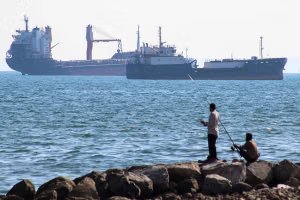
Tanker loads Iranian crude in Persian Gulf as Tehran weighs resuming exports
1

Tanker loads Iranian crude in Persian Gulf as Tehran weighs resuming exports

2
ANALYSIS

A tough winter for Iran's cement industry, a tougher one for steel

3

Houthi missile attack damages Riyadh’s tallest building

4

GTA 6 costs, slow internet frustrate Iranian gamers, fuel satire

5

Tehran threatens oil routes, wider missile strikes amid US sanctions

Banner

Spotlight

  • War damage leaves Iran with few options to avert winter gas crunch
    ANALYSIS

    War damage leaves Iran with few options to avert winter gas crunch

  • Ideology or history? Analysts clash over the roots of Iran’s enmity with the US

    Ideology or history? Analysts clash over the roots of Iran’s enmity with the US

  • A test of power: Who will control Iran's state TV?
    INSIGHT

    A test of power: Who will control Iran's state TV?

  • A tough winter for Iran's cement industry, a tougher one for steel
    ANALYSIS

    A tough winter for Iran's cement industry, a tougher one for steel

  • How Iranians are turning grief into defiance
    OPINION

    How Iranians are turning grief into defiance

  • Iran could launch dirty-bomb attack, but risks make it unlikely
    ANALYSIS

    Iran could launch dirty-bomb attack, but risks make it unlikely

Banner
Banner
Banner
Banner
Banner
Banner
•
•
•

More Stories

Iran uses executions to silence dissent and spread fear, US says

Nov 20, 2026, 17:14 GMT+0
100%
A screengrab from a video sent to Iran International showing a graffiti of executions in Iran's Ekbatan neighborhood in January 2025.

The US State Department on Friday accused Iranian authorities of using death sentences to intimidate protesters demanding basic rights and relief from economic hardship, and of carrying out a wave of executions to silence dissent and maintain their grip on power.

In a post on its Persian-language X account, the department said Tehran was resorting to intimidation and the gallows rather than addressing the country’s crises and the legitimate demands of its people.

“When citizens take to the streets to demand their basic rights and relief from unbearable economic pressures, the regime responds by hastily carrying out death sentences and bringing severe, repressive charges,” the department wrote.

Citing death sentences issued against protesters Amir Delshad, Matin Shabani and Arman Marefati, the department said Iran’s judiciary was being used to instill fear. It said treating free expression as a capital offense exposed the government’s inability to respond to public grievances.

The department said Iranian authorities had announced the executions of more than 730 Iranians since late December 2025, most following what it called sham trials.

A tally compiled from reports by human rights monitors puts the number of people executed in Iran between January 1 and November 18 at no fewer than 1,158. It includes executions the authorities never announced.

Iran Human Rights, a Norway-based monitor, said Monday that at least 39 men had been executed in connection with the January protests and at least 121 people arrested over the demonstrations remained under sentence of death.

Among those executed were Hassan Dioband, Hamid Kazemi and Reza Zangeneh, who were hanged on November 8 over protests in Karaj, west of Tehran, the group said.

An Iran International investigation in October showed Iran had executed nearly two people a week in political and security cases since the January protests, including over protest- and war-related accusations, while another 190 people faced death sentences.

At least 70 people were executed from January 7 to October 5. Human rights organizations and activists say the figures are minimum totals, covering only cases that have been reported and verified.

Of the 70 people executed, 35 were put to death in cases connected to the January protests, nine in cases linked to the 12-day and 40-day wars, and 26 in other political and security cases.

Two men in RAF Fairford plot likely to plead not guilty, London court hears

Nov 20, 2026, 17:10 GMT+0
•
Shervin Shahrestani
100%
B‑1B Lancer bomber at the RAF Fairford airbase, which hosts US Air Force personnel, in Fairford, Gloucestershire, Britain, September 27, 2026.

Two men charged over an alleged plot against Britain’s RAF Fairford airbase on behalf of Iran are likely to plead not guilty, their lawyers indicated at a hearing in London on Friday, where the judge set the trial for November 22, 2027.

Mohmed Abdulkarim, 24, and Nouman Essghir, 25, appeared via video link at a preliminary hearing at the Old Bailey over a plot that prosecutors say involved driving three vans containing petrol to the airbase used by the United States to carry out strikes on Iran.

Abdulkarim is charged under Britain’s National Security Act with engaging in conduct that was likely to materially assist a foreign intelligence service between August 31 and September 28.

His co-defendant, Essghir, a British national, is the only one of the five men arrested outside RAF Fairford to be charged, though his charge relates to alleged reconnaissance of the base on August 22.

Following the arrest of five British men outside the base in southwest England in the early hours of September 27, US B-1 bombers were withdrawn from RAF Fairford on security grounds.

Prosecutors told the court that Britain had authorized the use of its bases in March for what it described as defensive strikes to stop Iran firing missiles across the region. In July, Iran’s Revolutionary Guards warned that any base used to launch attacks on Iran was a legitimate target.

Prosecutors say Abdulkarim and Essghir were in contact with a person abroad named “Ali”, who is alleged to have been “acting in the interests of the Islamic Republic of Iran”. Iran’s ambassador to Britain has denied Tehran was involved.

Prosecutors cited a message in which Abdulkarim described Ali as a spy working for Iran against Israel. Abdulkarim told police he believed he was helping to shoot a promotional video for a new business.

In a US indictment made public on November 10, prosecutors allege that Mohammed Ali al-Hassani, an Iraqi national, directed preparations for the Fairford plot from Iran and paid contacts in Britain to obtain vehicles and materials. The indictment says his contacts also gave him information on the base’s layout.

According to the US Justice Department, al-Hassani directed preparations from Iran, paying contacts in Britain to conduct surveillance and obtain vehicles and materials for the September operation.

US prosecutors have charged al-Hassani and two others. Separately, the US removed aircraft from RAF Mildenhall, a second airbase in Britain, last week over a reported threat from Iran, the Wall Street Journal reported.

Mrs Justice Cheema-Grubb set aside four weeks for the trial at Woolwich Crown Court. Asked by the judge whether there would be further defendants, prosecutors said they could not say.

Six other people, including the four other men arrested outside RAF Fairford on September 27, remained on police bail, police said last month.

Iran readies tankers to run US blockade, threatens Persian Gulf oil if fired on

Nov 20, 2026, 14:13 GMT+0
100%

Guards-linked media, lawmakers and Friday prayer leaders signaled this week that Iran is preparing to send tankers through the US naval blockade, and warned that any attack on them would bring strikes on oil facilities across the Persian Gulf.

“The blockade must be broken,” Foreign Minister Abbas Araghchi told the ILNA news agency on Friday, when asked about reports that Iranian oil was being loaded for export. Iran would make every effort to export oil and to pursue negotiations, he said.

No Iranian official has confirmed a convoy. But the idea has moved in days from commentary by Revolutionary Guards-affiliated outlets to parliament and, on Friday, to prayer leaders in several cities, a path that decisions taken at the top in Tehran often follow before they are announced. Friday sermons are coordinated nationally by a council that answers to the supreme leader.

‘If a single bullet hits’

The campaign began on Wednesday, when the Guards-affiliated Fars news agency published a commentary urging Tehran to send a convoy of tankers through the blockade.

Iran should announce it officially, Fars said, and warn that any attack on the convoy would bring strikes on the region’s energy infrastructure, “especially UAE oil,” and on communications networks in Dubai.

On Thursday, the oil tracker TankerTrackers said Iran “appears to be preparing to ship out oil again.”

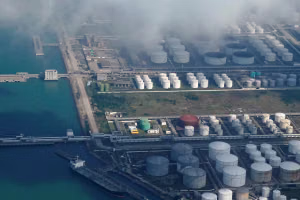
Its co-founder, Samir Madani, told Reuters that a tanker was taking on Iranian crude from another vessel in the Persian Gulf. If it cleared the blockade, it would be the first seaborne export of Iranian crude since mid-July. Al-Monitor reported that more than 14 Iranian tankers were gathered near Kharg Island, Iran’s main oil terminal, most with their tracking transponders switched off.

  • Iran war could cut global oil demand by over 4% by 2035 - IEA

    Iran war could cut global oil demand by over 4% by 2035 - IEA

  • Tanker loads Iranian crude in Persian Gulf as Tehran weighs resuming exports

    Tanker loads Iranian crude in Persian Gulf as Tehran weighs resuming exports

The Guards-affiliated Sabereen News, in a post labeled “unofficial,” said dozens of tankers were preparing to sail for China, and that Tehran had warned governments across the region it would go to war if the United States attacked them.

A Fars report said that any disruption to a tanker’s voyage would mean explosions at oil facilities in the UAE, Saudi Arabia, Qatar, Kuwait, Oman and Bahrain. Fars illustrated its commentary with an image of Fereydun, the hero of the Persian epic the Shahnameh, on horseback in the sea, guarding Iranian ships.

Mostafa Najafi, described in Iranian media as an adviser to Mohsen Rezaei, secretary of the Supreme National Security Council, linked the plan to the top. The supreme leader had ordered an end to the state of “neither war nor peace,” he wrote, and “the military option is also on the agenda.” Tehran, he wrote, “no longer wants to watch the blockade and the threats.”

From parliament to the pulpit

Mohammad Bayat, a lawmaker on the presiding board of parliament’s Internal Affairs Committee, called on Friday for tankers to be readied and for “an ultimatum” to Washington and the region’s governments. Iran, he said, “must be the initiator” of practical steps to end the blockade.

In the northwestern city of Ardabil, prayer leader Hassan Ameli, a member of the Assembly of Experts, went furthest.

  • Iran's oil output plunges below pre-war domestic needs

    Iran's oil output plunges below pre-war domestic needs

  • Bessent says Iran economy will contract by more than 25%

    Bessent says Iran economy will contract by more than 25%

Officials had taken “a very important decision to break this siege,” he said, and tankers would soon set sail from Kharg for China.

“Our armed forces have warned the Americans that if a single shot is fired at them, all oil centers in the Persian Gulf countries will be Iran’s legitimate target,” he said.

In Tehran, Friday prayer leader Mohammad-Javad Haj-Aliakbari said the armed forces were ready “at sea, on land, in the air, everywhere,” with orders “to take unlimited, unrestricted action, at a time of our own choosing.” “If they want to test us, they can go ahead and test us,” he said.

In Khorramabad, in the west, Friday prayer leader Ahmadreza Shahrokhi urged the armed forces not to let the blockade continue, and said that if any attack came from the territory of the Persian Gulf states, the armed forces should target “the palaces” of their rulers.

In Yasuj, in the southwest, Nasir Hosseini said Iranians wanted the blockade broken “with the power of the nation and the armed forces” and spoke of nuclear deterrence. In Tabriz, Ahmad Motahari-Asl warned that Iran had “not yet closed” the Bab el-Mandeb strait at the mouth of the Red Sea.

The Guards’ commander, Ahmad Vahidi, said: “Today we have put part of a great battle behind us, and part of it lies ahead.”

Why now

The blockade has cut Iran off from its main source of foreign currency. Iran loaded about 2 million barrels of crude and condensate a day in March, Reuters reported, citing Kpler and Vortexa. By September, Kpler recorded no loadings at all, the first full month without any since the 1979 revolution. Production has fallen to about 1.8 million barrels a day, roughly half its prewar level.

Chinese refiners usually pay one to two months after delivery, so payments for Iran’s last cargoes could arrive by mid-December, Homayoun Falakshahi, Kpler’s head of crude oil analysis, has told Iran International. After that, Tehran stands to lose $3 billion to $6 billion a month.

  • Qatar turns to US LNG to cushion Iran war losses

    Qatar turns to US LNG to cushion Iran war losses

  • Once US blockaded Iran, China’s ‘Malaysian’ oil imports dried up

    Once US blockaded Iran, China’s ‘Malaysian’ oil imports dried up

Alihossein Ghazizadeh, an Iran International analyst, said Tehran had concluded that time was against it. Washington wants to keep the blockade in place until the state is weak enough to collapse, give in or face mass protest, he said, and fighting later would cost the United States less.

“If a war is going to happen in three months, it’s better that it happens today,” he said, describing Tehran’s thinking. Iran could provoke a clash, he said, but the decision to start a full-scale war would rest with the United States and Israel.

Washington tightens, and waits

The United States has moved the other way. On Wednesday, US Central Command widened the blockade to cover ship-to-ship transfers at sea. “Such ships may be stopped, boarded, diverted, captured, or directed to proceed to the Iranian port where the cargo originated,” it said, warning that ships failing to comply could face force. CENTCOM says it has redirected 150 merchant vessels and disabled five since June, and in September US forces struck several Iranian tankers near Kharg and Jask after the Guards fired missiles at a US warship.

President Donald Trump has signaled patience. He told Axios this week that he was in no rush to decide on Iran and would see what happened after the new year.

On Thursday he said he could end the war “immediately,” but that Saudi Arabia had asked him “to please just let it be the way it is now for a while, because [Iran is] disintegrating.”

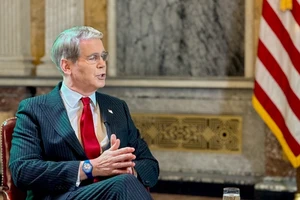
Treasury Secretary Scott Bessent, who runs the economic campaign, told CNBC this month that death threats against him from Iran’s leadership showed the pressure was working. Of the Guards, he said: “They’re like a dangerous cornered animal.”

Israel has pressed the other way. Mossad chief Roman Gofman was in Washington last week to urge a resumption of joint strikes, Axios and the Wall Street Journal reported.

If the tankers sail, Washington faces a choice it has so far avoided: let the blockade break, or fire on Iranian ships and test whether Tehran will carry out its threat against the Persian Gulf states.

Ex-boyfriend shoots woman dead at her birthday party in Iran

Nov 20, 2026, 12:36 GMT+0
100%

A 23-year-old woman was shot dead at her own birthday party in Iran’s northern Gilan province by a former boyfriend after she refused to marry him, local media reported, days after a 16-year-old girl’s killing by her father set off a national outcry.

Sadaf Haghbin was killed in the early hours of Thursday in Choukam, in Khomam county near the road between Rasht and the Caspian port of Bandar Anzali.

A 29-year-old man walked into the party armed, locked the guests in a room and took Haghbin upstairs, local media in Gilan reported. The Kurdish rights group Hengaw, citing sources close to the family, said he beat her and pressed her to call her parents and say she agreed to marry him. When she refused, he shot her several times.

He shot her first in the heart, then in the face and finally in the head, the local outlet Hirkani reported, citing an informed source, before fleeing. He had a history of violence and abuse toward her, Hengaw said.

Khabaronline reported that her refusal of his proposal was the likely motive, though police have not confirmed it.

The police chief of Khomam county, Iman Jahandideh, said without naming Haghbin that a 29-year-old man had shot a 22-year-old woman with a hunting rifle over “personal disputes” and fled.

He was arrested a few hours later with the rifle, confessed and was handed to the judiciary, the police chief said.

Two killings in four days

Haghbin’s death came four days after Sogand Sayadi, a 16-year-old schoolgirl in the western city of Kermanshah, died after falling from the fifth floor of a building on November 15. Rights groups say her father threw her.

The day before, administrators at her girls’ high school had summoned her father over her relationship with a young man he opposed.

According to rights groups, he beat her in front of her classmates and school staff, after she had warned teachers that her father would kill her if they sent her home with him.

Kermanshah’s prosecutor opened an investigation, and her father was arrested on charges including assault and murder, along with the school principal, on charges of negligence. Iran’s main teachers’ union network condemned the school’s handling of the case.

A petition launched on Tuesday demanding a tough sentence for her father and a change to the law that shields him has gathered more than 220,000 signatures.

A law that protects fathers

Under Article 301 of Iran’s Islamic Penal Code, a father or paternal grandfather who kills his child cannot face qisas, or retribution in kind, the punishment for most murders. He faces at most a prison term, and in practice often a short one.

The rule has been at the center of Iran’s most notorious cases. In May 2020, 14-year-old Romina Ashrafi was beheaded with a sickle by her father in Talesh, also in Gilan province, after she ran away with a man he opposed.

He was sentenced to nine years. In February 2022, 17-year-old Mona Heydari was beheaded by her husband in Ahvaz, in the southwest, who walked through the streets with her head. Each case set off outrage online and calls for reform that were never met.

A bill to protect women from violence has been stuck for about 16 years between the government, parliament and other state bodies and has still not become law.

At least 84 women and girls

At least 84 women and girls were killed in Iran between March 21 and October 13, 12 of them under 18, the Emtedad news site reported on Monday, citing cases reported in the media. Eight of the underage victims were killed by fathers, brothers or other blood relatives.

  • Killing of Iranian schoolgirl sparks calls for legal reform

    Killing of Iranian schoolgirl sparks calls for legal reform

  • Iranian girl's suspected honor killing raises questions over school's role

    Iranian girl's suspected honor killing raises questions over school's role

In August, another 16-year-old in Kermanshah, Hana Rakan, was shot in the head by her father while she slept, Hengaw reported.

The Shargh newspaper reported on Thursday that 125 women and children had died from domestic violence between late March and November. Both counts rely on reported cases and are likely to understate the real number.

After Haghbin’s death, users on social media posted the names of women and girls killed by family members or partners in recent weeks.

Iran sentences taekwondo champion to death over January protests

Nov 20, 2026, 11:37 GMT+0
100%

Iran has sentenced Pouya Fakhrabadi, a 25-year-old national taekwondo champion, to death over a fire during January’s protests in the central city of Yazd, and a source told Iran International he was tortured into confessing.

Judge Mohammad Bemani, who heads Branch 2 of Yazd’s Revolutionary Court, issued the sentence in a joint case known as the “Yazd telecommunications” case, according to information received by Iran International and the rights group HRANA.

Three other men in the case, Mehdi Rajabi, Mohammad Kargar and Mohini Makki, were each sentenced to 20 years, to be served in internal exile in the prison of Zahedan, in Sistan and Baluchestan province, more than 800 kilometers away.

  • The faceless judge who sentenced 11 Iranian protesters to death in 2026

    The faceless judge who sentenced 11 Iranian protesters to death in 2026

The charge announced was “taking part in setting fire to public property.” The details of the accusations against the men are not known, and it is not clear whether Fakhrabadi has appealed.

The case stems from protests on January 8 and 9, the days of the January massacre, when Imam Hossein Square in Yazd was one of the city’s main protest sites. The telecommunications building on the square and other government offices nearby, including one belonging to the Imam Khomeini Relief Committee, a state welfare foundation, caught fire.

100%
Pouya Fakhrabadi

‘They broke his head with a rifle butt’

Fakhrabadi, who holds a master’s degree in physical education, was arrested at his home in Yazd on February 20, a source familiar with the case told Iran International. Security agents broke his head with a rifle butt during the raid, leaving a wound that needed 20 stitches, the source said.

In solitary confinement he was severely beaten and tortured and lost about 30 kilograms, the source said. Agents forced him to confess by threatening to kill members of his family and to sexually abuse them. He was denied a lawyer throughout the case.

  • Abdanan protests draw solidarity and fears of renewed crackdown

    Abdanan protests draw solidarity and fears of renewed crackdown

His sister, who saw the violence during his arrest, suffered severe panic attacks and could barely speak for months afterward, the source said.

Fakhrabadi is a champion in hanmadang, the taekwondo discipline of creative and power breaking. He won gold at the international Kukkiwon Cup, organized by the sport’s world headquarters in South Korea, and has won a national title, setting a new record.

The Yazd detainees

Of 28 people from the January protests held in Yazd prison, 15 have been sentenced to between three and 21 years, and 13 are still awaiting a verdict, HRANA reported on Tuesday.

In the months since the protests, Iran’s judiciary has handed down death sentences, prison terms, floggings and asset confiscations to many of those detained and to other political prisoners.

On Wednesday, the UN General Assembly’s human rights committee adopted a draft resolution condemning the crackdown on the January protests and calling for a halt to all executions, with a view to abolishing the death penalty.

A lawyer facing a wartime charge

In Isfahan, prosecutors have extended the detention of human rights lawyer Amirsalar Davoudi by 30 days and added a new charge, his lawyer, Mehdi Karimi Farsi, told the Emtedad news site.

  • Iranian rights lawyer suffered heart attack in detention, rights group says

    Iranian rights lawyer suffered heart attack in detention, rights group says

  • UN experts warn Iran's crackdown on lawyers imperils fair trials

    UN experts warn Iran's crackdown on lawyers imperils fair trials

Davoudi, who was sentenced in 2019 to 30 years in prison and 111 lashes over his work defending political prisoners, was arrested again on October 11. He already faced charges of “spreading falsehoods online,” “propaganda against the system” and “inciting people to war and killing each other to disrupt national security.” He now also faces “producing and spreading false news against national security in wartime.”

Moein Khazaeli, a lawyer, wrote on X that prosecutors brought the new charge under Article 4 of a law toughening penalties for espionage, passed after the June 2025 war. It carries 10 to 15 years in prison, he said, or death if the court treats it as “corruption on earth.” He said the law was being used to stop lawyers defending their clients.

Part of the case against Davoudi stems from a recording he posted on Instagram on October 4 of a wedding ceremony conducted by phone between two of his imprisoned clients, Mahshad Keshani and Alireza Sepahi Badjani. Sepahi Badjani was executed the next day.

Davoudi suffered a heart attack in solitary confinement on November 8 and was taken to Isfahan’s Al-Zahra hospital, Iran Human Rights reported. The next morning, he was taken to court to be charged. He has had no contact with his family since his arrest, his lawyer said, despite a court order on November 15 allowing calls.

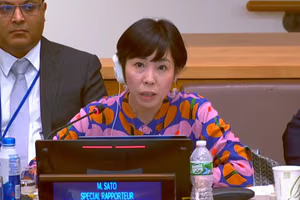
UN human rights experts said on November 9 that Davoudi’s arrest was part of a campaign of pressure on independent lawyers, at least 135 of whom faced judicial or security action in Iran between September 2025 and September 2026.