• العربية
  • فارسی
BrandBrand
  • Iran Insight
  • Politics
  • Economy
  • Analysis
  • Special Report
  • Opinion
  • Podcast
  • Live TV
  • Iran Insight
  • Politics
  • Economy
  • Analysis
  • Special Report
  • Opinion
  • Podcast
  • Live TV
  • Theme
  • Language
    • العربية
    • فارسی
  • Iran Insight
  • Politics
  • Economy
  • Analysis
  • Special Report
  • Opinion
  • Podcast
  • Live TV
All rights reserved for Volant Media UK Limited
volant media logo

Oil prices fall over 3% as Middle East exports recover despite tanker attacks

Nov 17, 2026, 02:38 GMT+0

Oil prices fell more than 3% on Monday as recovering exports through the Strait of Hormuz reinforced expectations of a global supply surplus, despite renewed tanker incidents in the waterway.

Brent crude futures settled down $3.40, or 3.6%, at $92.44 a barrel, while US West Texas Intermediate crude fell $2.84, or 3.2%, to $85.72, Reuters reported.

The Islamic Revolutionary Guard Corps (IRGC) said Monday that two oil tankers had struck mines in the Strait of Hormuz, causing explosions, and claimed six tankers had caught fire in incidents on Sunday and Monday.

The claims could not be independently verified.

Most Viewed

Third US carrier joins Iran blockade, Bessent warns of economic collapse
1

Third US carrier joins Iran blockade, Bessent warns of economic collapse

2

Iran facing one of fastest economic collapses ever, Bessent says

3

Blair's sister-in-law attended Iran conference linked to IRGC spy recruitment - Telegraph

4

UK PM warns Iran against attacks on journalists and military bases

5
VOICES FROM IRAN

Toxic air chokes Iranian cities, residents report health problems

Banner
Banner
Banner
Banner
Banner
Banner
Banner

Spotlight

  • Iraq’s move on militia stronghold may do little to curb Iran’s influence
    ANALYSIS

    Iraq’s move on militia stronghold may do little to curb Iran’s influence

  • 'Our turn to play': Iran hardliners call for breaking US blockade

    'Our turn to play': Iran hardliners call for breaking US blockade

  • Head full of pellets: protester recalls ordeal on Iran holiday island
    EXCLUSIVE

    Head full of pellets: protester recalls ordeal on Iran holiday island

  • Israeli opposition to Islamic Republic transcends party lines
    ONE-ON-ONE

    Israeli opposition to Islamic Republic transcends party lines

  • 2019 crackdown failed to break cycle of Iran street protests
    ANALYSIS

    2019 crackdown failed to break cycle of Iran street protests

  • Toxic air chokes Iranian cities, residents report health problems
    VOICES FROM IRAN

    Toxic air chokes Iranian cities, residents report health problems

  • Can higher fuel prices curb Iran’s smuggling problem?
    ANALYSIS

    Can higher fuel prices curb Iran’s smuggling problem?

  • Iran’s Janfada campaign gives Basij recruitment a patriotic banner
    ANALYSIS

    Iran’s Janfada campaign gives Basij recruitment a patriotic banner

•
•
•

More Stories

Iran’s dams may have been built to support missile bases - NYT

Nov 17, 2026, 01:36 GMT+0
100%
Dez Dam in Khuzestan province, southwestern Iran. (File photo: Amin Nazari/ISNA)

Iran’s extensive network of dams and water-transfer projects may have been built partly to support underground missile bases, the New York Times reported on Monday, citing experts who identified overlaps between water infrastructure and areas targeted in US-Israeli airstrikes.


Water and military experts told the newspaper that projects with no clear civilian justification could help sustain Iran’s underground military facilities. The report stressed, however, that the connection remains speculative.

Nima Shokri, a water security expert at Germany’s Hamburg University of Technology, said his team had tracked at least 533 dams across Iran. Examining a map of strikes on suspected military sites this year, he noticed that their locations closely resembled the pattern on his map of dams.

“It was always puzzling to me,” he told the Times. “Why were they building so many dams?”

The airstrikes prompted another question: “Why does it seem that wherever we have dams, there is a missile strike close by?”

Supplying the ‘missile cities’

Seven water and military experts interviewed by the newspaper said dams could provide the steady water and electricity supplies needed by sprawling military complexes.

Iran’s underground “missile cities” house facilities for producing, storing and launching missiles and drones, protected by tunnels dug deep beneath mountains.

Danny Citrinowicz, a former Iran analyst for Israeli military intelligence, said access to independent supplies would give Tehran “operational continuity.”

“Iran has a strong incentive to ensure that its missile complexes are not dependent on the broader national infrastructure for essential services,” he said.

One example examined by the newspaper was a large project transferring water from the Zagros mountains to Yazd.

Amir Aghakouchak, a water expert at the University of California, Irvine, said March airstrikes and reporting about a major missile facility in the area led him to suspect that the project “may have been influenced, at least in part, by military considerations.”

Shokri cautioned that many dams serve essential civilian needs in a country facing water shortages, providing drinking water, irrigation and electricity.

“Any potential military role should not overshadow these functions,” he said.

Civilian infrastructure in military planning

Iran International reported in March on a leaked 33-page directive attributed to the Revolutionary Guards’ missile command that appeared to make civilian locations part of a structured system for concealing and supporting missile operations.

The document, supplied by the hacktivist group Edalat-e Ali, identified industrial facilities, sports centers, sheds and warehouses as potential cover positions. Its criteria included keeping equipment out of view of surrounding buildings and ensuring surveillance cameras were absent or could be switched off.

A separate Iran International investigation compiled accounts of security and military forces moving personnel, weapons and equipment into at least 70 civilian sites across 17 provinces, including 34 schools.

Iran International geolocated visual evidence from seven locations, all schools.

In September, Tehran Governor Mohammad-Sadegh Motamedian called for schools used by other state bodies to be returned before the academic year began. He did not identify the institutions involved or say how many schools remained occupied.

Iranian officials have denied using civilians as shields and accused Israel and the United States of targeting civilian infrastructure.

Questions over conservationists’ arrests

The Times report also explored whether proximity to concealed military sites could help explain the Guards’ arrests of wildlife conservationists in 2018. It established no definitive connection.

Morad Tahbaz, a founder of the Persian Wildlife Heritage Foundation who spent more than five years in prison, recalled interrogators’ fixation on his team’s work protecting rare wild sheep in Hormozgan province.

“They were incredibly sensitive about that area,” he said.

The newspaper reported that US strikes hit the province’s Tarom Protected Area on July 14, killing a wildlife ranger’s family. Washington said it was targeting military infrastructure and coastal defenses. Military expert Farzin Nadimi told the Times the location was near a suspected underground missile base.

“I think it is possible that the Guards saw anyone doing fieldwork near these sites, even wildlife conservationists, as a potential security threat,” environmental analyst Nik Kowsar told the newspaper.

UK PM warns Iran against attacks on journalists and military bases

Nov 16, 2026, 23:37 GMT+0
100%
Britain's Prime Minister Andy Burnham takes a drink during a toast as he attends the annual Lord Mayor's Banquet at the Guildhall in London, Britain, November 16, 2026. REUTERS/Toby Melville

British Prime Minister Andy Burnham warned Monday that Britain would respond to Iranian-sponsored attacks on journalists, Jewish communities and military airbases, amid concerns over operations linked to the Islamic Revolutionary Guard Corps (IRGC).

Speaking at the Lord Mayor's Banquet in London, Burnham said: “Nor will we allow them to sponsor attacks on journalists, our Jewish communities here in Britain and airbases without response.”

His warning came days after two Iranian men, Mostafa Sepahvand, 41, and Farhad Javadi Manesh, 46, were convicted at London's Woolwich Crown Court on November 12 of assisting a foreign intelligence service.

The court heard that the men conducted surveillance targeting Iran International journalists Mojtaba Pourmohsen and Kambiz Hosseini, as well as British lawyer Jonathan Turner, on behalf of Iranian intelligence.

Sepahvand was also convicted of preparing to commit serious violence against a person in Britain. Prosecutors said he had been promised up to £150,000, approximately $200,000, for carrying out an attack.

Both men are scheduled to be sentenced on December 17. A third defendant was acquitted.

In a separate case, British and US authorities have brought charges over a suspected IRGC-linked plot targeting RAF Fairford, a British airbase used by US bombers during the war with Iran.

On November 10, US prosecutors announced charges against three men in connection with the September plot, including a suspect who prosecutors said coordinated activities through coded telephone calls while detained in a New York jail.

Two other men have been charged in Britain in connection with the suspected plot. US B-1 bombers were withdrawn from RAF Fairford shortly afterward.

Burnham told Parliament on October 12 that British authorities assessed the suspected Fairford plot as highly likely to have been coordinated in Iran and almost certainly directed by the IRGC.

Iranian Foreign Minister Abbas Araghchi rejected Britain's accusations in a September 30 post on X, pointing to the release on bail of suspects arrested in connection with the Fairford incident.

“I can confirm Iran's belief that releasing supposed terrorists working for foreign states really says it all,” Araghchi wrote, adding: “You're barking up the wrong tree.”

US Army seeks 17 bunkers in Israel, Saudi, Lebanon amid Iran threats - report

Nov 16, 2026, 21:53 GMT+0
100%
U.S. Air Force personnel take part in a training exercise at Prince Sultan Air Base in Saudi Arabia on June 24, 2022. (File photo: U.S. Air Force/Staff Sgt. Noah J. Tancer)

The US Army is urgently seeking contractors to build 17 reinforced concrete bunkers in Israel, Saudi Arabia and Lebanon to protect American and coalition troops from missile and drone attacks, Military Times reported Monday.

According to an Army procurement notice posted Friday, the project calls for 10 bunkers in Israel, five in Saudi Arabia and two in Lebanon, replacing existing personnel shelters made from converted shipping containers.

“Due to elevated regional force protection conditions, there is an urgent, high-priority requirement to replace nonstandard personnel protection shelters,” the Army said in the notice.

The military said the objective was to protect US and coalition service members operating in potentially hostile environments across the US Central Command's area of responsibility.

The project follows Iranian missile and drone attacks on US military installations across the Persian Gulf that have killed at least 23 American personnel, according to the report.

Among the incidents was a March 2026 drone strike on an Army command post at Kuwait's Port of Shuaiba that killed six US service members. Subsequent reports alleged that the facility lacked adequate protection against aerial attacks.

The Army said the bunkers would be installed at five primary military sites, including one in Israel and two each in Saudi Arabia and Lebanon. Their exact locations were not disclosed.

Each bunker will consist of three reinforced concrete sections, steel entrance doors and protective concrete barriers, with additional sandbags along the exterior walls and at least 18 inches of overhead cover.

The Army wants construction completed within 45 days of issuing the task order and expects to give contractors just three days to submit price quotations.

“Due to extreme operational urgency (soldiers currently at risk using non-standard containerized shelters), the subsequent solicitation is anticipated to have an expedited 3-day quote turnaround window,” the notice stated.

The Army is seeking construction and engineering firms capable of mobilizing immediately in the three countries, with responses due by November 25.

Iran’s daily hardships find a voice in IRGC-linked media

Nov 16, 2026, 21:28 GMT+0
100%
A man, a woman and a child wearing face masks ride a motorcycle in Iran, November 15, 2026. ISNA

The depth of hardship in Iran is evident even in messages published by the Revolutionary Guards-affiliated Fars news agency, which is airing accounts of families struggling to survive without examining the responsibility of its powerful patron.

Children leaving education to support their families, teachers struggling to afford their commute and a disabled parent awaiting assistance feature in the complaints, echoing what Iran International audiences have long described in its Voices from Iran coverage.

Their appearance in Fars brings those grievances into an outlet aligned with an institution that holds extensive political and economic power, and whose own role goes unexamined in the roundup.

Published under the heading “Messages you sent to Fars,” the accounts describe a recurring gap between promised support and what people say they can actually obtain.

The selection offers a bleak picture of daily life even through the accounts an establishment outlet chooses to publish.

The writers were not named in the roundup, and their individual accounts have not been independently verified by Iran International.

Children working, assistance falling short

One contributor, identifying himself as a painter, said his children had been unable to continue their education because the family could no longer afford it.

“Because I am a simple painter, my children had to work, and we pool our earnings to keep things going,” he wrote.

He said he paid 120 million rials (nearly $45) a month in rent and questioned his household’s placement in the fifth and sixth income deciles under the classification system used to determine eligibility for state assistance.

Iran's minimum monthly base wage stands at around 166 million rials ($62).

“For God’s sake, is it fair?” he asked, citing his rental deposit, several loans and two children of marriageable age.

Another contributor said shops were refusing electronic food vouchers, undermining assistance intended to help households buy essential goods.

“Most shops that supplied meat and chicken through food vouchers have stopped accepting them because they have not received their money,” the message said.

A parent with a severe physical disability said payments for care, living expenses and hygiene supplies had still not arrived.

“I am the head of a household with two schoolchildren and have a severe physical and mobility disability, meaning that even if I wanted to work, I could not,” the contributor wrote.

The accounts raise questions not only about the adequacy of assistance, but also whether it reaches recipients and can be used when they need it.

Struggling to get to work

Two teachers described the difficulty of meeting basic expenses despite being employed.

“I am a permanent teacher with 14 years of service. I earn 245 million rials ($91), part of which goes on commuting,” one wrote. “How can I live on this salary? How can I get married? How can I buy a car?”

Another, teaching in a nomadic community, said traveling to school and back required driving about 100 kilometers (62 miles) a day in a private vehicle.

“Without the stations’ fuel cards, how can I do this?” the teacher asked. “How much monthly gasoline allowance do I have to cover my car’s fuel needs?”

The complaint comes amid tighter restrictions on access to gasoline. Iran International reported on November 15 that shared station fuel cards, which allow motorists to refuel without using their personal cards, had been withdrawn in 11 provinces. A parliamentary energy committee official acknowledged that the restrictions had fueled public dissatisfaction.

Elsewhere, contributors described public services failing and officials passing responsibility between agencies.

A resident of a village in Bushehr province said fixed internet service had been disconnected for more than a month.

“Nobody answers. They keep putting us off until tomorrow.”

A resident of Rafsanjan in southeastern Iran described drinking-water pipes left broken for months despite persistent water shortages. The village administration referred residents to the water utility, which the writer said also failed to respond.

Grievances without accountability

The messages largely appeal to authorities for help. One contributor explicitly invoked what they described as workers’ support for the political system.

“The biggest supporters of this system are workers, the poor and the middle class,” the message said, before questioning why employers were not paying workers’ insurance contributions and why arduous jobs were not receiving special pension treatment.

The appeal highlights the contradiction in Fars’s role: it offers a platform for people seeking relief while being affiliated with an institution deeply embedded in the structures governing their lives.

The Revolutionary Guards’ influence extends beyond military and security affairs. Reports and investigations by Iran International, Reuters and many other outlets have documented its sprawling business empire across oil, construction, shipping, telecommunications and ports, alongside its growing political power.

Yet the roundup does not examine how that power is exercised, how the Guards’ economic interests affect ordinary Iranians or what responsibility the institution bears for public policy. Nor does it include responses from the agencies concerned or evidence that the complaints have been resolved.

The selection alone cannot establish whether Fars is seeking to pressure the government, retain readers’ trust or compete with independent media as a channel for public grievances.

Whatever the intention, the presentation allows an outlet tied to a major center of power to cast itself as an advocate for people seeking help, while leaving that center of power outside its scrutiny.
Head full of pellets: protester recalls ordeal on Iran holiday island

Nov 16, 2026, 19:10 GMT+0
•
Azadeh Akbari
100%
Taha Eskandari

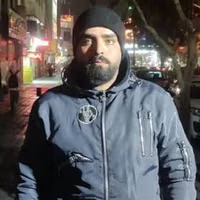
An Iranian protester who survived being shot in the head during January's nationwide demonstrations has described how security forces opened fire on crowds on the resort island of Kish, leaving him with more than 100 shotgun pellets lodged in his head and neck.

Kish is a holiday destination in the Persian Gulf known for its beaches, luxury hotels and shopping malls. Hardly a hotbed of political protest, the island became a scene of deadly violence during January's crackdown, according to 25-year-old Taha Eskandari.

"I thought Kish was a small place and that killings on the scale seen in other cities couldn't happen there," he told Iran International.

Eskandari said he was shot twice while fleeing security forces on January 9, lost consciousness and subsequently spent months in hiding, fearing arrest if he sought medical treatment.

X-rays and a radiology report dated September 22, reviewed by Iran International, identified more than 100 small, round metallic foreign bodies consistent with shotgun pellets in and around his skull, facial tissues, both eye sockets and neck, with a marked concentration around his left eye.

'The first thing we did was write our wills'

Eskandari said protests began on Kish on January 7, with larger demonstrations following a call by exiled Prince Reza Pahlavi on January 8 and 9.

Having participated in the 2022 anti-government protests, he anticipated a violent response and joined four others in preparing first-aid supplies for injured demonstrators.

"The first thing we did was write our wills," he said, explaining that they feared being killed and wanted their families prepared.

The group purchased medical supplies at their own expense, but their first-aid kits were nearly exhausted by around 10:30 p.m. on January 8 because of the number of wounded protesters, he said.

100%

"They weren't shooting below the waist. They were shooting directly above the waist," Eskandari said. He described seeing security forces firing from the roof of a police station. "They were firing at people from above the police station. I saw it with my own eyes."

He also recalled witnessing a young woman being shot in the neck while standing beside him near Police Station 11 that night.

"She was standing beside me, protesting. We didn't have anything with us, not even a stick," he said. Suddenly, he heard a bullet pass close to his ear. It hit the woman.

"I looked down and saw her dying at my feet."

Eskandari said he and other protesters tried to move her to safety but were forced to scatter when security forces advanced. They could not recover her body or establish her identity.

"Whenever I talk about that night, my hands and feet start shaking," he said.

Shot twice while fleeing

The following day, according to Eskandari, security forces pursued protesters near Amir Kabir Square. He fled into the Maryam Hotel, but armed officers entered the building and began shooting. He escaped through a rear exit but was spotted by two armed men.

"The first shotgun blast hit my neck and back," he recalled. "The second hit me directly in the head, and I lost consciousness."

Eskandari said he regained consciousness roughly two hours later in another hotel, where someone had taken him after the shooting. Fearing arrest, he avoided hospitals and tried to treat his wounds himself.

"I couldn't sleep that night. When I tried to put my head on the pillow, my neck hurt. That was when I realized my neck was full of pellets," he said.

Eskandari subsequently spent months in hiding, including in the mountains near Varamin, southeast of Tehran, as swelling and infections worsened. He eventually fled Iran and underwent medical imaging abroad.

"My right eye is gradually losing its sight," he said. "What I see with that eye is no longer the same as what I see with the other."

He described the pellets still lodged in his body as permanent reminders of the crackdown.

"I've always said these are souvenirs for me. Souvenirs of those days, of the people who lost their lives," Eskandari said.

"I survived so I could be the voice of those inside Iran who cannot speak."