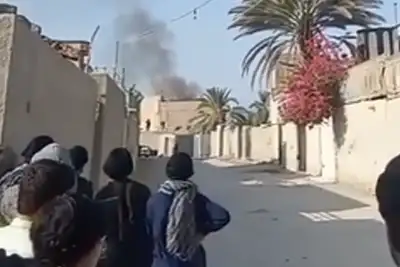
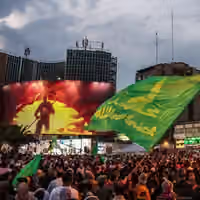
The protests initially erupted over a sharp spike in exchange rates but soon escalated into open calls for the overthrow of the Islamic Republic.
Many Iranians now say they personally know at least one or two people killed on January 8 or 9. Arrests and enforced disappearances—whose exact scale remains unknown—have also drawn countless families into the crisis, deepening fear and uncertainty.
According to people who have recently left Iran or managed to communicate via Starlink, businesses across the country are either closed or operating at minimal capacity, battered by currency turmoil and the prolonged internet shutdown.
On one side, customers have disappeared; on the other, sellers are reluctant to part with their goods.
Merchants say they cannot be sure they will be able to replace inventory amid exchange-rate volatility, turning even routine transactions into a gamble. Many now prefer not to sell at all.
Even before the unrest, businesses were under intense pressure.
Data published by the economic website Eco Iran show that bank lending from April to December rose 47 percent year-on-year. But 82 percent of loans to the productive sector went toward “working capital”—a sign that firms were borrowing not to expand, but simply to survive.
Shrinking purchasing power
Soon after the protests began, the government announced a plan to offset declining purchasing power following the removal of subsidized exchange rates for essential imports.
Under the plan, low- and middle-income individuals are to receive 10 million rials per month—about $7.50, roughly equivalent to one day’s wage for a construction worker.
Four months of payments were deposited at once, with recipients told they could spend one-quarter of the sum each month on 11 basic items, including rice, cooking oil, protein products, and dairy, at state-set prices in designated stores.
Prices for most of those goods in the open market have continued to surge, and some items have become scarce. Most readers responding to a poll by the news website Khabar Online said the subsidy was insufficient or ineffective.
One reader commented on the website that the handout offsets at most half the price increase for the 11 subsidized items, noting that rising food costs would also push up prices for everything from biscuits to restaurant meals, for which no compensation exists.
Many also fear the government will finance the program by printing money, further accelerating inflation, which official figures show had already surpassed 50 percent by December.
Cost of blackout
The nationwide internet shutdown, imposed on January 8 and still in place, has crippled hundreds of thousands of small and home-based businesses.
From home food producers to online language and music teachers, entire livelihoods have vanished overnight, with authorities offering no clear timeline for restoring connectivity.
These businesses relied almost entirely on online platforms for advertising and sales. Many were small producers in cities and even remote villages, selling handicrafts, agricultural goods, or homemade food directly to customers through Instagram.
Even before the shutdown, widespread filtering had forced them to pay for VPNs, further straining already fragile operations.
Kourosh, the manager of an advertising company who left Iran for Turkey after the January 8–9 killings, said all advertising activity had come to a halt.
“My clients have lost any hope of selling their products before the Iranian New Year, which is just two months away,” he told Iran International.
“People have no money, and even if they do, they won’t spend it on clothes, shoes, or home goods. Everyone was counting on sales in these final weeks of the year.”