• العربية
  • فارسی
BrandBrand
  • Iran Insight
  • Politics
  • Economy
  • Analysis
  • Special Report
  • Opinion
  • Podcast
  • Live TV
  • Iran Insight
  • Politics
  • Economy
  • Analysis
  • Special Report
  • Opinion
  • Podcast
  • Live TV
  • Theme
  • Language
    • العربية
    • فارسی
  • Iran Insight
  • Politics
  • Economy
  • Analysis
  • Special Report
  • Opinion
  • Podcast
  • Live TV
All rights reserved for Volant Media UK Limited
volant media logo

IRGC deputy chief says Iran can hit targets 1,500km away with 2-ton warheads

Nov 13, 2026, 06:53 GMT+0

The Islamic Revolutionary Guards deputy commander said Friday that Iran’s armed forces can strike targets 1,500 kilometers away with missiles carrying two-ton warheads.

Mostafa Izadi described the capability as a way to thwart enemy plans to undermine Iran’s security and power.

He also said the “myth” of US bases providing security was over, calling the United States a “paper tiger.”

He said Iran was ready across missile, air defense, drone, naval and territorial defense fields, and that the Basij paramilitary forces were present throughout the country.

Most Viewed

Workers in Iran sell organs to pay debts and cover living costs
1

Workers in Iran sell organs to pay debts and cover living costs

2
VOICES FROM IRAN

Missile city unveiling sparks anger over poverty, lack of shelters

3

Trump vows ‘total victory’ as Iran rejects concessions and threatens wider war

4

Iranian commanders threaten to kill Trump, strike US targets worldwide

5
ANALYSIS

US targets Iran's land trade routes, but Tehran may hold firm

Banner
Banner
Banner
Banner
Banner
Banner
Banner

Spotlight

  • Iran's intelligence merger debate signals possible security shake-up
    INSIGHT

    Iran's intelligence merger debate signals possible security shake-up

  • Americans ‘a bit naive’ about influence campaigns by Iran, Russia, China
    ONE-ON-ONE

    Americans ‘a bit naive’ about influence campaigns by Iran, Russia, China

  • Trump's Iran dilemma after America's 'everything' election
    OPINION

    Trump's Iran dilemma after America's 'everything' election

  • The faceless judge who sentenced 11 Iranian protesters to death in 2026
    SPECIAL REPORT

    The faceless judge who sentenced 11 Iranian protesters to death in 2026

  • Iran state TV panelists urge tougher action against US blockade

    Iran state TV panelists urge tougher action against US blockade

  • Iran’s largest ‘private’ bank is run by Supreme Leader’s business empire
    SPECIAL REPORT

    Iran’s largest ‘private’ bank is run by Supreme Leader’s business empire

  • France's cyberattack allegations against Iran should wake up Europe
    OPINION

    France's cyberattack allegations against Iran should wake up Europe

  • US targets Iran's land trade routes, but Tehran may hold firm
    ANALYSIS

    US targets Iran's land trade routes, but Tehran may hold firm

•
•
•

More Stories

Iran's intelligence merger debate signals possible security shake-up

Nov 13, 2026, 03:30 GMT+0
•
Behrouz Turani
100%
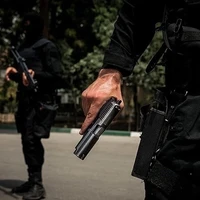
Counterterrorism forces take part in a security drill in Tehran, Iran.

A proposal to merge Iran's Intelligence Ministry with the Revolutionary Guards' powerful intelligence organisation is gaining traction, reviving debate over the rivalry between the two agencies and the future of the country's security apparatus.

The issue has drawn renewed attention in the reformist newspaper Etemad, which is close to President Masoud Pezeshkian's administration.

In an article published Thursday, the newspaper examined proposals reportedly discussed in senior state consultations to consolidate the two agencies into a more unified and accountable intelligence structure.

Iran's Intelligence Ministry remains without a permanent chief nearly eight months after Esmail Khatib was killed in an Israeli strike in March, while parliament considers separate legislation to overhaul the ministry's leadership.

The two agencies have long operated alongside one another, with overlapping responsibilities and competing centres of authority.

A history of rivalry

Iran's intelligence apparatus encompasses several organisations, but the Intelligence Ministry and the Islamic Revolutionary Guard Corps (IRGC) Intelligence Organisation are its two most prominent institutions.

The ministry operates within the government, with its chief nominated by the president and approved by parliament. The IRGC's intelligence arm belongs to a military organisation operating under the supreme leader's command.

Their competing authority has occasionally produced disagreements over investigations and the treatment of detainees.

During the late 2010s, one prominent dispute involved environmental activists arrested by the IRGC Intelligence Organisation on espionage charges. Another concerned more than 50 people reportedly accused of spying for Israel.

In both cases, the Intelligence Ministry publicly challenged allegations advanced by the IRGC Intelligence Organisation.

Some former detainees subsequently told Iranian and Persian-language media outside the country that the ministry had apologised for their detention and offered compensation.

A sensitive debate

Writing in Etemad, journalist Mehdi Beik-Oghli examined longstanding concerns about overlapping mandates, institutional rivalries and legal accountability within Iran's intelligence system.

His analysis also explored the qualifications required for senior intelligence officials and the difficulties of maintaining separate security institutions with overlapping responsibilities.

Etemad is widely regarded as one of the newspapers closest to Pezeshkian's administration. Its proprietor, Elias Hazrati, serves as a senior government media adviser.

The article does not establish whether a merger has been formally proposed by the government or endorsed by senior decision-makers, but its publication brings a sensitive question about Iran's intelligence establishment into a prominent government-aligned newspaper.

Leadership vacuum

Iran's parliament is preparing to consider separate legislation that could fundamentally change the leadership structure of the Intelligence Ministry.

Parliamentary presidium spokesman Abbas Goudarzi said Tuesday that an urgent bill would remove the longstanding requirement for the intelligence minister to possess ijtihad, an advanced qualification in Islamic jurisprudence.

Since the ministry's establishment in 1984, all its permanent ministers have been clerics.

The proposed legislation would allow a non-cleric to take the position while establishing two new organisations within the ministry, responsible for internal security and ideological affairs.

Their directors would be appointed directly by Supreme Leader Mojtaba Khamenei, while the intelligence minister would continue to be nominated by the president and approved by parliament.

Goudarzi said the changes would help resolve the leadership vacancy following Khatib's death. The ministry has been run by an acting minister whose identity has not been publicly disclosed.

The proposed legislation has yet to receive parliamentary approval, and it remains unclear whether the eventual selection of a new minister would favour career intelligence officials or figures associated with the Revolutionary Guards.

While the parliamentary proposal would retain the ministry and alter its leadership arrangements, the merger discussion goes further, raising the possibility of consolidating institutions that have operated as competing centres of security authority for decades.

Neither proposal has been adopted, and no decision to merge the intelligence agencies has been announced.

Americans ‘a bit naive’ about influence campaigns by Iran, Russia, China

Nov 13, 2026, 00:01 GMT+0
•
Kambiz Tavana
100%
Sean Durns, director of the Counter Extremism Research Center at the Capital Research Center, speaks in an interview with Iran International's Kambiz Tavana in Washington DC on Nov. 12, 2026

Americans have repeatedly underestimated foreign efforts to influence their politics and public opinion, leaving the US vulnerable to campaigns by China, Russia and Iran, says Sean Durns, director of the Counter Extremism Research Center at the Capital Research Center.

Speaking at Iran International's Washington studio, Durns argued that influence operations and unconventional warfare are deeply embedded in the strategies of America's adversaries but remain poorly understood by much of the US public and political establishment.

"The American people are great people. They can be a bit naive," he said. Influence operations and hybrid warfare, he added, "have been ingrained into the DNA of the Chinese Communist Party since its founding, but they're very foreign to Americans."

Durns, a former deputy commentary editor at the Washington Examiner, leads a program launched last month by the conservative Capital Research Center to investigate extremist movements and foreign influence in the United States.

"These countries have a common enemy, and that is us," he said. "They do cooperate. They do collaborate, and we've seen that with the recent war, in fact, against Iran, where both China and Russia have given aid to Iran in its war against America."

A Ukrainian intelligence assessment reviewed by Reuters in April found that Russian satellites had carried out dozens of imagery surveys of military and critical sites across the Middle East to help Iran strike US forces and other targets.

In May, the Trump administration sanctioned several China-based firms it said had supplied satellite imagery that enabled Iranian strikes on US forces.

"The Chinese Communist Party views Iran as a foil, a way to tie down the United States,” Durns said, “so that it can continue to amass its power and challenge America for hegemony," he said.

Money and influence

Durns pointed to the network of Neville Roy Singham, an American-born former technology executive living in Shanghai, as an example of what he described as foreign influence reaching Western political movements.

Singham, who is married to Jodie Evans, a co-founder of the antiwar group Code Pink, has funded organisations that have attracted scrutiny over their promotion of Chinese government narratives.

In July, the House Ways and Means Committee subpoenaed three Singham-funded nonprofits—BreakThrough News, The People's Forum and Tricontinental—over approximately $40 million in funding linked to him.

Two of the organisations said the subpoenas violated the First Amendment. No charges have been filed.

Durns suggested that some demonstrations in Europe reflected organised influence campaigns rather than entirely spontaneous public mobilisation.

"It's important to understand, when the American public looks across the Atlantic and sees streets burning in Milan, Italy, or in Paris, France, or elsewhere, in Albania, in Spain, that these are not necessarily organic protests," he said.

Durns also accused such groups of exploiting the Gaza conflict to mobilise public anger.

"Gaza has been a very effective one for them, in which, of course, they use lies," he said. "They count on the public not being aware, not being educated."

He argued that social media platforms have made it easier for foreign influence campaigns to reach American audiences.

"There's no fact-checking on TikTok, and the algorithms are distorted to work on behalf of the Chinese Communist Party," he said.

Lessons from the Cold War

Durns said American complacency about foreign influence was not new, pointing to revelations about Soviet intelligence operations that emerged after the Cold War.

Among the examples he cited was the Mitrokhin Archive, a collection of notes compiled by KGB archivist Vasili Mitrokhin and smuggled to Britain in 1992, which exposed Soviet intelligence operations across the West.

"I have met a number of individuals in the press, or who are policymakers themselves, who have never heard of things like the Mitrokhin Archive," Durns said.

He suggested that a similar failure to understand the motivations of adversaries had shaped Washington's approach to the Islamic Republic since the 1979 revolution.

Successive American administrations, he argued, had repeatedly searched for moderate figures within Iran's leadership, misreading the nature of its political system.

"There are no moderates in the Iranian regime. The moderates have been expelled," he said. "They're in Evin prison, or they're elsewhere."

An enduring challenge

Durns rejected comparisons between the recent US war with Iran and the American experience in Vietnam, arguing that claims of an American defeat were misleading.

"There's been a very popular narrative, which is that America lost the current war against Iran, or that this war against Iran was like Vietnam," he said. "That is profoundly, profoundly false."

He also argued that Iran's economic weakness left Washington with substantial leverage despite Tehran's efforts to prolong the confrontation.

Durns compared the current mood in the United States to the 1970s, when America emerged from Vietnam amid widespread predictions of decline, only to prevail in the Cold War less than two decades later.

"So never count America out," he said. "But at the same time, the hour is getting late, and there are growing threats that have been massing over the course of many years that we need to confront and combat."

Another Baluch militant group joins coalition fighting Tehran rulers

Nov 12, 2026, 21:44 GMT+0
100%
File photo shows Jalil Ghanbarzahi, the leader of Ansar al-Furqan, who was killed in clashes with the Revolutionary Guard in 2017.

Baluch armed group Ansar al-Furqan has merged into the People’s Fighters Front, the coalition’s spokesman said, expanding an alliance that has claimed a series of attacks on Iranian security forces in the southeast in recent months.

Spokesman Mahmoud Baluch said the merger followed mediation by figures in Baluchestan and efforts by both organizations’ leaders to strengthen their campaign against the Islamic Republic.

“We the people of Iran, despite all our differences of thought and ideological disagreements, inhabit one land, share a common destiny and have been taken hostage by a criminal tyrant,” he said in a statement on Wednesday.

Baluch urged Iranians to overcome political divisions and unite to end the system of supreme clerical rule.

The front, known by its Persian initials JMM, was formed in December 2025, bringing together Jaish al-Adl, the PADA Baluch Movement, Harakat-e Nasr Baluchistan, the Mohammad Rasulullah group and independently organized Baluch fighters.

  • Who are the Baluch militants taking on Iran rulers, and how far can they go?

    Who are the Baluch militants taking on Iran rulers, and how far can they go?

Its charter combines demands for Baluch rights with nationwide political objectives, advocating diplomatic, cultural and media activity alongside armed action.

The United States designated Jundallah a terrorist organization in 2010 and amended the designation in 2019 to include Jaish al-Adl.

Ansar al-Furqan is not designated as a terrorist organization by the United States or the European Union but is blacklisted by Iran, Pakistan and China.

The Terrorism Research & Analysis Consortium has reported alleged links between the group and al-Qaeda, the al-Nusra Front, Hay’at Tahrir al-Sham and Jaish al-Adl.

Ansar al-Furqan took responsibility for several attacks on Iran’s police and military, including a 2018 Chabahar suicide bombing which killed two policemen. However, the attacks have not remained limited to the restive southeast.

In 2017, Ansar Al-Furqan claimed responsibility for bombing an oil pipeline in Ahvaz, a city located in Iran's southwestern Khuzestan province.

Continued JMM attacks

The People’s Fighters Front claimed responsibility for three attacks in Golshan, Konarak and Saravan on November 2–3, targeting what it described as Revolutionary Guards personnel, Afghan Fatemiyoun fighters and a police special unit commander.

Local rights group Haalvsh reported that at least seven members of the IRGC-affiliated Fatemiyoun brigade were killed in the Konarak attack on a school allegedly being used as a military base.

The IRGC-affiliated Tasnim news agency gave a different account, saying militants attacked army personnel and one assailant was killed. It reported no deaths among the targeted personnel.

On November 7, Iran executed Mohammad Aref Shahbakhsh over an attack on a police post in Khash, the judiciary said. It alleged links to Jaish al-Adl but provided no date for the attack or details of his trial.

US-based rights group HRANA previously documented 63 armed incidents across southeastern Iran between March 31 and October 10, leaving at least 94 dead and 33 wounded. Most incidents remained unattributed or could not reliably be linked to a particular group.

Analysts interviewed by Iran International in October said closer coordination had helped militants intensify attacks, but cautioned that broader national support remained uncertain.

The predominantly Sunni Baluch population has long faced economic deprivation, ethnic and religious discrimination, and repression.

Trump shifts Vance away from Iran talks, says deal unnecessary

Nov 12, 2026, 21:08 GMT+0
100%
U.S. President Donald Trump (left) and Vice President JD Vance appear to salute during a wreath-laying ceremony at the Tomb of the Unknown Soldier at Arlington National Cemetery in Arlington, Virginia, on Veterans Day, November 11, 2026

US President Donald Trump on Thursday directed Vice President JD Vance to focus on alleged Democratic corruption rather than Iran talks, saying Washington no longer needed a deal with Tehran and that the Iranian regime was collapsing.

“We don't need a deal with Iran. Those days have long since passed,” Trump wrote on Truth Social. “We've got their money, Hundreds of Billions of Dollars, and we've got their Strait!”

He asked Vance to devote his “complete and total attention” to the domestic effort.

Vance had been leading efforts to secure a ceasefire and resume nuclear negotiations. But Trump has privately criticized the June memorandum of understanding the vice president helped negotiate, questioning whether it was a costly mistake, The Wall Street Journal reported, citing two officials.

The officials said Trump believed the arrangement had given Iran time to regroup and collect oil revenues before Washington imposed a naval blockade.

In separate remarks to Salem on Thursday, Trump said Tehran’s public defiance concealed the extent of its economic difficulties.

“The regime is collapsing,” he said. “Their economy is gone. They're not paying the soldiers.”

‘No hesitation’ to use force

Trump also said he was prepared to use military force to stop Iran from threatening US allies and vessels. Asked whether he would hesitate to do so, he replied: “No. No hesitation.”

Iran’s state-run IRNA news agency reported Thursday, citing official sources, that Sirik in Hormozgan province had been struck in an “enemy” attack. It described the strike as military in nature but gave no details about the target, damage or casualties.

Separately, US Central Command called reports that it had told Israel to prepare for renewed war with Iran “mere speculation,” Al Jazeera reported.

Israeli public broadcaster Kan had reported that warnings about a possible resumption of fighting were conveyed to Israeli military representatives in the United States and through military channels to Israel and Persian Gulf countries.

Regional governments continued pressing for negotiations. Turkish President Recep Tayyip Erdogan called for talks to begin as soon as possible during a meeting with Iranian President Masoud Pezeshkian on Thursday, Turkey’s presidency said.

Meeting on the sidelines of the COP31 summit in Antalya, Erdogan urged a swift end to the conflict and pledged continued support for regional peace efforts.

Trump's Iran dilemma after America's 'everything' election

Nov 12, 2026, 21:00 GMT+0
•
Albert Eisenberg
100%
FILE PHOTO: US President Donald Trump arrives to deliver remarks, ahead of the midterm elections at the Lincoln Memorial Reflecting Pool, after being reopened following months of repairs, in Washington, DC, US, November 2, 2026.

President Donald Trump may have paid a heavy political price for his war with Iran, but last week's sweeping election defeat has done little to clarify what he will do next.

Voters across America did not simply hand Democrats control of Congress. The wave reached further down the ballot, flipping hundreds of state legislative seats from Arizona to New Hampshire and giving Democrats control of states and localities few thought possible.

Last Tuesday was a referendum on much of what has happened since Trump took office for the second time in January 2025. The war was a powerful accelerant.

From the beginning, the administration has seemed intent on alienating voters and turning wins into losses. Its approach to immigration, overseen by figures such as Homeland Security Secretary Kristi Noem, helped turn what had been a Republican strength into a political liability.

Trump imposed, paused and reimposed a slew of punishing tariffs at a time when voters were already struggling. Headlines about alleged self-dealing and conflicts of interest, including the decision to accept a $400 million Boeing jet from Qatar's royal family, added to the damage.

In 2024, Republicans successfully portrayed Democrats as out-of-touch insiders; by 2026, they were facing similar accusations themselves.

All of this significantly weakened Trump's domestic political standing and tarnished the Republican brand. The controversies sucked oxygen from the most pressing issue on American voters' minds: the affordability crisis.

On the eve of the war, Trump's approval rating stood at 42 percent. When gas prices shot up, Republicans had little credibility left with working voters in states such as Ohio, Iowa and Texas. By last week's elections, his approval had fallen further, to 37 percent.

Iran was a major factor, not least because of the lack of clear deadlines or a convincing explanation to the American public of why the country was at war. Whatever the administration's strategic arguments, the average American voter had more immediate concerns.

Vice President JD Vance, whose political identity is closely tied to MAGA, has argued that the war was the reason Republicans lost up and down the ballot. “The reason we lost is the war,” Vance wrote the morning after the election.

The immediate verdict is that the war has been a political loser for Trump and the Republican Party. The long-term verdict on the argument Trump has made from the start—that Iran cannot be allowed to acquire a nuclear weapon—is less clear.

The president himself acknowledged the political costs in an interview with 60 Minutes after the election: “Is it a good decision for today and tomorrow? Maybe not, but I have to go with what's right for our country.”

What comes next is anybody's guess. After meeting with Qatar's prime minister this week, Trump declared that Iran “militarily, is effectively over” and called further strikes “quite unlikely.”

Trump has also signaled a pullback from Israel, Iran's principal regional adversary: a shift Vance says voters are demanding. On Election Day itself, the president announced that the US would stop sending Israel its roughly $4 billion in annual aid by the end of this year.

Democrats, meanwhile, will use every tool at their disposal to prevent the US military from extending its operations, starting with the power of the purse. “We are going to end the war,” Senate Democratic Leader Chuck Schumer has promised.

But America's mercurial president is difficult to predict and has a habit of saying one thing and doing another when it comes to Tehran. With the political damage already done, he could ramp up the pressure, keep the blockade in place or pursue a peace deal. Trump likes options, and he likes leverage.

After last week's Everything Election, those options remain on the table, even if the political room to pursue them has narrowed.