• العربية
  • فارسی
BrandBrand
  • Iran Insight
  • Politics
  • Economy
  • Analysis
  • Special Report
  • Opinion
  • Podcast
  • Live TV
  • Iran Insight
  • Politics
  • Economy
  • Analysis
  • Special Report
  • Opinion
  • Podcast
  • Live TV
  • Theme
  • Language
    • العربية
    • فارسی
  • Iran Insight
  • Politics
  • Economy
  • Analysis
  • Special Report
  • Opinion
  • Podcast
  • Live TV
All rights reserved for Volant Media UK Limited
volant media logo

Iran says expanded target list covers sites beyond Middle East

Nov 11, 2026, 19:48 GMT+0

Iran's armed forces have prepared an updated list of potential targets covering locations in the region and beyond that could be used by the United States or Israel, deputy chief of staff Keyoumars Heydari said.

Heydari said the list was awaiting formal communication to army and Revolutionary Guards commanders, adding that the confrontation with the United States had become a regional war.

"Our response has no geographical limitations," he said, adding that if an aircraft flew from any country to bomb Iran, Iranian forces would be authorized to strike similar locations in that country.

Most Viewed

Iran's Revolutionary Guards unveil new underground missile site
1

Iran's Revolutionary Guards unveil new underground missile site

2

US moves aircraft out of second British base over Iran threat - WSJ

3

Iran arrests several in hijab crackdown on popular Tehran street

4
ANALYSIS

Trump’s Iran diplomacy faces a test: Can both sides claim victory?

5

Workers in Iran sell organs to pay debts and cover living costs

Banner

Spotlight

  • France's cyberattack allegations against Iran should wake up Europe
    OPINION

    France's cyberattack allegations against Iran should wake up Europe

  • Trump wants to keep Iran blockade. Can the Persian Gulf sustain the standoff?
    INSIGHT

    Trump wants to keep Iran blockade. Can the Persian Gulf sustain the standoff?

  • Iran state TV debate signals cautious openness to nuclear talks

    Iran state TV debate signals cautious openness to nuclear talks

  • The price Iranians paid for 47 years of revolutionary promises
    ANALYSIS

    The price Iranians paid for 47 years of revolutionary promises

  • Trump’s Iran diplomacy faces a test: Can both sides claim victory?
    ANALYSIS

    Trump’s Iran diplomacy faces a test: Can both sides claim victory?

  • Food, medicine, hope: what Iran's economic crisis is costing its people
    VOICES FROM IRAN

    Food, medicine, hope: what Iran's economic crisis is costing its people

Banner
Banner
Banner
Banner
Banner
Banner
•
•
•

More Stories

France's cyberattack allegations against Iran should wake up Europe

Nov 11, 2026, 18:45 GMT+0
•
Clément Therme
100%
French Minister for Europe and Foreign Affairs Jean-Noel Barrot leaves following the weekly cabinet meeting at the Elysee Palace in Paris, France, May 6, 2026.

A supermarket refrigerator might seem an unlikely instrument of geopolitical confrontation. Yet France’s attribution of cyberattacks targeting refrigeration systems to Iran’s Revolutionary Guards brings a distant war into Europeans’ everyday lives.

With supermarkets in several other European countries also affected, this is more than a bilateral dispute between Paris and Tehran.

It raises a question Europe can no longer postpone: how should it respond to attempts to make European societies bear the costs of confrontation in the Middle East?

On November 10, France summoned Iran’s ambassador after publicly assigning responsibility for the attacks to the Islamic Revolutionary Guard Corps (IRGC). Tehran denied the allegations.

French prosecutors have requested international arrest warrants against several individuals linked to the Shahid Kaveh cyber unit. France’s decision to name the institution it holds responsible marks a political threshold.

Disrupting refrigeration can destroy stock, interrupt distribution and impose costs on businesses. It can also undermine public confidence in the authorities’ ability to protect ordinary routines.

This does not establish that the attackers could generate nationwide food shortages. But the implications extend beyond the immediate damage: civilian infrastructure can become vulnerable to a conflict that many Europeans consider geographically remote.

One dimension of France’s confrontation with Tehran is the deterioration of bilateral relations. French engagement with Iran has combined diplomatic dialogue and economic interests with disagreements over nuclear proliferation, regional security and human rights.

Iranian security institutions, however, appear to regard France’s diplomatic and cultural presence with suspicion.

The closure of the French Language Centre in Tehran, condemned by Paris in September, and reported attacks against embassy personnel illustrate the deterioration. Cultural institutions that maintain connections between societies have become pressure points in disputes between states.

Information operations exploiting social tensions in France can serve a similar purpose, increasing the domestic costs of confronting Tehran.

Tehran has long been suspicious of foreign engagement with Iranian civil society, often interpreting cultural contact and public criticism as potential subversion. Such an approach further narrows the space for normal diplomacy.

Another dimension concerns France’s military alliance with the United States, which exposes it to Iranian pressure despite its diplomatic opposition to the war.

France also maintains close security relationships with Washington’s partners in the Persian Gulf, including Qatar, Kuwait, Saudi Arabia and the United Arab Emirates, countries that have faced Iranian retaliation in a war they did not seek.

These relationships help explain why Tehran may regard European states as part of the strategic infrastructure sustaining American power in the Middle East. Several European countries host US military bases, making them potential targets in a confrontation that extends beyond the region.

Iran’s top security official, Mohsen Rezaei, reinforced those concerns on Wednesday, warning that Tehran could strike US military bases in Europe and on distant islands if Washington attacked Iran again.

Such threats illustrate the possibility of horizontal escalation: widening a confrontation geographically and expanding the range of potential targets. Pressure on European territory could be intended to influence Washington indirectly while encouraging European governments to constrain American military action.

Cyber operations are particularly suited to this form of pressure because they can disrupt civilian activity while allowing those responsible to conceal or deny their involvement. Responsibility can remain contested even when governments believe their intelligence establishes a convincing chain of attribution.

Beyond cyber operations, Iran’s announcement that it has lifted its self-imposed 2,000-kilometer missile-range limit adds another dimension to this signaling.

The announcement does not, by itself, establish the deployment of reliable longer-range capabilities. It nevertheless suggests that previously asserted geographical restraints should no longer be taken for granted.

Europe should assess these developments together without treating them as identical threats. Cyber sabotage, hostage diplomacy, intimidation of diplomats, information operations and missile signaling involve different methods and require different responses.

Their possible convergence matters because each can contribute to an effort to deter European involvement through the threat of retaliation.

A credible European response must combine collective political action with practical protection. European governments should share evidence, coordinate investigations and strengthen the security of vulnerable commercial systems. Where responsibility is established, sanctions should target the institutions and individuals involved.

Existing measures also need effective enforcement; otherwise, successive announcements risk becoming largely symbolic. Businesses, meanwhile, need clear security guidance. Diplomatic statements alone cannot protect vulnerable equipment.

Maintaining dialogue with Tehran presents a further difficulty. Official denials by Iran’s Foreign Ministry do not necessarily reflect the activities of its security apparatus, often described as the country’s “deep state.”

Iranian intelligence networks have been accused of exploiting diplomatic access and cover for operations abroad. This creates a challenge for European governments seeking to preserve diplomatic engagement while guarding against the misuse of diplomatic privileges.

Diplomatic channels remain necessary to reduce the risk of miscalculation, but they require scrutiny and safeguards. Europe should make clear both the consequences of further attacks and the possibilities for de-escalation.

France’s attribution could become a European wake-up call if it leads to a common policy that protects civilian infrastructure, supports regional partners and preserves diplomatic engagement while guarding against its exploitation by Tehran’s security apparatus.

US targets Iran's land trade routes, but Tehran may hold firm

Nov 11, 2026, 16:58 GMT+0
•
Behrouz Turani
100%
Trucks queue at the Bazargan border crossing between Iran and Turkey, one of Iran’s main overland trade routes

Tehran has dismissed US plans to restrict Iran’s overland trade routes as ineffective propaganda, but Iranian businesses report sharp increases in transportation costs and insurance premiums.

Some say these costs have multiplied several-fold, though it remains unclear how much of the increase can be attributed to the new operation.

Operation Iron Gate follows two earlier US initiatives, Economic Fury and Economic Outcast, which introduced a naval blockade and expanded secondary sanctions across five sectors: digital assets, technology, gold, aviation and shipping.

Iron Gate, by contrast, is a CENTCOM task force rather than a full-scale operation. Established on November 7 and operating with roughly 20 personnel based in Tampa, Florida, its long-term impact remains difficult to assess.

The economic damage

The International Monetary Fund projects a 5.4% economic contraction and 68.9% inflation for 2026.

CENTCOM asserts its blockade has prevented more than $25 billion in crude exports, although the figure has not been independently verified.

While CENTCOM has not specified the total volume of trade Iron Gate aims to block, its stated targets cover weapons, dual-use technology, sanctioned materials and illicit revenue moving through land and Caspian routes.

Ordinary trade is not explicitly targeted, but the scale of Iran's regional commerce illustrates the challenge of enforcing such restrictions.

Regional trade

Iraq has more land crossings with Iran than any other neighbouring country. On November 9, Washington reportedly requested that Baghdad close all but two crossings.

Iraq's Trade Ministry put bilateral trade at $12.5 billion in 2024, while Iranian customs figures showed Iraq purchased $11.9 billion in Iranian exports during the last Iranian calendar year, making it Iran's second-largest export market after China.

Smaller crossings have also expanded rapidly, with Mehran alone handling $453 million in exports over six months.

Reports by Alhurra, the US-funded Arabic-language broadcaster, have highlighted IRGC-supervised smuggling through militia-controlled routes into Iraq, potentially making these networks a particular target for Iron Gate.

Along the Turkish border, six-month bilateral trade reached $7.04 billion, according to Mehr News. Petrochemicals accounted for 48% of Iranian exports and oil products another 33%.

Bazargan remains a major bottleneck, with Iranian officials reporting that Turkey permits only 200 trucks a day, against the 500 requested by Tehran.

To the north, industry estimates published in Iranian economic media project Russia–Iran Caspian cargo volumes of approximately 10 million tonnes in 2026, nearly double the previous year's level.

Iranian exports to Pakistan and Afghanistan amount to roughly $2.4 billion each, alongside extensive informal fuel smuggling on which an estimated 2.4 million people in Pakistan's Baluchistan depend.

Internal strain

Many observers, including some Iranian officials, argue that additional restrictions are unlikely to bring about economic collapse, pointing to Iran's adaptation to nearly five decades of sanctions.

Assessments reported by Reuters have also suggested that renewed military strikes may be unlikely to change Tehran's negotiating position or destabilize its leadership.

Yet the ability of the Iranian state to withstand pressure does not mean its population can absorb the costs. Iranians contacting foreign-based Persian-language outlets, including Iran International, consistently describe the growing hardship facing ordinary households.

Iron Gate may prove more effective at raising trading costs and disrupting specific networks than at restricting Iran's overall commerce.

Oil-product flows through Iraq and Turkey, along with military-related shipments across the Caspian, could face additional scrutiny. But the task force's limited size and the geographical scale of its mission make its eventual impact uncertain.

Caspian maritime traffic, in particular, remains difficult for Washington to reach directly.

Iran may therefore be able to withstand further restrictions, even at the cost of prolonged economic hardship. Tehran could ultimately prefer what amounts to more pressure on ordinary Iranians over geopolitical concessions.

Iran threatens US bases in Europe if attacks resume

Nov 11, 2026, 14:30 GMT+0
100%
FILE PHOTO: Servicemen attend the annual multinational crisis response training SABER GUARDIAN 23 HOSPEX with a medical focus, at the U.S. Air Force Base in Ramstein, Germany, June 6, 2023.

Iran would strike US bases in Europe and on distant islands if the United States attacks again, the country’s top security official said, warning countries that host American forces that any base involved in an attack would become a target.

“If the Americans make a mistake and attack us, we will not limit ourselves to nearby bases,” Mohsen Rezaei, secretary of the Supreme National Security Council, told the Beirut-based channel Al Mayadeen, which is aligned with Hezbollah and Tehran.

“We may even target some American military bases in European countries.”

  • Iran’s war threats now reach Europe, from Cyprus to Britain

    Iran’s war threats now reach Europe, from Cyprus to Britain

  • G7 warns Iran of continued pressure if diplomacy fails

    G7 warns Iran of continued pressure if diplomacy fails

Iran might also hit “some islands they think our missiles cannot reach,” he said, and he advised every country that hosts US forces not to cooperate with an attack. “Wherever American planes take off from, we will regard it as a threat against us.”

Rezaei also said Vladimir Putin had told him, when they met in the Kremlin, that he had informed the Americans that the Islamic Republic “is not a system that can be toppled.”

A widening target list

The threat marks another step up in what Tehran says it is prepared to hit. In the 12-day war of June 2025, Rezaei said, Iran limited its strikes to Israel. In the war that began on February 28 it fired on US bases across the region. Now its officials name Europe.

Last month, Supreme Leader Mojtaba Khamenei ordered the armed forces to prepare for retaliation without geographic limits, according to a statement attributed to him. The army’s spokesman said a new war could spread “beyond West Asia,” and the hardline daily Kayhan listed US and NATO facilities in Cyprus, Greece, Romania, Albania, Italy and Britain, and the joint US-British base on Diego Garcia in the Indian Ocean.

  • US moves aircraft out of second British base over Iran threat - WSJ

    US moves aircraft out of second British base over Iran threat - WSJ

  • US Treasury chief moves to military base after Iranian threats

    US Treasury chief moves to military base after Iranian threats

Whether Iran can reach them is less clear. The Center for Strategic and International Studies lists Iran’s main ballistic missiles with ranges of about 2,000 kilometers, with some variants reaching perhaps 3,000. Britain’s Royal United Services Institute has said a strike as far as the UK is theoretically possible, with smaller and less accurate warheads flying through defended airspace.

The warning comes days after the US military moved tankers and aircraft out of RAF Mildenhall in eastern England over a threat from Iran, and weeks after it withdrew bombers from RAF Fairford following a suspected Iran-linked plot.

‘There are no negotiations’

Rezaei denied that Tehran was talking to Washington, contradicting reports this week of progress in Qatari mediation.

“We are not negotiating with the Americans at present, and there are no negotiations between us and the United States,” he said.

Reports of a meeting in Qatar, or of plans for him to meet Vice President JD Vance, were “lies,” he said, meant to ease economic pressure and bring down oil prices. Asked directly about a meeting with Vance, he said: “Absolutely not.”

  • Iran state TV debate signals cautious openness to nuclear talks

    Iran state TV debate signals cautious openness to nuclear talks

  • Iran signals readiness for talks but demands US lift restrictions

    Iran signals readiness for talks but demands US lift restrictions

Iran has set seven conditions, he said, and the Strait of Hormuz will stay closed until they are met. Washington’s first reply had been “deceptive.” The first condition is an end to the war on all fronts, especially Lebanon.

He said the nuclear issue was not on the table, and that “not even a particle” of Iran’s enriched uranium would leave the country. Tehran had told Moscow the same, he said, adding that Iran was designing nuclear-powered ships and submarines and might build small modular reactors, and needed the material for them.

Rezaei also said both sides had signed an agreement during an earlier round of talks in Islamabad, and that Trump had torn it up within a month. Washington has not confirmed that account.

Rezaei said Iran had recently taken control of US drones in flight through electronic warfare and brought seven down intact, and had captured two underwater craft able to dive to 6,000 meters. He gave no details, and none of the claims could be independently verified.

The unseen leader

Asked about the health of Mojtaba Khamenei, who has not appeared in public since succeeding his father in March, Rezaei did not answer directly.

He said that when they last met, and he prayed behind him, he found him better informed about the country “even than me,” and that he issues instructions to military commanders.

Rezaei said he had carried a message from Mojtaba Khamenei to Putin, mostly on continuing cooperation, and that they had discussed the North-South trade corridor and piping Russian gas, no longer sold to Europe, into Iran for its own use and resale to its neighbors.

Missile city unveiling sparks anger over poverty, lack of shelters

Nov 11, 2026, 13:11 GMT+0
100%
IRGC commanders tour an underground missile facility lined with missiles and military transport vehicles.

The Revolutionary Guards' unveiling of a new underground missile facility has sparked public anger over military spending, with citizens questioning government priorities amid growing poverty, energy shortages and a lack of civilian shelters.

Iranian media released images on November 10 showing Ali Abdollahi, chief of staff of the armed forces, and Majid Mousavi, commander of the Revolutionary Guards' Aerospace Force, touring what was described as a new underground "missile city."

Neither the facility's location nor the date of the officials' visit was disclosed.

  • Iran presses ahead with military, nuclear rebuilding despite economic woes

    Iran presses ahead with military, nuclear rebuilding despite economic woes

"They have drilled holes into mountains for missile cities, but they have left even bigger holes in people's dinner tables," a resident of Shiraz wrote to Iran International.

Another criticized the focus on expanding missile capabilities rather than addressing economic hardship.

"They either inaugurate missile cities or compete to threaten the region, Europe and the US. The only thing that does not matter to them is the people and their problems," the person wrote.

The unveiling followed remarks by lawmaker Ghasem Ravanbakhsh on November 7 calling for longer-range missiles and discussing the potential ability to target military bases and infrastructure in European countries, including Britain.

Missile facilities and shrinking household budgets

Several citizens questioned the allocation of resources to underground military infrastructure while living standards continue to deteriorate.

"Now we know where the money meant for people's livelihoods is being spent," one person wrote.

Another compared Iran's growing missile infrastructure and the Revolutionary Guards' influence to North Korea, pointing to declining household purchasing power and economic hardship.

Year-on-year inflation reached 88.7 percent in October, the Statistical Center of Iran announced on October 28.

"Regional power and strength are not demonstrated by unveiling missile cities, but by providing people with essential goods and fuel so they do not face shortages," another wrote.

Others questioned the construction and operating costs of underground facilities, including their electricity and gas consumption.

One person estimated construction costs at $50 million per kilometer and questioned why households were being urged to conserve energy while military facilities consumed substantial resources.

The criticism coincided with fresh government warnings about possible winter gas shortages.

  • Gas-rich Iran turns to Russia for an energy lifeline

    Gas-rich Iran turns to Russia for an energy lifeline

Iran faces a gas supply shortfall of approximately 430 million cubic meters, government spokesperson Fatemeh Mohajerani said on November 10, warning of possible interruptions and urging households to reduce consumption.

Some respondents also accused the Revolutionary Guards of controlling access to foreign currency and import permits through affiliated companies, arguing that resources needed for food and medicine were being directed toward missile development and regional allied groups.

Underground missile bases but no public shelters

Another major concern raised by the citizens was the lack of civilian shelters and emergency protection facilities in the event of war.

"I wish that instead of unveiling missile cities, you would unveil underground shelters for the people. Everything matters to the Islamic Republic except the lives of Iranians," a resident of Karaj wrote.

The criticism follows an Iran International report published on November 3 examining civilian preparedness for possible conflict.

Many said they could neither afford emergency supplies nor identify a safe place to shelter during military strikes.

  • Iranians say they cannot afford emergency kits as fears of renewed war grow

    Iranians say they cannot afford emergency kits as fears of renewed war grow

Some also questioned the government's decision to publicize images of facilities presumed to be sensitive military sites while providing no recent images of Supreme Leader Mojtaba Khamenei.

They contrasted the publicity surrounding underground missile infrastructure with the continued absence of new public images of the country's leader.

G7 warns Iran of continued pressure if diplomacy fails

Nov 11, 2026, 12:58 GMT+0
100%
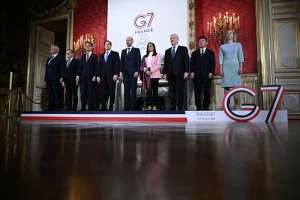
Ukraine's Foreign Minister Andriy Sybiga, Germany's Foreign Minister Johann Wadephul, Britain's Foreign Secretary Ed Miliband, US Secretary of State Marco Rubio, France's Foreign Affairs Minister Jean-Noel Barrot, Canada's Foreign Minister Anita Anand, Italy's Deputy Prime Minister and Foreign Minister Antonio Tajani, Japan's Foreign minister Toshimitsu Motegi and EU High Representative and Vice-President for Foreign Affairs and Security Policy Kaja Kallas pose for the family photograph during the G7 foreign ministers summit at the Quai d'Orsay in Paris, France, November 10, 2026.

The Group of Seven (G7) foreign ministers warned on Wednesday that they would continue coordinating economic and political pressure on Iran if diplomatic efforts failed to produce an agreement addressing Tehran's nuclear program and regional security concerns.

In a joint statement following their November 9–10 meeting in Paris, the ministers expressed support for regional mediators seeking a lasting diplomatic settlement while reiterating that Iran must never be allowed to develop or acquire a nuclear weapon.

"Absent a diplomatic solution, we committed to continuing our coordination to economically and politically constrain the Iranian regime's ability to sow instability in the region and around the world," the ministers said.

The foreign ministers of Canada, France, Germany, Italy, Japan, Britain and the United States, alongside the European Union's foreign policy chief, called on Tehran to resume full cooperation with the International Atomic Energy Agency (IAEA) to restore transparency over its nuclear activities.

They also reaffirmed their commitment to enforcing UN sanctions reinstated against Iran in September 2025 through the snapback mechanism and urged other UN member states to implement the measures.

G7 raises alarm over alleged Iranian plots abroad

The ministers expressed grave concern over Iran's alleged involvement in violent plots targeting citizens and territories of G7 countries, specifically citing a September incident at a British military air base used by US forces.

"We also expressed grave concern over Iranian involvement in violent plots against many of our citizens and territories," the statement said.

The ministers acknowledged Britain's attribution of Iranian involvement in a September 27 incident at RAF Fairford, an air base in Gloucestershire that has hosted US bombers.

"Iran should be in no doubt that we are united and remain committed to safeguarding our sovereignty," they said.

British counterterrorism police arrested several suspects following a security alert at RAF Fairford after reports of suspicious vehicles approaching the base.

Two British nationals were subsequently charged under Britain's National Security Act, including one accused of assisting a foreign intelligence service believed to be Iranian.

On November 10, the US Justice Department separately announced charges against three men over an alleged network linked to Iran's Islamic Revolutionary Guard Corps (IRGC) and implicated in attacks and attempted attacks in Europe and the United States, including the suspected RAF Fairford plot.

Iran has denied involvement, and the allegations have not been established in court.

Separately, US military aircraft were relocated from RAF Mildenhall, another British air base, amid security concerns.

The Associated Press reported Tuesday that 13 American aircraft, including aerial refueling tankers, had departed the base in eastern England for other military facilities in Europe.

A US official told AP the move was a precaution in response to a threat but did not identify its source. The Wall Street Journal reported that the threat was linked to Iran, citing people familiar with the matter.

There has been no public confirmation that the incidents involving the two bases were connected.

G7 rejects Iranian restrictions on Strait of Hormuz

The ministers strongly condemned Iranian attacks on neighboring countries and civilian vessels, as well as disruptions to international trade and energy supplies caused by restrictions on maritime traffic through the Strait of Hormuz.

They called on Tehran to cease attacks against commercial shipping and respect its obligations under international humanitarian law.

The G7 reaffirmed its opposition to "any tolls, fees, illegal costs, discriminations or any limitation imposed on maritime transit through the Strait."

The ministers also emphasized the importance of US Central Command's operations to clear naval mines and escort civilian vessels through the waterway.

They recognized a separate French-British initiative aimed at facilitating the resumption of commercial shipping, including by helping verify the removal of mines.

The statement underscored the importance of restoring safe and unrestricted passage through the strategic waterway, a major route for global energy exports that has faced severe disruption during the conflict involving Iran, the United States and Israel.

G7 demands end to Iranian support for armed groups and Russia

The ministers urged Tehran to stop supporting nonstate armed groups across the Middle East, specifically calling for an end to Iranian weapons supplies and other assistance to Yemen's Houthis.

They condemned continued Houthi strikes against Saudi Arabia, including attacks affecting civilians and infrastructure, and called for an immediate halt to military operations.

On Lebanon, the G7 reiterated that the disarmament of Hezbollah and other nonstate armed groups was essential to bringing all weapons under the authority of the Lebanese state.

The ministers also condemned Iran's military assistance to Russia in its war against Ukraine, alongside North Korean military support and Chinese supplies of weapons-related materials and equipment.

They said G7 members intended to continue taking action against countries enabling Russia's military campaign.