Trump hails defeat of Hegseth impeachment effort, touts Iran war victory
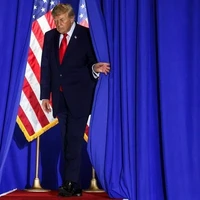
US President Donald Trump on Tuesday welcomed the failure of an effort to impeach Defense Secretary Pete Hegseth, describing US military operations in Iran and Venezuela as victories that helped secure his position.
“The Democrats’ attempt to impeach Secretary of War Pete Hegseth has miserably FAILED!” Trump wrote in a post on Truth Social.
Trump also called Republican Representative Thomas Massie, who introduced the impeachment effort, a “major LOSER.”
Trump also cited record military recruitment and high troop morale, calling Hegseth a “Great American Patriot.”
“The Democrats continue to weaponize and abuse the United States of America. They must be stopped! MAKE AMERICA GREAT AGAIN,” he added.
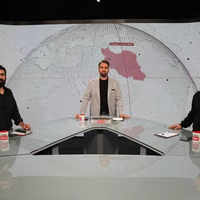
A discussion on Iran’s nuclear negotiations on the state television program Be Vaght-e Iran.
A discussion on Iranian state television signaled cautious openness to future nuclear talks with Washington, with a commentator describing flexibility over preliminary exchanges while insisting Tehran’s conditions for ending the war must first be met.
Vahid Khazab, introduced as a military and political analyst, said on the state broadcaster’s Be Vaght-e Iran (Iran Time) talk show on Monday night that a significant development amid mediation efforts was Tehran’s willingness to discuss its nuclear program through intermediaries.
His account suggested room for diplomacy, but did not amount to an official announcement of a change in Iran’s negotiating position.
Iran has insisted that Washington accept its seven demands and end the war before nuclear negotiations begin. Khazab described preliminary discussions through intermediaries as a sign of “flexibility.”
However, he said, those discussions were limited to determining the issues that could be addressed in future nuclear negotiations, once Iran’s initial conditions had been accepted and the war ended.
Proposed nuclear compromise
According to Khazab, Pakistan’s army chief, Field Marshal Asim Munir, has raised the possibility of allowing Iran to continue uranium enrichment at 3.67%. His account did not establish whether Washington had accepted that provision.
In exchange, the proposals include diluting Iran’s stockpile of uranium enriched to 60%, which Khazab put at 400 kilograms, or converting it into fuel rods for nuclear reactors.
The proposed arrangement would also include the release of part of Iran’s frozen assets, the return of International Atomic Energy Agency inspectors, and ultimately the reopening of the Strait of Hormuz, Khazab said.
Tehran would likely regard any US acceptance of enrichment inside Iran as a major concession, he said. However, it would seek to negotiate how its highly enriched uranium stockpile is diluted and how much nuclear material remains inside the country.
He added that some Iranian experts had suggested gradual dilution to preserve part of the country’s nuclear capabilities for the “future, post-Trump era.”
Parallel mediation efforts
Pakistan, China, Iraq, Turkey and Qatar have been pursuing diplomatic initiatives amid concerns about renewed US military strikes against Iran.
Nima Akbarkhani, also introduced as a military expert on the program, said people with what he described as “greater access” had told him that the scale of mediation efforts in recent days was unprecedented compared with previous initiatives.
China has been among the countries involved. Ali Bagheri-Kani, a deputy secretary of Iran’s Supreme National Security Council, traveled to China in early November and met with Beijing’s special envoy for Middle Eastern affairs, Zhai Jun.
Zhai subsequently traveled to Iran on November 8. According to Khazab, he met not only with Iranian Foreign Ministry officials but also with Parliament Speaker and chief negotiator Mohammad-Bagher Ghalibaf.
Iraq has also been involved. Iraqi Prime Minister Ali Faleh al-Zaydi traveled to Iran late last week on an unannounced visit.
Iran’s Tasnim News Agency, which is affiliated with the Revolutionary Guards, reported that al-Zaydi met with President Masoud Pezeshkian and Ghalibaf. However, the agency said he had not obtained what it described as “a result satisfactory to the United States.”
Turkey has also been seeking to facilitate an agreement through political contacts with Washington and Tehran.
According to remarks attributed to Turkish intelligence chief Ibrahim Kalin, President Recep Tayyip Erdogan spoke with Trump and expressed concern about renewed military attacks against Iran, urging him to refrain from further strikes.
Qatar, which has served as one of the main channels of communication between Tehran and Washington in recent months, is also attempting to bring the two sides back to negotiations.
Qatari Prime Minister Mohammed bin Abdulrahman Al Thani traveled to Washington on Monday and met with Trump and Vice President JD Vance.
Former Qatari prime minister and foreign minister Hamad bin Jassim Al Thani has also emphasized the need to resolve regional disputes.
Khazab interpreted his recent emphasis on cooperation to end Iran’s blockade as a possible shift in Qatar’s calculations under wartime conditions.
Iran denies plans for Vance-Rezaei meeting
Khazab also addressed reports that Mohsen Rezaei, secretary of Iran’s Supreme National Security Council, could meet Vance in Qatar next week.
The discussion followed reports on Monday citing Kalin as saying Qatar would host the US vice president and Iran’s security chief the following week. Türkiye newspaper carried the Turkish intelligence chief’s remarks.
In his Monday night comments, Khazab suggested that reports of a possible meeting were not necessarily false, interpreting Iranian denials as a rejection of the existence of a specific arrangement.
According to the analyst, whether a meeting could take place would depend on Washington announcing its acceptance of Iran’s seven initial conditions for ending the war and reopening the Strait of Hormuz.
Iranian Foreign Minister Abbas Araghchi dismissed reports of the meeting as “speculation and media fabrication” and described them as “baseless from the outset.”
“There are no plans for such a meeting,” he said.
Rezaei subsequently told Lebanon-based Al Mayadeen television in an interview on Tuesday that “the Americans’ claims about the continuation of negotiations or the holding of a meeting in Qatar are outright lies.”
He said the claims were being circulated solely to ease economic pressure and drive down oil prices.
Khazab’s argument for conditional engagement rested on Tehran’s distrust of Washington. He accused the United States of violating its commitments after an earlier agreement and memorandum of understanding, leading to renewed hostilities.
For that reason, he said, Iran did not want to enter another round of negotiations that might produce a temporary agreement followed by a return to war.
“We have no objection to negotiations, no objection to talking. But it must be done in a way that genuinely removes the threat of war,” Khazab said.
Iran's parliament is preparing to consider allowing a non-cleric to head the Intelligence Ministry for the first time, under a proposal that would also give the supreme leader direct appointment powers over two new bodies within the ministry.
Parliamentary presidium spokesman Abbas Goudarzi said Tuesday that an urgent bill removing the requirement of ijtihad, an advanced qualification in Islamic jurisprudence, would be placed on parliament's agenda next week, ISNA reported.
Under the proposal, two organizations responsible for "internal security" and "ideological affairs" would be established within the ministry. Their directors would be appointed by Supreme Leader Mojtaba Khamenei, while the intelligence minister would continue to be nominated by the president and approved by parliament.
Goudarzi described the two organizations as a substitute for the minister’s religious qualification.
He said the change would help resolve a vacancy lasting nearly eight months, following the killing of Intelligence Minister Esmail Khatib, a clerical figure, in an Israeli strike in March. The ministry has since been run by an acting minister whose identity has not been publicly disclosed.
Four decades of clerical intelligence chiefs
Since the ministry’s establishment in 1984, every permanent intelligence minister has been a cleric, under a law passed in 1983 requiring religious education equivalent to ijtihad.
Clerical leadership has not insulated the ministry from scandals over repression. Dissidents were assassinated inside Iran and abroad during Ali Fallahian’s tenure from 1989 to 1997. His successor, Ghorbanali Dorri Najafabadi, resigned in 1999 after the ministry acknowledged its agents’ involvement in the 1998 murders of dissidents and writers.
Control of the ministry has also brought presidents into conflict with the supreme leader. In 2011, President Mahmoud Ahmadinejad dismissed Intelligence Minister Heydar Moslehi, but Ali Khamenei ordered his reinstatement, demonstrating the limits of presidential authority over the ministry.
A broader selection process, new appointments
The proposal follows conflicting statements from lawmakers about whether the change had received committee approval.
Amir Hayat Moghadam, deputy chairman of parliament's National Security and Foreign Policy Committee, argued Saturday that the requirement had restricted the selection of qualified intelligence professionals.
Committee spokesman Hassan Qashqavi subsequently clarified that members had discussed the issue without formally approving legislation. But Hayat Moghadam claimed committee approval.
The latest proposal would widen the pool of potential ministers while establishing two senior positions filled directly by the supreme leader.
The proposal also comes after years of competition between the ministry and the Revolutionary Guards’ separate intelligence organization.
Whether the change would benefit career intelligence officers or open the position to figures from the Guards remains unclear. No candidate has been publicly identified, and the proposal still requires parliamentary approval and clearance by the Guardian Council.
Shahram Poursafi in the FBI's Most Wanted Terrorist list
The FBI on Tuesday added an Iranian Revolutionary Guard member accused of plotting to assassinate former US national security adviser John Bolton to its Most Wanted Terrorists list and released appeals for information on three alleged associates.
Shahram Poursafi, also known as Mehdi Rezayi, allegedly sought to arrange the killing on behalf of the Islamic Revolutionary Guard Corps’ Quds Force. The FBI said he solicited the murder of two former US government officials between October 2021 and April 2022.
The bureau also issued seeking information posters for Mohammad Reza Ansari, Abolfazl Alizadeh and Mohammad Hossein Shamoradizadeh, whom it linked to Iranian assassination planning.
“The FBI will not stand for the IRGC’s brazen attempts to silence, harm, or murder activists, dissidents, journalists, public officials, or anyone else it deems a threat,” said Gregory Heeb, special agent in charge of the Washington Field Office’s Counterterrorism Division.
The alleged Bolton plot
The Justice Department announced charges against Poursafi in August 2022, accusing him of offering $300,000 to have Bolton killed in Washington or Maryland, likely in retaliation for the January 2020 killing of Quds Force commander Qasem Soleimani.
Prosecutors said Poursafi initially asked a US resident he had met online to photograph Bolton, claiming the pictures were for a book. He subsequently negotiated the assassination with a confidential source working with US authorities. The charges include murder-for-hire and providing or attempting to provide material support to a transnational murder plot.
The State Department’s Rewards for Justice program is offering up to $20 million for information leading to Poursafi’s arrest or conviction. Its account says he used encrypted messaging applications to arrange the killing from Iran.
Quds Force network
The FBI described Ansari as a deputy in Unit 840, a Quds Force unit responsible for developing lethal operations, and said he had supported Iranian operations in Syria. With Poursafi’s assistance, Ansari allegedly planned and attempted to assassinate two former US officials.
Alizadeh and Shamoradizadeh are commanders in the Basij Imam Ali Battalion who have allegedly participated in lethal plotting, the bureau said. It identified Asghar Bagheri, who died in April 2026, as Unit 840’s former commander.
Iran International reported in December 2022, citing leaked documents, that Ansari led a failed operation targeting Bolton and former secretary of state Mike Pompeo. That report also identified Poursafi, Alizadeh and a commander named Mohammad Hossein Shahmoradi as members of Ansari’s team.
The US Treasury sanctioned Ansari and Poursafi in June 2023, accusing them of planning assassination attempts against two former US officials. Treasury said Ansari belonged to a Quds Force external operations unit targeting Iranian dissidents and other nationals in the United States, the Middle East, Europe and Africa.
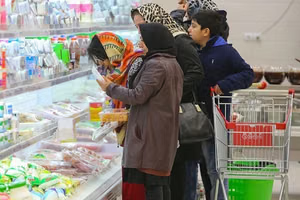
An Iranian man looks at a butcher shop window in Tehran, Iran, October 27, 2026.
A prolonged confrontation with Washington risks eroding Iran’s economy and impoverishing its people even without a sudden collapse, an Iranian economist warned, as Washington appears intent on maintaining economic pressure without renewed major combat operations.
In an interview with Shargh newspaper published Monday, Mohammad Tabibian, a former deputy director of Iran’s Planning and Budget Organization, questioned the strategy of measuring success through the country’s capacity to endure economic suffering.
His warning came as President Donald Trump said Monday that Qatar, Saudi Arabia, the UAE and other regional countries favored maintaining the “status quo,” which he described as the continuation of the US naval blockade and Operation Iron Gate, a new US task force to restrict Iran’s overland trade.
Trump also said US forces remained “locked and loaded,” keeping renewed military action an option.
Tabibian cautioned that Iran’s ability to adapt to sustained pressure did not mean an end to the damage.
“Adapting to sanctions does not mean eliminating their harm,” he said. Alternative trade routes, discounted sales, difficulties transferring money and uncertainty about the future continue to impose costs, reflected in reduced investment, declining productive capacity and weaker purchasing power.
The government’s ability to pay salaries was not, by itself, a measure of economic health, he argued. Payments could continue while their real value fell and families lost access to adequate food, healthcare, education or housing.
“A society can therefore gradually become poorer without experiencing a sudden halt to all economic activity,” he said.
“If investment declines in the meantime, human capital deteriorates and people suffer more, we cannot call the mere continuation of economic activity a success.”
Tabibian also cautioned that economic pressure would not necessarily produce Washington’s desired political outcome. Its effects would depend on decisions by both governments and the response of the economy and society, he said.
Mohammad Tabibian served under the administration of Ali Akbar Hashemi Rafsanjani as deputy director of the Planning and Budget Organization.
Who bears the cost of endurance?
Tabibian challenged Iranian authorities over decisions about the conflict and the economic burden imposed on society.
“My fundamental question is who bears responsibility for the decisive decisions about war and peace, and what mechanisms exist to hold them accountable? How can imposing this much pain and suffering on a nation be justified?” he said.
“People endure hardships within their homes that usually go unseen. There are families whose university-educated children remain unemployed at around age 40 and financially dependent on their parents. Many young people cannot establish independent lives. Retired parents, too, must support several people on limited incomes.”
He also rejected the assumption that disrupting the Strait of Hormuz and raising energy prices would necessarily force Washington to abandon its confrontation with Tehran.
“Why should we consider the suffering of our own people a success, simply in the hope that the other side suffers more?” Tabibian asked, arguing that government policies should instead be judged by their effects on people’s security and living standards.
He distinguished household resilience, government finances, the capacity to rebuild infrastructure and society’s political tolerance, warning against treating them as a single measure of national endurance.
The United States was better equipped to absorb economic shocks because of its large, diversified economy, financial resources and capacity for innovation, he said. Betting that higher energy prices or disruptions in the Strait of Hormuz would cripple the American economy or compel Washington to change course was therefore an unreliable strategy.
Washington backs economic pressure
Tabibian’s warning coincided with statements from US leaders favoring continued economic pressure without a resumption of large-scale combat operations.
Following a meeting with Qatar’s prime minister on Monday, President Donald Trump said several Arab governments favored keeping the present arrangements in place.
“Qatar, Saudi Arabia, UAE, Bahrain, Kuwait, and others, would prefer the status quo,” Trump wrote on Truth Social, describing that arrangement as the continuation of the US naval blockade and Operation Iron Gate, an initiative targeting weapons shipments and other illicit flows across Iran’s land borders and the Caspian Sea.
Secretary of State Marco Rubio made the economic argument more explicitly on Tuesday.
“The economic pain that is being inflicted on Iran right now is extraordinary, and it compounds. It’s growing every day,” Rubio told reporters in Paris.
“We don’t need to conduct military strikes if we’re achieving the same objective through economic means and economic pressure,” he added.
The economic campaign combines the naval blockade with sanctions against Iranian financial institutions, oil exports and businesses involved in sanctions evasion.
Reuters reported in September that three senior Iranian sources described Washington’s efforts to obstruct Iranian oil exports and access to international financial networks as increasingly difficult to withstand.
The sources warned that Tehran had fewer remaining avenues to obtain foreign currency and finance essential imports, raising concerns within the leadership about the consequences of a prolonged economic crisis.
The World Bank has also warned that the conflict, intensified sanctions and disruptions to trade are pushing Iran’s economy into a deeper contraction, with falling real incomes, weakened investment and growing poverty.
Economic grievances and the risk of renewed unrest
US intelligence officials and researchers have also examined the possible political consequences of prolonged economic pressure.
In March, Director of National Intelligence Tulsi Gabbard told Congress that sanctions and economic deterioration had contributed to the conditions behind Iran’s nationwide protests in January.
Iranian demonstrators gather in a street during nationwide protests, in Tehran, Iran, January 8, 2026.
She said US intelligence assessed that internal tensions were likely to increase as the Iranian economy worsened, even if the Islamic Republic remained in power.
A more recent study by Eric Lob, a political scientist at Florida International University and scholar at the Carnegie Endowment for International Peace, examined how economic grievances in Iran have repeatedly developed into broader political protests.
Published in October, his research argued that the war and US naval blockade had intensified the economic problems that initially drove those demonstrations, including inflation and currency depreciation.
He warned that prolonged deterioration would increase the likelihood of renewed social unrest, while the authorities’ reliance on repression could deepen the underlying grievances.
Tabibian, however, cautioned against assuming that economic suffering would automatically translate into political collapse. Political upheavals depended on the interaction of economic, institutional and social conditions, he said.
Nor could the timing, form or likelihood of protests be predicted simply from rising prices.
“Policymakers should not mistake people’s silence for satisfaction or an unlimited capacity to endure,” he said.
The limits of economic pressure
Other researchers have highlighted the risks of relying on prolonged pressure to constrain a government’s military capabilities or change its decisions.
In a November 2 assessment, Benjamin Jensen, director of the Futures Lab at the Center for Strategic and International Studies, examined possible US options ranging from continued pressure to attacks on military installations or sensitive nuclear facilities.
His assessment assumed that the existing sanctions and blockade would remain in place. Jensen described continued pressure as the lowest-risk option, but warned that Tehran could use the time to rearm, seek to divide Washington from its allies or launch attacks of its own.
He also cautioned that military gains did not guarantee sustained political results.
Tabibian said Iran might find ways to reduce the effects of some restrictions over time, but questioned the cost of doing so if investment declined and people endured further hardship.
He called for efforts to resolve disputes and reduce the risk of war, while cautioning that negotiations alone would not guarantee a solution. The outcome would depend on the decisions, conditions and actions of both sides.
“At the end of the tunnel of war and attrition, no clear light is visible for Iran or the United States,” he said.
Shoppers walk through a market in Iran, where rising living costs and shrinking purchasing power reflect the economic toll of 47 years of Islamic Republic rule.
Nearly 47 years after Iran's 1979 revolution, a former football chief has asked what Iranians got for its promises, pointing to officials’ children living abroad, oil wealth that never reached wages and a state that answered protests with bullets.
“You haven’t done anything for 47 years. All you talk about is dignity, dignity, dignity. What dignity?” Mohammad Dadkan, former president of Iran’s Football Federation, said in an interview on the Persian-language podcast Tak be Tak.
The cost of confronting US
"What would we have to talk about if it weren't for 'Death to America'? What would we use to keep people occupied?" Dadkan asked.
The slogan has been at the heart of the Islamic Republic’s identity since 1979, when students loyal to Ayatollah Khomeini seized the US embassy and held its diplomats hostage.
Decades of confrontation, and the dispute over the nuclear program, brought broad US sanctions on oil, banking and trade.
They have deterred investment and raised the cost of imports, and the state’s own mismanagement has done the rest. Iranian households live with high inflation, falling purchasing power and few jobs.
Officials call resistance to Washington the measure of national independence. Iranians have paid for it in prices.
Shoppers crowd a bazaar in Iran, where decades of economic hardship, rising prices and declining purchasing power have taken a toll on everyday life.
Privilege at home, children abroad
"What have you done other than fill your own pockets, send your children abroad and take all the privileges for yourselves?" Dadkan said.
The children of senior officials living in the countries their parents denounce have long drawn anger.
Fatemeh Ardeshir Larijani, daughter of Ali Larijani, the former secretary of the Supreme National Security Council killed in an Israeli strike in March, worked as a cancer specialist at Emory University in the United States until January, when Emory said her employment had ended after protests by Iranian Americans. A government spokesman said she had already returned to Iran.
Issa Hashemi is the son of Masoumeh Ebtekar, a former vice president who was spokeswoman for the students who seized the US embassy in 1979.
He lived in Los Angeles with his wife and son until April, when US immigration authorities detained the family and Secretary of State Marco Rubio revoked their permanent residency over their connection to Ebtekar.
For most Iranians, a falling currency and closing visa doors have made studying or settling abroad ever harder.
Oil wealth and shrinking wages
"We have stone, gold, oil, the best resources and an excellent geographical position for attracting tourists. We haven't done anything," Dadkan said.
Iran has some of the world’s largest oil and gas reserves. Its people have not seen the benefit.
Annual inflation reached 76.8 percent in October, according to the Statistical Center of Iran, and prices were 88.7 percent higher than a year earlier.
The dollar traded at about 2.63 million rials in November, against about 1.6 million in early April: the rial lost nearly 40 percent of its value in seven months.
The base minimum wage for the Iranian year that began in March was set at about 166 million rials a month. At today’s rate that is about $63.
'National dignity’
Dadkan also turned the officials’ favorite word back on them, pointing to Iranian women driven into prostitution in neighboring countries.
The US State Department’s 2019 Trafficking in Persons Report cited growing numbers of young Iranian women in prostitution in Dubai, some controlled by networks that took their passports and threatened violence, and possible links between traffickers and members of the police, the Revolutionary Guards and the Basij militia.
Its 2022 report identified Iranian women as vulnerable to sex trafficking in Turkey, especially near the border.
Resilience, salaries and missiles
"They've come up with something new, and apparently they all say the same thing," Dadkan said, criticizing officials' repeated use of the term resilience.
The Persian term tabavari, meaning resilience or the ability to withstand hardship, has increasingly featured in speeches by Iranian officials urging the public to cope with economic and social pressures.
Shoppers browse fresh produce at a market in Iran.
The appeals have come as households struggle with persistent inflation, declining purchasing power, electricity outages and water shortages. Power cuts have disrupted businesses and industrial production, while water shortages have affected daily life in several provinces.
Dadkan's criticism focused on the expectation that citizens should repeatedly adjust to worsening conditions, with officials emphasizing their capacity to endure hardship rather than explaining how the underlying problems would be addressed.
Dadkan also challenged demands for higher parliamentary salaries.
"Why should your salary get increased? What have you done?" he asked.
He contrasted lawmakers' benefits with the struggles of retirees who have repeatedly demonstrated for pensions that keep pace with inflation.
Military priorities drew similar criticism.
"You come on television in the morning and say the missiles' range should be increased. Why is that your concern? Go take care of people's lives, their welfare and their security," Dadkan said.
Iranian officials have made expanding the country's missile capabilities a priority, even as power cuts disrupt homes and factories, water shortages worsen and basic infrastructure falls into disrepair.
The right to protest
"Now tell those who don't agree with your policies to come out. See if you can contain the crowds. Then you'll find out whether people want you," Dadkan said.
His challenge followed years of anti-government demonstrations, including protests in 2017–18 and 2019, the Woman, Life, Freedom uprising of 2022 and the nationwide protests of January 2026.
The January crackdown, particularly the killings on January 8 and 9, became central to questions about the system's treatment of dissent.
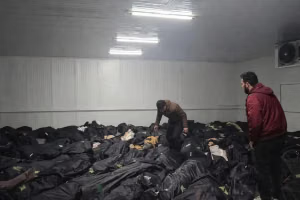
On January 25, Iran International's editorial board announced that more than 36,500 people had been killed during those two days, citing confidential security documents, field reports and testimony from medical workers, witnesses and victims' families.
One generation lived through revolution, war and one economic crisis after another. The next grew up with falling incomes and few prospects, and many left. Others buried relatives killed in the streets.
Forty-seven years is a chapter in a state’s history. For Iranians it is a lifetime of youth spent getting by, futures abandoned and families split by emigration or death. None of it can be given back.