• العربية
  • فارسی
BrandBrand
  • Iran Insight
  • Politics
  • Economy
  • Analysis
  • Special Report
  • Opinion
  • Podcast
  • Live TV
  • Iran Insight
  • Politics
  • Economy
  • Analysis
  • Special Report
  • Opinion
  • Podcast
  • Live TV
  • Theme
  • Language
    • العربية
    • فارسی
  • Iran Insight
  • Politics
  • Economy
  • Analysis
  • Special Report
  • Opinion
  • Podcast
  • Live TV
All rights reserved for Volant Media UK Limited
volant media logo
PODCAST

Netanyahu or not, the next move on Iran may be Trump's

Negar Mojtahedi
Negar Mojtahedi

Iran International

Nov 1, 2026, 01:59 GMT+0
FILE PHOTO: U.S. President Donald Trump points his finger towards Israeli Prime Minister Benjamin Netanyahu as they shake hands during a press conference after meeting at Trump’s Mar-a-Lago club in Palm Beach, Florida, U.S., December 29, 2025.

Some inside Iran may be focused on Benjamin Netanyahu's political survival after Israel's inconclusive election, but the most consequential decision about another war with Iran may be made in Washington rather than Israel, analysts say.

Netanyahu's promise to "finish the job" in Iran has offered a ray of hope to some Iranians seeking the end of the Islamic Republic.

But Middle East analysts speaking to Iran International's Eye for Iran podcast challenged the idea that Netanyahu's return is essential to further military action against Tehran, arguing that Israel's political divisions do not necessarily extend to its assessment of the Iranian threat.

Instead, they pointed to President Donald Trump's remaining time in office as a potentially decisive factor in whether Israel and the United States launch another round of strikes against Iran.

Dan Feferman, a Middle East researcher and co-founder of Middle East 24, cautioned against interpreting Israel's political divisions through the traditional American left-right framework.

‘No soft approach on Iran’

He argued that an Israeli government led by former military chief Gadi Eisenkot, particularly one involving former prime minister Naftali Bennett and Avigdor Lieberman, would not necessarily approach the Iranian threat significantly differently from Netanyahu.

The divisions between Israel's political camps extend well beyond Iran, encompassing disputes over Netanyahu's handling of the October 7, 2023, security failures, the subsequent wars and military service exemptions for ultra-Orthodox Israelis.

Alex Winston, news editor of The Jerusalem Post, offered a similar assessment, arguing that Netanyahu's principal rivals would not necessarily pursue a softer approach toward the Islamic Republic.

But Winston drew an important distinction between confronting the Islamic Republic militarily and assuming responsibility for overthrowing it.

He argued that most Israelis would prefer to support Iranians seeking political change rather than have Israel itself be seen as the country that brought down the Islamic Republic.

That distinction raises a fundamental question about Netanyahu's repeated promise to "finish the job" in Iran: does it mean further weakening the Islamic Republic's military capabilities, or actively pursuing its removal from power?

Why Trump may matter more

Feferman pointed to the remaining two years of Trump's presidency as a potentially decisive window for further military action.

A future American president, particularly a Democrat, would be far less likely to support or participate in additional strikes against Iran, Feferman argued.

Netanyahu appeared to reinforce that argument in his first address following the October 27 election, in which his Likud party emerged as the largest but neither his bloc nor the opposition secured a clear parliamentary majority.

"Iran is weaker than ever, Israel is stronger than ever," he declared. "Israel stands before a historic, once-in-a-lifetime opportunity, with our partner President Trump, to remove the existential threat from Iran once and for all."

The remarks placed Iran at the centre of Netanyahu's plans for another term, even as his path to forming a government remained uncertain.

Israel has its own security interests and military capabilities, but US political backing remains central to its leaders' calculations.

‘We want Bibi’

The Israeli election has nevertheless attracted considerable interest among Iranians hoping for the Islamic Republic's downfall.

Benjamin Basire, an Iranian-born Jewish political analyst living in the United States, said some had followed the vote as though it were their own, contacting him with messages expressing hope that Netanyahu would remain in power.

"We want Bibi. Bibi is our savior," he recalled them saying, adding that some feared Netanyahu's departure would extinguish their hopes of political change.

Netanyahu has already overseen two rounds of Israeli attacks on Iran, in 2025 and 2026, as well as operations that killed senior Iranian military commanders and severely weakened Hezbollah, Tehran's most powerful regional ally.

But with the prospect of another confrontation looming, the question is whether Israel will act again, and with what degree of American support.

Winston suggested that the prospect of renewed fighting was already shaping expectations in Israel, pointing to the approaching US midterm elections as a potential turning point.

"We're already preparing for war," he warned.

"We're ready. That's for sure."

Watch Eye for Iran on YouTube or listen on your favourite podcast platform.

Most Viewed

Iran court sentences 21-year-old protester to death
1

Iran court sentences 21-year-old protester to death

2

Vance offers to meet Iran's Rezaei for peace talks as Qatar renews mediation efforts

3

Tehran refuses to budge as diplomacy races against war

4
INSIGHT

Talks or resistance? Iran's factions differ over path out of crisis

5

UK maritime agency says small boat planted explosives on Hormuz tanker

Banner
Banner
Banner
Banner
Banner

Spotlight

  • Netanyahu or not, the next move on Iran may be Trump's
    PODCAST

    Netanyahu or not, the next move on Iran may be Trump's

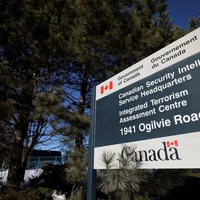
  • CSIS warns Iran-related activities targeting Canada likely to continue in 2026

    CSIS warns Iran-related activities targeting Canada likely to continue in 2026

  • Talks or resistance? Iran's factions differ over path out of crisis
    INSIGHT

    Talks or resistance? Iran's factions differ over path out of crisis

  • Tehran refuses to budge as diplomacy races against war

    Tehran refuses to budge as diplomacy races against war

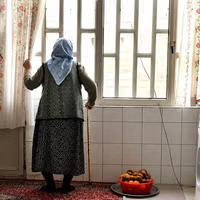
  • Growing old alone: The parents Iran’s emigrants left behind
    VOICES FROM IRAN

    Growing old alone: The parents Iran’s emigrants left behind

  • Behind Khamenei's call for peace, Tehran's unchanged demands
    OPINION

    Behind Khamenei's call for peace, Tehran's unchanged demands

  • Iran's Great Depression? Economists weigh Bessent's dire forecast
    ANALYSIS

    Iran's Great Depression? Economists weigh Bessent's dire forecast

•
•
•

More Stories

Iran says US tone shifts but demands still block talks

Oct 31, 2026, 23:26 GMT+0
100%
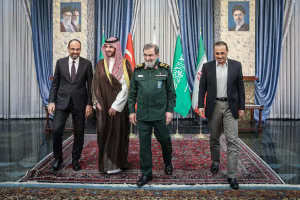
Iran's Supreme National Security Council Secretary Mohsen Rezaei, center right, attends a quadrilateral meeting with senior officials from Saudi Arabia, Pakistan and Turkey in Tehran, Iran, October 26, 2026. ISNA

Iran's Supreme National Security Council Secretary Mohsen Rezaei said Washington had changed its approach toward Tehran, but Iran would not enter negotiations or reopen the Strait of Hormuz until the United States met seven conditions intended to demonstrate a change in behavior.

In an interview with state television Saturday, Rezaei said diplomatic exchanges had been underway for more than a month and Washington had made three proposals, with Tehran now waiting for a US response to its latest position.

“We are now waiting for the Americans' response,” Rezaei said, adding that the Strait of Hormuz “cannot reopen unless Iran's seven conditions are met.”

The comments came as Iranian negotiators met Qatari mediators in Doha after more than 12 hours of talks between Iranian and Qatari officials in Tehran the previous day. The Qatari team has maintained regular contact with Washington during the discussions, Reuters reported, citing an official briefed on the negotiations.

US Secretary of State Marco Rubio said Saturday that President Donald Trump had not decided whether to resume military action and that Washington remained open to a diplomatic solution.

Foreign Minister Abbas Araghchi said there were no plans for direct talks with US officials and that consultations over Iran's conditions were continuing through mediators.

US and Iran remain divided over terms

Rezaei said Washington's first response was insufficient and its second proposal was more favorable, but said the United States intended to negotiate and then attack Iran again. A third proposal still contains ambiguities and remains under discussion, he said.

Washington wants Iran to make nuclear concessions as part of restarting talks, while Tehran is seeking measures including the lifting of the US naval blockade, the release of frozen Iranian funds and permission to sell oil before negotiations resume, Axios reported.

Reuters reported that Qatar had proposed a seven-day confidence-building plan that Iran considered inadequate. Iran's own proposal includes lifting the blockade, unfreezing assets and approving an Iranian-backed shipping route through the Strait of Hormuz.

Araghchi similarly tied progress toward negotiations to the Strait of Hormuz, saying Saturday that reopening it on Iran's terms could pave the way for talks with Washington.

Rezaei said Iran's seven conditions were intended to address ambiguities in an earlier Islamabad understanding, including the management of the Strait of Hormuz and the collection of fees.

Vance letter signals new US approach, Rezaei says

Washington's direct outreach to Rezaei has emerged as another channel in the effort to restart negotiations. US Vice President JD Vance sent him a letter at Trump's direction, the Wall Street Journal reported this week, citing US officials and people familiar with the matter.

Vance also offered to meet Rezaei personally to discuss a negotiated settlement, the Washington Post reported Thursday, citing a US official familiar with the negotiations. Istanbul or Doha would be the most likely venues if a meeting takes place, according to the report.

The Post reported that Vance's letter described Washington's central interest as ensuring Iran does not obtain a nuclear weapon and called for Tehran to provide representatives empowered to discuss nuclear issues.

The Trump administration views Rezaei, a former commander of the Revolutionary Guards, as the key point of contact in Tehran and as someone capable of building consensus behind an agreement to halt Iran's nuclear program, the Post reported.

Rezaei said Saturday that he had read the letter but had not responded, though he described its tone as markedly different from an earlier letter from Trump.

“The tone of the letter has completely changed,” he said.

Trump later said the outreach concerned efforts to help Iran obtain medical supplies.

Nuclear issue remains central to diplomacy

With Iran's nuclear program central to any potential negotiations, Rezaei said Tehran had made no decision to change its nuclear doctrine despite public calls for a shift following attacks on the country's nuclear facilities.

“There has been no new decision regarding a change in the nuclear doctrine,” he said.

Rezaei said Iran was a member of the Nuclear Non-Proliferation Treaty and would insist on what he described as its rights under the treaty in any future nuclear talks.

“If there are to be nuclear negotiations, we will demand our rights,” he said.

Rezaei also attacked International Atomic Energy Agency Director General Rafael Grossi, calling him a “mercenary and servant of the Zionist regime.”
He said Iran's nuclear facilities had undergone extensive inspections and asserted that there had been no diversion in its nuclear program.

He also warned of a severe Iranian response to renewed US military action.

Iran pushes regional security role

Beyond the negotiations with Washington, Rezaei portrayed Iran as seeking a broader role in shaping regional security, pointing to recent four-way talks in Tehran with senior Saudi, Turkish and Pakistani officials.

Rezaei said the visiting officials voiced strong concerns about Israel, including a warning from Saudi Defense Minister Khalid bin Salman that Israel could eventually target Saudi Arabia.

“Prince Khalid said that after you, Israel will go after Turkey, and then it will come after us, Saudi Arabia,” Rezaei said.

Rezaei said the three countries had requested the visit and that all four sides agreed to continue the meetings. “They spoke so firmly against Israel,” he said.

He said Turkish intelligence chief Ibrahim Kalin also raised concerns about Israel, while the Pakistani representative expressed concern about what Rezaei described as growing ties between Hindus and Jews directed against Muslims and Pakistan.

Rezaei said the talks covered the Mecca pact, Yemen and Syria, as well as Israel's presence in southern Lebanon and southern Syria and the situations in Gaza and the West Bank.

“We believe that foreign powers should leave the region and the countries of the region themselves should maintain their security,” Rezaei said.

'No geographic limits': Tehran projects readiness for all-out war

Oct 31, 2026, 16:33 GMT+0
100%
A graphic released by Supreme Leader Mojtaba Khamenei's official outlet depicts a missile with the phrase 'no geographic limits' written on it

As US-Iran diplomacy gains momentum through Qatari mediation, Tehran is seeking to project a willingness to wage a wider war with the United States and Israel, floating the prospect of retaliation without geographic limits.

Supreme Leader Mojtaba Khamenei and the country's top military commander issued warnings on Saturday of a wider response to any renewed attack, ordering an expansion of the list of potential American and Israeli targets.

The warnings came as Qatari and Pakistani mediators intensified efforts to broker an agreement between Tehran and Washington, while reports suggested President Donald Trump was considering renewed military action after Tuesday's US midterm elections.

In remarks published by Iranian state media following a meeting with senior military commanders, Khamenei called for "maximum deterrence," saying threats of any type or scale must be met with an "immediate and effective response without geographic limitations."

He also instructed commanders to update their list of potential targets to bring a wider range of American and Israeli assets, both physical and nonphysical, within reach of Iran's armed forces.

General Abdolrahim Abdollahi, chief of staff of Iran's armed forces, echoed the warning shortly afterward, saying the military was preparing a new list of targets across a broader geographic area and warning that Tehran's response to any attack would be "unimaginable" to its adversaries.

100%
File photo: People walk by a large banner depicting Iran's Supreme Leader Mojtaba Khamenei and his slain father, Ali Khamenei

The Wall Street Journal reported this week that Admiral Brad Cooper, the head of US Central Command, had briefed Trump on military options involving Iran.

The newspaper also reported that Washington had warned regional allies to prepare for the possibility of a short but intense resumption of fighting after the November 3 midterm elections.

Axios previously reported that the Pentagon had instructed Central Command to complete preparations for possible renewed combat operations.

The prospect of another round of war has alarmed regional powers.

Speaking at a security forum in Bahrain on Saturday, Saudi Vice Foreign Minister Waleed ElKhereiji said countries across the region wanted peace restored, although the outcome of mediation efforts remained uncertain.

Egyptian Foreign Minister Badr Abdelatty warned at the same event that another round of fighting would be "more dangerous, more destructive" and lead nowhere.

Iranian Foreign Minister Abbas Araghchi said Saturday that Tehran was reviewing proposals concerning its nuclear program and that an Iranian delegation had travelled to Qatar for further consultations.

He described an American effort to open dialogue as a "positive step," but said Iran had no immediate plans to meet US officials and that any resumption of negotiations would depend on Tehran's conditions being met.

Halloween gathering in Tehran ends in arrests and police crackdown

Oct 31, 2026, 10:34 GMT+0
100%

Iranian security forces and plainclothes officers broke up a Halloween gathering in central Tehran on Friday evening, beating and detaining people and forcing nearby cafes to close, witnesses told Iran International.

Young people wearing Halloween costumes and makeup had gathered on Iranshahr Street, near Tehran's Artists Park, when police blocked the road. Basij members and plainclothes security personnel then moved in to disperse the crowd.

Members of the Basij, a paramilitary force affiliated with Iran's Islamic Revolutionary Guard Corps (IRGC), and plainclothes security personnel then moved in to disperse the crowd.

An eyewitness said the operation extended beyond those celebrating Halloween, with families spending the evening in Artists Park also ordered to leave.

"It was like the protests. They were running after people and shouting, 'Disperse!'" the witness told Iran International.

The witness said officers ordered families to run and leave the area, describing the presence of Basij members, plainclothes personnel and pickup trucks.

Security forces arrest Halloween revelers, shut down Tehran cafes

The eyewitness said they saw people being arrested on Iranshahr Street.

Other information received by Iran International indicated that several people were beaten and cafes in the area were forced to close by security personnel.

The witness also reported seeing people carrying Islamic Republic flags in another part of the street.

The exact number of people detained and the extent of any injuries were not immediately clear.

  • Iran vows crackdown on Halloween citing cultural taint

    Iran vows crackdown on Halloween citing cultural taint

Authorities ban Halloween celebrations

The incident followed a directive from Iran's Chamber of Guilds, a national body overseeing trade associations, prohibiting Halloween celebrations in public venues and businesses.

The organization warned that cafes, restaurants and other hospitality establishments could face closure and legal action for hosting or even advertising Halloween events.

It said the restrictions were intended to protect the country's "cultural, religious and social values."

Iranian authorities have repeatedly sought to restrict Halloween celebrations, which have become increasingly popular among younger Iranians despite official opposition to what authorities regard as Western cultural influences.

In October last year, the Chamber of Guilds issued a similar ban covering Halloween-themed gatherings, advertising and merchandise, warning that businesses violating the rules could be shut down and their managers referred to judicial authorities.

Halloween crackdown extends to other cities

Authorities also took action against Halloween celebrations in Yazd and Qazvin provinces.

In Yazd, provincial prosecutor Mehdi Hassanpour said organizers of Halloween events in Yazd and Ardakan had been summoned for questioning and a venue had been sealed.

He said the measures followed public complaints about women appearing without mandatory hijab and men and women attending a party together, according to the judiciary's provincial public relations office, cited by Didban Iran.

In Qazvin, police said on Saturday that 19 businesses had been identified and shut down as part of a campaign against Halloween celebrations, according to the state-run IRNA news agency.

Reza Esmailpour, head of the provincial police department overseeing public businesses, said the establishments had published Halloween-related images and promotional material.

He said authorities had also initiated legal proceedings against those involved as part of efforts to prevent the spread of what police described as Western culture and lifestyles.

Iranian outlet questions crackdown on Halloween

The security operation also drew criticism in Iranian media.

In a Friday article titled "The government's battle with the pumpkin," Iranian news website Rouydad24 questioned the authorities' approach to young people's cultural choices.

"What is the benefit of a security crackdown on people's lifestyles?" the outlet asked.

It described the restrictions on Halloween celebrations as part of a broader policy of confronting the cultural preferences of younger Iranians.

"Despite years of threats, warnings and business closures, this celebration remains popular among the younger generation," Rouydad24 wrote.

The outlet said the continued popularity of Halloween reflected a cultural divide that prohibitions and police action had failed to close.

The latest incident comes amid tighter enforcement of social restrictions in Iran, including rules governing dress and public gatherings, as the country faces the economic and political pressures of the ongoing war with the United States.

Arab states demand response from Iran as fears of wider war dominate Bahrain summit

Oct 31, 2026, 09:45 GMT+0
100%
Jasem Mohamed Al Budaiwi, Secretary General, Gulf Cooperation Council.

Arab states remain open to negotiations with Iran but need a reciprocal response from Tehran, the head of the Gulf Cooperation Council (GCC) said on Saturday, as senior regional officials warned of a more destructive phase of the US-Iran war.

The warnings came at the 22nd IISS Manama Dialogue in Bahrain, where ministers from Egypt, Saudi Arabia, Britain, Syria and Yemen addressed Iranian attacks, Houthi operations and the growing risks to regional security.

"The GCC states have always called for dialogue and negotiation to resolve any issue in the region, and they still do," GCC Secretary General Jasem Mohamed Al Budaiwi said.

He said the six-member bloc maintained open channels with Iran alongside its partnerships with Western powers, China, Russia and other countries.

"In a region of widening divides, this ability to talk to all sides is one of the few assets left," he said.

"But diplomacy needs partners, partners who respond in kind."

Egypt warns next round of war could be more destructive

Egyptian Foreign Minister Badr Abdelatty expressed concern about renewed fighting between Washington and Tehran, warning that another escalation could have wider consequences.

"The second round will be more dangerous, more destructive, and it will lead to nowhere. We have to draw lessons from the past," Abdelatty said, according to Reuters.

He also warned that military action could unleash consequences beyond the control of those who initiated it.

"A war can begin with a unilateral decision, but no one can unilaterally control its consequences or stop it," he told the conference.

Abdelatty called for diplomatic channels, confidence-building measures and regional participation in security arrangements, warning against repeating what he described as mistakes during negotiations over the 2015 Iran nuclear agreement.

"Deterrence without diplomacy may postpone war, but cannot prevent it," he said.

Strait of Hormuz and Bab el-Mandeb emerge as major concerns

Al Budaiwi called for navigation through the Strait of Hormuz to return to conditions before February 28, when the US-Iran war began.

He said Iranian attacks on GCC member states had caused casualties and damaged civilian and critical infrastructure, while disruptions to the strait had affected energy prices, shipping, insurance and global supply chains.

"The GCC states were not a party to the war and did not seek it," he said.

  • Tehran summit divides Iranian hardliners over Yemen and US talks

    Tehran summit divides Iranian hardliners over Yemen and US talks

  • Iran hardliners split over role of mediators in US tensions

    Iran hardliners split over role of mediators in US tensions

Saudi Vice Foreign Minister Waleed Elkhereiji also warned about threats to international trade through the Strait of Hormuz, the Red Sea and Bab el-Mandeb.

"Securing navigation in the Red Sea and the Straits of Bab el Mandeb and Hormuz is a shared responsibility that requires regional and international cooperation based on the respect of international law," he said.

He condemned renewed Houthi attacks on Saudi Arabia and threats to commercial shipping, accusing the group of undermining diplomatic efforts to end the Yemen conflict.

Yemen points to Iranian support for Houthis

Yemeni Foreign Minister Afrah al-Zouba directly linked regional maritime threats to outside support for the Houthis.

"The UN panel of experts on Yemen has shown that all the support being given to the Houthis from Iran, from Iraqi armed groups and Hezbollah has been proven," she said, citing findings she attributed to UN experts.

Al-Zouba called for efforts to stop weapons and financing reaching the group, warning of its connections with other armed organizations.

She also cited information received in 2025 about cooperation between the Houthis and Somalia's al-Shabab militant group involving weapons and training.

"Coastal security starts with security on land and the protection of civilians," she said, arguing that restoring Yemeni state authority was essential to protecting maritime routes.

  • Iran turns on Pakistan as Saudi defense pact takes effect

    Iran turns on Pakistan as Saudi defense pact takes effect

  • Iran's rhetoric against UAE hardens after Netanyahu visit

    Iran's rhetoric against UAE hardens after Netanyahu visit

Britain pledges military support alongside diplomacy

British Middle East Minister Stephen Doughty said the UK had deployed air defense equipment and personnel to Saudi Arabia to help protect against missiles and drones following renewed Houthi attacks.

He said British forces had also flown defensive missions over Qatar, Bahrain, Jordan and the UAE during Iranian attacks and provided air defense support to Bahrain and Kuwait.

"We are clear and united in understanding the threat that is posed by Iran and the very serious threats from Iran and its proxies," Doughty said.

He reiterated Britain's opposition to Iran acquiring nuclear weapons while promising continued diplomatic engagement.

"We must strain every sinew for peace," he said, adding that Britain would support threatened partners "with actions and not just words."

Syria condemns attacks on Arab countries

Syrian Foreign Minister Asaad al-Shaibani also condemned missile and drone attacks on regional states, pledging support for Bahrain, Saudi Arabia, Qatar, Oman and Jordan.

"We are against using Syria to threaten the neighboring countries," he said.

Al-Shaibani said Damascus was working to consolidate state control over weapons and strengthen cooperation with neighboring countries.

The remarks reflected a common theme at the conference: calls for diplomacy with Iran alongside demands for stronger defenses, an end to attacks on Arab countries and restored freedom of navigation.

Al Budaiwi said the GCC's offer of regional cooperation remained open.

"This invitation still stands for those who answer it with action," he said.

Talks or resistance? Iran's factions differ over path out of crisis

Oct 30, 2026, 20:22 GMT+0
•
Maryam Sinaiee
100%
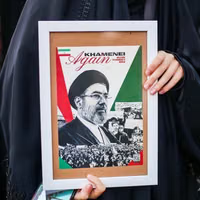
A participant holds a framed poster of Supreme Leader Mojtaba Khamenei at a rally of student supporters in Tabriz, northwestern Iran, October 30, 2026

Divisions within Iran's political establishment over how to end the country's prolonged state of neither war nor peace are coming into sharper focus as mediators race to secure an agreement with Washington amid preparations for possible renewed US-Israeli strikes.

Qatari mediators held talks in Tehran for at least 12 hours on Friday while maintaining contact with the White House, Axios reported. The diplomatic push comes amid reports that Washington and Israel are preparing for possible military action after next week's US midterm elections.

The competing approaches have emerged in the wake of Supreme Leader Mojtaba Khamenei's call to end the impasse.

According to an official account of a meeting with Supreme National Security Council Secretary Mohsen Rezaei, reportedly held on October 27, Khamenei called for an end to the war and the current uncertainty, while insisting that Iran's conditions for an agreement be met.

Advocates of diplomacy have seized on his remarks to press for renewed negotiations with Washington, while conservatives emphasise military deterrence, economic resilience and maintaining Tehran's demands. The disagreement is less about whether to negotiate than the terms on which Iran should do so.

President Masoud Pezeshkian, who has repeatedly warned about the economic consequences of prolonged uncertainty, pledged a day after the account was published to fulfil Khamenei's instructions.

"You cannot plan in a state of indecision," Pezeshkian said on October 24, recalling that the late supreme leader Ali Khamenei had also called for an end to the impasse.

"But I still believe we should go [to negotiations] and move beyond the neither-war-nor-peace situation," he added.

Advocates of diplomacy seek a way out

Reformist and moderate politicians have argued that prolonged uncertainty is discouraging investment, delaying economic decisions and deepening public anxiety.

Mohammad Ali Abtahi, a former vice-president under Mohammad Khatami, has advocated "dignified negotiations", while former lawmaker Mansour Haghighatpour, a moderate conservative close to Ali Larijani, said Iran faced a choice between renewed war and an agreement.

"National interests dictate that we choose a path through which we can achieve our objectives with the least possible cost and damage," Haghighatpour told Donya-e Eqtesad, urging Washington to return to negotiations in Islamabad.

Javad Youneszadeh, a member of Pezeshkian's media team, went further, arguing that negotiations were compatible with the supreme leader's emphasis on resistance rather than a retreat from it.

In a commentary published on the president's website, he said both Ali Khamenei and his successor had authorised talks with Washington despite what he described as repeated American breaches of commitments.

"The Islamic Republic of Iran still wants to return to the Islamabad memorandum of understanding, even assuming that the enemy has disrupted everything," he wrote.

Former Iranian diplomat Kourosh Ahmadi also urged de-escalation, warning that refusing to show flexibility could lead to renewed fighting, a prolonged naval blockade and further economic pressure.

Conservatives emphasise deterrence and resistance

Conservatives and hardliners, meanwhile, have interpreted Khamenei's remarks as a call to strengthen Iran's position rather than soften its demands, arguing that ending the uncertainty requires military preparedness and economic resilience alongside diplomacy.

Fada-Hossein Maleki, a hardline member of parliament's National Security and Foreign Policy Committee, told the newspaper Iran that resolving the impasse required a new strategic framework involving the government, parliament and armed forces.

He said the framework should strengthen Iran's defence capabilities, address economic problems and prepare the country for both negotiations and military confrontation.

Maleki stressed that Khamenei's call should not be taken as a signal that Tehran was moving towards war or was prepared to accept peace at any price.

Conservative political activist Alireza Khojastehpour similarly told IRNA that stronger military deterrence could help translate Iran's battlefield achievements into diplomatic gains while reducing the economic costs of prolonged uncertainty.

The Mehr news agency also called for preparations to withstand sustained external pressure, citing warnings from Pezeshkian and Rezaei about the economic consequences of a prolonged blockade.

"From these statements, it can be understood that the country's decision-makers are planning economically and militarily to resist external pressure," Mehr wrote, while acknowledging the costs imposed on Iranian households.

The competing interpretations suggest that Khamenei's call to end the impasse has done little to resolve the underlying disagreement over how to achieve it. While advocates of diplomacy see negotiations as a way to ease economic pressure, conservatives emphasise deterrence and resistance, leaving unanswered the question of what Tehran is prepared to concede, if anything, to secure an agreement.