• العربية
  • فارسی
BrandBrand
  • Iran Insight
  • Politics
  • Economy
  • Analysis
  • Special Report
  • Opinion
  • Podcast
  • Live TV
  • Iran Insight
  • Politics
  • Economy
  • Analysis
  • Special Report
  • Opinion
  • Podcast
  • Live TV
  • Theme
  • Language
    • العربية
    • فارسی
  • Iran Insight
  • Politics
  • Economy
  • Analysis
  • Special Report
  • Opinion
  • Podcast
  • Live TV
All rights reserved for Volant Media UK Limited
volant media logo

Pahlavi tells Europe to stop appeasing Tehran after two more protesters hanged

Nov 3, 2026, 10:43 GMT+0
Iran's exiled prince Reza Pahlavi

Iran's exiled prince Reza Pahlavi called on European governments to end what he described as appeasement of Tehran as he arrived in Brussels on Tuesday, after two men arrested during January protests in Isfahan were executed.

“As I arrive in Brussels, the capital of Europe, to meet with its leaders, the criminal regime in Iran has murdered two more protesters from the January 8 and 9 protests. Amirhossein Ebrahimi and Amirhossein Maleki were put to death this morning, killed by the Islamic Republic, for the crime of wanting to be free,” he wrote on X.

“I am in Brussels with a clear message: the era of appeasement must end. Appeasement means more dead, innocent Iranians. Now is the time for moral courage and strategic clarity. Now is time to help the Iranian people end this reign of terror,” he added.

Pahlavi’s communications office described the executions, which took place at dawn in Isfahan, as killings intended to spread fear and said those who ordered and carried them out would be held accountable.

Iranian authorities said the men had been armed and that the Supreme Court had upheld their death sentences. Rights groups have raised concerns about due process in the broader case, including allegations of torture and forced confessions among defendants.

Pahlavi’s office said he would meet senior European Parliament members, Belgian ministers and lawmakers, and deliver a speech at the Belgian Military Academy hosted by the defense minister.

His agenda includes urging stronger diplomatic and economic measures against Tehran and support for Iranians, including preserving internet access.

On Wednesday, he is scheduled to hold a press conference at the European Parliament with Vice President François-Xavier Bellamy and relatives of victims of January’s protests.

In Frankfurt on November 7, he is due to receive the Friedrich Naumann Foundation Freedom Prize on behalf of the Iranian people.

  • Two more men hanged in protest case in Iran

    Two more men hanged in protest case in Iran

Most Viewed

Arab states warn Iran of individual, collective retaliation over attacks - WSJ
1

Arab states warn Iran of individual, collective retaliation over attacks - WSJ

2

Iran’s nuclear bomb debate gains ground on official platforms

3

Netanyahu pressing Trump to strike Iran immediately after midterms - Axios

4

Israel denies pressing Trump for Iran strikes amid diplomatic push

5

Qatar turns to US LNG to cushion Iran war losses

Banner
Banner

Editors' Pick

  • Iran says US tone shifts but demands still block talks

    Iran says US tone shifts but demands still block talks

  • Halloween gathering in Tehran ends in arrests and police crackdown

    Halloween gathering in Tehran ends in arrests and police crackdown

  • Netanyahu or Eisenkot? Tehran sees little difference on war
    INSIGHT

    Netanyahu or Eisenkot? Tehran sees little difference on war

Banner
Banner
Banner
Banner

Spotlight

  • Tehran denies Ghalibaf sidelined as Rezaei's role grows

    Tehran denies Ghalibaf sidelined as Rezaei's role grows

  • Qatar turns to US LNG to cushion Iran war losses

    Qatar turns to US LNG to cushion Iran war losses

  • Mohsen Rezaei’s negotiating calculus: someone else always pays the price
    ANALYSIS

    Mohsen Rezaei’s negotiating calculus: someone else always pays the price

  • Iran’s nuclear bomb debate gains ground on official platforms

    Iran’s nuclear bomb debate gains ground on official platforms

  • Residents describe struggle to afford basic needs as Iran inflation hits 88.7%
    VOICES FROM IRAN

    Residents describe struggle to afford basic needs as Iran inflation hits 88.7%

  • Netanyahu or not, the next move on Iran may be Trump's
    PODCAST

    Netanyahu or not, the next move on Iran may be Trump's

  • New Baha'i memoir recounts life inside Iran's prisons

    New Baha'i memoir recounts life inside Iran's prisons

•
•
•

More Stories

How far would Russia and China go to save the Islamic Republic?

Nov 3, 2026, 10:15 GMT+0
•
Negar Mojtahedi
100%
Russian President Vladimir Putin and Chinese President Xi Jinping attend a reception at the Kremlin in Moscow, Russia March 21, 2023.

Putin’s rare call to Iran’s security chief and a state TV commentator’s account of Chinese preparations for the Islamic Republic’s possible collapse raise a question about Tehran’s most powerful partners: how far would Moscow and Beijing go to ensure its survival?

Iranian state media said Putin’s conversation with Mohsen Rezaei, secretary of the Supreme National Security Council, covered regional developments and continued strategic cooperation. No new military commitments were announced.

The call came days after the Wall Street Journal reported that US Vice President JD Vance had reached out to Rezaei to revive negotiations, which may explain why Putin wanted to speak to him directly.

Two days earlier, on Saturday, Rouhollah Amin Saeedi, a political analyst, told viewers of Iran’s state broadcaster that Chinese officials had believed the Islamic Republic was close to collapse during the January protests, and that diplomats at China’s embassy in Tehran had prepared for that possibility. Neither China nor Russia wants Iran to have nuclear weapons, he added.

China buys most of the oil Iran sells abroad and signed a 25-year cooperation agreement with Tehran in 2021. Moscow’s ties run through security, and through Rezaei.

Why Putin called Rezaei

The protocol was unusual. Putin normally speaks to presidents, not security chiefs. Alex Vatanka, a senior fellow at the Middle East Institute, said the call could reflect Rezaei’s growing weight in Iran’s leadership, including his rivalry with Parliament Speaker Mohammad Bagher Ghalibaf over who handles talks with Washington.

  • Tehran denies Ghalibaf sidelined as Rezaei's role grows

    Tehran denies Ghalibaf sidelined as Rezaei's role grows

Tanya Lukyanova, an associate producer at CBS’s 60 Minutes who covers Russia, suggested that Putin may see Rezaei, with his reported line to the Trump administration, as useful in his own negotiations over ending the war in Ukraine on Moscow’s terms.

The two countries have traded heavily in war. Iran supplied Russia with drones and the technology to build them for use in Ukraine; Moscow has been reported to give Tehran intelligence and military help in its war with the United States.

But Vatanka cautioned against reading the call as a promise of more. Moscow will help Tehran, he said, as long as it does not risk a direct confrontation with the United States.

A nuclear Iran or no Islamic Republic

The conventional wisdom is that Russia and China do not want Iran to have a bomb. Vatanka said that may no longer hold.

“That’s the conventional wisdom that they don’t want Iran to become a nuclear weapon state,” he told Iran International. Moscow’s confrontation with Washington has changed the calculation.

“If they had to choose between an Islamic Republic that’s nuclear armed versus an Islamic Republic gone and replaced with a pro-US, pro-Western entity, they’d rather have this regime with a nuclear weapon,” he said.

Ilan Berman, senior vice president of the American Foreign Policy Council, said the Kremlin benefits from leaving the nuclear question unresolved. An Islamic Republic that keeps challenging Washington and the region pulls American attention and weapons away from Ukraine, which serves Moscow without Iran having to cross the threshold.

Russia’s growing role

The call followed Russian Foreign Minister Sergei Lavrov’s visit to Tehran this month and President Masoud Pezeshkian’s meeting with Putin in Moscow.

In an analysis published on Monday by Chatham House, Aniseh Bassiri Tabrizi argued that the war has changed how Tehran sees Russia. Once regarded by some Iranian officials as an unreliable partner, Moscow is now seen as essential to Iran’s military survival, its reconstruction and its future deterrence.

Russia has been reported to supply satellite imagery, targeting intelligence and military components, and its expertise could help Iran rebuild its air defenses and missile sites.

Berman also pointed to reports that Russian intelligence has helped the Houthis in their attacks on Saudi targets, as a sign that Moscow is willing to support Tehran’s allies too.

That help comes at a price. In an analysis published on Sunday in Lawfare, Carol R. Saivetz of MIT and Kimberly Marten of Barnard College argued that Moscow has gained from higher oil prices and from American air defenses being diverted from Ukraine, but that backing Tehran puts its relations with Saudi Arabia and other Persian Gulf states at risk. They described the partnership as one built on wartime advantage, not lasting trust or binding commitments.

Support without guarantees

None of this means Moscow would rescue Tehran if it faced collapse.

Saivetz and Marten identified several developments that could lead Putin to cut his support: a deal that reopens the Strait of Hormuz, an Iranian military or economic collapse, or a ceasefire in Ukraine on terms he likes. Bassiri Tabrizi argued, by contrast, that Russian military cooperation could become a lasting part of Iran’s security as it rebuilds.

On Monday Moscow again stressed diplomacy, with Foreign Ministry spokeswoman Maria Zakharova calling for greater efforts to end the conflict.

The picture is lopsided. The Islamic Republic increasingly depends on Russia for its security; Russia keeps the freedom to decide how much support serves its own interests. And by the account of a commentator on Iran’s own state television, China was already planning for the day it would no longer be there.

Putin may prefer the Islamic Republic to survive, and may profit from its confrontation with Washington. Preserving it at any cost is a different calculation.

Iran’s war threats now reach Europe, from Cyprus to Britain

Nov 3, 2026, 09:56 GMT+0
100%
Missiles are displayed beside a large portrait of Iran's Supreme Leader Mojtaba Khamenei and images of military figures on a street in Tehran, Iran.

Iranian military officials and hardline lawmakers have warned that a new confrontation with the United States could extend beyond the Middle East, while conservative media have begun identifying American military facilities in Europe as potential targets.

The warnings follow a statement attributed to Supreme Leader Mojtaba Khamenei on Saturday, ordering Iran's armed forces to prepare for retaliation without geographic restrictions and expand their list of potential US and Israeli targets.

The hardline daily Kayhan went further, arguing that American and NATO facilities "in the heart of Europe" could be targeted if US and Israeli attacks on Iran resume.

The newspaper named military facilities in Cyprus, Greece, Romania, Albania, Italy and Britain, as well as the joint US-British base on Diego Garcia in the Indian Ocean.

Military commanders signal broader reach

Iran's Army spokesman, Mohammad Akraminia, said renewed fighting could spread beyond the countries and territories involved in previous rounds of the war.

"In the recent war, the conflict extended from the occupied territories to US bases in regional countries, but if another attack takes place, the geography of the war could expand beyond West Asia," he said.

  • Netanyahu pressing Trump to strike Iran immediately after midterms - Axios

    Netanyahu pressing Trump to strike Iran immediately after midterms - Axios

  • Iran sends conflicting signals on US deal as Trump raises prospect of strikes

    Iran sends conflicting signals on US deal as Trump raises prospect of strikes

  • Netanyahu or not, the next move on Iran may be Trump's

    Netanyahu or not, the next move on Iran may be Trump's

He added that Iran was updating its list of potential US and Israeli targets.

A senior Basij commander, Ghassem Ghorayshi, also said Iran's armed forces would no longer be bound by previous limits on missile range, target selection or the scale of operations.

"In the past, target selection and missile ranges were restricted," he said, attributing those limits to decisions made under former Supreme Leader Ali Khamenei.

"From now on, the armed forces will have no restrictions on striking targets, determining missile range or the scale of missile operations," he added.

The remarks do not by themselves establish that Iran has developed new long-range missiles or formally changed its military doctrine.

Iranian newspapers identify European bases

A separate report in the newspaper Hamshahri also raised the possibility of targeting American military infrastructure in Europe, including air bases, logistics centers and support facilities.

The newspaper cited speculation that Iranian missiles could reach targets 4,000 to 5,000 kilometers away, significantly beyond the roughly 2,000-kilometer range Iran previously described as a self-imposed limit.

However, those longer-range estimates remain disputed, and the ability to extend a missile's theoretical range does not necessarily establish its accuracy, payload or operational effectiveness.

The reports reflect a broader shift in Iranian rhetoric toward threatening American military infrastructure outside the Middle East.

Western defense experts have offered more cautious assessments of Iran's long-range strike capabilities. The Washington-based Center for Strategic and International Studies lists Iran's principal ballistic missiles with ranges generally around 2,000 kilometers, with some variants potentially reaching 3,000 kilometers.

Britain’s Royal United Services Institute has said strikes as far as the UK may be theoretically possible, but would involve smaller, less accurate warheads traveling through defended airspace.

  • Arab states warn Iran of individual, collective retaliation over attacks - WSJ

    Arab states warn Iran of individual, collective retaliation over attacks - WSJ

  • Iran’s nuclear bomb debate gains ground on official platforms

    Iran’s nuclear bomb debate gains ground on official platforms

  • Iran rejects nuclear talks despite ongoing mediation with US

    Iran rejects nuclear talks despite ongoing mediation with US

Lawmakers warn of wider conflict

Hassan Ghashghavi, spokesperson for parliament's National Security and Foreign Policy Committee, warned that renewed fighting could spread far beyond the countries already affected by the war.

"I don't want to use the term World War III, but the geography of the war would be almost on the scale of World War III," he told Iranian media.

He said another conflict would be considerably wider than the previous 12-day and 40-day rounds of fighting.

Ghashghavi also suggested that Iranian retaliation could affect civilian infrastructure and everyday life in countries involved in attacks on Iran.

"If they leave your people in darkness, you should leave their people in darkness too," he said.

In another warning, Tehran lawmaker Kamran Ghazanfari said Iran could retaliate against US assets in Europe and potentially on American territory if Washington used military bases in Arab states to attack Iran.

Ghazanfari also speculated that Iran might already possess nuclear weapons, without providing evidence. Tehran has not officially announced that it possesses a nuclear weapon.

Tehran links warnings to negotiating demands

The military warnings have come alongside renewed Iranian demands in negotiations aimed at ending the war.

Parliament Speaker Mohammad Bagher Ghalibaf said Tehran had delivered a "firm and rational response" to Washington and that "the ball is now in America's court" to prevent renewed fighting.

Iran's armed forces chief, Ali Abdollahi, separately outlined five conditions for lasting regional security: an end to fighting on all fronts, particularly in Lebanon and Gaza; the lifting of sanctions and release of frozen assets; war reparations; recognition of Iranian authority over the Strait of Hormuz; and guarantees against renewed attacks under a new regional security framework.

The demands come amid diplomatic efforts involving Qatar and other mediators, although a senior Iranian official told Reuters on Tuesday that Tehran and Washington remained far from an agreement.

Two more men hanged in protest case in Iran

Nov 3, 2026, 05:46 GMT+0
100%

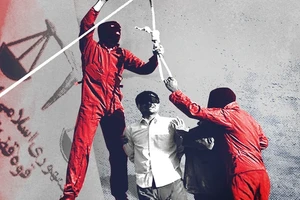
Amirhossein Maleki and Amirhossein Ebrahimi were hanged in connection with January protests in Isfahan, Iranian authorities said on Tuesday.

Mizan, the judiciary-linked news agency, alleged that the protesters had been armed and that the Supreme Court had upheld their death sentences.

The men are among 12 defendants sentenced to death in the Alikhani Square case. The case stems from protests in Isfahan on January 8, during which Iranian authorities accused defendants of involvement in the deaths of four security personnel, weapons offenses, destruction of property and arson.

Seven other defendants in the case, including two Afghan nationals, have been executed since July 19, Iran Human Rights said. Among them were Alireza Raisi and Alireza Sepahi, who were put to death on October 5.

UN Special Rapporteur Mai Sato highlighted the case during an October 28 address to the UN General Assembly’s Third Committee as an example of Iran’s mass trials of protesters.

  • Three Iran protesters face imminent execution after final family visits

    Three Iran protesters face imminent execution after final family visits

Shahrzad Shahbazi, a lawyer representing defendants in the case, has previously disputed the official account, saying none had formally been charged with murder and the alleged killings had not been tried.

Iranian authorities have long used broadly worded charges such as espionage, acting against national security, armed rebellion, enmity against God and corruption on earth to crush dissent and remove political opponents.

Human rights organizations say these labels are routinely applied to protesters, dissidents and political prisoners to portray them as security threats and provide a legal pretext for execution.

  • UN’s Mai Sato details executions, mass trials in Iran crackdown

    UN’s Mai Sato details executions, mass trials in Iran crackdown

Amnesty International, Human Rights Watch and UN experts have documented repeated cases in which such convictions were issued by revolutionary courts after grossly unfair or highly expedited proceedings, with defendants denied meaningful access to lawyers and verdicts based on torture-tainted forced confessions.

Rights groups therefore describe many executions carried out under these charges as arbitrary and politically motivated, warning that the authorities’ allegations should not be treated as independently established facts.

Iranian bank subsidiaries fire employees over alleged hijab violations

Nov 3, 2026, 01:58 GMT+0
100%
A view of a Bank Pasargad branch in Iran

Several employees at subsidiaries of Bank Pasargad, one of Iran's largest private banks, have been fired or barred from their workplaces amid tighter enforcement of the country's mandatory hijab laws, people familiar with the matter told Iran International.

Bank Pasargad CEO Majid Ghasemi dismissed six employees during an unannounced visit to one of the bank's subsidiaries on October 27 over their clothing, sources told Iran International.

During another visit the following day, several female employees were dismissed for wearing jackets and skirts, casual clothing or trainers, while a male employee was fired for wearing jeans, according to one of the sources.

Another person working at a company under Fanap Holding, a technology group linked to Bank Pasargad, said a company executive was forced to resign after refusing instructions to impose stricter dress code restrictions.

Employees at several companies, including Fanap, Fanap Infrastructure, Fanap Telecom, Dotin and Pasargad Electronic Payment, received notices warning that entry to workplaces from October 31 would be conditional on compliance with new clothing requirements.

The notices banned women from wearing headscarves, short or open-front manteaus, women's trouser suits and T-shirts. Some employees were subsequently denied entry over their clothing, the sources said.

One source said two or three colleagues were among those dismissed but were reluctant to speak publicly for fear of losing their severance payments and final employment settlements.

The reported dismissals come amid renewed pressure on Iranian businesses to enforce compulsory hijab rules, which require women to cover their hair and observe Islamic dress standards in public.

On October 30, Tehran Prosecutor Ali Salehi warned that managers of government agencies could face legal action for failing to enforce hijab regulations, according to the judiciary-affiliated Mizan news agency. He also called for increased monitoring of businesses, clothing retailers and public venues.

Iranian authorities have increasingly targeted businesses over alleged dress code violations. In August, Iran International documented at least 42 closures of cafes, restaurants, shops, sports clubs and other establishments across 17 cities in just three weeks.

More recently, Tehran prosecutors opened a case against organizers of the Tehran Art Fair over alleged violations of the country’s hijab laws, while the event's ticketing website and social media account were blocked.

Iran's compulsory hijab requirements have remained a point of contention since the 2022 protests sparked by the death of Mahsa Amini in morality police custody, with growing numbers of women appearing in public without headscarves despite the threat of penalties.

Three Iran protesters face imminent execution after final family visits

Nov 2, 2026, 22:00 GMT+0
100%
Amirhossein Maleki (left) and Abolfazl Ebrahimi (right), two Iranian protest detainees facing imminent execution in connection with the January protests in Isfahan.

Three young men sentenced to death in connection with Iran's January protests face imminent execution after their families were summoned for final visits on Monday, according to human rights activists.

The Norway-based organization Iran Human Rights said the families of Amirhossein Maleki and Abolfazl Ebrahimi had been summoned to Dastgerd Prison in Isfahan, warning that the two could be executed within hours or days.

Exiled political activist Ebrahim Allahbakhshi separately reported that Amirhossein Ebrahimi Analoujeh had also met his family for a final visit. Citing sources familiar with the cases, he said all three men had completed their final visits and were scheduled to be executed on Tuesday.

Iran Human Rights said the death sentences followed proceedings marked by torture, forced confessions and gross violations of due process.

The men are among 12 defendants sentenced to death in the Alikhani Square case. The case stems from protests in Isfahan on January 8, during which Iranian authorities accused defendants of involvement in the deaths of four security personnel, weapons offenses, destruction of property and arson.

Shahrzad Shahbazi, a lawyer representing defendants in the case, has disputed the official account, saying none had formally been charged with murder and the alleged killings had not been tried.

Seven defendants in the case, including two Afghan nationals, have been executed since July 19, Iran Human Rights said. Among them were Alireza Raisi and Alireza Sepahi, who were put to death on October 5.

The group said the Supreme Court had also rejected appeals by Analoujeh and two other defendants facing execution, Shervin Bagherian and Ali Dashti. It identified Bagherian as 17 at the time of his arrest and said lawyers defending the accused had themselves faced prosecution or imprisonment.

Torture allegations and unfair trials

UN Special Rapporteur Mai Sato highlighted the case during an October 28 address to the UN General Assembly’s Third Committee as an example of Iran’s mass trials of protesters.

Sato said 12 defendants had been sentenced to death and seven already executed. She warned that the proceedings failed to establish individual criminal responsibility, rendering the resulting death sentences arbitrary.

Amnesty International previously identified all three men among defendants facing execution, warning in July that they had been sentenced to death following a grossly unfair mass trial.

The organization documented allegations that Bagherian was forcibly disappeared for 21 days, beaten and denied access to a lawyer during the investigation. His forced confession was broadcast on state television before his trial, Amnesty said.

In an October statement, Amnesty said Sepahi had been subjected to prolonged solitary confinement, beatings and electric shocks.

Erfan Nabian told Iran International that he was tortured and subjected to a mock execution while being interrogated about allegations linked to the case. The former political prisoner was held alongside several of its defendants.

Iran Human Rights urged governments maintaining diplomatic relations with Tehran to act immediately to halt the executions.