While reformist and moderate newspapers, including Etemad, Shargh and Arman Melli, explore ways to reach an agreement, hardline outlets such as Hamshahri and Kayhan appear to be preparing the public for conflict.
Iranian negotiators left Doha on Sunday after three days of talks with Qatari mediators, and a Qatari team traveled to Tehran on Monday night before returning to Doha.
“Both parties are reviewing suggestions we as mediators proposed,” Qatar’s Foreign Ministry spokesperson said on Tuesday, adding that differences remained but talks were continuing. A senior Iranian official told Reuters the same day that Tehran and Washington were still far from a deal, and that Iran would not accept what he called Washington’s “excessive demands.”
Tehran says negotiations should be based on its seven-step September plan to reopen the Strait of Hormuz and end the US naval blockade, on a faster timetable proposed by Qatar. Foreign Minister Abbas Araghchi has suggested reopening the strait within two days of an agreement, leaving nuclear issues for a second phase.
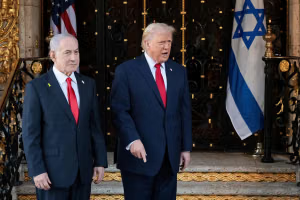
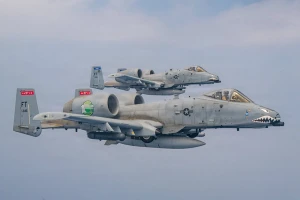
President Donald Trump has said there will be no further strikes before Tuesday’s midterm elections, but has not ruled out military action afterward. Secretary of State Marco Rubio says no decision has been made. US allies in the Persian Gulf have reportedly been told to prepare for possible strikes after November 4. Supreme Leader Mojtaba Khamenei has ordered Iran’s armed forces to prepare for war across an extended front.
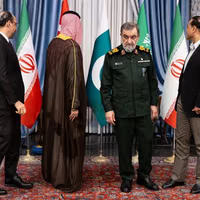
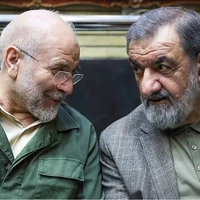
The immediate focus in Tehran is a letter from US Vice President JD Vance to Mohsen Rezaei, secretary of the Supreme National Security Council. After a week of confusion over who was leading negotiations, Foreign Ministry spokesman Esmail Baghaei said on Monday that Parliament Speaker Mohammad Bagher Ghalibaf remained in charge, but that Rezaei would answer Vance because the letter had been sent to him. Ghalibaf has not spoken publicly about a nuclear agreement for weeks.
Agreement on talks, not on terms
In a report headlined “We Must Negotiate,” the reformist daily Etemad set out three positions. Hossein Nourani-Nejad, deputy head of the reformist Ettehad-e Mellat party, described Iran’s choices as surrender, warmongering or de-escalation. He backed President Masoud Pezeshkian’s “smart management of hostility” and criticized hardliners and the state broadcaster for raising the idea of withdrawing from the Nuclear Non-Proliferation Treaty.
Asadollah Badamchian, a conservative politician of the Motalefeh party, argued that negotiation was a tool, not a principle, and was acceptable if it served national interests. He read Vance’s letter as evidence that Washington’s pressure strategy had failed, but warned against “naive optimism.” The final decision, he said, rested with the Supreme National Security Council and the Supreme Leader.
Ali Sufi, a reformist politician, was more hopeful. He identified five elements in Vance’s letter, including direct talks, lifting the blockade and reopening Hormuz, and argued that Iran was approaching a turning point, with both the Supreme Leader and Rezaei calling for an end to “neither war nor peace.” Including the nuclear issue could complicate negotiations, he cautioned, but would probably be unavoidable.
Hardline newspapers largely ignored the letter. Kayhan read his latest orders to military commanders as ending America’s ability to launch limited strikes and then withdraw. It dismissed US threats as psychological warfare, insisting Iran did not seek war but did not fear it.
Javan, a daily close to the Revolutionary Guards, called the threats a “psychological bombardment of the negotiating table” and said Tehran had rejected Qatar’s five-day confidence-building proposal.
The reformist outlet Eslahat News quoted lawmaker Fada-Hossein Maleki, who called the decision to send the letter to Rezaei a US conspiracy to divide Iranian officials.
‘War is certain’
Heshmatollah Falahatpisheh, a former chairman of parliament’s National Security and Foreign Policy Committee, offered a darker assessment in Shargh. Intensive Qatari mediation, he argued, reflected alarm rather than progress: the mediators had, he said, glimpsed both sides’ plans for a new war.
He described Vance’s approach as Trump’s attempt to secure a diplomatic success before the election, but said Washington’s proposed concessions were too limited to overcome mistrust. Pointing to military deployments, he declared war “certain.”
The only way out, Falahatpisheh said, was a regional agreement involving the United States and guaranteed by China. Russia, he argued, sees the region through the prism of the Ukraine war and is a spoiler rather than a credible guarantor.
China has around $480 billion in economic ties with the region, imports six to eight million barrels of Persian Gulf oil a day and has major investments in Qatar’s side of the gas field it shares with Iran. Falahatpisheh argued that rivalry with Washington gave Beijing both the interest and the influence to guarantee an agreement, despite suggestions that China might prefer to keep America occupied in the Middle East rather than focused on Taiwan.
Iranian observers have often argued that China puts its own interests ahead of Iran’s. Javan reported that a Chinese special envoy would visit Iran and the region soon, and cited a joint call by China and Oman for a return to the Islamabad memorandum.
The economic cost
In Arman Melli, the economist Mahmoud Jamsaz warned that Tehran was misreading Washington. Officials who assume America’s economic problems leave Trump no choice but to accept Iran’s conditions, he said, risk wasting the mediators’ last opportunity. Trump might instead decide that war is preferable to the status quo.
During the closure of Hormuz, Jamsaz noted, China drew on its strategic reserves and cut imports, countering forecasts of oil at $200 to $300 a barrel and weakening Iran’s leverage.
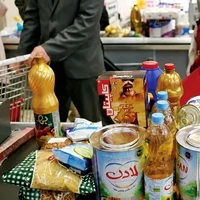
A prolonged confrontation, he warned, would bring foreign-currency shortages, a falling rial, runaway inflation and the destruction of the middle class, weakening society’s ability to withstand the crisis. Iran’s distorted state capitalism, he argued, fails the test of a “resistance economy”; budget deficits and the misery index show little economic resilience.
Neither war, a prolonged frozen conflict nor a Korean-style armistice serves Iran’s national interests, Jamsaz concluded. Only negotiations aimed at ending the confrontation offer a way forward.