• العربية
  • فارسی
BrandBrand
  • Iran Insight
  • Politics
  • Economy
  • Analysis
  • Special Report
  • Opinion
  • Podcast
  • Live TV
  • Iran Insight
  • Politics
  • Economy
  • Analysis
  • Special Report
  • Opinion
  • Podcast
  • Live TV
  • Theme
  • Language
    • العربية
    • فارسی
  • Iran Insight
  • Politics
  • Economy
  • Analysis
  • Special Report
  • Opinion
  • Podcast
  • Live TV
All rights reserved for Volant Media UK Limited
volant media logo

CIA chief urges Trump to keep economic pressure on Iran - Axios

Nov 2, 2026, 23:36 GMT+0
CIA Director John Ratcliffe arrives to brief senators on the situation in Venezuela, on Capitol Hill in Washington, D.C., U.S., January 7, 2026. REUTERS/Jonathan Ernst

CIA Director John Ratcliffe is advising US President Donald Trump to maintain a “no war, no deal” approach toward Iran and allow the economic pressure campaign to continue, Axios reported Monday, citing sources.

Ratcliffe told Trump that prolonged economic pain will induce Iran to make further concessions or create enough instability inside the country for citizens to revolt, according to a source with direct knowledge cited by Axios. The CIA declined to comment.

Treasury Secretary Scott Bessent and Secretary of State Marco Rubio are also advocating maintaining the status quo, while Vice President JD Vance and White House envoy Steve Witkoff are urging Trump to move toward a deal, according to the report.

Trump told Axios he was “in no rush” to decide whether to resume fighting with Iran. “One way or the other, we will do something, but there is no rush. We crippled them financially. They have no money, no gasoline and their people are getting very tired of it,” he said.

“We are talking to them. It's going fine,” Trump added. “There's less urgency [on the Iranian side] than you think there would be, but they want to make a deal more than they ever wanted.”

Qatari mediators have drafted an agreement outlining a three-day sequence of confidence-building measures aimed at resuming direct US-Iran negotiations, Axios reported, citing regional sources. Qatari mediator Ali al-Thawadi traveled to Tehran on Monday to continue talks on the proposal.

Most Viewed

Iran rejects nuclear talks despite ongoing mediation with US
1

Iran rejects nuclear talks despite ongoing mediation with US

2

Iran’s nuclear bomb debate gains ground on official platforms

3

Netanyahu pressing Trump to strike Iran immediately after midterms - Axios

4
VOICES FROM IRAN

Residents describe struggle to afford basic needs as Iran inflation hits 88.7%

5

Study finds self-immolation accounts for 16% of Iran's burn admissions

Banner
Banner

Editors' Pick

  • Iran says US tone shifts but demands still block talks

    Iran says US tone shifts but demands still block talks

  • Halloween gathering in Tehran ends in arrests and police crackdown

    Halloween gathering in Tehran ends in arrests and police crackdown

  • Netanyahu or Eisenkot? Tehran sees little difference on war
    INSIGHT

    Netanyahu or Eisenkot? Tehran sees little difference on war

Banner
Banner
Banner
Banner

Spotlight

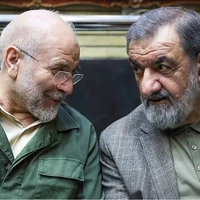
  • Tehran denies Ghalibaf sidelined as Rezaei's role grows

    Tehran denies Ghalibaf sidelined as Rezaei's role grows

  • Qatar turns to US LNG to cushion Iran war losses

    Qatar turns to US LNG to cushion Iran war losses

  • Mohsen Rezaei’s negotiating calculus: someone else always pays the price
    ANALYSIS

    Mohsen Rezaei’s negotiating calculus: someone else always pays the price

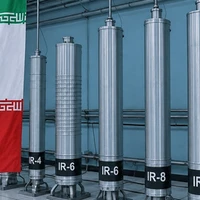
  • Iran’s nuclear bomb debate gains ground on official platforms

    Iran’s nuclear bomb debate gains ground on official platforms

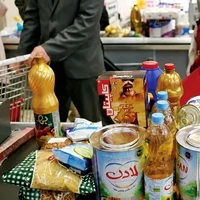
  • Residents describe struggle to afford basic needs as Iran inflation hits 88.7%
    VOICES FROM IRAN

    Residents describe struggle to afford basic needs as Iran inflation hits 88.7%

  • Netanyahu or not, the next move on Iran may be Trump's
    PODCAST

    Netanyahu or not, the next move on Iran may be Trump's

  • New Baha'i memoir recounts life inside Iran's prisons

    New Baha'i memoir recounts life inside Iran's prisons

•
•
•

More Stories

Three men helped IRGC prepare attacks on journalists, UK prosecutor says

Nov 2, 2026, 22:59 GMT+0
100%

Three men accused of plotting attacks on Iran International journalists carried out surveillance that materially assisted Iran’s Revolutionary Guards, a prosecutor told a London court in his closing argument on Monday.

Bill Emlyn Jones told jurors at Woolwich Crown Court that the defendants had visited addresses, taken photographs and recorded videos as requested by the Islamic Revolutionary Guard Corps. Their actions assisted the group even though no attack followed, he argued.

Mostafa Sepahvand, 41, Farhad Javadi Manesh, 46, and Shapoor Qalehali Khani Noori, 57, deny charges under Britain’s National Security Act. The alleged targets included Iran International journalists Kambiz Hosseini and Mojtaba Pourmohsen, as well as barrister Jonathan Turner.

Prosecutors say Sepahvand was expected to carry out an attack and recruited Javadi Manesh and Noori to help locate and monitor targets.

Sepahvand says he acted under threats against himself and his family while deliberately frustrating the operation. Javadi Manesh and Noori deny knowing that their activities were assisting Iranian intelligence.

Demands for better information

Jones challenged Sepahvand’s account by pointing to his repeated demands for more accurate information about the targets.

The IRGC had supplied overhead photographs and a description of a car without its registration number, the prosecutor said. Javadi Manesh consequently went to the correct street but filmed the wrong people.

Jones argued that Sepahvand’s frustration with incomplete or inaccurate information showed that he was genuinely trying to locate the targets. He asked why Sepahvand had worked so hard to obtain better information if, as he claimed, he had no intention of completing the task.

The prosecutor also challenged Sepahvand’s defense that threats had compelled him to cooperate.

Jones acknowledged Sepahvand’s repeated accounts of family members suffering at the hands of Iranian authorities. But he argued that the issue was whether the IRGC had placed Sepahvand under duress in this case, rather than whether it was capable of doing so.

He said there was no evidence supporting Sepahvand’s account of acting under such pressure.

A deal to return to Iran

Jones argued that Sepahvand wanted his Iranian criminal case, involving 32 burglary offenses, resolved so he could return to Iran.

The messages showed bargaining over which side would act first, he said: Sepahvand wanted the case fixed before carrying out the task, while the IRGC wanted him to complete the work before resolving it.

Jones cited messages from Vahid Malmir expressing hope that the case could be resolved and Sepahvand could return to Iran, followed by Sepahvand’s affirmative response.

He also referred to messages from Mostafa Ghorbani relaying assurances that Sepahvand’s case was settled, that he would be provided with a house and that people would meet him at the airport.

In another exchange cited by Jones, Sepahvand indicated that even if he got into trouble in Britain, he would be free in Iran.

The prosecutor argued that Sepahvand’s desire to return contradicted his account of being terrified of the Iranian authorities. That wish explained why the criminal case mattered so much to him and why the IRGC could use it as a “bargaining chip,” Jones said.

Co-defendants’ explanations challenged

Jones said the prosecution had to establish that the defendants’ conduct materially assisted the IRGC. He argued that they had done precisely what the group wanted in Britain: visiting supplied addresses, locating targets and conducting surveillance.

Javadi Manesh and Noori accepted visiting locations and taking photographs and videos, Jones said. The disputed issue was whether they knew why they were doing so.

He questioned whether they could spend hours with Sepahvand, repeatedly visit locations and photograph buildings and vehicles without asking about the purpose.

The suggestion that they simply followed his instructions without asking why “defies common sense,” Jones argued.

He challenged Javadi Manesh’s explanations in police interviews, including his account that Sepahvand was helping him find somewhere to live when they visited Malthouse Court.

The prosecutor said Sepahvand went there because the IRGC had supplied it as a possible address for Pourmohsen.

Jones also cited Javadi Manesh’s explanation that he photographed Iran International’s building because it was “pretty,” and that he had been nearby to obtain painkillers.

He rejected Javadi Manesh’s account that a visit to St Dunstan’s Avenue concerned selling car insurance, pointing to messages from Sepahvand about the street, a blue car and Hosseini’s dog, Niko.

Jones also questioned Javadi Manesh’s explanation for receiving and forwarding information about Turner, including his office locations. Javadi Manesh had told police that a relative of his partner needed a solicitor.

Javadi Manesh did not give evidence during the trial. Jones argued that he had avoided cross-examination because he could not defend the explanations he had given police.

Turning to Noori, the prosecutor accused him of concealing the nature of his relationship with Sepahvand despite accompanying him on repeated surveillance trips, including one shortly before midnight.

Jones pointed to calls Sepahvand made to Amin and Ghorbani in Iran while Noori was in the car. The conversations concerned what they could see at a location and complaints about missing information, he said.

Noori, who speaks Persian and Lori, would have heard enough to understand what was happening, Jones argued. He also suggested that the calls could be heard through the car’s speakers.

The defense’s closing arguments are scheduled to begin on Tuesday with Tyrone Smith speaking for Sepahvand.

Three Iran protesters face imminent execution after final family visits

Nov 2, 2026, 22:00 GMT+0
100%
Amirhossein Maleki (left) and Abolfazl Ebrahimi (right), two Iranian protest detainees facing imminent execution in connection with the January protests in Isfahan.

Three young men sentenced to death in connection with Iran's January protests face imminent execution after their families were summoned for final visits on Monday, according to human rights activists.

The Norway-based organization Iran Human Rights said the families of Amirhossein Maleki and Abolfazl Ebrahimi had been summoned to Dastgerd Prison in Isfahan, warning that the two could be executed within hours or days.

Exiled political activist Ebrahim Allahbakhshi separately reported that Amirhossein Ebrahimi Analoujeh had also met his family for a final visit. Citing sources familiar with the cases, he said all three men had completed their final visits and were scheduled to be executed on Tuesday.

Iran Human Rights said the death sentences followed proceedings marked by torture, forced confessions and gross violations of due process.

The men are among 12 defendants sentenced to death in the Alikhani Square case. The case stems from protests in Isfahan on January 8, during which Iranian authorities accused defendants of involvement in the deaths of four security personnel, weapons offenses, destruction of property and arson.

Shahrzad Shahbazi, a lawyer representing defendants in the case, has disputed the official account, saying none had formally been charged with murder and the alleged killings had not been tried.

Seven defendants in the case, including two Afghan nationals, have been executed since July 19, Iran Human Rights said. Among them were Alireza Raisi and Alireza Sepahi, who were put to death on October 5.

The group said the Supreme Court had also rejected appeals by Analoujeh and two other defendants facing execution, Shervin Bagherian and Ali Dashti. It identified Bagherian as 17 at the time of his arrest and said lawyers defending the accused had themselves faced prosecution or imprisonment.

Torture allegations and unfair trials

UN Special Rapporteur Mai Sato highlighted the case during an October 28 address to the UN General Assembly’s Third Committee as an example of Iran’s mass trials of protesters.

Sato said 12 defendants had been sentenced to death and seven already executed. She warned that the proceedings failed to establish individual criminal responsibility, rendering the resulting death sentences arbitrary.

Amnesty International previously identified all three men among defendants facing execution, warning in July that they had been sentenced to death following a grossly unfair mass trial.

The organization documented allegations that Bagherian was forcibly disappeared for 21 days, beaten and denied access to a lawyer during the investigation. His forced confession was broadcast on state television before his trial, Amnesty said.

In an October statement, Amnesty said Sepahi had been subjected to prolonged solitary confinement, beatings and electric shocks.

Erfan Nabian told Iran International that he was tortured and subjected to a mock execution while being interrogated about allegations linked to the case. The former political prisoner was held alongside several of its defendants.

Iran Human Rights urged governments maintaining diplomatic relations with Tehran to act immediately to halt the executions.

Seven Iran-backed Afghan fighters reported killed in southeast attack

Nov 2, 2026, 21:00 GMT+0
100%
Members of the People’s Fighters Front reportedly took control of a section of the Khash-Zahedan highway in southeastern Iran for several hours on Saturday, October 31, 2026, setting up checkpoints and stopping vehicles.

At least seven members of the Iran-backed Afghan Fatemiyoun militia were killed Monday when gunmen attacked a school being used as a military base in southeastern Iran, the Baluch rights organization Haalvsh reported.

Armed men riding two motorcycles attacked the Bir Sofla school in Bir village, in the Kahir district of Konarak County in Sistan and Baluchestan province, at approximately 4 p.m. local time, Haalvsh said.

The attackers opened fire on Fatemiyoun members stationed inside the building, killing at least seven and wounding several others, including two critically, according to the report.

Haalvsh said a car followed the motorcycles into the village as fighting continued. At least one assailant was killed and his body was removed by security forces, it reported. The wounded were transported by ambulance to hospitals in Chabahar and Iranshahr.

The Revolutionary Guards-affiliated Tasnim news agency offered a different account, reporting that an armed group it identified as Jaish al-Adl had attempted to attack army personnel in Konarak.

Tasnim said security forces killed one attacker and forced others to flee wounded. It did not report any deaths among the personnel targeted.

100%
A car belonging to the Iran's Sistan and Baluchestan traffic police shows signs of gunshots.

Fatemiyoun is an Afghan Shiite militia operating under the Revolutionary Guards’ Quds Force. The conflict-monitoring organization ACLED, citing local sources, has reported its deployment at military and Basij facilities and checkpoints across the province.

Haalvsh previously reported that more than 20 Fatemiyoun members were killed or wounded during prolonged fighting in Taftan County on October 13. That casualty figure could not be independently verified.

A series of deadly attacks

Monday’s confrontation follows repeated attacks on security personnel and installations across the province.

On October 27, Haalvsh reported that armed assailants attacked a police support headquarters and Police Station 12 in Khash, triggering prolonged gunfire.

Earlier, on October 7, gunmen attacked police headquarters in Golshan County using explosives and rocket-propelled grenades. The following day, separate attacks targeted police personnel near Nosratabad and a vehicle carrying army personnel near Nikshahr.

On October 14, a commander of a women’s Basij unit and a police officer were killed in separate shootings in Mehrastan County, according to Tasnim.

The US-based Human Rights Activists News Agency, HRANA, documented at least 63 armed incidents across Sistan and Baluchestan and neighboring Kerman between March 31 and October 10, leaving at least 94 people dead and 33 wounded. Its tally covered armed attacks and security operations, with 18 incidents recorded during the final 18 days of that period.

Jaish al-Adl joined other Baluch armed factions in December 2025 to form the People’s Fighters Front, known by its Persian initials JMM. The coalition claimed six of the incidents documented by HRANA, while most remained unattributed or could not reliably be linked to a particular group.

  • Who are the Baluch militants taking on Iran rulers, and how far can they go?

    Who are the Baluch militants taking on Iran rulers, and how far can they go?

ACLED separately recorded approximately 70 armed confrontations between armed groups and Iranian security forces in Sistan and Baluchestan during 2026 by early October, the highest annual figure in at least a decade.

Poverty and longstanding grievances

The violence has unfolded in a region marked by economic deprivation and grievances among its predominantly Sunni Baluch population.

In an August 2025 report, the International Crisis Group described Sistan and Baluchestan as Iran’s most deprived province by most measures, citing unemployment, poor infrastructure and unequal access to public services.

Drawing on Iranian official data, the organization reported that approximately 30% of provincial households experienced severe deprivation. Unemployment stood at 12.4% in 2023–2024, compared with 8.1% nationally.

Baluch activist and journalist Khalilullah Balochi previously told Iran International that economic deprivation, ethnic and religious discrimination and repression were central drivers of armed mobilization. He argued that militarization had deepened the grievances behind recruitment.

Israel denies pressing Trump for Iran strikes amid diplomatic push

Nov 2, 2026, 18:39 GMT+0
100%
A woman passes by a banner depicting Israeli Prime Minister Benjamin Netanyahu and US President Donald Trump day after the country held a national election, in Jerusalem, October 28 , 2026.

Israel’s UN envoy denied that Prime Minister Benjamin Netanyahu was pressing Donald Trump to resume strikes on Iran and dismissed claims that a nuclear attack was under consideration, while mediators pursued a deal ahead of Tuesday’s US midterm elections.

“Prime Minister Netanyahu is not pressing President Trump. President Trump knows exactly what he wants to achieve and how he wants to achieve it,” Danny Danon told Al Arabiya English.

“Israel will collaborate with the United States. We will support the decision of the United States, but it is not us pressing anyone,” he added.

Danon’s remarks followed an Axios report Sunday, citing an Israeli and a US source, that Netanyahu was urging Trump to strike Iran immediately after the November 3 elections, while the US president preferred to allow negotiations to continue.

The Israeli source described the leaders’ Saturday phone call as “tough,” while the US source called it “direct.”

Trump confirmed Sunday that he had spoken with Netanyahu about Iran, describing their conversation as “a very good talk,” without providing further details.

Danon also rejected a claim by US commentator Tucker Carlson on X that a nuclear strike against Iran was being considered, calling the idea “delusional.”

“No one is even discussing it in the US, nor in Israel,” he said.

Washington weighs military options and diplomacy

Trump said Saturday that negotiations with Iran were “going fine” and that he was in no hurry to resume military action, although he said Washington still needed to target one or two sites, including the suspected underground nuclear complex at Pickaxe Mountain.

US Secretary of State Marco Rubio said Saturday that Trump had not decided whether to launch further strikes.

“He hasn’t made a decision,” Rubio told reporters in Atlanta, adding that Washington preferred to resolve the conflict peacefully.

Rubio said diplomatic contacts had remained active, often through intermediaries, and declined to set a deadline for negotiations.

Iran says diplomatic contacts remain active

Iranian Foreign Minister Abbas Araghchi said Monday that consultations through mediators, including Qatar and Pakistan, remained intensive, after several days of talks with Qatari officials ended without a breakthrough.

“Everything depends on the political rationality of Washington,” Araghchi said, according to the state-run IRNA news agency.

Araghchi said a revised proposal developed through mediation could allow the Strait of Hormuz to reopen within two days if Washington accepts Iran’s conditions.

Tehran’s earlier seven-day plan called for Washington to lift its blockade of Iranian ports, release frozen Iranian assets and waive sanctions on Iranian oil sales before negotiations resumed.

Iranian President Masoud Pezeshkian also said Monday that Supreme Leader Mojtaba Khamenei had granted the government “certain authorities” regarding peace talks with the United States, according to IRNA.

Pezeshkian said Iran would seek to resolve the conflict through dialogue, without specifying the scope of those powers.

An Iranian source cited by the Revolutionary Guards-affiliated Fars news agency said Monday that indirect communications with Washington had produced no breakthrough and that Tehran still insisted on its seven conditions for progress. Exchanging messages through intermediaries was routine, the source said.

Despite the diplomatic contacts, Danon said in his Monday interview that Israel remained prepared for military action regardless of uncertainty surrounding the formation of a new government following last week’s Israeli elections.

“The military is prepared, we are ready and if we will need to protect our people, we will do it,” he said.

Iran bans sales of jewelry with monarchy-linked symbols in Khamenei hometown

Nov 2, 2026, 18:07 GMT+0
•
Azadeh Akbari
100%
A woman wears a gold necklace featuring Iran's Lion and Sun emblem

Iranian authorities have banned the display and sale of jewelry and coins bearing the Lion and Sun emblem or imagery associated with the country's former monarchy in the northeastern city of Mashhad, according to a notice issued by the city's gold traders' union.

The Mashhad Gold, Jewelry, Silver and Coin Dealers' Union said the order, issued on instructions from the police department responsible for supervising public establishments, covers bracelets, pendants, necklaces and commemorative coins featuring the symbols.

"Under instructions from the Department for Supervision of Public Establishments, the sale or display of any gold, silver or coins ... bearing images of the Pahlavi dynasty or the Lion and Sun is prohibited," the union said in a notice published on its Telegram channel.

It warned that any violations would be dealt with in accordance with regulations, without specifying the penalties.

Mashhad is home to the shrine of Imam Reza, the eighth Shiite imam, and is the hometown of Iran’s Supreme Leader Mojtaba Khamenei and his slain father and predecessor, Ali Khamenei.

100%
Necklaces displayed on a hand, featuring Iran’s Lion and Sun emblem and portraits of Reza Shah Pahlavi and Mohammad Reza Shah Pahlavi.

The semi-official Mehr news agency and local media also reported the restriction, saying traders had been instructed to review their inventories and shop displays to comply with the order.

The ban comes amid signs of growing demand for jewelry, decorative artwork and other products featuring the Lion and Sun and Pahlavi-era symbols, according to accounts received by Iran International from cities across Iran and observations of social media posts.

The Lion and Sun, a centuries-old Iranian emblem that appeared on the country's national flag before the 1979 revolution, has become a prominent symbol of opposition to the Islamic Republic's theocratic rule.

100%
A woman wears a gold pendants featuring Iran's Lion and Sun emblem, a historic national symbol that appeared on the country's flag before the 1979 Islamic Revolution.

Restrictions on historical and royal symbols

The Islamic Republic removed the Lion and Sun from Iran's flag and official insignia following the 1979 revolution that overthrew Shah Mohammad Reza Pahlavi.

Ruhollah Khomeini, the Islamic Republic's founding leader, denounced the Lion and Sun as a symbol of the former monarchy and called for its removal from government ministries and offices.

"The accursed Lion and Sun emblem should be removed from all ministries and offices," Khomeini said in a March 1979 speech in Qom, according to the official collection of his speeches. He also called for the removal of symbols associated with the former monarchy and their replacement with Islamic emblems.

In the decades since, the authorities have sought to promote an interpretation of Iranian history aligned with the Islamic Republic's ideology, while artists and intellectuals advocating secular and pre-Islamic aspects of the country's heritage have faced pressure and restrictions.

The restrictions have also extended to historical sites associated with Iran's pre-Islamic past, including the tomb of Cyrus the Great, the founder of the ancient Persian Achaemenid Empire who ruled in the sixth century BC.

On October 29, a date observed by many Iranians as Cyrus the Great Day, citizens reported security checkpoints and road closures blocking access to Pasargadae, the site of the ancient Persian king's tomb in southern Iran.

Iran International has previously documented similar restrictions in past years, when authorities prevented people from gathering at the tomb to commemorate Cyrus.

Protesters targeted over tattoos

The restrictions on jewelry come amid growing popularity of national and monarchist symbols, which have also become expressions of resistance through tattoos worn by Iranian protesters.

A September investigation by Iran International documented cases of security forces allegedly torturing and killing protesters bearing tattoos of the Lion and Sun, the Pahlavi crown and other symbols associated with Iran's national identity during January's nationwide crackdown.

Among those documented was Farid Ramezani, 29, who was shot by security forces in Tehran on January 8. An informed source said officers fired at a finger bearing a Pahlavi crown tattoo after he fell to the ground.

In another case, sources close to the family of Amirhossein Nobakht Pardasti, 21, said security forces cut into the tattooed area of his arm after he was wounded and detained during protests on January 8. When his family received his body, they said the skin bearing tattoos of Reza Shah and the imperial crown had been mutilated.

The investigation, based on accounts from protesters, tattoo artists, former political prisoners and relatives of those killed, documented how tattoos had become expressions of grief, identity and resistance, even as those bearing them faced violence and punishment.

  • The body as a battleground: Iran's resistance etched in ink and blood

    The body as a battleground: Iran's resistance etched in ink and blood