Saudi-led coalition says it intercepted Houthi missile aimed at southern Saudi Arabia
The Saudi-led coalition said on Monday that its air defenses intercepted and destroyed a ballistic missile launched by Iran-backed Houthi forces toward southern Saudi Arabia.
QatarEnergy's liquefied natural gas (LNG) production facilities, amid the US-Israeli conflict with Iran, in Ras Laffan Industrial City, Qatar March 2, 2026.
Qatar is securing long-term supplies of US liquefied natural gas to protect revenues against disruptions in the Strait of Hormuz, while pursuing mediation between Tehran and Washington to end the war.
The country’s dependence on the waterway leaves its gas industry exposed to prolonged shipping disruptions. For state-owned QatarEnergy, buying supplies produced outside the Persian Gulf offers a way to earn trading income when its own exports are constrained.
The new contracts will begin delivering in 2030 or later. They offer protection against future losses, but cannot restore shipments from Qatar’s damaged facilities or reopen its export route.
The risks were underscored on Friday, when a Qatari LNG carrier was struck by “unidentified objects” in the Persian Gulf, the same day Qatari mediators held talks in Tehran aimed at reaching a deal between Iran and the United States.
The Al Mayeda was hit Friday evening, its owner Nakilat said Sunday. No crew members were injured or environmental damage reported, and the vessel remained operational.
Qatar condemned the attack as a “dangerous act” threatening maritime navigation and global energy supplies, saying investigations were underway to identify those responsible.
War exposes Qatar’s dependence on Hormuz
Qatar is particularly vulnerable to disruption in the Strait of Hormuz. LNG accounts for half of its foreign-currency export revenues, and shipments to markets beyond the Persian Gulf must pass through the waterway.
Unlike some neighboring oil exporters, Qatar has no pipeline route capable of replacing those shipments. Its oil exports amounted to just 530,000 barrels per day last year, leaving its foreign-currency revenues largely dependent on gas.
According to official Qatari government statistics, the country exported 79 million tonnes of LNG last year, supplying 17% of global LNG consumption. Another 20 billion cubic metres of natural gas, equivalent to approximately 15 million tonnes, was delivered to the UAE and Oman through the Dolphin pipeline. By volume, LNG accounted for nearly 84% of Qatar’s total gas exports.
Qatar was forced to almost completely halt LNG exports for three months starting in March, with shipments gradually recovering from June. According to Kpler data, however, it exported only 4.58 million tonnes in the third quarter, less than a quarter of the volume recorded a year earlier.
September exports reached 1.6 million tonnes, the highest monthly level since the war began. That was still less than a quarter of the pre-war monthly average, with around one-third of shipments going to Kuwait and remaining within the Persian Gulf.
Damage to infrastructure has also been substantial. Iranian missile strikes in March damaged Ras Laffan’s liquefaction units, known as trains, 4 and 6, knocking 12.8 million tonnes of annual capacity offline—about 17% of Qatar’s pre-war capacity.
Energy Minister and QatarEnergy chief executive Saad al-Kaabi initially estimated repairs would take three to five years. In an October 29 interview with Reuters, he put the repair period at about three years.
QatarEnergy has extended force majeure on deliveries to Italy’s Edison until the end of December, the Italian company said on October 27. Shipping has also come under attack: in July, the LNG carrier Al Rekayyat was struck while transiting the Strait of Hormuz.
Qatar has ruled out a pipeline bypass on commercial and technical grounds. Kaabi said in September that transporting gas to another coast would require new liquefaction facilities, duplicating infrastructure already being built in Qatar. He has also warned that pipelines and associated facilities could themselves become targets.
US supplies offer protection against lost revenue
Qatar’s overseas investments predate the war, but its latest purchase agreements form part of a strategy to protect income against future shipping disruptions.
The first major overseas source is the Golden Pass LNG project in Texas. QatarEnergy owns a 70% stake, while ExxonMobil holds the remaining 30%. LNG production began on March 30, 2026.
The project has a total planned capacity of 18 million tonnes per year, giving QatarEnergy an equity share equivalent to 12.6 million tonnes of annual capacity once fully operational. The first train has a capacity of approximately 6 million tonnes per year, of which QatarEnergy’s share is 4.2 million tonnes.
The second element is long-term purchases from US producers. QatarEnergy signed two agreements with Cheniere Energy on October 22 to purchase a combined 4 million tonnes annually, split equally between its Sabine Pass terminal in Louisiana and Corpus Christi terminal in Texas.
Deliveries will begin in the early 2030s and continue through 2054. One million tonnes of the annual Sabine Pass supply is conditional on a final investment decision for an expansion project.
A week later, QatarEnergy signed a 20-year agreement to purchase up to 3 million tonnes annually from Woodside’s Louisiana LNG project. QatarEnergy expects deliveries to begin in 2030, with volumes increasing as additional production units start operating.
Together, the agreements provide for up to 7 million tonnes annually.
The Cheniere purchase price is linked to the US Henry Hub gas benchmark, plus a fixed fee. Both companies’ agreements provide for free-on-board deliveries, meaning QatarEnergy arranges transportation.
Lower US gas prices can create opportunities for profitable sales into Europe and Asia, although returns depend on liquefaction fees, shipping costs and destination-market prices.
Kaabi told Reuters the purchases were intended to generate revenue during future Hormuz disruptions. He cautioned that US cargoes could not simply replace supplies under existing long-term contracts specifying particular export terminals and destinations.
QatarEnergy is also negotiating with Venture Global. Kaabi said he expected further 20- to 25-year supply agreements with US and other producers before the end of 2026.
Qatar has overseas options Iran lacks
Iran’s own gas sector is also under pressure, but it has far fewer options to offset damage through foreign investment and overseas projects.
According to the National Iranian Gas Company, attacks in March knocked around 230 million cubic metres per day of production capacity offline at four gas processing plants. Approximately 100 million cubic metres has since been restored.
That leaves around 130 million cubic metres per day unavailable, equivalent to about 16% of last year’s daily production. Iran already faces substantial gas shortages during colder months, and the company has warned that around 11 provinces could experience supply problems this winter.
Iran’s financial capacity to rebuild damaged infrastructure is limited, while foreign participation in its energy projects is virtually nonexistent. Qatar has substantially greater financial resources to repair its damaged LNG trains and invest overseas.
Those differences do not establish how long Tehran can sustain disruptions to shipping. They do, however, give Qatar more commercial options for managing the consequences.
QatarEnergy’s equity share of Golden Pass will represent 12.6 million tonnes of annual capacity once all three trains are operational, while the Cheniere and Woodside agreements provide for purchases of up to another 7 million tonnes annually.
Those volumes will become available gradually and remain modest compared with Qatar’s pre-war annual capacity of 77 million tonnes and its planned expansion to 142 million tonnes by 2030.
Overseas trading can help cushion the financial impact of disruption. But repairing Qatar’s production facilities and securing passage through Hormuz remain essential to restoring its own exports.
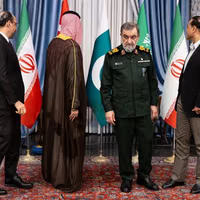
Iran's top security official Mohsen Rezaei (second from right), Pakistan’s Chief of Defence Forces Asim Munir (right), Turkish intelligence chief Ibrahim Kalin (left) and Saudi Arabia’s Defence Minister Prince Khalid bin Salman in Tehran, Iran, October 26, 2026. / Photo by ISNA
US Vice President JD Vance’s reported bid to meet Iran’s security chief Mohsen Rezaei for peace talks with Tehran raises a troubling question for Washington: Does it understand the man it would face across the table?
For more than four decades, Rezaei has occupied positions of power from which he could make decisions that imposed extraordinary human and economic losses on Iranians, while he and his factional allies in the Islamic Republic remained largely insulated from their consequences.
Understanding this track record and how he calculates the costs of diplomacy is essential to understanding how he might negotiate with Washington, how much he is prepared to tolerate, and what could finally persuade him to compromise.
The wartime calculus
The origins of Rezaei’s cost-benefit calculus go back to 1981, when the founder of the Islamic Republic, Ruhollah Khomeini, appointed the 27-year-old Rezaei as commander of the Islamic Revolutionary Guard Corps (IRGC). The IRGC was at the time a newly established institution in which revolutionary commitment and willingness to sacrifice often carried greater weight than professional military judgment.
Rezaei flourished in that environment and, in turn, helped consolidate a command culture that treated heavy casualties as an acceptable cost of pursuing ideological or factional objectives. The relationship was mutually reinforcing, as the institution rewarded commanders willing to endure enormous losses, while those commanders perpetuated a system in which the political consequences of those losses rarely affected the people responsible for them.
That high threshold for enduring costs paid by others became particularly consequential in 1982, after Iranian forces recaptured the city of Khorramshahr and Iraq subsequently offered negotiations. As IRGC commander, Rezaei was among those who argued for entering Iraqi territory rather than halting at the border. A war begun by Saddam Hussein's invasion now became another six years of bloody battles for goals extending beyond Iran's capacity.
During the catastrophic Operation Ramadan near the port city of Basra in July 1982, Iranian troops, including forces under Rezaei's IRGC command, repeatedly attacked entrenched Iraqi positions. Historians Anthony H. Cordesman and Abraham R. Wagner estimate between 20,000 and 30,000 Iranian troops were killed or critically wounded. Some Iranian leaders nevertheless saw progress in exhausting Iraq.
Mohsen Rezaei (second from left) alongside Ali Khamenei (center) during the Iran-Iraq War.
One of my uncles was killed in Operation Ramadan, and another in the offensive campaigns Rezaei had advocated after Khorramshahr. In this calculation, a battlefield disaster became an investment in a hypothetical victory in the long run. That victory never came.
Iranian forces did improve tactically, as a US National Defense University study demonstrates in its account of the successful 1986 assault on Iraq’s Faw Peninsula. Yet those improvements rarely prompted Iranian commanders to reconsider whether their objectives justified the mounting human suffering and material losses, allowing the same strategic mistakes to persist even as battlefield methods evolved.
Later that year, Operation Karbala-4 proceeded despite warnings that Iraqi forces anticipated the assault and that the operation had been exposed. Thousands of mostly Iranian youths were killed, wounded or went missing. Decades afterward, Rezaei called the operation a “diversion” preceding Operation Karbala-5, before acknowledging that it began as a principal attack.
File photo of Iranian forces preparing for Operation Karbala-4 during the Iran-Iraq War.
Here was another early expression of a dangerous institutional habit among Iranian decision-makers: a battlefield defeat could be treated as an investment in eventual victory, regardless of whether that victory was becoming more attainable or not.
The following year, Iranian forces continued operations toward Iraq’s Basra. A 2009 US National Defense University study, based on extensive interviews with former Iraqi Republican Guard commander Ra'ad Hamdani, described the fighting as the "Somme of the Iran-Iraq War," recalling frontal assaults with high casualties, enormous artillery concentrations and extraordinary destruction.
The National Defense University researchers concluded that repeated attacks reflected Iran’s persistent unwillingness to learn from previous failures. By 1987, they observed, Iranian political and military leaders were struggling to motivate soldiers who had suffered heavy losses without any meaningful gains.
Rezaei’s demands in the final year of the Iraq war exposed the deeper problem with his leadership style. In 1988, Rezaei set out requirements for rebuilding Iran’s offensive capacity over the following five years, including 350 infantry brigades, 2,500 tanks and 300 combat aircraft, while Prime Minister Mir-Hossein Mousavi’s government warned it could no longer finance the war.
Rezaei merely counted the weapons necessary for victory without offering a comparable accounting of the human cost of continuing the war. Ruhollah Khomeini accepted a ceasefire, and Rezaei remained commander until 1997.
Power and privilege
Peace brought Rezaei new positions and privileges, but the wartime mentality that allowed him to accept enormous costs borne by others followed him into politics. He served as secretary of Iran's Expediency Council from 1997 to 2021 and expanded his influence beyond the military.
He ran unsuccessfully for president in 2009, 2013 and 2021, but those electoral defeats did little to diminish his access to senior positions within the Islamic Republic.
Mohsen Rezaei displays his identification document and inked finger as he registers to run in Iran’s presidential election.
A Tehran Bureau investigation identified him as the owner of Tabnak, a major news website whose corporate structure included relatives and associates. He now had assets and networks worth protecting, even as he continued to regard sacrifice by others as an acceptable price for pursuing political objectives.
Rezaei’s response to his son’s dissent also illustrated the tension between family ties and political loyalty. Ahmad Rezaei had publicly criticized the Islamic Republic and fled the country. Mohsen Rezaei denounced him and declared that he would be treated like any dissident if he returned. Ahmad subsequently returned to Iran in 2005 and was not prosecuted, before leaving the country again.
Ahmad was found dead in Dubai in 2011. Police reported an apparent suicide, although questions persisted. Nevertheless, Rezaei's public response to his son's dissent suggested that even family ties could be subordinated to his position in a political order he had devoted his career to building.
In peacetime economic policy, the same institutional tolerance for high costs borne by Iranian citizens found another arena. Rezaei carried his understanding of costs into economics. Former associates of his presidential campaigns told me he conceived what became slain Supreme Leader Ali Khamenei's "resistance economy" and brought the idea to him.
As vice president for economic affairs under President Ebrahim Raisi from August 2021 to June 2023, he helped direct economic policy amid inflation and declining purchasing power. Once again, ordinary people financed the "resistance," while Rezaei retained his position and influence.
In an interview for this article, former Kayhan editor-in-chief and representative of Ali Khamenei Mehdi Nasiri alleged that Rezaei sought a share of Tehran’s roughly €2 billion electric-vehicle procurement deal with China under hardline Mayor Alireza Zakani in 2024, but declined to elaborate on the basis for his allegation. Separately, investigative journalist Yashar Soltani reported that the deal bypassed standard procurement procedures and involved intermediaries whose selection and financial qualifications were unclear. His report did not name Rezaei.
In August 2026, Rezaei became secretary of Iran's Supreme National Security Council, returning to decisions over war and diplomacy. The body, chaired by President Masoud Pezeshkian, coordinates Iran's security and foreign policy. Rezaei brings decades of relationships within the IRGC into its deliberations, along with the same institutional mentality that shaped his earlier career.
His recent words reveal how much of his wartime calculation survives. In an October 2026 interview, Rezaei acknowledged that a prolonged blockade would hurt Iranian families and investment, then insisted that "economic pain and strategic collapse are not the same thing". Four decades after the Iran-Iraq war, he continues to distinguish between the suffering of ordinary Iranians and the ability of their rulers to continue costly confrontations.
Yet Rezaei also has reasons to protect what he himself has acquired. Political scientist Robert A. Pape's influential research showed that even suicide terrorism can follow strategic calculations. The broader point is that ideological commitment need not exclude strategic calculation. Rezaei’s record suggests a high tolerance for losses borne by Iranians and a potentially much lower threshold when his survival, wealth and the political institutions he serves face danger.
Implications for Washington
Pressure directed mainly at Iranian households may therefore leave his incentives intact, since the leadership has long learned to transfer the consequences of its decisions to the population. His estrangement from his son Ahmad Rezaei also makes family ties an uncertain source of restraint.
The calculation changes when leaders themselves face costs they can no longer transfer, particularly when the institutions and networks sustaining their power are directly threatened. This may help explain why Parliament Speaker Mohammad Bagher Ghalibaf, also a former IRGC commander, met JD Vance in Switzerland in June 2026, a few months after US-Israeli strikes killed Supreme Leader Ali Khamenei and other IRGC commanders.
A “credible threat” can bring Tehran to the negotiating table, although the problem of durability remains. Once the threat recedes, the incentives that sustained decades of confrontation may return, leaving agreements vulnerable to reversal. Any lasting settlement therefore needs verification and enforceable consequences for reneging, even after the immediate threat has passed.
For Washington, the implication is that a credible threat must alter the calculations of those making decisions in Tehran. Pressure that the leadership can transfer to civilians has repeatedly proved insufficient. A lasting agreement requires the regime's decision-makers to understand that renewed confrontation would carry sustained consequences for themselves. Those consequences must remain credible even after the immediate danger has receded.
Iranian state media eagerly repeat the claim that Iranian politicians are exceptionally tough negotiators. Much of that toughness comes from their ability to draw on other people’s wealth and lives, which allows them to prolong confrontation without personally bearing its consequences.
Mohsen Rezaei's career illustrates the extraordinary bargaining advantage of making decisions while others pay the price. Anyone who negotiates with other people’s lives and resources can afford to be a tough negotiator.
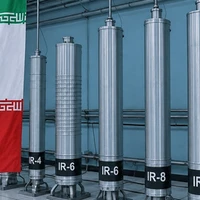
File photo shows different generations of centrifuges displayed in an exhibition in Iran
Calls to revise Iran’s nuclear doctrine and build an atomic bomb are gaining prominence on official platforms after gathering momentum in hardline circles, although the country’s top security official says no policy change has been approved.
Mohsen Rezaei, secretary of Iran’s Supreme National Security Council, said on Saturday, October 31, that neither the government nor the broader establishment had made a new decision on changing the country’s nuclear doctrine. However, he acknowledged discussion of whether Iran should retain its existing policy if war resumes.
Rezaei said attacks on Iran’s nuclear facilities had prompted public demands for reconsidering the policy. He argued that Iran had cooperated fully with International Atomic Energy Agency inspections.
“When people see this, they ask us why we should continue with this situation,” he said.
On September 19, Rezaei had also said that US and Israeli actions gave Iran grounds to withdraw from the Nuclear Non-Proliferation Treaty (NPT).
In recent days, hardliners have increasingly called on Mojtaba Khamenei to overturn his father Ali Khamenei’s religious decree prohibiting the production of nuclear weapons and declare their manufacture permissible.
Ahmad Naderi, a hardline member of parliament, told Khaneh Eqtesad in October that circumstances had changed and Ali Khamenei’s decree on nuclear weapons could be reconsidered.
“From Mojtaba Khamenei’s behavior, my understanding is that his fatwa will be different,” Naderi said.
Tasnim news agency reported on Saturday that Mojtaba Khamenei had instructed senior military commanders during a meeting to respond to any threat immediately and effectively, and “without geographical limitations”.
Before details of the meeting were published, hardliners on social media had expressed hope that he had ordered the development of nuclear weapons. The published account did not announce such an order.
Supporters of developing nuclear weapons have also cited remarks Ali Khamenei made during a meeting with students in November 2024. At the time, students called for a change in Iran’s nuclear doctrine. Responding to their demands, Khamenei said that whatever was necessary to confront the enemy would certainly be done.
An analysis published on Saturday by Khorasan newspaper, which is close to parliament speaker Mohammad-Bagher Ghalibaf, argued that changing the nuclear doctrine would not contradict the late leader’s guidance.
“Contrary to what some people are saying from certain platforms, changing the nuclear doctrine not only does not conflict with the wisdom and leadership of the martyred leader, but is actually a move along the path that he himself had laid out,” it said.
A commentary published by the Revolutionary Guards-affiliated Tasnim on Saturday raised another possibility besides a complete change of nuclear doctrine.
It argued that, with the leader’s approval, Iran could instead deepen its existing doctrine without formally changing it. This would involve enriching uranium to levels suitable for producing a nuclear weapon while stopping short of manufacturing one.
Calls for a nuclear bomb from official platforms
The demand for a change in nuclear policy has increasingly featured in official speeches and Friday prayer sermons.
Mohammad-Javad Haj Ali-Akbari, Tehran’s interim Friday prayer leader, said on Friday that calls to review the country’s nuclear doctrine reflected national awareness rather than a hasty or emotional reaction to American bad faith.
Ahmad Alamolhoda, the influential representative of the supreme leader in Razavi Khorasan province, has gone further, saying that anything necessary to intimidate the enemy, including possessing nuclear weapons, is religiously “obligatory”, according to Khorasan newspaper.
Citing statements by Tehran’s Friday prayer leader, Alamolhoda and the late Ali Khamenei, Khorasan argued that Iran’s security circumstances had changed and that acquiring nuclear weapons had become a demand aimed at strengthening deterrence.
Mohammad-Taghi Naghdali, an MP representing Khomeini Shahr, said on Sunday that the slogan among pro-government demonstrators had changed from “Nuclear energy is our indisputable right” to “Nuclear warhead is our indisputable right.”
Speaking to ChandSanieh news website, Ahmad Bakhshayesh, a member of parliament’s National Security and Foreign Policy Committee, said that if Iran decided to change its nuclear doctrine, it should first build a bomb and then withdraw from the NPT.
“Withdrawing without building a bomb would eliminate the [current] benefits of IAEA oversight,” he said.
Claims of public support
Proponents of revising Iran’s nuclear doctrine have presented the proposal as a popular demand. Haj Ali-Akbari said on Friday that unspecified polls had shown more than 70% of Iranians supported reconsidering the doctrine. The report of his remarks did not provide details of those polls or their methodology.
Mahmoud Nabavian, a hardline member of parliament, said in a post on X on October 29 that he had called on the supreme leader to authorize the production of an atomic bomb during a pro-government gathering in Qom. He said the crowd welcomed his request.
Such gatherings have continued in different parts of the country since the outbreak of the recent war.
IRGC-affiliated media outlets, particularly Fars and Tasnim, have also extensively covered calls for nuclear weapons in recent days, prominently highlighting them as popular demands.
Fars has promoted calls on its My Fars online platform for Iran to build nuclear weapons and increase the range of its missiles to 13,000 kilometers.
Opponents of the proposal, including reformist politician Mostafa Hashemitaba and social media users, have challenged claims of widespread public support and called for a referendum.
In September, Hashemitaba said that if media outlets such as Kayhan believed their position enjoyed popular support, they should endorse holding a referendum.
Warnings against political pressure
The campaign has also prompted warnings against putting political pressure on nuclear decision-making.
Nour News, a website close to Iran’s Supreme National Security Council, published an article on Saturday titled “Reviewing the Nuclear Doctrine: How and Through Which Path?” warning against reducing the complex implications of changing the doctrine to a simple division between supporters and opponents.
Referring to the issue being raised in Friday prayer sermons and at nightly pro-government gatherings, the article argued that decision-makers should be able to examine all available options without political pressure, temporary emotions or expectations that had already been created.
“People’s voices should be heard, but the voices of crowds should not be turned into a substitute for expert assessment and national decision-making,” Nour News wrote.
The issue has also received extensive coverage in reformist and moderate media, which have warned about the consequences of giving prominence to calls for nuclear weapons.
The moderate conservative website Asr-e Iran accused hardliners of using provocative issues to maintain cohesion within their own ranks and control the domestic political atmosphere. It warned that raising the prospect of building an atomic bomb could have serious consequences for Iran’s international standing.
“This will only become an excuse to legitimize the war-mongering scenarios of Iran’s enemies and seriously undermine the country’s peaceful image, which it has spent years trying to establish,” the website said.
Javad Emam, spokesman for the Reformist Front, also responded to the Tehran Friday prayer leader’s remarks in a post, warning that the issue went far beyond political slogans.
“Changing the nuclear doctrine and raising the issue of building an atomic bomb is not a simple decision that can be reduced to slogans. The country’s security, economy, national interests and future are at stake,” he wrote, adding: “Can one speak on behalf of the nation without evidence and impose the costs of such a decision on the people?”
FILE PHOTO: U.S. President Donald Trump and Israeli Prime Minister Benjamin Netanyahu at the Knesset on the day of Trump's address, amid a U.S.-brokered prisoner-hostage swap and ceasefire deal between Israel and Hamas, in Jerusalem, October 13, 2025.
Israeli Prime Minister Benjamin Netanyahu is pressing US President Donald Trump to strike Iran immediately after Tuesday's midterm elections, but Trump wants to let negotiations play out for now, Axios reported Sunday, citing an Israeli and a US source.
The two leaders had a candid phone call Saturday about the state of US negotiations with Iran and how quickly to return to combat, according to the report.
The Israeli source described the call as "tough," while the US source called it "direct."
Trump is pursuing diplomatic efforts to restart negotiations with Tehran while preparing for a possible resumption of major military operations after the November 3 elections, according to the report.
US Secretary of State Marco Rubio said Saturday that Trump had not decided whether to launch further strikes against Iran and preferred a diplomatic solution.
"He hasn't made a decision. I have no announcement in that regard with you today, and nor do we take any of it lightly," Rubio told reporters in Atlanta.
Trump told reporters Saturday that negotiations with Iran were "going fine" and that he was not "in much of a hurry," but said the United States still needed to "take care" of one or two Iranian nuclear sites.
"We can do that in 10 minutes. We have that planned. You can look at Pickaxe Mountain. We need to take care of that. We can do that very quickly," Trump said, referring to a suspected nuclear facility built into a mountain.
Iran considers US outreach
US Vice President JD Vance sent a letter last week to Mohsen Rezaei, secretary of Iran's Supreme National Security Council, about the possibility of restarting negotiations.
Rezaei said Saturday that he had received and read the letter but had not responded, according to Iranian state media.
"I read the letter. I haven't yet responded. Their tone has completely changed," Rezaei said in remarks broadcast on Iranian television.
IRGC-affiliated Tasnim news agency also reported that Tehran continued to insist on its seven conditions being met by Washington, saying any position contradicting that framework was unacceptable.
Qatar-mediated talks continue
Qatari mediators met with Iranian officials Sunday for a third consecutive day in an effort to reach a deal to restart direct negotiations between Washington and Tehran.
Iranian Foreign Minister Abbas Araghchi said Tehran was discussing a proposal that could allow the Strait of Hormuz to reopen within two days if Washington met Iranian conditions.
Araghchi said Sunday that consultations were continuing but had not produced a final agreement, stressing that progress depended on the United States responding to Iran's questions.
"We are making every effort in this regard and hope that the other side will demonstrate enough rationality to choose diplomacy over other paths," he said.
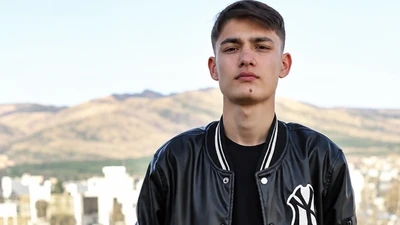
Alireza Ordoubadi, founder and CEO of Inverse School
Iranian authorities have seized assets of a private Tehran art and design school’s founder and begun confiscation proceedings, an IRGC-affiliated outlet reported, alleging he had insulted Shiite Muslims and spread anti-Islamic Republic propaganda on social media.
The report by Fars News concerned Alireza Ordoubadi, founder of Inverse School, and posts on his personal accounts.
It came a day after the school said authorities had frozen all its bank accounts and payment systems, blocked its website and seized its property, forcing it to suspend registration and sales of new courses.
Students who had already purchased courses would retain access to educational materials and support services, the school said.
Ordoubadi said the institution had never engaged in political activities and was being targeted because of his personal views, with the measures affecting its employees, instructors and students.
"The people of Iran have the right to think freely, make choices, protest and decide their own future. I will not ask anyone's permission to say this," he wrote in a statement published on the school's Instagram account.
"Their issue is with me, and they're making the school and its people pay the price," he wrote.
Founded in 2008, Inverse provides training in graphic design, animation, fashion, programming and other creative and digital skills. Ordoubadi said more than 70,000 people had studied at the institution over its 18 years of operation.
He said the school had lost students aboard Ukraine International Airlines Flight PS752 in January 2020, seen others imprisoned during the 2022 Woman, Life, Freedom protests, and lost two more students, whom he identified only by their first names, Amirali and Sima, during the latest nationwide protests.
"If the price I must pay for standing alongside these people is losing these 18 years, then I am willing to sacrifice those 18 years for Iran," he wrote.
Paying tribute to protesters killed during successive waves of anti-government demonstrations in Iran, from the 2009 and 2022 uprisings to the latest nationwide protests in December 2025 and January 2026, he added:
"This country belongs to Neda Agha-Soltan, Nika and Sarina, Hamidreza Rouhi, Majidreza Rahnavard, Sadra Soltani, Sepehr Shokri, Hamid Mahdavi and thousands of honourable people who gave their lives for its freedom. It belongs to their families and all those who continue to live with so much grief and deserve a future. My place is alongside these people."
"Seizure is your decision, and continuing is ours. And we will continue," he wrote.
The action comes amid a series of asset seizures involving Iranian public figures and supporters of anti-government protests.
On Tuesday, the lawyer for award-winning filmmaker Jafar Panahi said his client had been sentenced in absentia to five years and one month in prison and ordered to forfeit all his assets.
Earlier, authorities in the city of Qom announced the seizure of property and cryptocurrencies belonging to businessman Sadegh Saedinia, who supported nationwide anti-government protests in January.