• العربية
  • فارسی
BrandBrand
  • Iran Insight
  • Politics
  • Economy
  • Analysis
  • Special Report
  • Opinion
  • Podcast
  • Live TV
  • Iran Insight
  • Politics
  • Economy
  • Analysis
  • Special Report
  • Opinion
  • Podcast
  • Live TV
  • Theme
  • Language
    • العربية
    • فارسی
  • Iran Insight
  • Politics
  • Economy
  • Analysis
  • Special Report
  • Opinion
  • Podcast
  • Live TV
All rights reserved for Volant Media UK Limited
volant media logo

Iran seizes art school assets over founder's social media posts

Nov 1, 2026, 16:53 GMT+0
Alireza Ordoubadi, founder and CEO of Inverse School

Iranian authorities have seized assets belonging to the founder of a private art and design school in Tehran and begun confiscation proceedings, the IRGC-affiliated Fars news agency reported, a day after the school said its assets had been seized and its bank accounts frozen.

Fars alleged that Alireza Ordoubadi, founder of Inverse School, had insulted Shiite Muslims and engaged in propaganda against the Islamic Republic on his personal social media accounts.

The announcement came a day after the school said authorities had frozen all its bank accounts and payment systems, blocked its website and seized its property, forcing it to suspend registration and sales of new courses.

Students who had already purchased courses would retain access to educational materials and support services, the school said.

Ordoubadi said the institution had never engaged in political activities and was being targeted because of his personal views, with the measures affecting its employees, instructors and students.

"The people of Iran have the right to think freely, make choices, protest and decide their own future. I will not ask anyone's permission to say this," he wrote in a statement published on the school's Instagram account.

"Their issue is with me, and they're making the school and its people pay the price," he wrote.

Founded in 2008, Inverse provides training in graphic design, animation, fashion, programming and other creative and digital skills. Ordoubadi said more than 70,000 people had studied at the institution over its 18 years of operation.

He said the school had lost students aboard Ukraine International Airlines Flight PS752 in January 2020, seen others imprisoned during the 2022 Woman, Life, Freedom protests, and lost two more students, whom he identified only by their first names, Amirali and Sima, during the latest nationwide protests.

"If the price I must pay for standing alongside these people is losing these 18 years, then I am willing to sacrifice those 18 years for Iran," he wrote.

Paying tribute to protesters killed during successive waves of anti-government demonstrations in Iran, from the 2009 and 2022 uprisings to the latest nationwide protests in December 2025 and January 2026, he added:

"This country belongs to Neda Agha-Soltan, Nika and Sarina, Hamidreza Rouhi, Majidreza Rahnavard, Sadra Soltani, Sepehr Shokri, Hamid Mahdavi and thousands of honourable people who gave their lives for its freedom. It belongs to their families and all those who continue to live with so much grief and deserve a future. My place is alongside these people."

"Seizure is your decision, and continuing is ours. And we will continue," he wrote.

The action comes amid a series of asset seizures involving Iranian public figures and supporters of anti-government protests.

On Tuesday, the lawyer for award-winning filmmaker Jafar Panahi said his client had been sentenced in absentia to five years and one month in prison and ordered to forfeit all his assets.

Earlier, authorities in the city of Qom announced the seizure of property and cryptocurrencies belonging to businessman Sadegh Saedinia, who supported nationwide anti-government protests in January.

Most Viewed

Iran court sentences 21-year-old protester to death
1

Iran court sentences 21-year-old protester to death

2

Iran says US tone shifts but demands still block talks

3

Arab states demand response from Iran as fears of wider war dominate Bahrain summit

4

'No geographic limits': Tehran projects readiness for all-out war

5
INSIGHT

Talks or resistance? Iran's factions differ over path out of crisis

Banner
Banner
Banner
Banner
Banner

Spotlight

  • Netanyahu or not, the next move on Iran may be Trump's
    PODCAST

    Netanyahu or not, the next move on Iran may be Trump's

  • CSIS warns Iran-related activities targeting Canada likely to continue in 2026

    CSIS warns Iran-related activities targeting Canada likely to continue in 2026

  • Talks or resistance? Iran's factions differ over path out of crisis
    INSIGHT

    Talks or resistance? Iran's factions differ over path out of crisis

  • Tehran refuses to budge as diplomacy races against war

    Tehran refuses to budge as diplomacy races against war

  • Growing old alone: The parents Iran’s emigrants left behind
    VOICES FROM IRAN

    Growing old alone: The parents Iran’s emigrants left behind

  • Behind Khamenei's call for peace, Tehran's unchanged demands
    OPINION

    Behind Khamenei's call for peace, Tehran's unchanged demands

  • Iran's Great Depression? Economists weigh Bessent's dire forecast
    ANALYSIS

    Iran's Great Depression? Economists weigh Bessent's dire forecast

•
•
•

More Stories

Public schools in Iran pressure parents to pay for basic supplies

Nov 1, 2026, 13:42 GMT+0
•
Baharan Azadi
100%
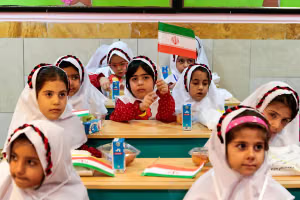
Students gather and play in the courtyard of a school in Iran.

Public schools across Iran are demanding payments from parents for basic supplies, utility bills and repairs, with some withholding report cards or pressuring students to secure the money, according to accounts sent to Iran International.

Parents responding to an inquiry described repeated requests for payments ranging from stationery and cleaning products to multimillion-rial fees, despite government assurances that contributions to public schools must be voluntary.

"Only teachers' salaries are left for them to collect from parents," one parent wrote after being asked to contribute money for paper.

The accounts contrast with Education Minister Alireza Kazemi's September 20 announcement that public schools were prohibited from charging families for enrollment or the start of the academic year.

Financial contributions from parents must be entirely voluntary, Kazemi said.

Parents asked to cover utility bills and cleaning supplies

Families described being required to cover routine school expenses, including water, electricity, gas, cleaning supplies and equipment repairs.

  • Parents lament hidden school fees in Iran

    Parents lament hidden school fees in Iran

"The government provides no assistance to schools," several respondents wrote in messages.

At a school meeting in early October, parents were told the government had no budget and public schools would have to operate with financial support from families, one parent said.

The school subsequently presented a list of monthly expenses covering water, electricity, drinking-water facilities, cleaning, heating and cooling equipment.

At another school, parents were asked to pay 2.5 million rials each to purchase paper.

Other families described requests for money to buy whiteboard markers, light bulbs, A4 paper, garbage bags and even to repair a broken classroom door.

One mother said her child's school demanded money for hand soap despite toilets being so dirty and unusable that her child avoided using them throughout the five-hour school day.

Parents have also been asked to purchase materials for basic science experiments because schools lack adequate laboratory equipment, according to another account.

Some schools have sought contributions for government and religious ceremonies, requesting money and sweets from families.

Voluntary contributions become compulsory payments

Some families described payments equivalent to tuition fees at public schools, even though the schools are not permitted to charge compulsory enrollment fees.

One parent said their child's public school collected 50 million rials despite having virtually no facilities.

Iran's minimum monthly wage was set at 166 million rials for 2026, equivalent to about $61 at an exchange rate of 2.72 million rials to the dollar.

Another described a public school with approximately 300 students attending in two shifts that collected between 17 million and 20 million rials from each student, regardless of the family's financial circumstances.

Examination paper costs were charged separately, the parent said.

100%
A student wearing a backpack stands in the courtyard of a school in Iran as parents and children gather near the entrance.

Several parents said schools refused to release students' report cards until additional payments were made.

The accounts contradict the education ministry's position that contributions must be optional.

Government funding shortages should not result in financial pressure on families, Akbar Pouladi, a member of parliament's education committee, said on August 26, criticizing compulsory payments at some schools.

In some cases, families said enrollment or the distribution of textbooks was conditional on payment.

Higher payments, inadequate facilities

Despite the growing financial demands, some parents said school conditions had not improved.

Nearly two months into the academic year, one parent said their child's school still lacked a proper door, whiteboard, curtains and enough desks, even though families were being charged to cover operating expenses.

  • Iran students go without as elite schools charge billions

    Iran students go without as elite schools charge billions

A teacher said the school where they worked had relied on parental contributions for years.

At the beginning of each academic year, administrators told parents that without their financial support, the school could not remain operational, the teacher said.

Residents describe struggle to afford basic needs as Iran inflation hits 88.7%

Nov 1, 2026, 12:10 GMT+0
•
Farnoosh Faraji
100%
A shopper stands beside a trolley of groceries at a supermarket checkout in Iran.

People across Iran say they are struggling to afford food, clothing and rent, while others face unpaid wages and falling business sales, according to messages sent to Iran International as year-on-year inflation hit 88.7% in October.

Messages describe mounting financial pressures on workers, pensioners, students, single mothers and small business owners, with some unable to meet basic needs and others facing unpaid wages and declining sales.

"I went to buy a piece of flat bread. All I got was a piece the size of my palm for 400,000 rials. I don't know how we're supposed to live," one resident wrote.

Iran's minimum monthly wage for 2026 was set at approximately 166 million rials ($61 at the current exchange rate of 2.72 million rials per US dollar).

A pensioner said their monthly income was insufficient to cover even 10 days of living expenses, illustrating the widening gap between household earnings and everyday costs.

Iran's annual inflation rate reached 76.8% in October, with prices rising 4.4% from the previous month, according to figures released by the Statistical Center of Iran.

The 88.7% year-on-year inflation rate means households had to spend an average of 88.7% more than in October 2025 to purchase the same basket of goods and services.

Food prices hit small businesses

Rising food prices have affected not only consumers but also small businesses facing a sharp decline in demand.

100%
Groceries, including meat, vegetables, dairy products and other food items, are laid out on a table in Iran.

"Before the war, I used to sell 70 chickens every day, but because of rising prices, daily sales have dropped to 12," the owner of a poultry and egg shop in Tabriz told Iran International.

The decline represents an approximately 83% reduction in the number of chickens sold daily, reflecting the impact of inflation and weakened consumer purchasing power.

Families struggle with school and clothing costs

The rising cost of education has added to the financial burden on families, with students describing difficulties obtaining basic school supplies.

"I need stationery to study, but prices have risen so much that I can't even afford a notebook," one student wrote to Iran International.

Education recorded the highest monthly price increase among major household expenditure categories in October, rising 23.5%, according to the Statistical Center of Iran.

A mother in Mashhad said she visited a discount clothing store to buy warm clothes for her daughter but found that a hoodie and trousers cost 35 million rials ($13).

Unpaid wages compound housing pressures

Alongside inflation, delayed salary payments have deepened financial difficulties for workers already struggling with rent and family expenses.

An employee of Atlas Air said outstanding wages had not been paid, leaving the family struggling to meet its financial obligations.

"We are tenants, and we also cover the expenses of our family and our parents," the employee wrote to Iran International.

A woman who heads her household and works in the oil industry's healthcare sector said her salary had not been paid by October 29. Officials attributed the delay to a shortage of funds, she added.

Economic hardship has intensified alongside currency depreciation, inflation and declining purchasing power, while the Islamic Republic continues to pursue a confrontational foreign policy, particularly toward the United States and Israel.

Study finds self-immolation accounts for 16% of Iran's burn admissions

Nov 1, 2026, 08:21 GMT+0
100%
A patient with heavily bandaged arms lies on a hospital stretcher at a burn treatment facility in Iran.

Self-immolation accounts for about 16% of burn hospitalizations in Iran, with women and young people making up a significant share of victims and mortality rates reaching 62%, the head of the country's burn association said on Sunday.

The figures come from an analysis of 39 studies conducted across Iran, which estimated the incidence of self-immolation at approximately 4.5 cases per 100,000 people, Hamid Salehi, head of the Iranian Burn Association, told the ILNA news agency.

"Self-immolation is not merely a medical issue, but a social and public health problem that requires cooperation between the healthcare system, psychiatrists, psychologists, social workers and institutions responsible for preventing social harm," Salehi said.

The research found that people who attempted self-immolation suffered burns covering an average of 65% of their bodies, with approximately 62% dying after hospitalization.

Salehi described the severity of injuries and death rates as deeply concerning, particularly given the substantial proportion of women and young people among those affected.

The findings were based on previous studies, and an accurate assessment of the present situation would require a comprehensive and up-to-date national registry, Salehi added.

Economic pressures and mental health concerns

The figures come as worsening economic, political and social crises in Iran have heightened concerns about the psychological pressures facing the population.

Iranian society is approaching an emergency in mental health and social welfare, with uncertainty stemming from the country's prolonged state of neither war nor peace placing severe pressure on citizens, Alireza Aghayousefi, head of Iran's Psychology and Counseling Organization, warned on October 25.

  • Iran nearing mental-health emergency, psychology chief says

    Iran nearing mental-health emergency, psychology chief says

A person seeking welfare assistance set themselves on fire in protest against a medical committee's decision, Alireza Vahidzadeh, head of the Welfare Organization in Kerman province, said on October 28.

In August, human rights news agency HRANA reported that Souma Moghaddami, an 18-year-old woman from Piranshahr who had been subjected to child marriage, died in hospital from injuries sustained after setting herself on fire.

The cases add to concerns about self-immolation as a form of self-harm linked to wider social and psychological distress.

Acid attacks leave lasting physical and psychological injuries

Chemical burns account for approximately 3% of burn-related hospital visits and admissions in Iran, Salehi said.

Some result from accidents at home or in workplaces, while others stem from deliberate acid attacks and interpersonal violence.

Research conducted in Shiraz found that intentional acid attacks accounted for approximately 29% of chemical burn cases, according to Salehi.

"Although acid attacks are less common than other causes of burns, they are particularly significant because of the severity of physical injuries, permanent disfigurement, facial damage, and psychological and social consequences," Salehi said.

Victims can face years of reconstructive surgery, substantial medical expenses, unemployment and social exclusion.

New acid attack cases continue to be referred to support organizations, while survivors and their families struggle with the long-term consequences of such violence, the Shargh newspaper reported in a September 23 investigation titled Unfinished Wounds.

  • Over a dozen Iranian women and girls killed in 30 days, many by male relatives

    Over a dozen Iranian women and girls killed in 30 days, many by male relatives

The report described how the financial and psychological consequences of acid attacks can transform the lives of victims and their families long after the initial injuries.

Sanctions and inflation hamper burn treatment

Sanctions, inflation and rising prices have made it increasingly difficult for Iranian medical facilities to obtain essential burn treatment supplies, Salehi said.

Specialized burn dressings, medical equipment and certain medications, including antibiotics, have become harder to procure, with shortages and purchasing difficulties worsening over the past year.

The problems add pressure to a healthcare system treating patients who often require extensive medical intervention, prolonged hospitalization and rehabilitation.

Mental health specialists recommend encouraging anyone showing signs of depression or suicidal thoughts to seek support from a trusted healthcare professional, support organization or someone they trust.

Netanyahu or not, the next move on Iran may be Trump's

Nov 1, 2026, 01:59 GMT+0
•
Negar Mojtahedi
100%
FILE PHOTO: U.S. President Donald Trump points his finger towards Israeli Prime Minister Benjamin Netanyahu as they shake hands during a press conference after meeting at Trump’s Mar-a-Lago club in Palm Beach, Florida, U.S., December 29, 2025.

Some inside Iran may be focused on Benjamin Netanyahu's political survival after Israel's inconclusive election, but the most consequential decision about another war with Iran may be made in Washington rather than Israel, analysts say.

Netanyahu's promise to "finish the job" in Iran has offered a ray of hope to some Iranians seeking the end of the Islamic Republic.

But Middle East analysts speaking to Iran International's Eye for Iran podcast challenged the idea that Netanyahu's return is essential to further military action against Tehran, arguing that Israel's political divisions do not necessarily extend to its assessment of the Iranian threat.

Instead, they pointed to President Donald Trump's remaining time in office as a potentially decisive factor in whether Israel and the United States launch another round of strikes against Iran.

Dan Feferman, a Middle East researcher and co-founder of Middle East 24, cautioned against interpreting Israel's political divisions through the traditional American left-right framework.

‘No soft approach on Iran’

He argued that an Israeli government led by former military chief Gadi Eisenkot, particularly one involving former prime minister Naftali Bennett and Avigdor Lieberman, would not necessarily approach the Iranian threat significantly differently from Netanyahu.

The divisions between Israel's political camps extend well beyond Iran, encompassing disputes over Netanyahu's handling of the October 7, 2023, security failures, the subsequent wars and military service exemptions for ultra-Orthodox Israelis.

Alex Winston, news editor of The Jerusalem Post, offered a similar assessment, arguing that Netanyahu's principal rivals would not necessarily pursue a softer approach toward the Islamic Republic.

But Winston drew an important distinction between confronting the Islamic Republic militarily and assuming responsibility for overthrowing it.

He argued that most Israelis would prefer to support Iranians seeking political change rather than have Israel itself be seen as the country that brought down the Islamic Republic.

That distinction raises a fundamental question about Netanyahu's repeated promise to "finish the job" in Iran: does it mean further weakening the Islamic Republic's military capabilities, or actively pursuing its removal from power?

Why Trump may matter more

Feferman pointed to the remaining two years of Trump's presidency as a potentially decisive window for further military action.

A future American president, particularly a Democrat, would be far less likely to support or participate in additional strikes against Iran, Feferman argued.

Netanyahu appeared to reinforce that argument in his first address following the October 27 election, in which his Likud party emerged as the largest but neither his bloc nor the opposition secured a clear parliamentary majority.

"Iran is weaker than ever, Israel is stronger than ever," he declared. "Israel stands before a historic, once-in-a-lifetime opportunity, with our partner President Trump, to remove the existential threat from Iran once and for all."

The remarks placed Iran at the centre of Netanyahu's plans for another term, even as his path to forming a government remained uncertain.

Israel has its own security interests and military capabilities, but US political backing remains central to its leaders' calculations.

‘We want Bibi’

The Israeli election has nevertheless attracted considerable interest among Iranians hoping for the Islamic Republic's downfall.

Benjamin Basire, an Iranian-born Jewish political analyst living in the United States, said some had followed the vote as though it were their own, contacting him with messages expressing hope that Netanyahu would remain in power.

"We want Bibi. Bibi is our savior," he recalled them saying, adding that some feared Netanyahu's departure would extinguish their hopes of political change.

Netanyahu has already overseen two rounds of Israeli attacks on Iran, in 2025 and 2026, as well as operations that killed senior Iranian military commanders and severely weakened Hezbollah, Tehran's most powerful regional ally.

But with the prospect of another confrontation looming, the question is whether Israel will act again, and with what degree of American support.

Winston suggested that the prospect of renewed fighting was already shaping expectations in Israel, pointing to the approaching US midterm elections as a potential turning point.

"We're already preparing for war," he warned.

"We're ready. That's for sure."

Watch Eye for Iran on YouTube or listen on your favourite podcast platform.

Iran court sentences 21-year-old protester to death

Oct 31, 2026, 11:53 GMT+0
100%

A court in Iran has sentenced 21-year-old protester Omran Amani to death on a charge of "moharebeh," or "waging war against God," according to information obtained by Iran International.

Amani was sentenced on October 24 by Branch 26 of Tehran's Revolutionary Court, presided over by Judge Iman Afshari.

Amani was arrested on February 11, following Iran's nationwide December-January protests, when Basij and intelligence officers raided his shared home in Tehran and detained him alongside two friends, Alireza Dolati and Mohammad Khalizadeh, a source familiar with the case told Iran International.

The three men worked as motorcycle couriers for SnappBox, an Iranian delivery service, the source said.

According to the source, security personnel severely beat the men during their arrest, and Amani was subsequently held in solitary confinement for two months.

The source said Amani's right shoulder was broken during torture aimed at extracting a forced confession at Tehran's Evin Prison and that he had not received adequate medical treatment for the injury.

  • UN’s Mai Sato details executions, mass trials in Iran crackdown

    UN’s Mai Sato details executions, mass trials in Iran crackdown

His case also includes accusations of conspiracy against national security and conducting operational or intelligence activities on behalf of Israel or other hostile governments or groups.

After the US-Iran war began on February 28, Amani was transferred from Evin Prison to Greater Tehran Prison, where he remains held in Ward 6, according to the source.

UN warns of executions and mass trials

The sentence comes amid growing international scrutiny of Iran's treatment of protesters arrested during nationwide demonstrations earlier this year.

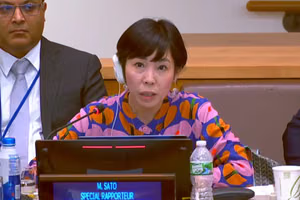
UN Special Rapporteur on human rights in Iran Mai Sato told the UN General Assembly on Wednesday that Iranian authorities had executed at least 34 people in connection with the January protests and conducted mass trials resulting in death sentences.

She cited one case in which 34 defendants were tried in five days, with 12 sentenced to death and seven subsequently executed.

Sato said the proceedings failed to establish individual criminal responsibility and warned that thousands of detainees had been held on national security charges, often without access to their families or lawyers.

"The result is that there is no lawful way left to dissent," she said.

The UN's Independent International Fact-Finding Mission concluded that the suppression of the January protests amounted to crimes against humanity, a finding Sato supported.