Russian foreign minister arrives in Tehran for talks with Iranian officials
Russian Foreign Minister Sergei Lavrov arrived in Tehran on Monday for an official visit and talks with Iranian officials, Iranian state media said.
Russian Foreign Minister Sergei Lavrov arrived in Tehran on Monday for an official visit and talks with Iranian officials, Iranian state media said.
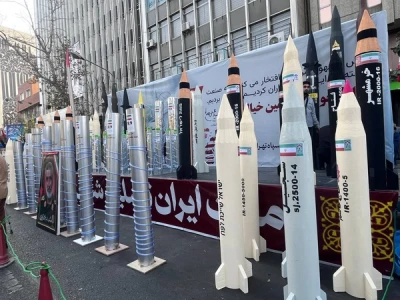
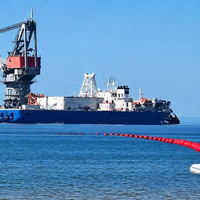
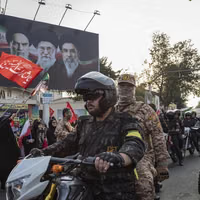
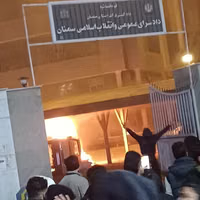
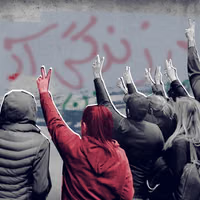






Iran's police intelligence agency has sent threatening text messages warning citizens of possible prosecution over online activity, including people who do not use social media, according to accounts shared with Iran International.
Several citizens told the messages appeared designed to spread fear, with some reporting receiving the warnings multiple times a day.
One message cited several articles of Iran's Islamic Penal Code and warned the recipient that their involvement in approving and sharing "criminal content" online was under investigation.
"They send us 20 of these messages a day," one person told.
Another said they regularly received similar warnings but paid no attention to them.
Warnings reach people without social media accounts
Several said the messages were being sent to people who had no social media presence, raising questions about whether authorities were targeting specific online activities or distributing warnings more broadly.
"They send these messages in bulk. My father received one too, even though he doesn't have a social media account at all," one person wrote.
Another citizen said a security guard at their workplace had received a similar message despite using a basic mobile phone and not having Instagram.
One recipient suggested the warnings were being sent randomly because authorities knew large numbers of Iranians were active on social media.
The messages follow previous efforts by Iranian authorities to monitor online activity and warn citizens against publishing content deemed unlawful.
Citizens reject attempts to intimidate social media users
Some recipients responded defiantly, describing the warnings as another attempt by security agencies to discourage public criticism.
"They want to create fear. How are you going to frighten people with text messages when they are not afraid of bullets and executions?" one citizen wrote.
Another complained about restrictions on freedom of expression, saying: "We even need permission to breathe. We have no right to protest."
In October 2024, Tehran's prosecutor's office announced legal action against several individuals following online monitoring, citing the publication of "false news" and content allegedly intended to undermine public psychological security.
"If we speak out, our pages are shut down, we are imprisoned, tortured and executed," another wrote.
One citizen pointed to authorities' treatment of memorials for people killed during protests, arguing that a government fearful of the graves of protest victims would also fear social media posts.
Other recipients responded with the phrase "Last days, last desperate measures," expressing their belief that the warnings reflected the authorities' weakening position.
SIM card blocks and security cases add to pressure
Beyond warning messages, some described restrictions on mobile phone services and involvement by security and judicial authorities.
One said their mother's SIM card had been blocked without explanation, and attempts to restore service had resulted in the family's case being referred to the Revolutionary Guards.
"The country's prosecutor's office blocked my mother's phone line for no reason. We tried to get it unblocked, but the matter ended up with the Revolutionary Guards, and they opened a case against us," the person told Iran International.
The citizen said officials had not explained why the SIM card was blocked or identified any alleged offense.
Further attempts to resolve the matter had created serious difficulties for the family, the person added.
Iran International reported on September 24 that SIM cards were being blocked over political Instagram stories and likes, with restrictions previously directed mainly at political activists and journalists increasingly affecting ordinary social media users.
Information received by Iran International on September 12 also pointed to a new wave of SIM card suspensions targeting political and civil activists in several Iranian cities without prior notice.
People in Iran have described deteriorating hospital services, rising treatment costs, shortages of medical staff and equipment, and long waits for care, as healthcare workers struggle with low wages and growing workloads, according to accounts shared with Iran International.
The complaints come as health officials report a growing shift from private to public hospitals because of financial hardship, with the country's nursing workforce at roughly half the national standard.
Rising costs and pressure on public hospitals
Four hospitals refused to admit a patient because they lacked specialist doctors, forcing the patient to seek private treatment at a cost of 200 million rials (about $76) in a single night, according to an account sent to Iran International.
The US dollar is trading at around 2.62 million rials in Iran, reflecting the sharp decline in the national currency's purchasing power.
Iran's minimum monthly base wage stands at around 166 million rials ($63), meaning the patient's single-night medical bill exceeded a full month's minimum wage, even before other living expenses.
Another patient said an emergency department at a public hospital charged around 100 million rials (about $38), provided no invoice and said emergency expenses were not covered by insurance.
A resident of Shiraz described worsening conditions at hospitals, where shortages of doctors and nurses have disrupted patient care.
Economic hardship and higher medical tariffs have shifted 30 to 40 percent of patient visits from private facilities to public hospitals this year, Yaser Foroughi, deputy for treatment at Iran University of Medical Sciences, said.
Other patients described overwhelmed medical staff struggling to meet growing demand despite efforts to provide adequate care.
Patients face steep bills and demands for unofficial payments
Several citizens described doctors requesting cash or gold coins outside formal hospital payment procedures before performing surgery.
One patient said a doctor at Tehran's Atieh Hospital quoted 4 billion rials for leg surgery alone, with at least two weeks of hospitalization due to an infection and accommodation for a companion expected to cost another 15 billion rials.
Others complained about rising out-of-pocket expenses and insurance coverage that failed to meet their medical needs.
Equipment shortages and long treatment delays
Patients said hospitals were running short of basic supplies, forcing them to purchase items including bedsheets, syringes and gloves themselves.
Healthcare workers and patients had previously told Iran International in September that syringes, sterile gauze, intravenous cannulas and latex gloves were either scarce or subject to rationing.
Another patient said MRI machines at public hospitals were frequently broken or required waits of up to three months for appointments.
Some private hospitals were also refusing supplementary health insurance, according to accounts submitted to Iran International.
One person said emergency services refused to dispatch an ambulance for their 73-year-old mother, who has cancer, after she fell, because two hours had passed since the fall.
Several patients also complained about declining patience among hospital staff when dealing with patients and their families.
Nurses say they are doing the work of two people
Iran's nursing workforce stands at roughly half the national standard, forcing individual nurses to carry the workload of two people, Ahmad Nejatian, head of Iran's Nursing Organization, said on October 17.
Nurses work an average of 80 hours of overtime each month, Nejatian said.
Healthcare workers linked deteriorating services to severe staffing shortages, exhaustion and inadequate pay.
One nurse said better salaries and living conditions, comparable to those in Persian Gulf countries, Europe and the United States, would improve healthcare workers' ability to care for patients.
A patient hospitalized for 12 days, however, described nurses continuing to treat patients respectfully and work diligently despite severe staff shortages and demanding conditions.
Low wages deepen pressure on healthcare workers
One healthcare worker said medical staff were expected to provide specialized care, particularly in intensive care units, on monthly salaries of just 250 million to 300 million rials ($95–$115), with a housing allowance of 10 million rials (about $4).
Another citizen blamed the government's economic policies for making it increasingly difficult for healthcare workers to concentrate on their duties.
Some nurses have gone months without receiving their salaries, leaving them with little motivation to train new staff, a medical trainee told Iran International in September.
The accounts point to mounting pressure on Iran's healthcare system, with rising treatment costs pushing more patients toward overstretched public hospitals as staff shortages, low wages and equipment shortages constrain the care available to them.
US President Donald Trump and Israeli Prime Minister Benjamin Netanyahu escalated threats against Iran on Sunday, and Tehran warned of retaliation even as diplomatic efforts continued over the Strait of Hormuz and the wider conflict.
Trump warned that the United States could “soon finish the job” against Iran unless Tehran changed course, while giving Netanyahu his “complete and total endorsement” ahead of Israel’s October 27 election.
“They have been systematically destroyed, both militarily and financially, and unless they change their ways, rapidly, we will soon finish the job,” Trump wrote on Truth Social.
Trump suggested Washington could take on the fight itself if Netanyahu failed to remain in power, saying that with the “wrong Leader” in Israel, “America will have to do this work ourselves.”
In a briefing with Israeli journalists on Sunday, Netanyahu said bringing down the Islamic Republic remained a key Israeli objective and that he had directed the country's security agencies to pursue it.
Netanyahu said 90% of the work required to defeat Israel's enemies had been completed, while pointing to Iran's economic crisis and protests as signs of what he described as the government's weakness.
“We must bring this regime down once and for all,” Netanyahu said, adding that Israel was prepared to act independently of Washington if necessary.
Responding later to Trump's endorsement, Netanyahu said: “Together we will complete the mission!”
Tehran answers threats
Iranian officials responded with a series of warnings against renewed US or Israeli military action.
Foreign Minister Abbas Araghchi directly challenged Trump's “finish the job” language, saying Iran had emerged stronger from the previous confrontation.
“Want to try your luck again? Be our guest. But be careful; we have unfinished jobs too,” Araghchi wrote on X.
He also accused Netanyahu of seeking to draw the United States into another war to advance his own political interests.
Iran's parliament also approved Mehrdad Akhlaghi Ketabchi as defense minister on Sunday, putting a veteran of the country's missile and aerospace industries in charge of its defense apparatus.
Akhlaghi warned Trump against another US attack, saying Washington should instead focus on getting its forces out of the region safely.
Other Iranian military officials issued similar warnings. Armed Forces Chief of Staff Ali Abdollahi said another attack would draw a response “different from, and more severe than before,” while an IRGC spokesman threatened a devastating response against Israel if Iran's energy infrastructure were targeted.
Diplomacy remains on table
Despite the escalating rhetoric, Tehran said its proposal for reopening the Strait of Hormuz and restarting negotiations with Washington remained available.
Araghchi said Iran's seven-day proposal, first presented in September, remained on the table as Tehran reviewed Washington's response. Under the plan, the strait would reopen on the sixth day and negotiations would begin on the seventh if Washington accepted Iran's conditions.
Iran's conditions include lifting the US blockade on its ports, removing sanctions on oil exports and ending hostilities across regional fronts.
Washington, meanwhile, wants Iran to agree to significant reductions in uranium enrichment, while Tehran wants initial talks focused on restoring security and oil flows through the strait.
The Gulf Cooperation Council also pushed for a diplomatic solution on Sunday during a meeting of its foreign ministers in Bahrain.
The GCC condemned continued Iranian missile and drone attacks against its member states, demanded an immediate end to the attacks and called for the restoration of maritime security and freedom of navigation through the Strait of Hormuz.
The bloc also called for a return to dialogue and diplomacy, but said any understandings with Tehran should address Iran's nuclear and missile programs, drones and support for proxies, with GCC states involved in negotiations affecting their security.
Tensions persist at sea and across region
Iran's Revolutionary Guards Navy said an oil tanker struck a naval mine south of the Strait of Hormuz on Sunday, causing an explosion and fire in its engine room. The Guards warned that vessels switching off their navigation systems while transiting the waterway would be classified as “hostile vessels.”
Separately, UK Maritime Trade Operations said a southbound tug northeast of Khor Fakkan in the UAE was struck by two unknown projectiles, damaging the vessel and causing one minor casualty. The tug continued on its route.
The regional confrontation also continued around Saudi Arabia. The GCC condemned escalating Houthi attacks and reaffirmed its collective support for Riyadh.
Egypt said it was prepared to provide “all necessary and possible forms of support” to Saudi Arabia. President Abdel Fattah el-Sisi had sought parliamentary authorization on Saturday for the military to help defend the kingdom if Riyadh requested assistance.
Retirees staged protests in several Iranian cities on Sunday over soaring living costs, inadequate pensions and healthcare problems, with some demonstrators also chanting against government corruption, repression and executions.
Social Security and steel industry retirees gathered in Tehran, Rasht, Kermanshah, Isfahan, Shush and Ahvaz, demanding higher pensions, payment of overdue benefits and improved access to healthcare.
Videos obtained by Iran International showed protesters chanting slogans including "Our enemy is right here, they lie when they say it's America" and "Cut back on one case of embezzlement and solve our problems."
In Tehran, retirees gathered outside the headquarters of the Social Security Organization, Iran's state pension and social insurance body, chanting "High prices, embezzlement — this is your economy," according to Pezhvak-e Kar Iran, a labor news outlet affiliated with the Iran Labor Confederation Abroad.
In the northern city of Rasht, demonstrators also condemned executions, chanting "We swear by the blood of our comrades, we will stand until the death sentences are overturned."
More than 70 political prisoners have been executed since December 2025, while at least 20 others face execution on politically motivated charges.
The US-based Human Rights Activists in Iran group said in an October 9 report that at least 2,003 people had been executed over the preceding year, a 29% increase from the previous 12-month period.
In the western city of Kermanshah, retirees protested the declining purchasing power of their pensions, chanting "Where are the oil dollars? We bear the inflation" and "War and sanctions are excuses; our lives are the evidence."
Protesters also demanded the release of imprisoned workers, teachers and protesters, including labor activist Nahid Khodajoo, who was arrested at her home by security forces about two weeks ago. Her whereabouts remain unknown.
In the central city of Isfahan, retired steelworkers marched to the provincial governor's office, demanding free and continuous healthcare, payment of overdue benefits and pensions equivalent to 90% of the salaries of comparable active workers.
Iran's semi-official ILNA news agency reported that repeated promises by officials to address the steelworkers' grievances had not been fulfilled.
In the southwestern city of Shush, retired workers from the Haft Tappeh sugarcane complex protested low pensions, inflation, unemployment, housing shortages and the suppression of independent labor organizations, according to the Haft Tappeh Sugarcane Workers' Syndicate.
"We will fight, we will die, we will win our rights," protesters chanted.
In nearby Ahvaz, retirees gathered outside the provincial Social Security headquarters, demanding overdue pension increases and protesting rising prices.
"Our expenses are in dollars, but our salaries are in rials," demonstrators chanted, according to the Iranian Retirees Council. Other slogans included "No to executions" and "Unity against poverty and corruption."
Retirees told ILNA that pensions below the poverty line had made it increasingly difficult to afford basic necessities, including food, medicine and medical care.
Iran's base monthly minimum wage stands at approximately 166.3 million rials ($63 at the October 18 free-market exchange rate), excluding additional allowances.
Years of inflation and the declining value of the rial have eroded purchasing power, fueling recurring demonstrations by retirees and workers demanding higher wages, improved healthcare and payment of outstanding benefits.
Iran's parliament speaker said a "Persian Gulf Data Authority" was coming and urged regional governments and investors to withhold resources from AI companies involved in military operations, amid threats by Iranian hardliners against digital infrastructure across the region.
"The Persian Gulf Data Authority is coming," Mohammad Bagher Ghalibaf wrote on X Sunday.
"To governments, funds, and firms in the region: you are kindly advised to give no resources to any AI or data company aiding invasions or killing children. No finance, equity, land and energy."
Ghalibaf did not explain how the proposed authority would operate, what powers it would have or how Iran could enforce restrictions on companies operating elsewhere in the region.
His remarks followed a series of warnings by senior Iranian officials and hardliners about targeting digital infrastructure across the Persian Gulf.
Hardliners threaten regional digital infrastructure
Last week, Mohsen Rezaei, secretary of Iran's Supreme National Security Council, warned that undersea communications cables, data centers and artificial intelligence facilities could become targets if war with the United States and Israel resumed.
"If war breaks out, many cables, data centers and artificial intelligence facilities, valued at $2 trillion, will be within range," Rezaei said, according to Iranian state media.
He said American technology assets in the United Arab Emirates and around the Strait of Hormuz had not yet been included among Iran's targets but could be struck in a renewed conflict.
The following day, Hossein Shariatmadari, editor-in-chief of the hardline Kayhan newspaper and the supreme leader's representative at the publication, endorsed Rezaei's warning.
In an article titled "Well Done, Brother Mohsen!", Shariatmadari called for using undersea fiber-optic cables running through the Persian Gulf and the Strait of Hormuz to pressure Washington and its allies.
He claimed that damaging the cables could disrupt more than 80 percent of commercial, banking, military and AI-related communications, an estimate that has not been independently verified.
The IRGC-affiliated Tasnim News Agency also backed threats against AI infrastructure, arguing in an article titled "Why Is Artificial Intelligence on the Target List?" that attacks on AI centers could undermine US technological competition with China, deter investment and put pressure on American stock markets.
Shariatmadari had previously urged Iran's military and Islamic Revolutionary Guards on September 3 to disrupt or sever international fiber-optic cables beneath the Persian Gulf and the Strait of Hormuz.
In May, Tasnim proposed imposing licensing and annual renewal fees on foreign operators of undersea internet cables passing through the strait.
It also called for major technology companies, including Meta, Amazon and Microsoft, to operate under Iranian law and proposed granting Iranian companies exclusive control over cable maintenance and repairs.
Previous threats against technology companies
Iran's Revolutionary Guards had already threatened major American technology companies operating in the Middle East during the war earlier this year.
On March 31, the IRGC published a list of 18 companies, including Microsoft, Google, Meta, Apple, Oracle, Nvidia and the UAE-based artificial intelligence company G42, warning that their regional operations could be targeted.
The Guards accused American technology and AI companies of assisting US military operations against Iran and warned employees to leave their workplaces.
The threats followed Iranian drone attacks in early March that damaged Amazon Web Services data centers in the United Arab Emirates and Bahrain.
Amazon said two facilities in the UAE were directly struck, while a nearby drone strike caused physical damage to its infrastructure in Bahrain.
The company reported structural damage, power disruptions and cloud service outages affecting customers across the region.
The Persian Gulf has become an important hub for American technology companies expanding their cloud computing and artificial intelligence operations, with the UAE among the countries hosting major investments in data centers.
Undersea fiber-optic cables are also critical to the region's digital infrastructure, carrying international internet traffic and supporting financial transactions, cloud computing and government communications.


