Trump warned that the United States could “soon finish the job” against Iran unless Tehran changed course, while giving Netanyahu his “complete and total endorsement” ahead of Israel’s October 27 election.
“They have been systematically destroyed, both militarily and financially, and unless they change their ways, rapidly, we will soon finish the job,” Trump wrote on Truth Social.
Trump suggested Washington could take on the fight itself if Netanyahu failed to remain in power, saying that with the “wrong Leader” in Israel, “America will have to do this work ourselves.”
In a briefing with Israeli journalists on Sunday, Netanyahu said bringing down the Islamic Republic remained a key Israeli objective and that he had directed the country's security agencies to pursue it.
Netanyahu said 90% of the work required to defeat Israel's enemies had been completed, while pointing to Iran's economic crisis and protests as signs of what he described as the government's weakness.
“We must bring this regime down once and for all,” Netanyahu said, adding that Israel was prepared to act independently of Washington if necessary.
Responding later to Trump's endorsement, Netanyahu said: “Together we will complete the mission!”
Tehran answers threats
Iranian officials responded with a series of warnings against renewed US or Israeli military action.
Foreign Minister Abbas Araghchi directly challenged Trump's “finish the job” language, saying Iran had emerged stronger from the previous confrontation.
“Want to try your luck again? Be our guest. But be careful; we have unfinished jobs too,” Araghchi wrote on X.
He also accused Netanyahu of seeking to draw the United States into another war to advance his own political interests.
Iran's parliament also approved Mehrdad Akhlaghi Ketabchi as defense minister on Sunday, putting a veteran of the country's missile and aerospace industries in charge of its defense apparatus.
Akhlaghi warned Trump against another US attack, saying Washington should instead focus on getting its forces out of the region safely.
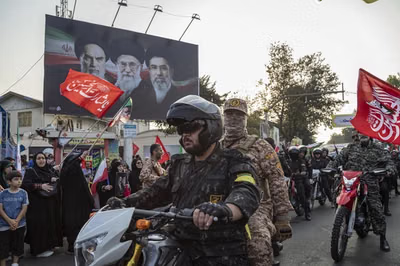
Other Iranian military officials issued similar warnings. Armed Forces Chief of Staff Ali Abdollahi said another attack would draw a response “different from, and more severe than before,” while an IRGC spokesman threatened a devastating response against Israel if Iran's energy infrastructure were targeted.
Diplomacy remains on table
Despite the escalating rhetoric, Tehran said its proposal for reopening the Strait of Hormuz and restarting negotiations with Washington remained available.
Araghchi said Iran's seven-day proposal, first presented in September, remained on the table as Tehran reviewed Washington's response. Under the plan, the strait would reopen on the sixth day and negotiations would begin on the seventh if Washington accepted Iran's conditions.
Iran's conditions include lifting the US blockade on its ports, removing sanctions on oil exports and ending hostilities across regional fronts.
Washington, meanwhile, wants Iran to agree to significant reductions in uranium enrichment, while Tehran wants initial talks focused on restoring security and oil flows through the strait.
The Gulf Cooperation Council also pushed for a diplomatic solution on Sunday during a meeting of its foreign ministers in Bahrain.
The GCC condemned continued Iranian missile and drone attacks against its member states, demanded an immediate end to the attacks and called for the restoration of maritime security and freedom of navigation through the Strait of Hormuz.
The bloc also called for a return to dialogue and diplomacy, but said any understandings with Tehran should address Iran's nuclear and missile programs, drones and support for proxies, with GCC states involved in negotiations affecting their security.
Tensions persist at sea and across region
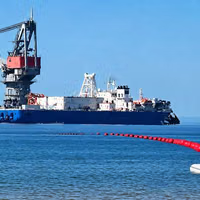
Iran's Revolutionary Guards Navy said an oil tanker struck a naval mine south of the Strait of Hormuz on Sunday, causing an explosion and fire in its engine room. The Guards warned that vessels switching off their navigation systems while transiting the waterway would be classified as “hostile vessels.”
Separately, UK Maritime Trade Operations said a southbound tug northeast of Khor Fakkan in the UAE was struck by two unknown projectiles, damaging the vessel and causing one minor casualty. The tug continued on its route.
The regional confrontation also continued around Saudi Arabia. The GCC condemned escalating Houthi attacks and reaffirmed its collective support for Riyadh.
Egypt said it was prepared to provide “all necessary and possible forms of support” to Saudi Arabia. President Abdel Fattah el-Sisi had sought parliamentary authorization on Saturday for the military to help defend the kingdom if Riyadh requested assistance.