Recent Houthi attacks on Saudi Arabia, including Riyadh’s international airport, have sharpened questions about how far Washington and other governments are prepared to go in supporting the kingdom.
Bohl, a senior analyst at the risk intelligence firm RANE, said the least costly US option would be to drop objections similar to those Washington raised over Saudi-led military operations before the 2022 truce. Those concerns included civilian casualties from airstrikes and the humanitarian consequences of an offensive on the Red Sea port city of Hudaydah.
Washington helped push for a halt to the offensive on Hudaydah in 2018. The UN-brokered Stockholm Agreement established a ceasefire there later that year.
“That will cost the United States virtually nothing,” Bohl said of lifting political objections, referring to munitions, troops and additional spending.
Greater intelligence support, assistance in targeting Houthi forces or direct American airstrikes would carry military, economic and especially political costs, he said.
“It will look like President Trump is now expanding the war that he seems to be trapped in with the Iranians.”
Air power has limits
Air power alone is unlikely to defeat the Houthis, Bohl said, but could help capable ground forces advance and hold territory.
He pointed to Yemeni units backed by the Saudi-led coalition, including the Giants Brigades, whose ability to capture and retain territory could depend heavily on tactical air support.
The question is whether those forces have recovered sufficiently from recent Houthi advances to mount a sustained counteroffensive.
Bohl said forces aligned with Yemen’s internationally recognized government had appeared disorganized after a Houthi advance toward the southern end of the Red Sea coast. Some units were now regrouping and resuming offensive operations, he said, but their ability to coordinate remained uncertain.
“The big question is, will they gain enough coherence in order to push back the Houthi advances around Taiz, and more importantly, push up the Red Sea coast towards Hudaydah.”
More support for defense than offense
Foreign governments are more willing to help defend Saudi Arabia than to support a campaign to recapture Houthi-held territory, Bohl said.
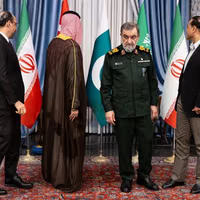
He cited Pakistani military support and Turkish preparations to provide defensive assistance as examples of efforts to protect the kingdom. Such support, he said, was primarily aimed at defending Saudi airspace and preventing further attacks.
An offensive inside Yemen would be a harder commitment to secure.
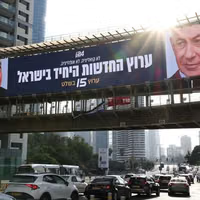
Israeli Prime Minister Benjamin Netanyahu is seeking Saudi consent through US mediation for Israel to join the campaign against the Houthis, Haaretz reported on Monday.
Saudi Crown Prince Mohammed bin Salman opposes Israeli participation over concerns about a public backlash, the newspaper said. Netanyahu reportedly hopes cooperation would strengthen ties with Riyadh and help advance normalization.
Many governments see the country as “a geopolitical black hole that their forces will disappear into and that they’ll never achieve victory,” Bohl said.
They also look to Washington to provide military capabilities they cannot deploy at comparable scale. Turkey could influence events in its neighborhood, he said, but would face greater constraints in sustaining an extensive campaign as far away as Yemen.
Whether an effective offensive coalition emerges will depend heavily on Washington’s objectives, Bohl said. Those could range from reversing recent Houthi gains to supporting a broader effort to recapture territory, potentially including Sanaa.
The United States’ 2025 air campaign ended with an Oman-brokered ceasefire with the Houthis in May that year. A campaign supporting territorial advances would raise a different question: how far Washington was prepared to help allied ground forces go.
“America’s role in it will be instrumental in us understanding whether or not a coherent offensive coalition can actually be put together and have an impact on conditions on the ground.”