Family of executed January protester says Iran concealed burial site
The family of Alireza Raisi, executed this week over the January protests in Isfahan, still does not know where he was buried after security agents took his father blindfolded to the burial site, a source close to the family told Iran International.
The source said Raisi's father was driven for about two hours with two other people and was not allowed to carry a mobile phone. He remained blindfolded during the journey to what the source described as a desert area near a small village outside Isfahan.
The burial did not take place in the village cemetery, the source said, and authorities did not give the family the exact location of the grave.
A senior hardline Iranian lawmaker has been named in an allegation involving unauthorized excavation for antiquities and treasure, while parliament is also examining a reported excavation case involving an unnamed member of the legislature.
Investigative journalist Yashar Soltani said he had obtained documents indicating that Mojtaba Zolnouri, a lawmaker from Qom and a figure associated with the hardline Paydari Front, was involved in unauthorized digging for historical artifacts and treasure.
“After oil, the Paydari camp is now after treasure,” Soltani wrote on X on Tuesday.
“I have obtained documents indicating that Mojtaba Zolnouri, the lawmaker representing Qom, was involved in unauthorized excavation in search of historical artifacts and treasure,” he added.
Soltani did not publish the documents or say where or when the excavation allegedly took place. The allegation has not been independently verified, and Zolnouri has not publicly responded.
Parliament examining excavation case
Journalist Zahra Abdollahi separately said the issue of a lawmaker involved in excavation for buried treasure had been raised at a recent meeting of parliament’s Internal Affairs and Councils Committee and referred to the body that oversees lawmakers’ conduct.
“At a recent meeting of parliament’s Internal Affairs and Councils Committee, the issue of a lawmaker’s misconduct in connection with digging for treasure and buried antiquities was raised, and it was decided that the matter should be reviewed by the board overseeing lawmakers’ conduct,” she wrote on X.
Abdollahi did not identify the lawmaker, meaning there is no public evidence establishing that the parliamentary case concerns Zolnouri.
She said she had obtained an official document addressed to a prosecutor concerning excavation at a residential property in a historically sensitive area. According to her account, the letter called for the work to be halted.
Abdollahi said she planned to release further details of the document.
Paydari link comes amid oil-sales scrutiny
Soltani tied his latest allegation to a separate controversy surrounding Iran’s sanctions-era oil sales.
“I previously said that one of the four recipients of 85 million barrels of oil was the son-in-law of the Paydari Front spokesperson,” he wrote.
The reference was to Ruhollah Razavi, whose name has appeared in reporting on the network of trusted intermediaries, known in Iran as “trustees,” used to sell sanctioned oil and move the proceeds back to the country.
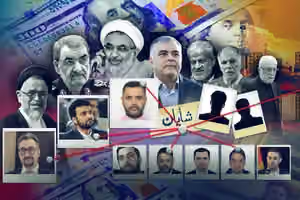
The wider system has come under growing scrutiny over billions of dollars in oil revenues that were not returned to Iran. An Iran International investigation found that members of one network collectively failed to repatriate $11 billion, while confidential documents showed 86 million barrels of oil had been assigned to four intermediaries who already owed money from previous sales.
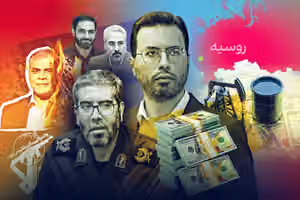
Iran International also reported this week that senior IRGC commander Hossein-Reza Sadeghi and his son Saeed played central roles in efforts to preserve an IRGC Intelligence oil-sales network and shift its financial operations from the United Arab Emirates to Russia.
Two surveys emerging from within or around Iran's political establishment paint a bleak picture of public confidence: deep skepticism toward state institutions, single-digit trust in political officials and overwhelming demand for change.
What they reveal much less clearly is what kind of change Iranians actually want, partly because answering such questions openly can carry serious consequences.
One, presented by Ebrahim Hajiani, a former director of the state-affiliated Iranian Students Polling Agency (ISPA), says the proportion of Iranians seeking "fundamental political change" has risen from 8 to 67 percent in two decades.
The other, supervised by Ali Rabiei, social adviser to President Masoud Pezeshkian, found that about 53 percent supported fundamental reforms, 19 percent wanted regime change and 13 percent favored minor structural adjustments. Only 9 percent supported preserving the status quo.
Despite their different methodologies and categories, the findings converge on one broad conclusion: dissatisfaction with Iran's political and social institutions is deep, and relatively few respondents appear content with the status quo. Hajiani's "fundamental political change," however, cannot automatically be equated with regime change.
The trust figures are similarly stark.
According to Hajiani, only 7 to 8 percent of respondents trust political officials, while trust in the three branches of government ranges between 25 and 30 percent.
Rabiei's survey found trust in the judiciary at just over 30 percent, against more than 54 percent who expressed distrust. The executive branch was trusted by just over 25 percent, while more than 59 percent expressed distrust. Parliament was trusted by 23 percent, with more than 59 percent saying they distrusted it.
The security institutions fare better. Hajiani found that 53 percent trust the regular Army, while both the Islamic Revolutionary Guard Corps and the police are trusted by 46 percent.
Both researchers describe the findings in terms of an institutional crisis. Hajiani speaks of a "crisis of authority" or "crisis of reference," while Rabiei identifies a "crisis of efficiency, trust and political representation."
Hajiani also identifies 2022, the year the Woman, Life, Freedom uprising erupted, as a social watershed, dividing Iranian society into a "before" and "after" in attitudes towards dress codes, family dynamics, religion and the role of women.
Rabiei, meanwhile, argues that a "broad social middle" still exists: a large segment of society that is dissatisfied but seeks reform, stability and gradual improvement rather than upheaval. He says this constituency is poorly represented in the media, political parties and state institutions.
His figures provide some support for that interpretation, but the conclusion should be treated cautiously. The surveys themselves illustrate why.
Hajiani says around 70 percent of those approached by pollsters do not respond. That raises an obvious question over whether those willing to participate are representative of those who refuse, particularly when questions concern the legitimacy of the political system.
Sharq newspaper has previously noted that refusals and evasive answers are particularly common on questions touching on the legitimacy of the government and political system.
In an environment where opposition activity can bring serious consequences, respondents may have reason to be cautious about openly expressing support for replacing the Islamic Republic.
That does not necessarily mean the polling itself is dishonest. Even a methodologically rigorous survey can produce guarded responses when the questions are politically sensitive.
There are other limitations. Neither of the reports as publicly presented provides sufficient detail about sample size, methodology or response rates to allow a full assessment of representativeness.
Their institutional connections also warrant caution: Rabiei is a presidential adviser, while Hajiani is a former head of a state-affiliated polling organization.
A potentially more consequential problem is harder to measure: who agrees to answer sensitive questions, how those questions are framed, and which findings ultimately become public.
That makes precise conclusions about how many Iranians want reform, fundamental change or the replacement of the Islamic Republic difficult to draw from these surveys alone.
Still, even research emerging from institutions connected to Iran's establishment describes a society in which confidence in political leaders is extremely low, demand for substantial change is widespread and only a small minority appears satisfied with the status quo.
Iran’s central bank chief has rejected what he portrays as a US prediction of economic collapse, even as the rial trades near record lows and Iranian oil exports have fallen to zero.
Central Bank Governor Abdolnaser Hemmati said Tuesday that a US prediction of economic collapse was failing to materialize, pointing to what he described as the continued functioning of Iran’s economy despite months of war, sanctions and restrictions on its oil trade.
“There are only five days left of that two-week promise they made that the country’s economy was supposedly going to collapse,” Hemmati told state television. “We are sitting here now talking about the country’s economic achievements, and I tell them that this will not happen.”
Hemmati appeared to be referring to recent remarks by US Treasury Secretary Scott Bessent, who said on Sept. 27 that Iran had about 15 million barrels of oil left in transit and would make its final deliveries to China within roughly two weeks, after which it would have “nothing left to trade for anything.”
The remarks come as Washington intensifies economic pressure on Iran, targeting its oil revenues and access to the international financial system.
Hemmati played down the impact of reduced access to foreign currency, saying Iran had supplied about $24.9 billion since the beginning of the Iranian calendar year in March, compared with $28 billion during the same period a year earlier.
The central bank has also moved to provide up to $2 billion to the foreign exchange market in an effort to support the rial.
“The reason we provided $2 billion in foreign currency for the market was to make Trump and his Treasury secretary understand that we have no problem providing foreign currency,” Hemmati said.
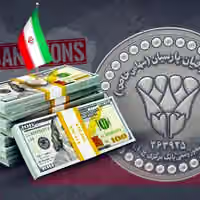
The rial nevertheless continued to lose value, falling to about 2.688 million against the US dollar on the unofficial market on Saturday, a record low. The currency has lost more than half its value over the past year, while inflation has risen above 70%.
Pressure on Iran’s principal source of foreign revenue has also intensified. Iranian oil exports fell to zero in September amid the US naval blockade, even as Persian Gulf oil flows excluding Iran recovered to more than 81% of their pre-war levels.
Bessent said Tuesday that Iran had not loaded a single barrel of crude onto a vessel since Aug. 25.
Despite playing down the impact of the pressure on Iran’s economy, Hemmati acknowledged the difficulties facing ordinary Iranians.
“We truly understand the difficulties and pressures people are facing,” he said. “We are doing our best, and we are concerned as well. We are trying to minimize these problems.”
IRGC Commander-in-Chief Ahmad Vahidi attends a ceremony to pay his respects to late Supreme Leader Ali Khamenei, July 5, 2026. In 2022, Vahidi was Iran's Interior Minister and led the State Security Council
Iran’s repression of the Woman, Life, Freedom uprising was coordinated from the top through a functioning chain of command linking senior authorities to security forces on the streets, Amnesty International says.
Amnesty cites leaked orders, official statements, appointment records and documents showing internal reporting and coordination.
Among the evidence is an order issued by Iran’s General Staff of the Armed Forces on September 21, 2022, which moved through the police’s national command system to county-level forces and was entered into local police records.
It examines how security councils developed policy, ministers transmitted binding instructions, commanders deployed forces and government bodies funded prolonged operations.
Security councils set policy
At the national level, the Supreme National Security Council sets Iran’s defence and security strategies, including its response to protests. The president chairs the council, whose membership includes senior political, military and intelligence officials.
The State Security Council, headed by the interior minister, coordinates domestic security policy. Provincial and county security councils, chaired by governors, monitor local conditions, report upward and coordinate the responsibilities of security bodies.
During the 2022 uprising, these structures connected national decisions to operations in individual provinces and counties, Amnesty found.
The interior minister at the time, Ahmad Vahidi, held overlapping positions that gave him authority across the system. Alongside leading the ministry and State Security Council, he served as the supreme leader’s deputy commander-in-chief for police affairs, placing him above the police’s general commander in its command structure.
State Security Council resolutions became binding orders when communicated for implementation by the interior minister.
Amnesty examined leaked resolutions dated September 18 and 26, 2022, accompanied by cover letters signed by then deputy interior minister Majid Mir Ahmadi. Those letters transmitted instructions to senior officials and required implementation and reporting.
Police and IRGC units carried out operations
The police, known by the Persian acronym FARAJA, and the Islamic Revolutionary Guard Corps were the principal security bodies involved in lethal protest dispersals.
Within FARAJA, the Prevention Police oversaw police stations and provided the initial response to protests. Its Assistance Cohorts supplied additional personnel when stations needed support.
The Special Cohorts, commanded nationally in 2022 by Hassan Karami, were deployed when protests exceeded the capacity of those forces to disperse them.
The IRGC operated through provincial corps overseen by regional headquarters. Their subordinate forces included operational divisions, Security Cohorts and county-level Basij structures.
Amnesty found that Basij’s recruitment, training, mobilization and remuneration were governed through the IRGC, placing them within its institutional structure.
Specific order
Amnesty obtained and verified a September 21 instruction from the General Staff that called for a “firm and severe” response. Two days later, the police commander in Mazandaran province instructed forces to “respond mercilessly and go as far as causing death.”
Other orders went into operational detail, specifying the forces to deploy, their locations and the weapons and ammunition to use.
A leaked letter from Vahidi to then president Ebrahim Raisi, dated January 8, 2023, recorded a State Security Council decision the previous October to allocate nine trillion rials to the Interior Ministry for security costs.
Amnesty put that sum at approximately $22 million at the market exchange rate at the time. The letter also described costs associated with transporting, feeding and accommodating thousands of deployed personnel.
Responsibility beyond those who fired
Amnesty assessed commanders under the principle of superior responsibility, examining their control over subordinates, knowledge of crimes and failure to prevent or punish them.
For Interior Ministry officials, it focused on aiding and abetting, reflecting their alleged role in coordinating and facilitating operations.
The organization said commanders continued to praise security forces and order further repression despite mounting evidence of crimes.
It listed 10 national officials and 77 regional, provincial and county officials associated with its detailed investigations in western Iran, pointing out that the list was not exhaustive and that individual criminal responsibility must be established through independent investigations and fair prosecutions.
The organization said no responses had been received to letters seeking comments from Iran’s leadership and senior officials before publication.
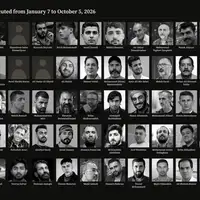
Names and photos of the political prisoners executed in Iran since January protests
Iran has executed nearly two people a week in political and security cases since the January protests, including over protest- and war-related accusations, while another 194 people face death sentences, an Iran International review of cases shows.
Among those facing execution are 113 people arrested in connection with the January protests, as well as 13 women and at least seven people who were under 18 at the time of the alleged offenses.
At least 70 people were executed from January 7 to October 5. Human rights organizations and activists say the figures are minimum totals, covering only cases that have been reported and verified.
Of the 70 people executed, 35 were put to death in cases connected to the January protests, nine in cases linked to the 12-day and 40-day wars, and 26 in other political and security cases.
The executions include people arrested in recent months as well as prisoners whose cases date back years, including to the 2022 Woman, Life, Freedom uprising and others who had spent close to nine years in prison.
January-related executions
Iran Human Rights had documented 32 executions linked to the January protests by Oct. 3. The subsequent executions of Alireza Raisi and Alireza Sepahi in Isfahan, together with that of Arvin Kheirkhah in Shahroud, bring the number identified in Iran International’s review to 35.
Iran Human Rights says defendants have been sentenced following proceedings marred by allegations of torture, forced confessions and denial of fair-trial rights.
Another nine people executed during the period had cases linked to the two recent wars.
The remaining 26 were executed in other political and security cases involving alleged links to opposition groups, earlier protests or espionage accusations.
Thirteen were accused of working with or belonging to opposition groups: nine of links to the People’s Mojahedin Organization of Iran, two to the Democratic Party of Iranian Kurdistan and four of membership in Jaish al-Adl or Ansar al-Furqan.
Their cases predated the January protests and the two recent wars.
Seven others were executed on espionage charges. Six had been detained before the 12-day war: four were accused of spying for Israel, with one also accused of working with the United States, and two of spying for an unnamed Arab country. The seventh had also been detained before the two recent wars.
The remaining four included two protesters from the Woman, Life, Freedom uprising and two people accused of membership in ISIS.
The cases of the two alleged ISIS members dated to clashes in the Bamo mountains in 2017. They were executed after nearly nine years in detention and prison.
On death row
At least 194 people in political and security cases are currently under death sentences, according to the human rights reports reviewed by Iran International.
Of those, 113 are linked to the January protests, 10 to the two recent wars and 71 to other political and security cases. Their judicial status varies, including initial death sentences, sentences upheld on appeal and cases undergoing further review.
Among the 71 prisoners whose cases are unrelated to the January protests or the wars are 19 detained over earlier protests: 17 linked to the 2022 Woman, Life, Freedom uprising and two to the November 2019 protests.
Another 44 have political and security cases dating from before the recent wars and January protests.
They range from political, civil and humanitarian activity to alleged links with the People’s Mojahedin, Kurdish, Baluch and Arab groups and espionage accusations. One prisoner has been sentenced to death for “insulting the Prophet.”
Two other cases began with resistance to the seizure of agricultural land in November 2025 and resulted in death sentences for “corruption on Earth.”
Three prisoners are accused of killing a member of the Basij, while two others face sentences in older political cases.
Women and juveniles
All 70 people executed in the period were men, but 13 women are among the 194 currently under death sentences. Seven have cases linked to the January protests, two to the wars and four to other political and security cases.
At least seven of those facing execution were under 18 when the alleged offenses took place. Five are defendants in cases stemming from the January protests, one is linked to the 2022 uprising and one to an older case.
Amnesty International has warned about the risk of execution facing five of the juvenile defendants.
Another case documented by HRANA involved a detainee who was 17 years and nine months old in June 2026, meaning he was under 18 during the January protests.
Available information is insufficient to establish how many of those already executed, if any, were under 18 at the time of the alleged offenses.
An age range could be determined for 53 of the 70 people executed and 116 of the 194 facing execution. Of those, 29 executed prisoners and 68 facing death sentences were younger than 30.
Ethnicity and nationality
Ethnicity is not routinely recorded in judicial or human rights reports, making it impossible to establish the background of most people in the dataset.
Where sources explicitly identified ethnicity, at least 18 of those executed and 51 of those facing execution belonged to ethnic minority groups.
The ethnicity of 48 executed prisoners and 143 facing death sentences could not be determined.
Those executed also included three Afghan nationals, two Iraqi nationals and one Iranian-Swedish citizen. The two Arabs among the foreign nationals were Iraqi citizens.
Among those facing execution are three Afghan nationals, one Turkish national and one Iranian-Swedish citizen. The Turkish national is Kurdish and is also included in the ethnic breakdown.
Hotspots: Karaj and Isfahan
Of the 70 executions, 32 were carried out in Karaj and 12 in Isfahan. Five each took place in Mashhad and Urmia, three each in Qom and Shahroud, and two each in Zahedan, Naqadeh and Kermanshah. Hamedan and Shahrekord recorded one each, while the location of two could not be established.
That means 44 of the 70 executions, or nearly two-thirds, were carried out in Karaj and Isfahan. The figures refer to where sentences were carried out, not the prisoners’ home provinces or places of birth.
At least 32 executions were reported at Qezel Hesar Prison, 12 at Isfahan Central Prison, seven at Urmia Central Prison and five at Vakilabad Prison in Mashhad.
The last reported place of detention could be established for 186 of the 194 people facing execution.
Isfahan accounts for the largest group: 45 were last reported at Isfahan Central Prison, two at Dowlatabad Women’s Prison and one at a juvenile detention center.
Another 32 were held at Qezel Hesar, 14 at Zahedan Central Prison and 12 at Vakilabad. Evin, Adelabad Prison in Shiraz and Sheiban Prison in Ahvaz each held 10.
Allegations of torture
The executions and death sentences come amid repeated warnings from human rights organizations about the handling of the cases.
Iran Human Rights has reported allegations of torture to obtain confessions, violations of fair-trial rights and pressure on prisoners’ families not to speak publicly about their cases.
Human rights groups say restrictions on access to information, a lack of judicial transparency and pressure on families make it difficult to establish the full number of people executed or facing execution.
The 70 executions and 194 death sentences documented in the review therefore represent cases that could be identified and verified, rather than an estimate of the full scale.