• العربية
  • فارسی
Brand
  • Iran Insight
  • Politics
  • Economy
  • Analysis
  • Special Report
  • Opinion
  • Podcast
  • Live TV
  • Iran Insight
  • Politics
  • Economy
  • Analysis
  • Special Report
  • Opinion
  • Podcast
  • Live TV
  • Theme
  • Language
    • العربية
    • فارسی
  • Iran Insight
  • Politics
  • Economy
  • Analysis
  • Special Report
  • Opinion
  • Podcast
  • Live TV
All rights reserved for Volant Media UK Limited
volant media logo

Journalist ties tanker attacks to oil middlemen, drawing treason accusations

Maryam Sinaiee
Maryam Sinaiee

Iran International

Sep 22, 2026, 10:24 GMT+1
Vessels in the Strait of Hormuz, as seen from Musandam, Oman, August 3, 2026.

Iranian investigative journalist Yashar Soltani says the middlemen who move Iran's sanctioned oil revenues had a financial motive to wreck the June deal with Washington, and that the tanker attacks weeks later served it. Hardline outlets have answered with accusations of treason.

Speaking on an online program last week, Soltani said networks built to evade oil sanctions stood to lose from the June memorandum between Tehran and Washington, because implementing it would have cut their role in oil sales.

Three Saudi and Qatari tankers were attacked in the Strait of Hormuz less than three weeks after the memorandum was signed. Soltani said the attacks served to derail the agreement and prevent sanctions on Iranian oil from being lifted for good, keeping the networks in business.

The people he described as trustees are not the traders who sell the oil, he said, but the intermediaries who move the money. He named Ruhollah Razavi, son-in-law of Majid Motaghifar, spokesman for the hardline Paydari Party, as one of four who control much of the trade.

The margins are the point. Moving the proceeds of a single tanker carrying about $90 million of oil costs roughly $4 million through these intermediaries, Soltani said. Through SWIFT, the international banking system Iran is cut off from, it would cost about $500.

He also said the four had run monthly debts to the government in the hundreds of millions of dollars while using the money for other business, putting the monthly average attributed to Hossein Shamkhani, son of the late security chief Ali Shamkhani, at about $800 million.

Iranian outlets have recently named Razavi, Shamkhani and two others as the network's main trustees, and asked how they were chosen and how the system works.

The backlash

Fars News Agency, affiliated with the Revolutionary Guards, said Washington had violated the memorandum, particularly its provision on the Strait of Hormuz, and rejected any suggestion that Iran bore responsibility for its collapse.

"Recent reports, including material published by Yashar Soltani and affiliated media, seek to switch the roles of victim and culprit and portray Iran as responsible for the failure of the memorandum," Fars wrote. "The narrative that vigilantes broke the agreement is simple and attractive, but when placed alongside the successive violations by the United States, it falls apart."

Tasnim, also linked to the Guards, called it performative justice-seeking. "If a nation is told that the war with the United States and Israel is not the product of the wickedness and crimes of these two regimes, but rather the result of the mischief of some people inside the country seeking to continue benefiting economically, what incentive will remain there for unity?" it asked.

The state broadcaster's political program Be Vaght-e Iran argued on social media that no commercial network could have carried out the attacks whatever its motive.

"Trustees have neither a military structure, nor anti-ship cruise missiles, nor links to the command levels of the IRGC and army," the post said. "This type of narrative is not only unprofessional, but also a dangerous and disturbing game aimed at discrediting the defenders of the country's security who have stood by this land for years."

A military analyst in an accompanying video said that while the United States had violated the memorandum, only Iran's wartime command, the Khatam al-Anbiya Central Headquarters, could have ordered missile strikes.

The accusations

Hardline users have accused Soltani of serving those who want to pressure Iran's armed forces.

Ehsan Hosseini, who edits the hardline publication Khat-e Energy, said Soltani was trying to swap one set of trustees for another: "The project Yashar Soltani has launched is not against the trustees; it seeks to oust some and replace them with other trustees, those who failed to return $13 billion in oil revenues and caused the January protests."

Majid Shakeri, an adviser to parliament speaker Mohammad-Bagher Ghalibaf, called the revelations a propaganda campaign by one group of trustees against another. Both groups, he said, had contributed to two wars and to last year's protests, and anyone attributing Iran's response to the American violation to this rivalry deserved a "field trial for wartime treason."

Journalist Davoud Modarresian put the blame on the government, which he said had neither the nerve to leave the dollar-based financial order nor the ability to control the trustees.

"By implementing currency shocks and releasing the dollar exchange rate in December, they pushed the economy to the brink of collapse and created the conditions for the enemy's military greed," he wrote.

Not all of it was hostile. "If oil is sold without obstruction or sanctions by the ministry under the memorandum, and its money returns through transparent channels, the profits of the trustees and the IRGC will be cut," one user wrote, arguing that this pointed to collusion between the two.

Banner

Most Viewed

Turkish Airlines says all Iran flights suspended until March 2027
1

Turkish Airlines says all Iran flights suspended until March 2027

2

Trump weighs Iran options; Tehran signals Hormuz leverage

3
ANALYSIS

Iran factories face deepening raw material shortages

4

Iran threatens regional strikes as MPs question nuclear policy

5

Economic crisis puts Iran’s coal miners at greater risk

Banner

Spotlight

  • Flying to or from Iran? What to know as US pressure squeezes air links

    Flying to or from Iran? What to know as US pressure squeezes air links

  • Iran factories face deepening raw material shortages
    ANALYSIS

    Iran factories face deepening raw material shortages

  • Will shutdowns forced by US blockade damage Iran’s oil wells?
    ANALYSIS

    Will shutdowns forced by US blockade damage Iran’s oil wells?

  • Tehran sees ‌Beijing as potential bridge to Washington
    ANALYSIS

    Tehran sees ‌Beijing as potential bridge to Washington

  • Tehran ‘ashamed’ as Iranians struggle to make ends meet

    Tehran ‘ashamed’ as Iranians struggle to make ends meet

  • Iran faces postwar winter with major gas capacity still offline
    ANALYSIS

    Iran faces postwar winter with major gas capacity still offline

Banner
Banner
•
•
•

More Stories

Flying to or from Iran? What to know as US pressure squeezes air links

Sep 21, 2026, 22:24 GMT+1
•
Negar Mojtahedi
100%
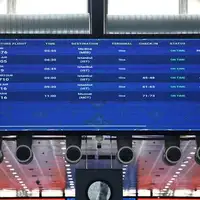
File photo shows a flight board displaying flight information after flights resumed at Imam Khomeini International Airport, amid a ceasefire between U.S. and Iran, in Tehran, Iran, April 25, 2026.

Travel to and from Iran is becoming harder as major foreign airlines, including the flag carrier of Turkey, a key affordable hub for Iranians, suspend services and new US sanctions threaten remaining international routes operated by Iranian carriers.

For Iranians visiting relatives abroad, returning home has become increasingly uncertain. For those living outside the country, reaching parents, children and other loved ones in Iran is becoming just as difficult.

The disruption has left travelers trying to determine which flights are still operating, whether future bookings can be relied upon and what alternatives remain if they cannot fly.

US Treasury Secretary Scott Bessent said Monday that US sanctions would effectively shut Iranian airlines out of international operations from September 23, warning foreign companies against providing them with fuel, ground services or ticket sales.

“All the Iranian airlines will be shut down around the world,” Bessent told CNBC. “If they land, you cannot provide them with fuel, you cannot provide them with landing services, you cannot sell them tickets, or you will be knocked out of the dollar system.”

The warning does not itself close foreign airspace to Iranian aircraft, but raises the risk of US penalties for companies and financial institutions that continue doing business with sanctioned carriers. The practical impact will depend on how governments, airports and service providers respond.

Iran International contacted multiple international airlines and four travel agencies specializing in travel to Iran to establish what options remain for passengers.

Which flights are still available?

Options are increasingly limited and can change at short notice.

Turkish Airlines has suspended all flights to Iran until at least March 2027, a company representative told Iran International by phone, adding that no services are currently scheduled before then and there is no guarantee they will resume in March.

Emirates said it is no longer operating flights to Tehran, while Lufthansa and Austrian Airlines confirmed that flights to and from Iran are suspended until at least October 24, 2026.

Both Lufthansa and Austrian Airlines said they were monitoring the situation and could not guarantee that flights would resume after that date.

Qatar Airways told Iran International that its flights to Iran are currently suspended because of airspace restrictions. Services are tentatively scheduled to resume on November 29, but the airline said that date could change depending on conditions.

Four travel agencies specializing in Iran travel said they were also unable to book operating services on airlines from Russia, China and Oman, as well as Turkey’s Pegasus Airlines and carriers serving routes from Armenia, at the time they spoke to Iran International.

One agency said it had seen Pegasus continue to accept some bookings for Iran routes that were later cancelled at short notice, forcing passengers to change their travel plans.

Iran International found some Pegasus itineraries between Turkey and Iran displayed on booking platforms from November 29, but the listings do not guarantee that the flights will operate.

Iran also did not appear as a destination option in searches on Flydubai’s or Expedia’s booking systems. Other routes checked by Iran International produced no available itineraries before March 2027.

100%

Those searches provide only a snapshot of what booking platforms were displaying at the time and do not establish when international services will resume or whether other routes may remain available.

How are people getting to and from Iran?

The travel agencies, which requested anonymity, said their businesses had been severely affected as passengers looked for alternatives to flying directly into Iran.

They said some travelers arriving from Western countries were flying to Turkey and then taking a roughly 17-hour bus journey to Van, near the Iranian border.

From there, travelers could cross into Iran and continue by road. The agencies estimated that reaching Tehran from Van could take another 16 to 17 hours by bus or car.

That can mean more than 30 hours on the road alone, excluding the initial flight, border crossings and waiting times.

The agencies said Mahan Air had already stopped operating from Turkish airports after losing access to ground-handling services.

The disruption followed the US Treasury’s September 8 sanctions package, which designated all Iranian airlines and also targeted three Turkey-based companies accused of providing services to Mahan Air. Treasury described the 27 sanctioned carriers as Iran’s remaining airlines not already covered by US sanctions.

Other Iranian carriers were still operating through Turkish airports as of September 21, the agencies said, but they expected those services to come under increasing pressure after September 23 as companies assessed the risk of continuing to service sanctioned aircraft.

What changes on September 23?

The US Treasury sanctioned 36 targets connected to Iran’s aviation sector on September 8, including 27 Iranian airlines. Treasury accused the aviation sector of being used to transport weapons, military personnel and illicit cargo.

Bessent said on September 21 that the restrictions would effectively shut Iranian airlines out of international operations from September 23 by targeting the foreign services they rely on.

The sanctions do not automatically prohibit Iranian aircraft from entering every country or close foreign airspace to them. But airlines need access to airports, fuel, ground handling, ticketing, banking and other services to operate internationally, giving Washington significant leverage over their ability to continue flying abroad.

Some countries have already moved to restrict Iranian carriers.

Flights by US-sanctioned Iranian airlines to Georgia stopped from September 21 after the affected carriers operated their final services the previous day, according to Georgian media. Georgia’s Civil Aviation Agency had earlier said it takes US and European sanctions mechanisms into account when granting foreign airlines access to its aviation market.

Iraq is moving even earlier than Bessent’s September 23 deadline. Two Iraqi government sources told AFP that Baghdad would suspend flights operated by Iranian airlines from dawn on Tuesday, September 22.

One official said Iraq would implement the restriction in accordance with the US Treasury decision and warned that countries failing to comply risked sanctions. A second source confirmed the decision.

The suspension could particularly affect Shiite pilgrims travelling from Iran to the Iraqi holy cities of Najaf and Karbala, as well as families and other passengers who rely on flights between the two countries.

For travelers, the central problem is that schedules displayed today may offer little certainty about what will actually operate in the coming weeks. With foreign airlines withdrawing and Iranian carriers facing new barriers abroad, travelling both into and out of Iran is increasingly dependent on a shrinking number of routes — or long overland journeys through neighboring countries.

Economic crisis puts Iran’s coal miners at greater risk

Sep 21, 2026, 10:29 GMT+1
100%
A coal miner works at a mine in Iran.

Iran’s economic crisis and rising currency costs are making essential safety equipment harder for coal mines to obtain, increasing risks for workers already operating in dangerous conditions, labor news agency ILNA reported on Monday.

Rising foreign exchange rates, sanctions and difficulties obtaining specialized equipment have become major challenges for the industry, where many mines still rely on traditional or semi-mechanized methods, said the report.

“There is an inverse relationship between the exchange rate and the provision of equipment; the more expensive foreign currency becomes, the less financial capacity employers have to provide safety,” Ebrahim Rahimian, executive secretary of the Tabas Workers’ House, told ILNA.

Many components used in mine monitoring and safety systems are imported and have no domestically produced alternatives, Rahimian said.

  • Iran oil workers protest pay conditions at offshore platforms, Assaluyeh

    Iran oil workers protest pay conditions at offshore platforms, Assaluyeh

Employers, he added, still have options to obtain equipment if they prioritize worker safety, including raising the necessary funds to purchase imported products at market exchange rates.

Deadly record in Iran’s mines

Workplace accidents, according to ILNA, remain a persistent problem in Iran, with coal mines among the most dangerous workplaces because of the conditions involved in underground extraction.

A collapse at the Parvadeh Tabas Coal Company mine killed a worker on April 29 in one of the latest fatal accidents.

A methane explosion at a coal mine in Tabas killed 53 workers in September 2024, drawing renewed attention to safety standards in Iran’s mining industry.

The economic pressures affecting mine operators have intensified as the rial has lost value, making imported machinery and specialized equipment more expensive.

100%

Sharp currency fluctuations have also complicated financial planning for businesses as Iran contends with sanctions and persistent inflation.

Underground mines need advanced monitoring

Coal miners working underground require more than personal protective equipment such as boots and gloves, Rahimian said.

Advanced systems, he added, are needed to continuously monitor gas concentrations and pressure in layers above underground workings, providing information directly connected to workers’ safety.

  • Iranian workers report  layoffs, months of unpaid wages

    Iranian workers report layoffs, months of unpaid wages

Workers at mining companies in Tabas, Kerman, Zarand and Jiroft continue to operate using traditional or semi-mechanized methods, with only one company providing an exception, according to Rahimian.

Training is another essential part of reducing the dangers workers face underground, particularly in preparing them to respond to emergencies, he said.

“Continuous training and retraining is the minimum right of the workforce and must not be stopped at any cost.”

The combination of aging mining practices, costly imported safety technology and mounting economic pressure has left workers exposed to hazards that previous deadly accidents have already demonstrated can carry severe consequences.

Iran factories face deepening raw material shortages

Sep 20, 2026, 18:34 GMT+1
•
Dalga Khatinoglu
100%
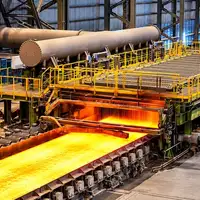
File photo of a steel production line at an industrial facility in Iran.

Iranian manufacturers are rapidly running down stocks of raw materials as supply disruptions and rising costs deepen pressure on industrial production, according to the latest survey by the Iran Chamber of Commerce.

The index measuring manufacturers’ raw material inventories fell to 39.3 in August from about 44.5 in July, while the Purchasing Managers’ Index for the overall economy dropped to 46.9, according to the survey. A reading below 50 indicates contraction.

Continued depletion of raw material inventories, combined with weakness elsewhere in the supply chain, could become one of the “most serious constraints on industrial production growth” in the coming months, the Iran Chamber of Commerce warned.

War damage adds to supply pressure

Part of the shortage cannot be explained by restrictions on imports alone. Iran was a major producer and exporter of several affected products, including petrochemicals and steel, before the war.

  • Iran faces postwar winter with major gas capacity still offline

    Iran faces postwar winter with major gas capacity still offline

Major petrochemical facilities in Asaluyeh and Mahshahr and the Mobarakeh Steel and Khuzestan Steel complexes were targeted during the war. Asaluyeh and Mahshahr together accounted for roughly three-quarters of Iran’s petrochemical production before the strikes.

Mobarakeh and Khuzestan Steel also sustained damage to production infrastructure.

The chamber attributed pressure on raw material stocks to limited access to foreign currency, difficulties with imports and customs clearance, goods being held at customs, logistical disruptions and higher procurement costs.

The oil and gas products sector recorded the lowest raw material inventory index at 23.3, followed by vehicles and related parts at 28.7. Rubber and plastics and the clothing and leather industries each recorded 32.2.

100%
Workers on an automobile production line at a factory in Iran.

Only the food industry and the wood, paper and furniture sector recorded raw material inventory readings above 50.

Input costs climb

Manufacturers also reported a sharp rise in raw material costs, with the purchase-price index increasing to 88.2 in August from 80.4 in July.

The index exceeded 100 for oil and gas products, while machinery and household appliances and non-metallic mineral products recorded readings above 92. Raw material purchase-price indices were above 50 across every industrial sector surveyed.

Other major PMI components remained below 50, including output or service activity at 47.8, new customer orders at 47.5, suppliers’ delivery times at 48.6 and employment at 47.3. All deteriorated from July except employment, which was unchanged.

Consumer prices were more than 84% higher in August than a year earlier, while annual inflation stood at about 69%, according to the Statistical Center of Iran.

  • Iran's appliance industry is collapsing, and so is the market it was built for

    Iran's appliance industry is collapsing, and so is the market it was built for

The sharp increase in manufacturers’ input costs adds to inflationary pressure on consumer prices. The Chamber warned that shrinking inventories could also reduce production capacity and disrupt or halt some production lines if current conditions persist.

Iran mobilisation drive extends to children under 15

Sep 20, 2026, 02:56 GMT+1
100%
Children carrying rifles take part in a Janfada mobilisation rally in Iran, September 18, 2026

The spokesman for Iran’s mass mobilisation campaign said children under 15 could be introduced to military concepts, while denying that minors were receiving formal weapons training as authorities expand a civilian defence drive launched during the war.

Sasan Zare, spokesman for the Janfada campaign, said the main organisation of volunteers would be based around adults aged 18 and over, but acknowledged that younger people were also being brought into the initiative.

“The stronger their value system is formed from childhood, and the more familiar they become with concepts such as patriotism and self-sacrifice, the more significant the impact can be on their future,” Zare told the Iranian news agency ILNA.

Those registered with the campaign were over 15, he said, while women taking part in its training courses were over 18. For children below that age, Zare said the emphasis should be on patriotism, responsibility, first aid, safety and what he called a “culture of self-sacrifice and resistance.”

The Islamic Republic has stepped up a broad campaign to mobilise civilians since the US-Israeli war began in February.

The Janfada initiative was launched in late March, and authorities have since promoted registration through mosques, Basij bases and public events, alongside plans for military and emergency-response training.

The campaign has drawn scrutiny over the involvement of minors, with rights groups accusing Iranian authorities of recruiting children into the Basij and using them at checkpoints.

Amnesty International said in April that Iranian law allows children under 15 to join as ordinary Basij members, while those aged 15 and over can become active Basij members and collaborate with the Revolutionary Guards on assigned missions.

The rights group said it had verified evidence of children as young as 12 deployed at checkpoints and patrols, including some carrying rifles.

Iran International has separately received accounts from several provinces describing children and teenagers taking part in checkpoint operations and handling weapons at state-sponsored gatherings.

Asked specifically about teenagers being used at checkpoints, Zare said he did not know how such deployments were being carried out because checkpoints fell under the authority of local police and security bodies.

His campaign, he said, provided training related to urban and public security, while the units deploying volunteers would decide whether they were used at checkpoints.

Will shutdowns forced by US blockade damage Iran’s oil wells?

Sep 19, 2026, 22:15 GMT+1
•
Mehdi Moslehi
100%
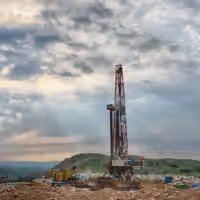
File photo: An oil rig in Iran

The sharp fall in Iran’s oil loadings is forcing it to curb production, raising costs beyond lost sales, from restarting aging wells to maintaining reservoir pressure and protecting shared fields. But could the shutdowns cause lasting damage?

Iranian officials often speak about oil as if the only question were whether crude can be sold today or tomorrow. In that telling, if exports stop, the oil simply stays underground until sanctions or a blockade ease, after which production can resume from where it left off.

Oil Minister Mohsen Paknejad said earlier this month that Iran’s oil exports did not stop “even for an hour” during the 40-day war. He had previously said there was not even a single day of production decline during that period.

Even if those claims are accurate for the war itself, they do not answer a more important question about what followed: how much production must be shut in when exports collapse and storage fills, and what will it cost to bring those wells and facilities back?

Energy intelligence firm Kpler estimated Iranian oil loadings fell from about 1.83 million barrels per day in March to around 255,000 bpd in August. It also estimated crude production dropped from about 3.24 million bpd to 1.755 million bpd, while inventories at terminals, refineries and other onshore storage sites increased.

Some Iranian crude may still be discharged in China, but much of that oil had already left Iran before the blockade intensified and remained for a time on tankers in Asian waters. Selling those cargoes is not the same as moving fresh crude out of Iranian wells and export terminals.

When exports fall, producers can initially divert crude into onshore storage, refineries and tankers. But storage is finite. Once it fills, the pressure moves upstream, forcing the National Iranian Oil Company to reduce production from some wells or shut them altogether.

An oil field is not an underground warehouse

An oil reservoir is sometimes imagined as an underground lake that can simply be tapped, closed and reopened months later.

In reality, oil sits within porous rock and networks of natural fractures. Its movement toward a producing well depends on reservoir pressure, rock properties, fluid composition and the way the field is managed.

That means shutdowns do not affect every well in the same way.

Some conventional Middle Eastern reservoirs can tolerate short shutdowns without serious damage. In certain fractured reservoirs, temporarily reducing output may even allow pressure to recover and oil to migrate from the rock matrix into fractures.

Robin Mills, a researcher at Columbia University’s Center on Global Energy Policy, has argued that production shutdowns are unlikely to cause catastrophic or permanent damage across most of Iran’s oil industry.

He has pointed to Iran’s relatively rapid production recovery after previous declines caused by sanctions and the Covid-19 pandemic.

That distinction matters. There is little basis for claiming that shutting production will inevitably destroy Iran’s oil wells.

But recoverable does not mean free, immediate or risk-free.

Iran has many mature fields and aging wells. Ahvaz, Marun, Gachsaran and Aghajari, among the country’s most important producing areas, have been in operation for decades.

Low-pressure wells, or wells producing large volumes of water alongside crude, may fail to flow naturally after a prolonged shutdown. Restarting them can require pumping, nitrogen injection, chemical treatment or other well-servicing operations.

During a shutdown, mineral scale, asphaltenes and other heavy compounds can accumulate around the wellbore, in production tubing or in flow lines.

Corrosion, sand and solids deposition, pump failures and unwanted flows between zones with different pressures are also recognized risks.

An analysis by the Society of Petroleum Engineers’ Reservoir Advisory Committee on prolonged shut-ins warned that corrosion, deposits, pump damage and plugging can leave some wells requiring repairs, stimulation or recompletion before they return to production.

For weak-performing wells, remediation can also become expensive enough to call their economics into question.

None of those costs appears in a simple calculation of barrels that were not sold.

Rotating shutdowns also cost money

NIOC has experience managing production cuts during earlier rounds of sanctions.

One option is to rotate shutdowns among wells rather than take an entire field offline, reducing the amount of time any single well remains idle.

That can limit the risks, but it requires continuous monitoring of reservoir pressure, fluid composition, gas injection, corrosion, pumps and surface facilities.

Repeated shutdowns and restarts, changes in chemical injection and the recalibration of processing equipment also add to operating costs.

In other words, not producing oil still costs money.

If falling oil revenues squeeze maintenance budgets, what begins as a manageable shutdown can develop into a far more expensive repair problem.

The question is therefore not whether every shut well will be lost. It is how many will return without additional work, how long the others will take to restart and how much that process will cost.

Gas injection links the oil problem to Iran's gas crisis

Many of Iran’s mature oil fields rely on gas injection to maintain reservoir pressure and improve recovery.

Kpler has estimated historical gas injection into Iranian oil fields at about 4.8 billion cubic feet per day. Even before the current crisis, Iran was injecting less gas than its reservoirs required.

That problem could become more acute.

Gas production from South Pars also produces condensate. If Iran becomes unable to export, store or consume enough of that condensate, it may eventually have to reduce gas output.

The government would then face harder choices over how to allocate gas among households, power plants, industry, exports and injection into oil reservoirs.

Lower gas injection does not destroy a well overnight. But over time, it can reduce reservoir pressure and potentially lower ultimate oil recovery.

A crisis that begins with crude exports can therefore feed back into oil production through constraints on condensate and natural gas.

This part of the cost rarely features in official statements.

Iranian officials emphasize continued exports and efforts to circumvent restrictions, but disclose little about how much gas, equipment and investment is needed to maintain reservoirs while production is being curtailed.

Shared fields create another risk

Not all Iranian fields can be treated in the same way.

Azadegan and Yadavaran are shared with Iraq, Forouzan with Saudi Arabia and Salman with the United Arab Emirates, with production taking place from different parts of connected geological structures.

A reduction in Iranian output does not mean crude immediately flows across a border toward a neighboring country’s wells. Reservoir behavior is more complicated and depends on geology.

But if Iran reduces production and development for an extended period while the other side continues drilling and extracting oil, Iran’s economic position in those shared resources can weaken.

Oil left underground in such fields is not necessarily being preserved exclusively for Iran to produce later.

Continued extraction across the border can, in some reservoirs, reduce Iran’s future recoverable share or economic opportunity.

The real cost of shutting production

The impact of a forced production cut cannot be measured by lost sales alone.

It also includes the cost of storing crude, maintaining idle wells, carrying out repairs and restarts, any loss in future productive capacity or reservoir recovery, and missed opportunities in shared fields.

There can be broader consequences as well.

Lower gas production would put more pressure on power generation, petrochemical feedstock and industrial consumption, forcing the government to make increasingly difficult choices over scarce energy supplies.

A prolonged blockade and collapse in exports therefore affects more than the Islamic Republic’s immediate oil revenue.

If wells and facilities are not adequately maintained, part of the cost can persist long after exports recover.

Paknejad can point to uninterrupted exports or production during a limited period, but more important questions remain unanswered.

How many Iranian wells are now producing at full capacity? How many have been throttled back or shut? How has gas injection changed? How much is being spent to manage shut-ins, maintain equipment and eventually restore production?

Without those figures, claims of continued production offer only a partial picture of the state of Iran’s oil industry.

Most Iranian wells may eventually be recoverable. But shutting them is neither cost-free nor necessarily quick to reverse.

The longer production remains constrained, the more maintenance, reservoir management and restart costs may accumulate — costs whose full scale cannot be known without far greater transparency about the condition of Iran’s wells and fields.