• العربية
  • فارسی
BrandBrand
  • Iran Insight
  • Politics
  • Economy
  • Analysis
  • Special Report
  • Opinion
  • Podcast
  • Live TV
  • Iran Insight
  • Politics
  • Economy
  • Analysis
  • Special Report
  • Opinion
  • Podcast
  • Live TV
  • Theme
  • Language
    • العربية
    • فارسی
  • Iran Insight
  • Politics
  • Economy
  • Analysis
  • Special Report
  • Opinion
  • Podcast
  • Live TV
All rights reserved for Volant Media UK Limited
volant media logo

‘Hugging actors are married’: Tehran theatre navigates contact restrictions

Oct 6, 2026, 20:15 GMT+1
Iranian actress Sheida Khaligh and her husband Keyvan Saketof hug during the play Arash.

A theater production in Tehran displayed a notice to spectators before a performance saying two actors who embrace on stage are married, underscoring the restrictions governing physical contact between men and women under the Islamic Republic.

“Dear spectator, in this performance a woman and a man embrace each other,” the message shown before the play Arash said. “We have been asked to assure you that Sheida Khaligh and Keyvan Saketof have been married for years.”

Under rules enforced by the Islamic Republic, physical contact between unrelated men and women is prohibited in public performances, which are subject to oversight by the Ministry of Culture and Islamic Guidance.

Iranian theater groups have long been required to observe restrictions covering physical contact, dress and interactions between male and female performers.

Married actors have occasionally provided productions with a rare way around those restrictions, allowing forms of physical contact that would otherwise risk intervention by cultural authorities.

Even then, performances remain subject to official approval and scrutiny over how such contact is presented.

The notice comes amid heightened scrutiny of physical contact on stage.

Tehran prosecutors opened a case last month against the team behind another play over what the judiciary described as conduct “contrary to social norms and propriety” after footage appeared to show two actors making physical contact.

The production denied any contact had taken place and subsequently adjusted the staging to make the distance between the actors clearer.

Most Viewed

Iran escalates Starlink threats over fears of losing internet control
1

Iran escalates Starlink threats over fears of losing internet control

2
ANALYSIS

Houthi gains reversed at Bab al-Mandab, but Iran’s leverage runs deeper

3
VOICES FROM IRAN

Iran workers face delayed wages, lost benefits and job fears

4

Saudi Arabia, Turkey and Pakistan activate defense pact over Houthi attacks

5

Netanyahu predicts Iran regime’s fall, Tehran warns war could engulf region

Banner
Banner

Spotlight

  • Iran’s own surveys reveal demand for 'fundamental change'

    Iran’s own surveys reveal demand for 'fundamental change'

  • Iran executes nearly two people a week since January protests

    Iran executes nearly two people a week since January protests

  • Iran, US back to ‘square one’ as diplomacy stalls
    INSIGHT

    Iran, US back to ‘square one’ as diplomacy stalls

  • Houthi gains reversed at Bab al-Mandab, but Iran’s leverage runs deeper
    ANALYSIS

    Houthi gains reversed at Bab al-Mandab, but Iran’s leverage runs deeper

  • Iranians cross into Armenia to earn what they cannot at home

    Iranians cross into Armenia to earn what they cannot at home

  • Clothes, diaries, dolls: Iran forces raid slain protesters’ rooms

    Clothes, diaries, dolls: Iran forces raid slain protesters’ rooms

  • Why Iran’s oil minister quit at a critical moment for exports
    INSIGHT

    Why Iran’s oil minister quit at a critical moment for exports

  • IRGC commander, son helped build new oil-sales network
    EXCLUSIVE

    IRGC commander, son helped build new oil-sales network

Banner
Banner
•
•
•

More Stories

Iran executes nearly two people a week since January protests

Oct 6, 2026, 18:33 GMT+1
•
Shahed Alavi
100%
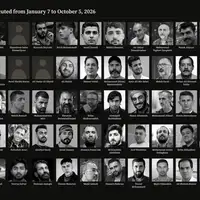
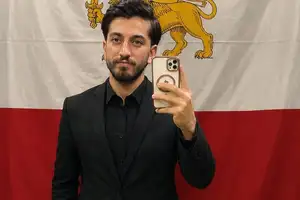
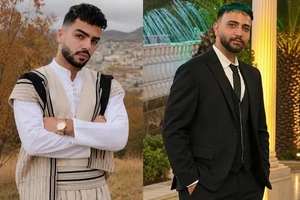
Names and photos of the political prisoners executed in Iran since January protests

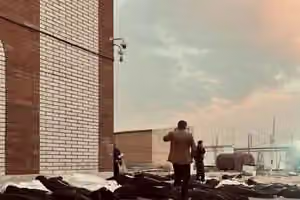
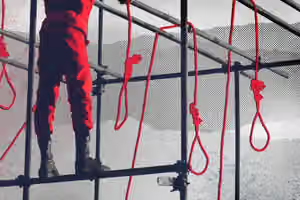
Iran has executed nearly two people a week in political and security cases since the January protests, including over protest- and war-related accusations, while another 194 people face death sentences, an Iran International review of cases shows.

Among those facing execution are 113 people arrested in connection with the January protests, as well as 13 women and at least seven people who were under 18 at the time of the alleged offenses.

At least 70 people were executed from January 7 to October 5. Human rights organizations and activists say the figures are minimum totals, covering only cases that have been reported and verified.

Of the 70 people executed, 35 were put to death in cases connected to the January protests, nine in cases linked to the 12-day and 40-day wars, and 26 in other political and security cases.

The executions include people arrested in recent months as well as prisoners whose cases date back years, including to the 2022 Woman, Life, Freedom uprising and others who had spent close to nine years in prison.

January-related executions

Iran Human Rights had documented 32 executions linked to the January protests by Oct. 3. The subsequent executions of Alireza Raisi and Alireza Sepahi in Isfahan, together with that of Arvin Kheirkhah in Shahroud, bring the number identified in Iran International’s review to 35.

Iran Human Rights says defendants have been sentenced following proceedings marred by allegations of torture, forced confessions and denial of fair-trial rights.

Another nine people executed during the period had cases linked to the two recent wars.

The remaining 26 were executed in other political and security cases involving alleged links to opposition groups, earlier protests or espionage accusations.

Thirteen were accused of working with or belonging to opposition groups: nine of links to the People’s Mojahedin Organization of Iran, two to the Democratic Party of Iranian Kurdistan and four of membership in Jaish al-Adl or Ansar al-Furqan.

Their cases predated the January protests and the two recent wars.

Seven others were executed on espionage charges. Six had been detained before the 12-day war: four were accused of spying for Israel, with one also accused of working with the United States, and two of spying for an unnamed Arab country. The seventh had also been detained before the two recent wars.

The remaining four included two protesters from the Woman, Life, Freedom uprising and two people accused of membership in ISIS.

The cases of the two alleged ISIS members dated to clashes in the Bamo mountains in 2017. They were executed after nearly nine years in detention and prison.

100%

On death row

At least 194 people in political and security cases are currently under death sentences, according to the human rights reports reviewed by Iran International.

Of those, 113 are linked to the January protests, 10 to the two recent wars and 71 to other political and security cases. Their judicial status varies, including initial death sentences, sentences upheld on appeal and cases undergoing further review.

Among the 71 prisoners whose cases are unrelated to the January protests or the wars are 19 detained over earlier protests: 17 linked to the 2022 Woman, Life, Freedom uprising and two to the November 2019 protests.

Another 44 have political and security cases dating from before the recent wars and January protests.

They range from political, civil and humanitarian activity to alleged links with the People’s Mojahedin, Kurdish, Baluch and Arab groups and espionage accusations. One prisoner has been sentenced to death for “insulting the Prophet.”

Two other cases began with resistance to the seizure of agricultural land in November 2025 and resulted in death sentences for “corruption on Earth.”

Three prisoners are accused of killing a member of the Basij, while two others face sentences in older political cases.

100%

Women and juveniles

All 70 people executed in the period were men, but 13 women are among the 194 currently under death sentences. Seven have cases linked to the January protests, two to the wars and four to other political and security cases.

At least seven of those facing execution were under 18 when the alleged offenses took place. Five are defendants in cases stemming from the January protests, one is linked to the 2022 uprising and one to an older case.

Amnesty International has warned about the risk of execution facing five of the juvenile defendants.

Another case documented by HRANA involved a detainee who was 17 years and nine months old in June 2026, meaning he was under 18 during the January protests.

Available information is insufficient to establish how many of those already executed, if any, were under 18 at the time of the alleged offenses.

An age range could be determined for 53 of the 70 people executed and 116 of the 194 facing execution. Of those, 29 executed prisoners and 68 facing death sentences were younger than 30.

100%

Ethnicity and nationality

Ethnicity is not routinely recorded in judicial or human rights reports, making it impossible to establish the background of most people in the dataset.

Where sources explicitly identified ethnicity, at least 18 of those executed and 51 of those facing execution belonged to ethnic minority groups.

The ethnicity of 48 executed prisoners and 143 facing death sentences could not be determined.

Those executed also included three Afghan nationals, two Iraqi nationals and one Iranian-Swedish citizen. The two Arabs among the foreign nationals were Iraqi citizens.

Among those facing execution are three Afghan nationals, one Turkish national and one Iranian-Swedish citizen. The Turkish national is Kurdish and is also included in the ethnic breakdown.

100%

Hotspots: Karaj and Isfahan

Of the 70 executions, 32 were carried out in Karaj and 12 in Isfahan. Five each took place in Mashhad and Urmia, three each in Qom and Shahroud, and two each in Zahedan, Naqadeh and Kermanshah. Hamedan and Shahrekord recorded one each, while the location of two could not be established.

That means 44 of the 70 executions, or nearly two-thirds, were carried out in Karaj and Isfahan. The figures refer to where sentences were carried out, not the prisoners’ home provinces or places of birth.

At least 32 executions were reported at Qezel Hesar Prison, 12 at Isfahan Central Prison, seven at Urmia Central Prison and five at Vakilabad Prison in Mashhad.

The last reported place of detention could be established for 186 of the 194 people facing execution.

Isfahan accounts for the largest group: 45 were last reported at Isfahan Central Prison, two at Dowlatabad Women’s Prison and one at a juvenile detention center.

Another 32 were held at Qezel Hesar, 14 at Zahedan Central Prison and 12 at Vakilabad. Evin, Adelabad Prison in Shiraz and Sheiban Prison in Ahvaz each held 10.

100%

Allegations of torture

The executions and death sentences come amid repeated warnings from human rights organizations about the handling of the cases.

Iran Human Rights has reported allegations of torture to obtain confessions, violations of fair-trial rights and pressure on prisoners’ families not to speak publicly about their cases.

Human rights groups say restrictions on access to information, a lack of judicial transparency and pressure on families make it difficult to establish the full number of people executed or facing execution.

The 70 executions and 194 death sentences documented in the review therefore represent cases that could be identified and verified, rather than an estimate of the full scale.

Three Iranians spied on Iran International journalists in UK, prosecutors say

Oct 6, 2026, 15:40 GMT+1
100%
Mostafa Sepahvand, 39, Shapoor Noori, 55, and Farhad Javadi-Manesh, 44, in a court sketch from Westminster magistrates’ court / Credit: SWNS

Three Iranian men spied on Iran International journalists to assist Iranian intelligence services and prepare for serious violence against at least one target, prosecutors told a London court Tuesday.

Iran International journalists Mojtaba Pourmohsen and Kambiz Hosseini were among the targets of the alleged surveillance operation, prosecutors told Woolwich Crown Court.

“Together, the defendants were engaged in what is very obviously a form of spying,” prosecutor William Emlyn Jones KC told jurors.

Mostafa Sepahvand, 41, Farhad Javadi Manesh, 46, and Shapoor Qalehali Khani Noori, 57, are accused of conducting months of surveillance and reconnaissance, including photographing and filming locations connected to their targets.

All three are charged with assisting a foreign intelligence service under Britain’s National Security Act 2023. Prosecutors say the foreign intelligence service was Iranian.

Sepahvand is also accused of conducting surveillance, reconnaissance and open-source research intending to carry out serious violence against a person in Britain. Javadi Manesh and Noori are accused of conducting surveillance and reconnaissance intending that serious violence would be carried out by someone else.

  • Three charged in UK with aiding Iranian intelligence, targeting Iran International

    Three charged in UK with aiding Iranian intelligence, targeting Iran International

“It is the prosecution case that their ultimate objective was that one or more of their targets would be subjected to serious violence,” Jones told the jury.

The prosecution says Sepahvand was intended to carry out the violence himself, with Javadi Manesh and Noori gathering information to assist the planning of an attack.

The three men were arrested in May 2025 and are the first Iranian nationals charged under the National Security Act, which came into force in 2023.

Phones reveal surveillance operation

Prosecutors presented on Tuesday an outline of the evidence regarding the surveillance of Pourmohsen and Hosseini.

“These three defendants were carrying out surveillance and reconnaissance to locate and target at least two journalists associated with news agency Iran International,” Jones said.

The surveillance was intended to establish where targets lived and worked, their routines, the people they spent time with and the layouts of buildings connected to them, according to the prosecution.

  • Three Iranians plead not guilty over alleged plot against journalists in UK

    Three Iranians plead not guilty over alleged plot against journalists in UK

Material recovered from Sepahvand’s phone included searches seeking Pourmohsen’s address. One search asked ChatGPT for “Mojtaba Pour Mohsen’s address,” according to evidence presented in court.

ChatGPT did not provide a home address but returned information about his career and social media contacts and suggested contacting him through Iran International, jurors were told.

Investigators also recovered from Sepahvand’s phone what prosecutors described as a briefing document or “targeting package” containing Pourmohsen’s photograph and information about locations associated with him.

The material included the address of Volant Media, Iran International’s parent company, and information about the Clayton Hotel on Chiswick High Road.

Pourmohsen had stayed at the hotel around Christmas 2024 after developing security concerns about his home address, Jones told jurors.

Prosecutors also presented photographs and videos of Malthouse Court, where Pourmohsen had lived between 2019 and 2023.

The defendants appeared not to know that Pourmohsen had already moved away, according to the prosecution.

Location data and videos

Cell-site data placed Sepahvand and Javadi Manesh in the Malthouse Court area on December 10, 2024, prosecutors said.

Data from a SIM card installed in Sepahvand’s Mercedes A200 also placed the vehicle in the area, according to evidence presented to the jury.

Javadi Manesh later sent Sepahvand photographs and videos of Malthouse Court that prosecutors say were recorded during the visit.

One video played to jurors began with a view of the river before moving toward the block of flats and zooming in.

Location data also placed Sepahvand and Noori in the Malthouse Court area on December 16, prosecutors said.

The prosecution had begun addressing the surveillance of Hosseini by the latest court update.

Sepahvand says he acted under pressure

The defendants contest crucial elements of the prosecution case in different ways.

Sepahvand accepts carrying out surveillance and reconnaissance and that he was doing so for the benefit of Iran, according to the prosecution’s account of his defence.

His position is that he did not want to carry out the activity and acted because he feared the consequences of refusing. Sepahvand also maintains that he deliberately did a poor job so the Iranian intelligence service would not receive the assistance it wanted, Jones told jurors.

The prosecution disputes that account.

“We suggest you will find nothing in any of these messages that is, or looks or even feels like, a threat to Sepahvand,” Jones said.

Javadi Manesh and Noori accept visiting relevant locations and taking photographs and videos but maintain that they did not know they were doing so to assist Iranian intelligence services, according to the prosecution’s description of their cases.

Jurors will have to consider whether they knew what the activity was intended to achieve or whether the circumstances meant they reasonably ought to have known, Jones said.

Messages presented to jury

The prosecution also took jurors through communications recovered from Sepahvand’s phone involving two Iranian telephone numbers.

One belonged to a man identified as Mostafa Ghorbani. Another was saved in Sepahvand’s phone as “Amin Mostafa’s friend.”

Both contacts appeared repeatedly in Sepahvand’s phone activity, prosecutors said.

In a December 8 exchange with Ghorbani presented in court, Sepahvand discussed information he had been sent about a person and location.

“It’s a tourist area, look. They got these [from] Iran, someone said he/she/it is here. They also sent me these few pictures from the Internet. I said ‘okay, I’ll go’, if he/she/it wasn’t there it’s their own problem,” Sepahvand wrote in a translated message read to the jury.

The following day, Sepahvand discussed plans to visit a location with the contact saved as Amin, according to the prosecution.

“I’ll definitely go tomorrow,” Sepahvand wrote.

Prosecutors say “tomorrow” referred to December 10, when location data subsequently placed Sepahvand and Manesh near Malthouse Court.

Amin responded with messages including “God willing you’ll see him/her/it” and “it’ll be sorted,” according to translations presented in court.

The prosecution argues the exchanges undermine Sepahvand’s position that he carried out the work because he had been threatened.

Jones also told jurors that some communications referred to Sepahvand being paid for his work.

Prosecutors say Sepahvand also wanted help resolving a criminal conviction in Iran. The jury was told that the conviction itself was not evidence against him and should not be held against him, but prosecutors consider his efforts to resolve it relevant to his motivation.

Another target

The surveillance outlined by prosecutors extended beyond Iran International.

Material exchanged between Sepahvand and Javadi Manesh included information about Jonathan Turner, a founder of UK Lawyers for Israel, the court heard.

Two aerial images sent by Sepahvand to Javadi Manesh in August 2024 showed addresses connected to UK Lawyers for Israel and Turner’s barristers’ chambers, prosecutors said.

The prosecution says the material relates to another person who had attracted the attention of Iranian intelligence services for reasons different from the journalists.

The majority of the evidence on which prosecutors will rely comes from material obtained from the defendants’ mobile phones following their arrests, Jones told jurors.

The indictment accuses Sepahvand, Javadi Manesh and Noori of engaging between August 14, 2024 and February 16, 2025 in conduct likely to assist a foreign intelligence service carrying out UK-related activities, knowing or reasonably being expected to know that their conduct was likely to provide material assistance.

  • Three Iranians charged in UK spying case set to face trial in October 2026

    Three Iranians charged in UK spying case set to face trial in October 2026

The case is being heard by Mrs Justice Cheema-Grubb and is expected to last six to eight weeks, with the prosecution expected to spend about two weeks presenting its case.

The prosecution’s opening has begun laying out the digital trail at the center of its case, including searches for a journalist’s address, photographs and videos of locations connected to him, location records and messages discussing visits to those locations.

The jury will ultimately decide what the three men knew about the purpose of the surveillance and whether prosecutors prove it was intended to assist Iranian intelligence services and prepare for serious violence against journalists in Britain.

Tehran police warn cafes over live music, DJs and hookah

Oct 6, 2026, 11:23 GMT+1
100%
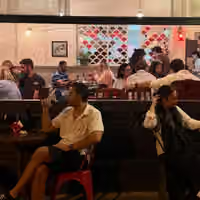
A DJ performs as people gather for drinks at a café in Iran.

Police in Tehran have warned cafes that they could face closure or lose their licenses for hosting live music, using DJs or serving hookah, extending a broader campaign of enforcement against businesses over entertainment, mandatory hijab rules and support for protests.

Ali Rafiei, head of Tehran's police department responsible for monitoring businesses and public venues, said cafes must operate strictly within the activities covered by their licenses.

“Cafes must operate only within their licensed line of business,” Rafiei said. “Serving hookah, hosting live music or DJs, and gambling-related activities are among the violations that will be dealt with.”

He said police would take action as soon as such activities were identified. Businesses could first receive warnings and be required to provide written assurances, while repeated violations could result in their licenses being revoked.

Cafes face wider scrutiny

The warning follows a series of closures targeting cafes, restaurants, shops, gyms and cultural venues across Iran in recent months.

100%
People gather at a café in Iran.

At least 42 businesses were reported sealed between late July and mid-August in different cities.

Authorities in Ardabil also announced the closure of three coffee shops and the arrest of 16 people during the same period.

Closures have not been limited to entertainment or licensing violations. Businesses have also been sealed over the enforcement of Iran's mandatory hijab rules and over support for nationwide protests.

  • Cafés close, tolerance ends: Iran’s post-war shift on compulsory hijab

    Cafés close, tolerance ends: Iran’s post-war shift on compulsory hijab

  • From cafes to buskers, Tehran tightens its grip on the fabric of everyday life

    From cafes to buskers, Tehran tightens its grip on the fabric of everyday life

Young people and public space

Rafiei said police monitoring of cafes extended beyond activities inside the establishments.

He pointed to Tehran's Sanai and Iranshahr streets, saying cars cruising through the area, sidewalk setups by cafes and groups of young people gathering without what he described as a clear purpose had contributed to congestion and complaints.

100%
Women gather at a café in Iran.

He said blocking sidewalks or public space could also lead to enforcement action. Police generally issue a warning and seek a written commitment from the operator before sealing a business, he added.

Continued violations could ultimately result in the cancellation of a business license, according to Rafiei.

  • Iran seals dozens of businesses in renewed hijab crackdown

    Iran seals dozens of businesses in renewed hijab crackdown

  • Iran shuts down Tehran cafe over alcohol use and dancing

    Iran shuts down Tehran cafe over alcohol use and dancing

Protest support has also drawn penalties

The pressure on cafe operators has also extended to owners who supported the January protests.

In one case, Iran's Supreme Court in September upheld the prison sentence and confiscation of assets imposed on Sadegh Saedinia, the head of Saedinia Properties and Industries and a supporter of the protests.

100%
Women gather at a café in Iran.

Saedinia was sentenced to 12 years, six months and one day in prison and barred from working in the cafe industry for two years after completing his sentence. All branches of his cafe business were sealed following his arrest.

The judiciary said the case involved social media posts, participation in gatherings, closing cafes and shops, and encouraging employees to take part in protests.

100%
Young men and women gather for drinks and food at a café in Iran.

The latest police warning adds live music, DJs and hookah service to a growing list of activities that can expose cafe operators to sanctions, alongside mandatory hijab enforcement, use of public space and support for demonstrations.

Clothes, diaries, dolls: Iran forces raid slain protesters’ rooms

Oct 6, 2026, 09:24 GMT+1
•
Samira Rahi
100%
The mother of Mani Safarpour, who was killed during protests in Tehran in January 2026.

Clothes, diaries, books and childhood dolls are being taken from the bedrooms of protesters killed in Iran, as security forces extend pressure on families seeking accountability into the most private spaces of their grief nearly nine months after the January 2026 killings.

“Seven plainclothes men entered our home and began searching different parts of it,” the father of a slain teenage girl told Iran International.

“They went into our daughter’s room and put some of her personal belongings, including clothes, diaries, books and even two of her dolls, into a bag and took them away.”

Security forces have raided the homes of at least five families in the past two weeks and removed belongings of their slain relatives, informed sources told Iran International. Three of those killed were under 18.

  • Shot in leg, forced into hiding: Iran protester recounts January crackdown

    Shot in leg, forced into hiding: Iran protester recounts January crackdown

The raids, sources said, targeted families active on social media and were intended to stop them keeping the memory of their children publicly alive.

The mother of the teenage girl had previously posted videos showing objects left behind in her daughter’s room as she mourned her death.

The latest raids take the pressure on bereaved families beyond summonses, arrests and restrictions on memorials. They reach into rooms left behind by the dead and the objects through which their parents continue to remember them.

‘Nothing will remain in your child’s room’

For another family, the message was explicit.

Security forces searched their home and took a watch and clothes their child was wearing when killed, the mother told. The officers then warned the parents against publishing more photographs or videos online.

“They threatened us that if we published another photo or video on the internet, nothing would remain in our child’s room,” she said.

The officers followed that warning with another, according to the mother.

“They told us, ‘A thief might come to your home one night, and in the morning you might find an empty room.’”

For months, families seeking accountability have faced restrictions on funerals, memorial ceremonies and birthday commemorations, according to information provided to Iran International.

Gravestones have been damaged at night, mobile phone SIM cards blocked and families pressured to remove posts from Instagram.

When a doll becomes something to confiscate

Personal belongings have assumed a wider role in the families’ efforts to preserve the memory of those killed.

A bedroom can be photographed. Clothes can be shown in a video. A diary can preserve someone’s words. A childhood toy can become an intimate reminder that the person killed was a son or daughter with a life beyond the circumstances of their death.

For parents who share those objects online, private grief can become a public record.

That has made the belongings themselves part of the pressure described by the families.

  • They carry the evidence of Iran’s crackdown on their bodies

    They carry the evidence of Iran’s crackdown on their bodies

Authorities have previously sought to restrict the public activities of relatives seeking accountability.

Mahmonir Molaei-Rad, the mother of Kian Pirfalak, and other families connected to those killed during the 2022 Woman, Life, Freedom protests have faced similar efforts to restrict their public activity.

But the latest accounts describe security forces crossing another boundary: moving from controlling what families publish to taking away some of the objects they publish about.

The fight over who gets remembered

The bedrooms of those killed have become more than spaces of mourning for some families.

Photographs of their possessions circulate online alongside images of graves, birthdays and family gatherings, allowing parents to preserve details of lives that might otherwise become reduced to names and death tolls.

The sources who spoke to Iran International said stopping that process was a purpose of the recent raids.

The confiscations therefore bring together two strands of pressure on families seeking accountability – attempts to restrict what they say publicly and interference with how they remember privately.

  • Families of slain protesters challenge Pezeshkian over UN remarks

    Families of slain protesters challenge Pezeshkian over UN remarks

Nearly nine months after the January killings, that struggle has reached objects of little material importance but immense personal value.

For families refusing to let their children disappear from public memory, a dress, a watch, a diary or a pair of dolls can preserve a fragment of the person who once occupied an empty room, but even those fragments are now being taken away.

Iran sentences 38-year-old to death as January protest executions mount

Oct 6, 2026, 08:36 GMT+1
100%

Hadi Abbasian, a 38-year-old resident of northeastern Iran, has been sentenced to death by a Revolutionary Court in Bojnurd after being arrested over his support for the nationwide protests in January, according to information obtained by Iran International.

Informed sources said Abbasian had previously posted videos on social media in support of demonstrators. The death sentence was communicated to him on Sunday at Shirvan prison.

The precise charge leading to the death sentence and the evidence presented against him have not been made public.

Arrested months after protests

Abbasian was arrested in May in Shirvan's Farhang Shahr district. During the nationwide protests earlier this year, he had published videos urging people to take part in demonstrations.

The source said Abbasian was tortured on the first day of his detention and taken to hospital after his condition deteriorated. He was later transferred to Shirvan prison.

His family has not been allowed to visit him since his arrest, the source said, adding that judicial and security authorities had prevented the family from appointing a lawyer of their choice.

Executions accelerate

The sentence comes as Iranian authorities have carried out a growing number of executions of people detained over the nationwide protests that erupted in January.

On Monday, Alireza Sepahi and Alireza Raisi were executed at Isfahan Central Prison in connection with protests in the central city, according to rights groups and Iran's judiciary.

  • Two more January protesters executed in Iran

    Two more January protesters executed in Iran

  • Iran executes man arrested during January protests

    Iran executes man arrested during January protests

They were among 12 defendants sentenced to death in what has become known as the Alikhani Square case. Seven people in that case have now been executed.

Sepahi married his fiancée from prison one day before his execution, according to Nobel Peace Prize laureate and lawyer Shirin Ebadi.

“Yesterday he became a groom, and today they executed him,” Ebadi wrote.

Five executions in less than a week

The two executions on Monday followed that of Siavash Jamshidi Kheirabadi, who was put to death on Saturday after being arrested during January protests in Shahrekord.

Iran's judiciary said Jamshidi had been sentenced to death for moharebeh, or “enmity against God,” over accusations that he fired at security forces. No information about his prosecution had been made public before the announcement of his execution.

Two other protesters, Ali Hemmati and Majid Nikandish, were executed on September 30 after being detained over demonstrations in Mashhad.

The judiciary accused them of involvement in the deaths of four security personnel and described them as “field operatives” in what it called an attempted coup. No court documents or independent evidence supporting those allegations were made public.

  • Shot in leg, forced into hiding: Iran protester recounts January crackdown

    Shot in leg, forced into hiding: Iran protester recounts January crackdown

  • Iran death-row protester shot, tortured in custody

    Iran death-row protester shot, tortured in custody

Taken together, at least five people detained in connection with the January protests have been executed since September 30.

Fair-trial concerns

Rights groups and UN experts have repeatedly raised concerns about the use of death sentences against protesters in Iran, citing reports of torture, forced confessions and denial of access to lawyers.

Mai Sato, the UN special rapporteur on human rights in Iran, raised concerns about the treatment of defendants and fair-trial standards in the Alikhani Square case, including reports that detainees and their relatives had been tortured.

A joint statement by 46 countries at the UN Human Rights Council last week also expressed concern over the execution of more than 30 protesters following the January crackdown and called on Iran to halt executions.

Iran Human Rights said in September that at least 100 people detained during the protests were at risk of execution.

Abbasian's case now adds another protester to death row, with his family still barred from visiting him and the basis for the sentence yet to be made public.