• العربية
  • فارسی
Brand
  • Iran Insight
  • Politics
  • Economy
  • Analysis
  • Special Report
  • Opinion
  • Podcast
  • Live TV
  • Iran Insight
  • Politics
  • Economy
  • Analysis
  • Special Report
  • Opinion
  • Podcast
  • Live TV
  • Theme
  • Language
    • العربية
    • فارسی
  • Iran Insight
  • Politics
  • Economy
  • Analysis
  • Special Report
  • Opinion
  • Podcast
  • Live TV
All rights reserved for Volant Media UK Limited
volant media logo

Senior Iran cleric calls UAE-Israel ties ‘betrayal,’ warns of reckoning

Oct 2, 2026, 18:23 GMT+1
Alireza Arafi speaks at an event in Qom, Iran, in this undated file photo

The UAE betrayed Muslim countries by siding with the United States and Israel, and its rulers will eventually be punished for meeting Israeli Prime Minister Benjamin Netanyahu, senior Iranian cleric Alireza Arafi said Friday.

Delivering the Friday prayer sermon in Qom, he described the UAE as a dependent state and said its meeting with Netanyahu reflected what he portrayed as broader cooperation by some regional governments with Israel and the United States. He said the encounter was especially offensive given what he said was the death toll in the Gaza war.

“Most shameful of all is that in a war in which Netanyahu has killed 70,000 Arabs, Sunni Arabs and Muslims, the UAE president has met with him with complete brazenness and shamelessness. Shame on you, shame on you. One day, Muslim nations will hold you to account,” Arafi said.

Most Viewed

Iran oil exports vanish as regional flows surpass prewar levels
1

Iran oil exports vanish as regional flows surpass prewar levels

2

Iranian weapons, Chinese supplies fuel Houthi advance in Yemen - WSJ

3

Trump says renewed bombing of Iran after midterms 'possible'

4
INSIGHT

Tehran weighs what comes next if US diplomacy fails

5

UK points to Iran role in suspected plot near RAF Fairford

Banner
Banner

Spotlight

  • As the rial sinks, Iranians seek shelter in almost anything else
    INSIGHT

    As the rial sinks, Iranians seek shelter in almost anything else

  • Shot in leg, forced into hiding: Iran protester recounts January crackdown

    Shot in leg, forced into hiding: Iran protester recounts January crackdown

  • Al-Qaeda is Iran's quiet backup if the war turns, expert says

    Al-Qaeda is Iran's quiet backup if the war turns, expert says

  • Can the Caspian give Iran a way around Hormuz?
    ANALYSIS

    Can the Caspian give Iran a way around Hormuz?

  • A Mossad spy in Iran: From banking infiltration to nuclear and missile sabotage
    SPECIAL REPORT

    A Mossad spy in Iran: From banking infiltration to nuclear and missile sabotage

  • Iran's rhetoric against UAE hardens after Netanyahu visit
    ANALYSIS

    Iran's rhetoric against UAE hardens after Netanyahu visit

  • Leaked Kremlin plan undercuts Moscow's claims on ruble-rial trade with Iran
    INSIGHT

    Leaked Kremlin plan undercuts Moscow's claims on ruble-rial trade with Iran

Banner
Banner
Banner
•
•
•

More Stories

As the rial sinks, Iranians seek shelter in almost anything else

Oct 2, 2026, 17:59 GMT+1
•
Behrouz Turani
100%
Visitors look at vehicles on display at the seventh Tehran Auto Show in the Iranian capital, September 2026

Iran’s stock market is breaking records even as the dollar and gold hit new highs, an apparent contradiction that may point to the same dynamic: households and investors scrambling to protect their wealth as the rial weakens and the economic toll of the Iran-US war grows.

Before trading closed on Wednesday, the final working day of the week in Iran, the Tehran Stock Exchange reached a record 7,766,000 points.

The market has risen 109 percent since the start of the Iranian year, while small investors poured roughly 4.7 trillion tomans, or about $19 million, into shares in a single day.

Iran’s prominent economic daily Donya-ye Eghtesad argues that the surge is not necessarily a sign of confidence. People are buying shares as political and economic risks rise, it says, while savers are also moving into gold, coins and dollars, all of which hit record highs on the same day.

The open-market dollar has passed 250,000 tomans, while measured in dollars, the stock market remains well below previous peaks.

At least part of the rally therefore appears to reflect a search for protection against the falling rial rather than confidence in the underlying economy.

Similar pressures are visible in consumer markets, where prices for cheaper mobile phones rose 33 to 42 percent in a month, outpacing the currency’s decline as import quotas, registration rules and fees hit lower-priced devices particularly hard.

Earlier this week, the government announced that the central bank would sell up to $2 billion in cash. The first $1 billion tranche is being sold through banks, with adults holding a national ID card allowed to buy up to $10,000.

The government’s own newspaper, Iran, warned that selling cash may slow the dollar’s rise but cannot reverse the underlying trend while inflation, budget pressures and political uncertainty remain unresolved.

Tehran’s prosecutor also ordered action against “market disruptors,” including online channels publishing exchange rates. Eyewitnesses on Ferdowsi Avenue, the capital’s main currency-trading hub, reported shorter queues and more sellers than buyers on September 30.

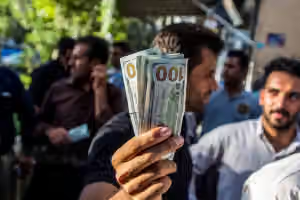
The respite was brief. On October 1, the open-market dollar rose 1.49 percent to 2,593,000 rials, its highest level in a year.

The central bank has been steadily raising the official exchange rate, from about 137,000 to more than 174,000 tomans this year, to encourage exporters to repatriate their foreign-currency earnings. Even so, the open-market rate remains much higher.

Because official imports are priced at the exchange-center rate, increases can feed through into the cost of imported goods. They also reduce the real value of the government’s electronic food-voucher scheme unless the state spends more rials to maintain it.

Hardline outlets including Kayhan and the IRGC-linked Javan portray the rial’s fall as part of Washington’s economic war. But their criticism is also directed at Iranian policymakers.

Kayhan calls currency sales a repeatedly failed policy and a waste of resources in wartime. It wants the government to reverse its economic liberalization and use judicial and security pressure to force exporters to repatriate their foreign-currency earnings.

The criticism exposes an argument within the establishment over how Tehran should respond: spend scarce foreign currency trying to contain demand, or preserve it while tightening controls over exporters and the domestic market.

That argument is becoming more urgent as the US blockade curtails Iranian oil exports, depriving Tehran of a major source of foreign currency.

Diplomacy could provide some relief, with Iran seeking access to frozen assets and an easing of sanctions and the blockade as part of negotiations with Washington.

For now, however, the clearest signal comes from the markets themselves. Stocks, gold and the dollar are all setting records. The simultaneous rush into them suggests that for many Iranians, almost anything that might preserve its value increasingly looks preferable to holding rials.

Iran court upholds film star’s jail term over post mourning protest victims

Oct 2, 2026, 17:05 GMT+1
100%
Elnaz Shakerdoost

An appeals court in Tehran has upheld a one-year prison sentence for renowned actress Elnaz Shakerdoost over an Instagram story mourning people killed during January’s protests, her lawyer said Friday.

The ruling also upheld a two-year ban on political, online and artistic activity imposed by Branch 23 of Tehran’s Revolutionary Court, which convicted her of “propaganda against the system.”

Her lawyer, Houshang Pourbabayi, said the post expressed grief and sympathy for those killed and contained no call for collective action or reference to state institutions.

Shakerdoost, 42, is one of Iran’s best-known film actresses and has worked in Iranian cinema for more than two decades. In 2019, she won the performance prize at the International Political Film Festival of Carcassonne in France for When the Moon Was Full, which also won the festival’s Grand Prize.

In August, human rights activists reported that nearly 100 prominent Iranians, including artists and filmmakers, had been summoned by security agencies or judicial authorities after speaking out against the new wave of executions, particularly the public hanging of protesters in Isfahan.

More than 20 of those summoned were well-known film and television actors, a civil rights activist said.

The report said those targeted had been among public figures posting against the executions under the hashtag “No to executions.”

Shortly after the brutal crackdown on January protests, acclaimed Iranian filmmaker Jafar Panahi warned that the Islamic Republic was intimidating artists to erase evidence of the massacre, citing the killing of a fellow director as the reality the authorities were trying to suppress.

Panahi said on Instagram that the killing of filmmaker Javad Ganji has been followed by an escalating campaign of intimidation against artists aimed at erasing the truth about protest deaths.

Panahi said directors Majid Barzegar and Behtash Sanaeiha were separately summoned and harshly interrogated for hours over a joint statement condemning state violence, warning that more cinema professionals are expected to face summons and that heavy judicial cases are already open.

Five killed in roadside attack as violence spreads in southeast Iran

Oct 2, 2026, 13:37 GMT+1
100%

At least five people were reported killed on Friday in an attack near Zahedan in southeastern Iran, as the Revolutionary Guards confirmed a roadside bombing in the area that killed one of its fighters.

Haalvsh, which covers developments in Sistan-Baluchestan, said five members of the IRGC-Quds’s Fatemiyoun militia were killed in the Rudmahi area near Zahedan after an explosive device detonated beside their vehicle and gunmen opened fire.

Iran's Revolutionary Guards gave a different account, confirming a roadside bombing in the province but saying one fighter was killed. The IRGC Ground Force said what it described as "terrorists" had planted a bomb along a road in Sistan-Baluchestan and carried out an indiscriminate attack.

The Guards did not identify the person killed, mention Fatemiyoun or give a precise location for the incident.

Conflicting accounts of Zahedan attack

Haalvsh said the attack took place at about 6:30 a.m. as the men were patrolling the Kaleh-Pedeh route in the Rudmahi area in a Land Cruiser equipped with a DShK heavy machine gun.

Citing eyewitnesses, the outlet said an explosive device was detonated as the vehicle passed and that gunmen opened fire after the blast destroyed the vehicle.

The identities of those reported killed have not been released.

Haalvsh said local sources continued to put the death toll at five and identified all of those killed as Fatemiyoun members, but said it had not been able to independently verify the precise number of deaths.

Fatemiyoun is a militia linked to the IRGC's Quds Force and made up largely of Afghan Shiites. It was formed with Iranian support and fought alongside forces loyal to Bashar al-Assad during Syria's civil war. The United States sanctioned the group in 2019.

Haalvsh said Friday's incident was the second deadly attack on forces it identified as Fatemiyoun in Rudmahi in less than a month. It reported in September that four members deployed in the area by the IRGC were killed when gunmen attacked them during a patrol.

The outlet has also reported the deployment of hundreds of Fatemiyoun members to several parts of Sistan-Baluchestan, including areas around Zahedan, Mirjaveh, Rask, Saravan, Zabol, Chabahar, Konarak and Iranshahr.

Hours of fighting in Rask

The violence on Friday was not limited to Zahedan.

Haalvsh said Iranian military and security forces moved in Rask county at about 5:30 a.m., triggering fighting with armed men that lasted more than six hours.

Heavy gunfire and explosions were heard during the confrontation, according to the outlet, which said reinforcements and additional military equipment were sent to the area.

Armored vehicles, pickup trucks and civilian cars with private license plates were seen at the scene, while a vehicle carrying a heavy weapon was also deployed, Haalvsh reported.

  • Heavy fighting spreads in southeastern Iran, with security force casualties reported

    Heavy fighting spreads in southeastern Iran, with security force casualties reported

Local sources cited by the outlet said reconnaissance quadcopters and explosive drones were used during the operation.

Haalvsh said the identity and affiliation of the gunmen remained unknown and that no reliable information had emerged about casualties or damage.

IRGC-linked Fars news agency, citing an unnamed source, said security forces had begun an operation against armed groups in Rask on Friday morning and that "a number" of gunmen had been killed. Fars said the operation was continuing.

Intelligence facility targeted

An intelligence ministry facility in Nokabad, the administrative center of Taftan county, was also attacked by gunmen early Friday, according to the Baloch Human Rights Documentation Network.

The group said the attackers fired at the building. Local sources also reported an explosion and said a grenade may have been used.

  • IRGC says six gunmen killed in clash in Iran's restive southeast

    IRGC says six gunmen killed in clash in Iran's restive southeast

No casualties or damage were immediately reported, and no individual or group had taken responsibility for the attack.

Fighting follows deadly clash a day earlier

Friday's incidents came a day after another hours-long confrontation near Zahedan.

On Thursday, the IRGC said six gunmen were killed during fighting with security forces in the Manzelab area. The Guards' Quds regional headquarters said its forces had identified and "destroyed" what it described as an armed "terrorist-Takfiri" cell that had been preparing an attack.

Haalvsh said that clash began at about 6 a.m. and continued for several hours, with heavy gunfire and rocket-propelled grenade fire heard in the area.

The IRGC said explosive devices were recovered but did not identify the armed group or name those killed.

A police officer, Alireza Sanchouli, was also killed in a separate armed attack on a checkpoint at the entrance to Rask, according to Iranian reports.

At least one person was killed earlier in the week during another confrontation with security forces in Iranshahr.

Last month, a roughly nine-hour battle in the Bakhshan area of Saravan killed three IRGC members and four gunmen. Reports at the time linked the armed side to the People's Fighters Front, an alliance formed in late 2025 that includes several Baluch armed groups, among them Jaish al-Adl.

Iranian authorities regularly describe armed groups operating in Sistan-Baluchestan as terrorist organizations. The southeastern province has seen repeated armed attacks, insurgent activity and clashes between security forces and gunmen in recent weeks.

Shot in leg, forced into hiding: Iran protester recounts January crackdown

Oct 2, 2026, 13:05 GMT+1
•
Azadeh Akbari
100%
Hamid Kouhsari

Hamid Kouhsari was carrying a wounded woman on his back through the streets of Gorgan on January 8 when security forces shot him from behind. He spent the next eight months in hiding with his leg untreated, before leaving Iran.

Kouhsari, 31, told Iran International that during the January 2026 uprising he saw security forces use violence unlike anything he had witnessed before in Gorgan, the capital of Golestan province in northern Iran, including the shooting of a toddler in the face. He spoke from a location that is being withheld because he fears reprisals from the Iranian authorities.

Security forces opened fire directly on crowds on January 8 as demonstrations swelled across the city, he said.

"You couldn't believe what you were seeing," he said. "They pointed their weapons directly at the crowd and opened fire. People were falling like sparrows."

Kouhsari had taken part in the November 2019 protests and in the 2022 protests that followed the death in morality police custody of Mahsa Amini, who had been detained for allegedly violating Iran's hijab rules. Nothing he saw then, he said, compared with January.

"It was unimaginable," he said. "They were firing bursts into the middle of the crowd."

‘The hardest part’

The scene that affected him most, Kouhsari said, involved a couple carrying a child he thought was about two years old.

"The hardest part for me was when there was a husband and wife with a child, about two years old, in their arms," he said.

All three were caught in the gunfire, he said. The father was hit below the waist, and the mother in her face, neck and abdomen. Kouhsari and others moved the parents toward people helping the wounded.

In the chaos, his attention turned to their child.

"I was thinking about the child in all that fear and panic," he said.

He realized he could no longer hear the toddler crying, he said, and then saw the child lying near the curb.

"I was just praying the child wasn't dead, that they were unconscious," he said.

When he picked the child up, he saw a severe gunshot wound to the face.

"Half of the child's face was gone from the bullet," he said.

Kouhsari said he screamed and began crying, then carried the child to a woman helping the wounded.

"I told her, 'This is their child too. Wherever you sent the mother and father, send the child there as well.'"

He never learned what happened to the family.

Shot while carrying a wounded woman

Later that night, another wounded woman begged him for help.

"Help me. Don't let them kill me," he recalled her saying.

Kouhsari lifted her onto his back and began carrying her toward the crowd.

"I told her, even if I die myself, I won't let you die here," he said.

As he neared the other protesters, security forces shot him from behind in the right leg.

He managed a few more steps before collapsing. Protesters pulled him into the crowd and used scarves and shoelaces to stem the bleeding.

Video reviewed by Iran International shows Kouhsari lying in a house where he was hiding, his wounded leg bleeding into a container, visibly in pain.

100%
A screengrab of footage showing Hamid Kouhsari receiving makeshift treatment for a gunshot wound to his right leg while in hiding after the January 8 protests in Gorgan.

He could not risk going to a hospital, he said, and was afraid even to try to get medicine from a pharmacy, because wounded protesters were being identified and detained.

"I wasn't afraid of being shot," he said. "I was terrified they would come and take me away."

That fear came from what happened after the November 2019 protests. Kouhsari said he was detained and later summoned to a Revolutionary Guards facility in Gorgan, where over several hours he was pressured into recording a confession.

His father, he said, was a veteran of the 1980-88 Iran-Iraq war and was wounded in it. Decades later, the son was shot by his own country's security forces in the street.

A doctor who later examined his leg privately told him it needed surgery because of damage to the bone and nerves, Kouhsari said.

The operation never happened.

Kalashnikovs, pellet guns and lasers

Kouhsari said he saw security forces use Kalashnikov-type rifles and pellet guns on January 8, as well as a weapon he could not identify.

He also described gunmen positioned above the streets, and protesters being marked with lasers before they were shot from those elevated positions.

"They would keep the laser on them even when they went into the crowd," he said. "The sniper from above would shoot the people they had marked with the laser."

Separate CCTV footage from Gorgan on January 9, obtained and verified by Iran International, shows security forces using lasers during the crackdown.

Kouhsari said Reza Asadi, a protester killed by live fire in Gorgan on January 8, was among those he saw marked with a laser before being shot.

100%
CCTV footage obtained and verified by Iran International shows security forces using lasers in Gorgan on January 9, a day after Hamid Kouhsari said protesters were targeted with similar tactics.

A body taken, a family kept searching

Among those killed that night was Kouhsari's relative Mostafa Kouhsari, a father of two from Azadshahr, about 75 kilometers east of Gorgan.

Mostafa was shot at around 9 p.m., Kouhsari said, and died on the way to the hospital as protesters tried to save him.

Revolutionary Guards forces took his body, Kouhsari said, and for four days the family had no word of where he was. After days of searching, they found him at a morgue in Gonbad-e Kavus, a city in the north of the province.

100%
Mostafa Kouhsari was shot by security forces during the January 8 protests and died on the way to hospital, according to his relative Hamid Kouhsari.

Intelligence agents then escorted the body back to Viro, a village east of Gorgan, and pressed the family not to hold a public funeral, Kouhsari said. Mostafa was buried there at around 6 a.m.

The pressure continued after the burial. The family held no memorial at the village mosque and instead marked the third, seventh and 40th days after his death, the customary points of mourning in Iran, privately at Mostafa's home.

Others close to him were also killed, Kouhsari said, but some of their families had asked him not to name them for fear of reprisals.

Eight months in hiding

With his leg still badly injured, Kouhsari went into hiding.

For about eight months, he said, he moved between car washes, cattle sheds, abandoned houses and remote villas belonging to friends.

"When I heard the sound of police, the hair on my body would stand up," he said.

Friends brought him food and medicine. The surgery the doctor had said he needed never took place.

His fear of being found grew after a friend was detained. The man revealed information under torture, Kouhsari said, and he became increasingly afraid the authorities could identify him.

In the end, facing the threat of arrest and fearing for his life, he was forced to leave Iran.

A final goodbye

Before leaving, Kouhsari photographed his home after emptying it of his belongings.

He could not properly say goodbye to much of his family, he said, and does not know when he will see them again.

"Saying goodbye to my mother was very hard," he said.

100%
Hamid Kouhsari

One of his last memories is of saying goodbye to his dog, whom he left with a friend.

"When I was saying goodbye to my dog, I saw my whole family in that animal," he said.

"The night I left Iran, for the first time in eight months I was able to sleep peacefully."

Iran’s truck repair hub feels the squeeze as work dries up

Oct 2, 2026, 11:27 GMT+1
100%
Staff at a repair workshop in Isfahan’s Amir Kabir industrial district, where businesses serving trucks and heavy machinery have reported a sharp drop in activity. (ILNA)

Business at one of central Iran’s main heavy-vehicle service hubs has fallen by about 30% from a year earlier, offering a ground-level view of an economy where soaring food prices, a battered currency and weaker freight activity are squeezing workers and small businesses.

The Amir Kabir industrial area in Isfahan is home to mechanics, machinists, body shops, battery specialists and parts dealers serving trucks, construction equipment and mining machinery. Labor news agency ILNA said activity across the district had fallen sharply as transport demand weakened and the cost of keeping vehicles on the road climbed.

“When freight activity slows and less cargo is being moved, drivers face serious problems,” a person working in the district told ILNA. “Most drivers bought their vehicles on installment, so besides making loan payments, they also have to cover the high cost of supporting their families.”
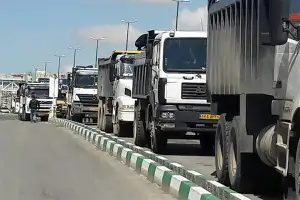
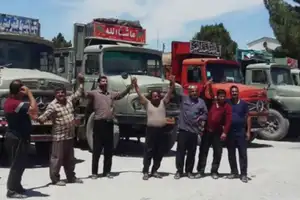
  • Explained: why Iran’s truckers are on strike and what it means

    Explained: why Iran’s truckers are on strike and what it means

  • Truckers' strike can paralyze Iranian government, experts say

    Truckers' strike can paralyze Iranian government, experts say

  • Truck driver strike tests Islamic Republic’s grip on road freight

    Truck driver strike tests Islamic Republic’s grip on road freight

Inflation eats into household budgets

The slowdown comes as Iranian households face some of the steepest price increases in years. Official data for September showed consumer prices were 89.8% higher than a year earlier, while average inflation over the preceding 12 months reached 73.6%. Food and drink prices had already risen 127.5% year on year in August.

Reuters reported in September that food prices had more than doubled while the wider economy was being squeezed by sanctions, restrictions on oil exports and the costs of the seven-month conflict with the United States.

Iran’s currency has added another layer of pressure. The rial fell beyond 2.5 million to the US dollar on the free market earlier this week, a record low, compared with roughly 1.1 million a year earlier.

For businesses dependent on imported equipment, that fall feeds quickly into prices.

“Parts dealers buy according to the day’s dollar rate,” an Amir Kabir business operator said, adding that prices often fail to come back down even when the rial temporarily strengthens.

“The consumer and the worker end up carrying the greatest burden,” he said.
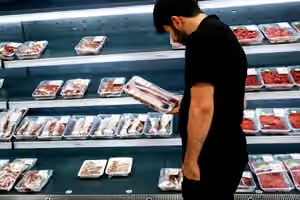
  • Meat, cream, rice: Food becomes loot as prices soar in Iran

    Meat, cream, rice: Food becomes loot as prices soar in Iran

  • Iran’s rial hits another record low under economic and military pressure

    Iran’s rial hits another record low under economic and military pressure

  • Disease, drug shortages grip overcrowded Iran prison

    Disease, drug shortages grip overcrowded Iran prison

Fewer loads hit an entire chain of jobs

The industrial district illustrates how weakness in one part of Iran’s economy spreads quickly into others.

A single truck can generate work for engine mechanics, gearbox specialists, machinists, painters, welders, upholsterers and parts sellers before it gets back on the road. When freight volumes fall, drivers delay repairs and workshops lose business.

“There’s a deep slowdown across the industrial area,” the tradesperson said. “It’s not that the vehicles don’t need work. Purchasing power and liquidity have fallen sharply.”

Some vehicles are repaired but then sit idle because there is no cargo to move, he said. Even when transport work is available, delayed payments from cargo owners leave drivers and workshops short of cash.

That weakness is also reflected in accounts shared with Iran International, with Iranians describing cuts to spending on food, housing and medicine as savings run down and private-sector job losses spread.

Cheap parts bring expensive problems

Workshop owners are also grappling with replacement parts that they say are either prohibitively expensive or of poorer quality.

A local tradesperson told ILNA that original components for older European and American heavy vehicles had become difficult to obtain, leaving operators increasingly dependent on Chinese-made replacements.

“In the past, if you rebuilt a Volvo or Mack with original parts, it could run for years without another major repair,” he said. “Now poor-quality parts mean repeated breakdowns.”

Original parts can still sometimes be found, he added, but at prices that often make them uneconomical for truck owners already dealing with loans, insurance and weaker freight income.

The result is a cycle in which operators choose cheaper parts, suffer more frequent failures and return to workshops while having less money available to pay for the repairs.
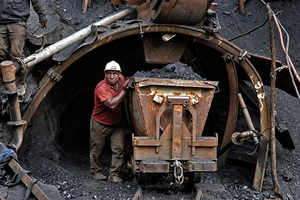
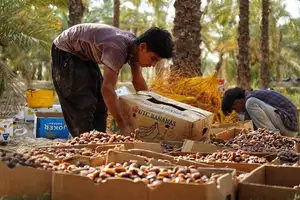
  • Economic crisis puts Iran’s coal miners at greater risk

    Economic crisis puts Iran’s coal miners at greater risk

  • Tehran ‘ashamed’ as Iranians struggle to make ends meet

    Tehran ‘ashamed’ as Iranians struggle to make ends meet

  • Iran factories face deepening raw material shortages

    Iran factories face deepening raw material shortages

Skilled jobs come under pressure

The downturn is beginning to affect hiring and job security.

A machining workshop may employ 10 to 12 people repairing engine blocks, crankshafts and other heavy components. With business down and insurance, municipal charges and other expenses still rising, workshop owners may stop taking on workers or begin cutting staff, according to ILNA.

“A workshop with 10 or 12 workers may no longer want to expand its workforce and may even reduce the number of employees because its income cannot cover its costs,” a local business owner said.

The impact could outlast the immediate downturn. Training an experienced technician can take about a decade, he said, but workshops have less incentive to bring in apprentices when they are unsure whether they can retain existing staff.

Pressure reaches beyond Isfahan

The problems in Amir Kabir mirror a broader contraction in everyday economic activity as the government struggles with reduced oil revenues, sanctions and restrictions on trade.

US pressure has sharply reduced Iran’s access to foreign currency from oil exports, while sanctions evasion has become more costly. That has made imported equipment and raw materials harder to finance just as the rial’s fall raises their local-currency price.

For the workers and drivers in Isfahan, however, the crisis comes down to a simpler calculation: there is less work, while virtually everything needed to do that work costs more.

“If prices are going to remain high, then at the very least the volume of work has to increase,” a local tradesperson told ILNA. “Businesses need enough cash flow to keep operating.”