• العربية
  • فارسی
Brand
  • Iran Insight
  • Politics
  • Economy
  • Analysis
  • Special Report
  • Opinion
  • Podcast
  • Live TV
  • Iran Insight
  • Politics
  • Economy
  • Analysis
  • Special Report
  • Opinion
  • Podcast
  • Live TV
  • Theme
  • Language
    • العربية
    • فارسی
  • Iran Insight
  • Politics
  • Economy
  • Analysis
  • Special Report
  • Opinion
  • Podcast
  • Live TV
All rights reserved for Volant Media UK Limited
volant media logo

China urges reopening of Hormuz, restraint from Iran and US

Sep 16, 2026, 09:32 GMT+1

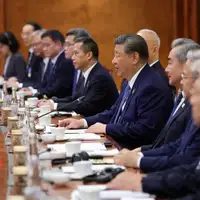
Chinese Foreign Minister Wang Yi urged Iran and the United States to remain rational and restrained, telling his Iranian counterpart Abbas Araghchi that continued hostilities served neither side nor the international community.

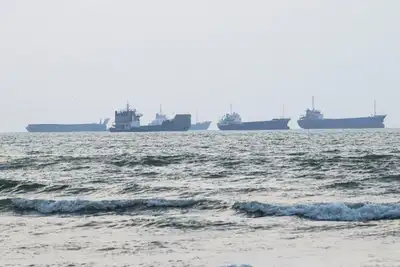
Wang called on all parties to take effective steps to reopen the Strait of Hormuz and backed dialogue between Iran and Persian Gulf states based on mutual respect for sovereignty and security. He also warned against allowing regional tensions to spread further toward Yemen and the Red Sea.

Banner

Most Viewed

US, Iran hint at talks even as sanctions tighten and Hormuz tensions stay high
1

US, Iran hint at talks even as sanctions tighten and Hormuz tensions stay high

2
ANALYSIS

Iran's Saudi leverage could become its liability

3

IAEA raises alarm over Iran access amid mounting Hormuz tensions

4

Islamic Republic asks public to identify opponents abroad

5
ANALYSIS

After Muscat collapse, Tehran argues over what comes next

Banner

Spotlight

  • A generation shaped by Woman, Life, Freedom refuses to go back
    ANALYSIS

    A generation shaped by Woman, Life, Freedom refuses to go back

  • ‘This is the cost you must pay’: Iran accused of denying food to death-row twin

    ‘This is the cost you must pay’: Iran accused of denying food to death-row twin

  • January's unfinished love stories: Lives severed by Iran protest killings

    January's unfinished love stories: Lives severed by Iran protest killings

  • After Muscat collapse, Tehran argues over what comes next
    ANALYSIS

    After Muscat collapse, Tehran argues over what comes next

  • Xi’s BRICS peace call sparks debate in Iran over China’s role in war

    Xi’s BRICS peace call sparks debate in Iran over China’s role in war

  • Iran's Saudi leverage could become its liability
    ANALYSIS

    Iran's Saudi leverage could become its liability

  • US pilot rescue inside Iran draws mockery of Guards

    US pilot rescue inside Iran draws mockery of Guards

Banner
Banner
•
•
•

More Stories

Security forces deploy as shops in western Iran strike on Mahsa Amini anniversary

Sep 16, 2026, 08:17 GMT+1
100%

Iranian security forces fanned out across several western cities on Wednesday as shopkeepers shut down businesses to mark the fourth anniversary of the death of Mahsa Amini, according to videos and messages sent to Iran International.

The general shutdown followed a joint call by an alliance of Iranian Kurdish political groups for businesses to close and workers to stay home on the anniversary of the 22-year-old’s death in morality police custody, an event that ignited the nationwide Woman, Life, Freedom movement.

Tensions were highest in Saqqez, Amini's hometown. Authorities deployed heavy security around the city and the nearby Aichi cemetery, where she is buried.

Local rights group Kurdpa reported that authorities released water from the nearby Cheragh-Veis dam for a third consecutive year to submerge secondary routes to her grave, while installing elevated structures to mount additional surveillance cameras along the main road.

  • Resistance born from Mahsa Amini’s death endures, UN rapporteur says

    Resistance born from Mahsa Amini’s death endures, UN rapporteur says

Strikes and heavy military presence

Videos and messages sent to Iran International showed shuttered markets across Saqqez, Sanandaj, Oshnavieh, Bukan, Paveh, Divandareh, Kermanshah, and Marivan.

Residents and human rights monitors reported riot police, military convoys, and heavily armed units, some equipped with mounted machine guns, patrolling key commercial corridors. Rights group Hana said security forces actively pressured shopkeepers to reopen their businesses and reported a distinct slowdown in internet services in the region.

The shutdown was preceded by a pre-anniversary crackdown. Rights monitor Hengaw reported that at least 20 young people were arrested in Oshnavieh ahead of Wednesday. Additional military units and anti-riot convoys were seen moving from Divandareh into Saqqez on Tuesday evening.

  • A generation shaped by Woman, Life, Freedom refuses to go back

    A generation shaped by Woman, Life, Freedom refuses to go back

Beyond the western provinces, residents in Isfahan, Rasht, Fouman, Mashhad, and Neyshabur sent reports to Iran International detailing an increased presence of morality patrols, hijab monitors, and plainclothes security personnel enforcing strict dress codes.

100%
Zeinab Jalalian, Varishe Moradi, Sakineh Parvaneh and Matlab Ahmadian

Solidarity behind bars

Prominent political prisoners also backed the strike. Four female prisoners, Zeinab Jalalian, Varishe Moradi, Sakineh Parvaneh, and Matlab Ahmadian, announced a one-day hunger strike on Wednesday in support of the economic shutdown, calling it "the most civil form of expressing protest" in a message distributed by the Kurdistan Human Rights Network.

Dayeh Sharifeh, the mother of executed political prisoner Ramin Hosseinpanahi, also endorsed the action, saying: "We keep the pursuit of justice alive; we neither forgive nor forget."

Amini died in September 2022 after being detained in Tehran over alleged violations of Iran's mandatory hijab rules. Her funeral in Saqqez sparked months of widespread anti-government demonstrations that grew into one of the most serious challenges to the Islamic Republic in decades.

A generation shaped by Woman, Life, Freedom refuses to go back

Sep 16, 2026, 02:59 GMT+1
•
Reza Akvanian
100%
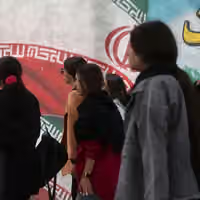
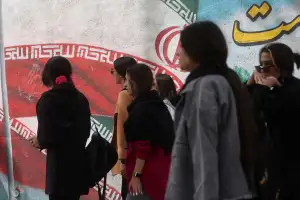
A group of Iranian women walking in public without the mandatory hijab

Four years after Mahsa “Jina” Amini’s death in Iran’s morality police custody sparked the Woman, Life, Freedom uprising, teenagers who watched her name become a rallying cry have grown up amid repression but beyond many of the social and political boundaries of pre-2022 Iran.

A girl who was just entering adolescence when the Woman, Life, Freedom protests began is now approaching adulthood. The past four years have been part of the period in which her understanding of society, government and freedom has taken shape.

Women burning their headscarves, nighttime chants from apartment windows, protests in schools and universities, young people knocking turbans off clerics’ heads and protesters standing up to security forces all became part of the memories that accompanied that generation into adulthood.

One of the most enduring changes is visible on the streets.

Many women now appear without mandatory hijab in streets, universities, cafes, shopping centers and on public transport. Some ride bicycles and motorcycles without covering their hair.

The Islamic Republic has responded to this defiance with arrests and summonses, warning text messages, vehicle seizures, restrictions on bank accounts and SIM cards, surveillance cameras and the closure of businesses.

Human rights organizations say tens of thousands of women have faced security or judicial action over their clothing during the past four years.

Abandoning mandatory hijab has become one of the clearest forms of collective disobedience to emerge from 2022, continuing in parts of society despite the security and legal costs.

As the fourth anniversary of Amini’s death approached, a coalition of Iranian Kurdish political groups called for a general strike on September 16, urging people to close shops and markets and stay away from work.

From Mahsa Amini’s death to prison and executions

Mahsa “Jina” Amini, a 22-year-old woman from Saqqez in Iran’s Kordestan province was detained by the morality police in Tehran on September 13, 2022. She was taken to hospital and died three days later.

Her gravestone bears the words: “Dear Jina, you will not die. Your name will become a symbol.”

Her father, Amjad Amini, wrote on September 14, ahead of the fourth anniversary of her death, that her name had “gone beyond our small home.”

The family, he said, was still waiting for the truth to emerge.

“The sealed secret that you and all the loved ones resting in this earth carry with you will not remain hidden forever,” he wrote.

Amini’s name quickly became a rallying cry for protests that began in Saqqez and Kordestan, spread to Tehran and then swept across Iran. The Kurdish slogan “Jin, Jiyan, Azadi” and its Persian equivalent, “Woman, Life, Freedom,” became the uprising’s defining chant.

“Death to the dictator,” “This is the final message, the target is the entire system,” “Poverty, corruption, high prices — we will go on until overthrow,” and “Don’t call it a protest, it’s called a revolution” were also heard on the streets, reflecting the political direction the protests had taken.

Supreme Leader Ali Khamenei and the Islamic Republic itself became the direct targets of many of the slogans.

The uprising also quickly became a global cause. Artists, athletes, academics, human rights activists and political figures around the world voiced support, carrying Amini’s name and the slogan Woman, Life, Freedom far beyond Iran’s borders.

The authorities answered the protests with lethal force, widespread injuries and mass arrests.

Human rights organizations have put the number of people killed in the uprising at more than 550. Many more were wounded, while shotgun pellets blinded dozens of protesters in one or both eyes.

Judiciary chief Gholam-Hossein Mohseni-Ejei said in May 2025 that more than 90,000 cases had been opened in connection with the 2022 protests, including cases involving schoolchildren, university students and teachers.

The crackdown continued in the courts after large street gatherings subsided.

Execution, imprisonment, flogging, internal exile, fines, travel bans and restrictions on social rights were among the punishments handed down to protesters and activists linked to the uprising.

Mohsen Shekari, Majidreza Rahnavard, Mohammad Mehdi Karami, Mohammad Hosseini, Saleh Mirhashemi, Saeed Yaghoubi, Majid Kazemi, Milad Zohrevand, Mohammad Ghobadlou, Reza Rasaei, Mojahed Korkor, Mehran Bahramian, Mehrab Abdollazadeh, Abdoljalil Shahbakhsh and Aref Khoshkar were among those executed in cases connected to the 2022 protests.

Others remain at risk of execution.

Among them is Ali Zarei Dozdarehsi, who suffered an eye injury from shotgun pellets during the uprising. After spending time in Germany, he returned to Iran, was arrested and was later sentenced to death by a Revolutionary Court.

Dozens of other protesters have also received death sentences or still have cases under review.

Golrokh Iraee, Nasim Simiyari, Hamid Ghareh-Hassanlou, Farzaneh Ghareh-Hassanlou and Hossein Mohammadi are among hundreds of political prisoners connected to the Woman, Life, Freedom uprising who have faced restrictions in prison, including being denied phone calls, family visits or furlough.

For some, much of the past four years has been spent behind bars, even as Iranian society outside prison has moved through new protests and new changes.

A generation that says ‘We are not going back’

The children and teenagers of 2022 have grown older. Some are now at university, some have entered the workforce and others have left Iran.

What many share is the experience of growing up in a society that lived through one of the most widespread uprisings in the history of the Islamic Republic.

Schools themselves became protest sites in 2022. Students chanted slogans, pulled down images of Islamic Republic officials from classroom walls and girls removed their headscarves.

Universities saw weeks of demonstrations, sit-ins and confrontations with security forces.

For a generation that witnessed those scenes during formative years, politics became tied to the street, the school, the university and everyday life.

German-American political thinker Hannah Arendt linked freedom to the human capacity to begin something new. In her thought, political action emerges among others in the public sphere, and revolutions are among the moments when the possibility of a “new beginning” becomes visible.

For the teenagers of 2022, an experience of that kind unfolded on a mass scale before their eyes: people who often did not know one another chanted the same slogans, supported each other and joined collective action in schools, universities, neighborhoods and streets.

Four years later, this generation lives in a society where repression continues. But the experience of 2022 has not been erased from its political memory.

What Woman, Life, Freedom gave the protests that followed

The 2022 uprising did not topple the Islamic Republic, but it changed the language and horizons of protest.

Woman, Life, Freedom entered Iran’s political vocabulary alongside slogans calling for the overthrow and end of the Islamic Republic.

Women stood at the center of a nationwide uprising. School students emerged as a visible force in protest, and acts of disobedience moved from demonstrations into everyday life.

Some of the behaviors that took shape during those months continued in the years that followed.

Rosa Luxemburg, the Marxist revolutionary and theorist, viewed the defeats of revolutionary movements as links in a historical chain that could help prepare the ground for future victories.

After the failed January 1919 uprising in Berlin, she treated the experience and political understanding gained through defeat as part of a revolutionary movement’s accumulated strength.

The protests that followed 2022 began from a point that Woman, Life, Freedom had already reached. Opposition to the Islamic Republic as a whole, and demands for its overthrow, remained present in later protest slogans.

January 2026 offered one of the clearest examples.

Protests that began over economic grievances rapidly spread across the country, with political slogans against the Islamic Republic becoming a major feature.

Estimates of those killed ranged from the government’s official figure of 3,117 to more than 36,500 in Iran International’s reporting. Tens of thousands were wounded, while around 100,000 people were arrested, summoned or interrogated.

For the generation that had experienced 2022, January 2026 became a second encounter with a nationwide uprising and a bloody crackdown within only a few years.

A generation carrying the memory of several generations

Iran’s teenagers and young adults now stand at the end of a much longer history of protest and repression: women’s protests against compulsory hijab in March 1979, the executions of the 1980s, the July 1999 university dormitory crackdown, the 2009 Green Movement, the protests of January 2018 and the bloody November 2019 crackdown.

Many learned about those events through their families, photographs, books and news reports.

Woman, Life, Freedom and the January 2026 protests, however, belong to their own lived experience.

That distinction has helped shape this generation’s political memory.

Images of protesting women, schoolgirls, young people in the streets, families demanding justice and political prisoners now sit alongside images of those killed, wounded and executed.

A girl who was just entering adolescence in September 2022 is now approaching adulthood carrying memories of Amini, protest, repression and disobedience — memories now layered alongside the stories earlier generations carried from March 1979, the 1980s, July 1999, the Green Movement and November 2019.

Four years after Amini’s death, Woman, Life, Freedom remains part of this generation’s memory: in the school and the street, in experiences of repression and defiance, and in the picture of freedom and Iran’s future that it carries into adulthood.

Above all, this generation has seen that the path to political change in Iran runs through the street, collective action and effective organization.

‘This is the cost you must pay’: Iran accused of denying food to death-row twin

Sep 15, 2026, 23:25 GMT+1
•
Negar Mojtahedi
100%
Iranian twins Taraneh and Romina Rahimi were arrested after joining anti-regime protests in Isfahan, Iran. Taraneh has been sentenced to death, while Romina faces decades in prison. (HANA)

Twin sisters Taraneh and Romina Rahimi have been tortured in detention and threatened with sexual violence, while death-row Taraneh is now being denied food in retaliation for family advocacy, their cousin told Iran International.

The sisters were 19 when they were arrested after joining January’s nationwide uprising in Isfahan. They turned 20 behind bars and remain imprisoned in Isfahan’s Dowlatabad Prison.

Taraneh has been sentenced to death, while Romina received prison sentences totaling 36 years. They were among 16 defendants tried by Branch 1 of the Isfahan Revolutionary Court in the Shohada Square case, 10 of whom received death sentences.

Masoud Nourmohammadi, the twins’ cousin who lives in the United States, told Iran International that prison authorities have recently begun denying Taraneh food, forcing her to rely on leftovers shared by other prisoners.

He said Taraneh was told the treatment was connected to his efforts to raise awareness about the sisters’ case outside Iran.

“They said your cousin has been talking outside of Iran,” Nourmohammadi said, recounting what Taraneh was told.

“This is the cost you have to pay.”

Nourmohammadi said he has also received daily death threats since speaking publicly about his cousins.

He said messages sent to him include his address and information about his family and warn him to remain silent.

“This is your address. This is your house. This is information about your family. We know where you live,” he said, recounting the threats. “Stop talking or something’s going to happen to your kids.”

Four months without knowing where they were

The sisters’ ordeal began after they joined protests around Isfahan’s Shohada Square during the nationwide uprising in January.

Taraneh and Romina were working at a shoe shop in the area when they closed the store and joined protesters outside, according to Nourmohammadi.

“They came out. They chanted,” he said. “The bravest Iranian people came out that night.”

About a week later, masked security forces broke into the home of a friend where Taraneh was staying, according to the family.

“They broke down the doors,” Nourmohammadi said. “They had masks on. They did not show any warrants.”

He said security forces bound Taraneh’s hands and feet, placed a bag over her head and took her away.

Romina was arrested separately at the family home. Nourmohammadi said security forces raided the house in the middle of the night and took her away in similar circumstances.

For roughly four months, their family did not know where either sister was being held.

Their mother, who raised Taraneh and Romina on her own, searched hospitals, courts and prisons for her only children.

“They were searching all of the hospitals, the courts, the prisons,” Nourmohammadi said.

Family members spent hours outside prisons demanding information, he said.

“No one answered them.”

For Nourmohammadi, thousands of miles away in the United States, the uncertainty was compounded by Iran’s internet blackout, which made communicating with relatives inside the country extremely difficult.

Eventually, his aunt received a phone call telling her the twins were being held at Dowlatabad Prison and that she could visit them.

She was given an appointment roughly two weeks later.

When she finally saw her daughters after months of not knowing where they were, Nourmohammadi said she could barely recognize them.

“Their faces were swollen, bruises all over their faces, their body was malnourished, they were limping,” he said.

“They had basically no hair on their head.”

It was only when the sisters began speaking that their mother realized the young women in front of her were her daughters.

“God, it was hard,” he said. “She only could recognize them when they started speaking ... she recognized them through their voices.”

Nourmohammadi said the sisters spent their first four months in solitary confinement.

‘The only evidence is the confession’

The family says both sisters were subjected to severe physical and psychological abuse during interrogation and coerced into confessing.

Before her arrest, Taraneh worked as an equestrian trainer and dreamed of opening her own riding academy.

Years earlier, she had suffered a serious horseback-riding injury that required orthopedic plates and screws in her leg. Her family alleges interrogators deliberately targeted the existing injury and repeatedly struck her damaged leg.

Romina had undergone stomach surgery before her arrest and was experiencing stomach problems around the time of the protests, according to Nourmohammadi.

The family also alleges that interrogators exploited the twins’ close relationship to pressure Taraneh into confessing.

The sisters had rarely been apart. During detention, relatives say, Taraneh could hear Romina screaming.

Interrogators then threatened to rape Romina unless Taraneh signed a confession, according to the family.

Taraneh later told the court that her confession had been extracted under torture, according to reports on the case.

Human Rights Watch and the Abdorrahman Boroumand Center for Human Rights in Iran have documented allegations that defendants in the Shohada Square case were tortured and coerced into confessing, as well as serious violations of their due-process rights.

Nourmohammadi said there was no substantive evidence against his cousins beyond confessions he says were obtained through torture.

“There is basically zero evidence on the case,” he said. “The only evidence that they have is the confession.”

The Shohada Square case

Taraneh and Romina were prosecuted alongside 14 other defendants over events surrounding the January protests in Isfahan.

Ten of the 16 defendants, including Taraneh, received death sentences.

The defendants faced charges including moharebeh, or “waging war against God,” destruction of public property, assembly and collusion against national security and propaganda against the state.

Human Rights Watch and the Boroumand Center said the prosecution relied heavily on confessions that defendants said were obtained under torture. They also documented restrictions on access to lawyers and other due-process violations.

The rights groups said defendants were accused of involvement in incidents in which two people died, but none of the 16 was charged with murder.

They also reported that defense lawyers sought to introduce mobile-phone videos they said could exonerate defendants, but the material was not admitted as evidence.

Crackdown continues beyond the streets

The mass demonstrations that swept Iran in January are no longer visible on the same scale, but the crackdown that followed has continued in prisons and courtrooms.

Protesters arrested during the uprising continue to face lengthy prison terms, death sentences and execution.

At least 29 people arrested in connection with the January protests had been executed by the end of August, according to Human Rights Watch and the Boroumand Center.

Amnesty International said in July that it had identified 60 people, including three children, at risk of execution in connection with the protests. Iran Human Rights has reported that more than 70 protesters were at risk of execution in Isfahan Prison alone.

The actual number could be substantially higher.

The crackdown has also extended to lawyers representing protesters. The Boroumand Center documented the arrests of at least 19 lawyers in the month following the January crackdown, while other lawyers taking protest-related cases have faced threats of arrest, renewed prosecution or disbarment.

For Nourmohammadi, what is happening to his cousins shows that the crackdown did not end when large protests disappeared from Iran’s streets.

“The crisis didn’t stop at January 8th and 9th,” he said. “The massacre didn’t stop there. It is still continuing and it’s happening right now in the prisons.”

“These kids are the best versions of Iranians,” he added. “They’re the bravest, brightest ... Iranian kids, and they don’t deserve that.”

Tehran political circles see US hand in postponement of Oman Hormuz talks

Sep 15, 2026, 20:28 GMT+1
•
Maryam Sinaiee
100%
Omani Foreign Minister Badr al Busaidi visited Tehran on August 25, 2026 for talks with his counterpart Abbas Araghchi.

Iranian lawmakers, hardline media and analysts have blamed Washington for postponing Oman-hosted talks on Strait of Hormuz shipping arrangements, despite officials attributing the delay to regional objections and Saudi concerns over Yemen.

Omani Foreign Minister Badr Albusaidi said the meeting, scheduled for Monday in Salalah, was postponed “in the interests of consensus.” An Iranian Foreign Ministry official separately said the delay came at the request of “some regional countries,” while spokesman Esmail Baghaei said Saudi Arabia had sought the postponement because of developments in Yemen.

No new date has been announced for the meeting.

Baghaei described the planned gathering as an “opportunity” created by Iran and Oman and urged regional states not to let it slip away.

“I don’t think any responsible party would accept that we should lose this opportunity for any reason, whether because of outside interference or because of excuses that really have nothing to do with Iran, and that we should not hold this meeting,” he said Monday.

Several voices in Iran have gone further, explicitly accusing Washington of working to derail the initiative.

Fada-Hossein Maleki, a member of parliament’s National Security and Foreign Policy Committee, told Tabnak that the United States had sought from the outset to prevent the Muscat process from taking shape or, if the meeting went ahead, to ensure Washington participated as a third party.

He said an Iran-Oman understanding on Hormuz could represent “another political defeat for the United States” because Washington had sought a role in arrangements concerning the strategic waterway, while Iran and Oman had pursued dialogue over its future management and shipping arrangements independently of Tehran-Washington negotiations.

Ali Gholhaki, an adviser to parliamentary speaker Mohammad-Bagher Ghalibaf, wrote on X that Saudi Arabia, Bahrain and the United Arab Emirates had obstructed the Oman meeting, but said “the main actor behind the cancellation of this meeting is America!”

International affairs analyst Mir-Ghasem Momeni offered a similar interpretation, telling ILNA that the postponement was aimed at increasing pressure on Iran and extracting further concessions.

“This is a scenario designed by the Americans, with Saudi Arabia and other countries carrying it out,” he said.

Saudi concerns offer another explanation

Saudi Arabia’s request came amid mounting tensions over Yemen and attacks on its energy infrastructure, providing a more immediate explanation for Riyadh’s reluctance to proceed with the talks.

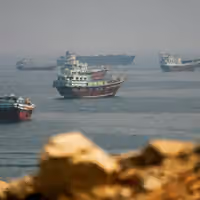
The Houthis have stepped up pressure on Saudi Arabia amid fighting in Yemen, while attacks on Saudi energy infrastructure have added to concerns over the security of alternative export routes as traffic through the Strait of Hormuz remains disrupted.

Hardline Kayhan newspaper nevertheless alleged that Saudi Arabia had used the recent escalation involving the Houthis and attacks on Saudi infrastructure as a pretext to derail the planned meeting.

The Javan newspaper, affiliated with the Revolutionary Guards (IRGC), sought to connect Riyadh’s position more directly to Washington, pointing to Saudi Crown Prince Mohammed bin Salman’s meeting with US Central Command chief Adm. Brad Cooper on Monday as evidence of what it described as US-Saudi coordination against the talks.

The meeting took place after Oman announced the postponement on Sunday night, however, and there is no public evidence linking Cooper’s visit to the decision to delay the Salalah gathering. Saudi state media said Mohammed bin Salman and Cooper discussed bilateral relations and the latest regional developments.

Limits of regional diplomacy

Some Iranian analysts have interpreted the postponement as evidence of a broader problem with attempts to resolve the Hormuz crisis solely through regional diplomacy.

Momeni argued that Washington retained enough influence over Persian Gulf Arab states to prevent them from reaching an independent arrangement with Tehran.

“The solution to the Strait of Hormuz problem is not an agreement between Iran and the Arab countries, but an agreement between Iran and the United States,” he said.

Political analyst Rahman Ghahramanpour wrote on X that the postponement was a sign of President Donald Trump’s reluctance to revive the Islamabad framework and his preference for designing a new framework that would simultaneously address the reopening of the Strait of Hormuz and the nuclear issue.

International relations professor Mohsen Jalilvand told Fararu that it had been clear from the outset that the meeting either would not take place or would fail to produce a tangible outcome because the principal parties to the conflict, particularly the United States and Israel, were absent from the negotiating table.

Jalilvand said that if the objective was to establish a durable mechanism for managing transit through the Strait of Hormuz, parties with genuine deterrent capabilities and the power to enforce an agreement would have to participate.

“Otherwise, regional treaties alone cannot provide a strong security guarantee for changing the current situation,” he said.

He added that the significance of the Oman meeting lay not simply in whether it was held, but in what its postponement revealed about the limits of regional diplomacy.

Opposition inside Iran

Not all criticism inside Iran has focused on why the meeting was postponed.

Kayhan editor Hossein Shariatmadari, a strong opponent of the understanding with Oman, has argued that the proposed arrangement amounts to giving the United States “a breathing space” and that Iran should not negotiate with other Persian Gulf countries over reopening the Strait of Hormuz.

In a Monday commentary, Shariatmadari sharply criticized the decision to invite other Persian Gulf states to the meeting, accusing them of protecting US and Israeli interests.

“As long as they have not paid the price for supporting the crimes of America and Israel and have not been punished, they should have no role or presence whatsoever in the decision-making of the Islamic Republic of Iran,” he wrote.

January's unfinished love stories: Lives severed by Iran protest killings

Sep 15, 2026, 19:05 GMT+1
•
Farnoosh Faraji
100%
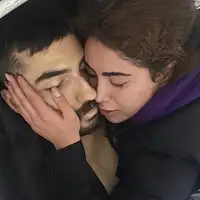
Matin Ghorbani’s wife, Mahsa Khanjani, embraces his body after he was shot dead during protests in Karaj on January 9.

Eight months after Iran's January protests, the partners left behind by some of those killed are recounting lives abruptly divided by gunfire – marriages measured in months or days, anniversaries spent at graves and final embraces they never knew were their last.

Their accounts preserve the intimate details of loss: the last phone call, kiss and touch, and plans for weddings and futures that never came.

A marriage cut short after 16 months

Shahrouz Mehrabi, a 36-year-old electrical engineer from Borujerd, was shot dead in Saveh on January 8, his wife Parvaneh's birthday.

The couple had struggled for years to build a life together. Their marriage lasted one year and four months.

100%
Shahrouz Mehrabi and his wife, Parvaneh, on their wedding day. Mehrabi was shot dead on January 8, his wife's birthday, after one year and four months of marriage.

“We loved each other and went through so much to finally be together,” Parvaneh wrote.

She remembered Shahrouz as kind, in love with life and full of plans. His death left those plans unfinished and turned her birthday into the anniversary of his killing.

  • Wounded January protester killed before his family, sources say

    Wounded January protester killed before his family, sources say

‘I wish I had held you longer’

Matin Ghorbani, a 23-year-old barista, was shot dead during protests in Karaj on January 9.

His wife, Mahsa Khanjani, later published a photograph of herself embracing Matin's body.

“Why does this have to be our last picture?” she wrote.

In a recent video, Mahsa described the months that followed: nights reaching morning without him and memories of a final phone call, embrace and kiss that seemed ordinary because she did not know they were farewells.

100%
Matin Ghorbani and his wife, Mahsa Khanjani, before Ghorbani was shot dead during protests in Karaj on January 9.

“I wish I had known it was the last time,” she said. “I wish I had held you longer, looked at you longer. I wish I had recorded your voice more deeply in my mind.”

100%
Meysam Ghaderi and his wife on their wedding day. Ghaderi was shot dead during protests in Karaj on January 8, just seven days after the couple married following an 11-year relationship.

Seven days of marriage

Meysam Ghaderi, 32, and his partner had been together for 11 years before finally marrying.

Seven days later, he was dead.

Meysam was shot in the neck during protests in Karaj on January 8, leaving a marriage that had taken more than a decade to reach barely a week old.

100%
Elham Sadeghi marks her wedding anniversary beside a photograph of her husband, Mohsen Jabbarzadeh, after his death during Iran’s January protests.

A ninth anniversary without him

For Elham Sadeghi, another anniversary arrived this month without her husband, Mohsen Jabbarzadeh.

Mohsen, 41, who owned a currency exchange business, was killed during protests on Tehran’s Salsabil Street on January 9 after being shot with live ammunition.

His injuries were so severe that he died within minutes. At the hospital, his family was told the bullet had severed the main artery in his leg.

Marking what would have been their ninth wedding anniversary on September 12, Elham remembered how hard they had fought to build their life together.

“We went through so much to be together, we fought so hard,” she wrote. “My love, I love you forever.”

100%
Sadegh Ghorbani and his wife, Atefeh Saei, on their wedding day. Ghorbani, 28, was shot during protests in Shahr-e Qods and died on January 10.

A first anniversary at his grave

Sadegh Ghorbani, 28, was shot in Shahr-e Qods near Tehran and died on January 10.

His wife, Atefeh Saei, spent their first wedding anniversary not beside him, but at his grave.

“Our first wedding anniversary; me without you, alone, frightened and in shock,” she wrote on Instagram.

In another post, Atefeh recalled touching her husband's cold body and fighting through a crowd to reach his coffin.

“I hate my hands; with these hands I touched your frozen body,” she wrote. “With these same hands, I made my way through the crowd to your coffin, held your lifeless feet and said: Don't be afraid. Go without worry, go in peace.”

Saei later described placing earth over her husband's body herself, fearful even during his burial that authorities might take his remains from the family.

100%
Aida Heidari and her fiancé, Abolfazl Soleimani Al-Mouti, before his death during protests in Qazvin on January 9. Heidari died by suicide eight months later, around the time the couple had planned to marry.

A wedding that never came

For Aida Heidari, 25, the future she had planned with her fiancé Abolfazl Soleimani Alamouti was supposed to begin around now.

Abolfazl was killed during protests in Qazvin's Zibashahr district on January 9. Their wedding was planned for about eight months later, people close to the couple said.

On September 3, around the time she would have been preparing for that wedding, Heidari died by suicide.

  • Fiancée of slain protester, father of another die by suicide in Iran

    Fiancée of slain protester, father of another die by suicide in Iran

People close to Heidari said she had struggled with grief and psychological distress in the months after Soleimani Alamouti’s death. However, the circumstances that led to her suicide are not independently known.