• العربية
  • فارسی
Brand
  • Iran Insight
  • Politics
  • Economy
  • Analysis
  • Special Report
  • Opinion
  • Podcast
  • Live TV
  • Iran Insight
  • Politics
  • Economy
  • Analysis
  • Special Report
  • Opinion
  • Podcast
  • Live TV
  • Theme
  • Language
    • العربية
    • فارسی
  • Iran Insight
  • Politics
  • Economy
  • Analysis
  • Special Report
  • Opinion
  • Podcast
  • Live TV
All rights reserved for Volant Media UK Limited
volant media logo

Resistance born from Mahsa Amini’s death endures, UN rapporteur says

Sep 14, 2026, 16:35 GMT+1
The front page of Iranian newspaper Jahan-e Sanat shows a portrait of Mahsa “Jina” Amini over a map of Iran.

UN Special Rapporteur on Iran Mai Sato said the movement born from Mahsa “Jina” Amini’s death in Iran’s morality police custody remains alive four years on, despite another deadly crackdown and continued enforcement of mandatory hijab rules.

Sato said the Woman, Life, Freedom movement brought together women and men across Iran’s ethnic groups and provinces to demand equal rights for women and girls.

Authorities responded with lethal force in 2022 and again during the nationwide protests of December 2025 and January 2026, she wrote on X.

She said mandatory hijab enforcement had also continued despite the suspension in December 2024 of the Law on Protecting the Family through the Promotion of the Culture of Chastity and Hijab. Cafes, restaurants and shops are still being closed when employees or customers appear without hijab, with arrests reported in some cases.

Mahsa “Jina” Amini, a 22-year-old woman from Saqqez, was detained while visiting Tehran with her brother on Sept. 13, 2022, for allegedly wearing her headscarf improperly. She collapsed after being taken to a morality police detention center and died in hospital three days later.

Iranian authorities denied that she had been beaten and attributed her death to an underlying medical condition, a claim rejected by her family. A UN fact-finding mission later concluded that Amini’s death was unlawful and caused by physical violence while she was in state custody.

Medical documents obtained by Iran International showed skull fractures, hemorrhaging and brain swelling consistent with severe trauma.

Protests began at Amini’s funeral in Saqqez on Sept. 17 and spread to more than 160 cities and towns, with women burning their headscarves and demonstrators chanting “Woman, Life, Freedom.”

At least 551 protesters, including 68 children, were killed, hundreds suffered blinding eye injuries and more than 20,000 people were arrested. The UN mission found that parts of the crackdown, including killings, torture, rape and other sexual violence, amounted to crimes against humanity.

Women continued appearing unveiled in public after the protests subsided, prompting authorities to turn to surveillance cameras, drones, vehicle impoundments and the Nazer reporting application. A 74-article hijab law introducing heavier fines, prison terms and other severe punishments was due to take effect in December 2024 but was halted following widespread opposition.

The next nationwide protest wave began over the collapsing rial and rising prices in late December 2025 before becoming an anti-government uprising.

Documents reviewed by Iran International showed that more than 36,500 people were killed during the crackdown on Jan. 8 and 9, while authorities acknowledged 3,117 deaths. A communications blackout and restrictions on independent reporting complicated verification.

Ahead of Mahsa’s fourth anniversary, people in Isfahan, Rasht, Fouman, Mashhad and Neyshabur told Iran International that morality police, hijab enforcers and plainclothes agents had returned to the streets.

Reports included women being detained for appearing without headscarves and vehicles being stopped or having their license plates removed.

“Four years on, the resistance Jina’s death gave rise to has not been extinguished,” Sato said. “Those rights will not stay deniable forever.”

Most Viewed

Mideast oil flows recover while Iran exports vanish, tracker says
1

Mideast oil flows recover while Iran exports vanish, tracker says

2

Iranians buy bread on credit, queue for chicken scraps

3

Deadly ship strike deepens crisis over Strait of Hormuz

4

Hormuz diplomacy stalls as attacks deepen pressure on Persian Gulf oil routes

5
VOICES FROM IRAN

Iran students go without as elite schools charge billions

Banner
Banner
Banner

Spotlight

  • Rushed trials, public hangings: Iran courts race to crush dissent
    INSIGHT

    Rushed trials, public hangings: Iran courts race to crush dissent

  • Israeli envoy says no victory until Islamic Republic falls

    Israeli envoy says no victory until Islamic Republic falls

  • Russia may fill Iran gap if support for Yemen Houthis falters
    ANALYSIS

    Russia may fill Iran gap if support for Yemen Houthis falters

  • Bid to oust Pezeshkian exposes rift among Iran conservatives
    INSIGHT

    Bid to oust Pezeshkian exposes rift among Iran conservatives

  • Iran’s hardliners bet on escalation as options narrow
    ANALYSIS

    Iran’s hardliners bet on escalation as options narrow

•
•
•

More Stories

Iran blocks restaurant page over ‘Bibi cutlet’ post

Sep 14, 2026, 14:55 GMT+1
100%

Iranian authorities blocked the Instagram account of a Tehran restaurant after it posted an apparent play on two terms that have become politically charged for the Islamic Republic: “Bibi” and “cutlet.”

The restaurant, Dastpokht-e Bibi (Bibi’s Cooking), posted an Instagram story reading “Nothing beats Bibi’s cutlet” alongside Iranian pop star Moein’s song Bibi Gol.

Shortly after the post went viral, the restaurant’s account was blocked by judicial order for what authorities described as “publishing criminal content.”

100%
The restaurant's page on Instagram was shut down by the Iranian authorities

On its face, the post advertised one of the restaurant’s dishes. But both words carry meanings in Iran’s increasingly coded political vocabulary.

“Bibi” is an old-fashioned Persian term for one’s grandmother. But it is also the widely used nickname of Israeli Prime Minister Benjamin Netanyahu and has become politically charged in Iran, particularly after the wars with Israel and the United States, as the nickname appeared in anti-government memes and expressions of support for Israeli attacks on the Islamic Republic.

  • Israeli Killings Of IRGC Generals Unleash Mockery Among Iranians

    Israeli Killings Of IRGC Generals Unleash Mockery Among Iranians

“Cutlet,” meanwhile, has been a political taunt since Qasem Soleimani was killed in a US drone strike in Baghdad in January 2020. Opponents of the Islamic Republic began referring to the former Quds Force commander as “cutlet” or “kotlet”, mocking the condition of his body after the strike.

The term subsequently became a broader euphemism on Persian social media for senior regime figures killed in military attacks.

The combination of the two words therefore allowed the restaurant’s slogan — “Nothing beats Bibi’s cutlet” — to be read as a reference to Netanyahu and Iranian officials killed by Israel, although the restaurant did not explicitly make such a political statement.

Authorities have acted over similar wordplay before. Celebrity chef Navab Ebrahimi was arrested in January 2023 after posting a recipe for cutlets on Instagram on the anniversary of Soleimani’s killing. His restaurant was also sealed and his Instagram account taken offline.

  • Iranian Professor Arrested For Mocking IRGC Commander's Death

    Iranian Professor Arrested For Mocking IRGC Commander's Death

In January 2024, an Iranian doctor and university professor from the city of Bojnourd in the northeast was detained after posting a picture of "cutlet" on the night of the death of IRGC commander Razi Mousavi.

In June 2024, the Iranian judiciary initiated a legal case against Hossein Pakdel, a playwright and theater director, for allegedly "disrupting the psychological security of society". Pakdel's Instagram post suggested that politics transform "stupid men into special diet cutlets".

The sensitivity surrounding references to Israel has intensified further during the current war.

Iranian authorities said in March that more than 1,000 people had been arrested over accusations including sharing anti-government material online or cooperating with Israel and the United States, while the judiciary warned that some forms of assistance to hostile states could carry the death penalty.

  • Khamenei ‘rat’ taunt spills from social media onto Iran’s campuses

    Khamenei ‘rat’ taunt spills from social media onto Iran’s campuses

Eight women face execution in Iran, rights group warns

Sep 13, 2026, 18:18 GMT+1
100%
(L-R) Pakhshan Azizi, Arghavan Fallahi, Sevda (Marzieh) Ebrahimi Shamsabadi, Taraneh Rahimi, Leila Abolhasani, and Zahra Shahbaz Tabari.

At least eight women are facing death sentences in prisons across Iran, including four in cases linked to the nationwide January protests, the US-based Human Rights Activists News Agency (HRANA) rights group reported on Sunday.

HRANA said the women had been sentenced in separate political, security and protest-related cases on charges including “armed rebellion,” “enmity against God” and “corruption on earth,” offenses that can carry the death penalty under Iran’s Islamic penal code.

The cases were heard by branches of the Revolutionary Courts in Tehran, Isfahan, Rasht and Bandar Abbas, the group said.

The death sentences of Pakhshan Azizi and Arghavan Fallahi have been upheld by Iran’s Supreme Court, according to HRANA.

Azizi, who is being held in Tehran’s Evin Prison, was arrested in August 2023 and sentenced to death the following year on a charge of “armed rebellion through membership in groups opposed to the country,” HRANA said. Her requests for a retrial have since been rejected.

Fallahi, also held in Evin, was arrested in Tehran in February 2025 and later sentenced to death on a charge of “armed rebellion through membership in groups opposed to the government and armed action.” Her sentence was upheld by the Supreme Court in August, HRANA said.

A third woman, 68-year-old Zahra Shahbaz Tabari, was sentenced to death for a second time after the Supreme Court overturned an earlier death sentence and ordered a retrial. She was convicted of “armed rebellion through membership and activity in an opposition group” and is being held in Lakan Prison in the northern city of Rasht, according to HRANA.

Four other women — Maryam Hadavand, Mahnaz Chardouli, Leila Abolhasani and Taraneh Rahimi — were sentenced to death in cases connected to the nationwide protests that erupted in January, the rights group said.

Hadavand, 45 and a mother of two, was arrested in connection with events in Pakdasht, southeast of Tehran, on Jan. 8 and sentenced to death on charges including allegedly participating in the killing of two Basij members, deliberately setting fire to a religious site, damaging public property and assembly and collusion against national security, according to HRANA.

Chardouli, held in Qarchak Prison, was tried on charges including “attacking a mosque with a Molotov cocktail,” “participating in gatherings” and “assembly and collusion,” HRANA said.

A Revolutionary Court in Isfahan sentenced Abolhasani, a mother of two teenage daughters, to death on a charge of “enmity against God” after her arrest during protests in Shahin Shahr on Jan. 8. HRANA said a source close to her family had previously said the case stemmed from her presence at and filming of a fire at a shop, while judicial authorities accused her of involvement in the blaze.

Taraneh Rahimi was among 10 defendants sentenced to death and 11 years in prison in a case involving 16 people arrested over the January protests in Isfahan, known as the “Isfahan Shohada Square” case. The defendants were each sentenced to death and 11 years in prison on charges including “enmity against God through carrying a bladed weapon,” destruction of public property and assembly and collusion, the group said.

The eighth woman, 32-year-old Sevda, also known as Marzieh Ebrahimi Shamsabadi, was sentenced to death in Bandar Abbas on a charge of “corruption on earth” in a case HRANA said was linked to security developments during the war.

She also faced accusations including insulting Iran’s Supreme Leader, conducting media activity deemed contrary to national security, carrying out intelligence activity for hostile governments and photographing a military site and sending images to Persian-language media abroad.

HRANA said five of the eight cases were still at the initial trial or appeal stages.

The group also highlighted the case of Bita Hemmati, who had been sentenced to death in connection with the January protests before the Supreme Court overturned the sentence in June and ordered a retrial. HRANA said the outcome of the new proceedings remained unclear.

Separately, Varisheh Moradi, who had been sentenced to death on a charge of “baghi,” or armed rebellion, over alleged membership in an opposition group, had her sentence overturned by the Supreme Court in December 2025 and was granted a retrial. Her case remains unresolved.

Iran court sentences January protest detainee to death, rights group says

Sep 13, 2026, 16:31 GMT+1
100%
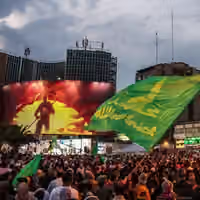
Crowds gather during protests in Mashhad, northeastern Iran, Jan. 8, 2026.

An Iranian court has handed down a death sentence to a man detained in connection with the January 2026 protests in the northeastern city of Shandiz, the US-based Human Rights Activists News Agency (HRANA) reported on Sunday.

Hossein Rasouli-Nasab was sentenced by the Mashhad Revolutionary Court on charges including “moharebeh,” or waging war against God, HRANA said.

The rights group said authorities had alleged that he committed moharebeh through participation in the destruction of public property and setting fire to religious centers. He was also accused of assembly and collusion against national security.

A source close to his family told HRANA that a mosque and a Quranic center caught fire during protests in Shandiz on January 8 and 9, and that Rasouli-Nasab’s case was opened in connection with those events.

Rasouli-Nasab was arrested during the January protests along with several other people, HRANA said. He was later transferred to Vakilabad Prison in Mashhad, where he remains held.

His case comes amid mounting concern from rights groups over the use of the death penalty against people detained in connection with the nationwide protests.

Human Rights Watch and the Abdorrahman Boroumand Center said in a joint report published on September 10 that Iranian authorities announced the executions of 29 people arrested in connection with the December 2025-January 2026 protests between March 18 and the end of August. Several were 18 or 19 years old, and five were executed in public.

The groups said that in 16 of those cases authorities did not allege that the defendants had killed anyone. Instead, some were executed over allegations including blocking streets, damaging public property and other acts that rights groups said did not meet the threshold for capital punishment under international law.

Human Rights Watch said the proceedings were often extremely fast, in some protest-related cases taking just over five weeks from arrest to execution, and said convictions were based in some cases on torture-tainted confessions and vague national security charges.

Amnesty International has separately accused Iranian authorities of “weaponizing the death penalty to repress dissent.”

Last week, Iran International reported that 18 prisoners held at Dastgerd prison in the central Iranian city of Isfahan were facing possible death sentences over unrest and a fire at the facility.

Last month, UN human rights chief Volker Türk said executions and death sentences in Iran had risen since March, with more than 100 other people facing similar charges and the death penalty.

Iran regime used Claude to expand surveillance of dissidents, Anthropic says

Sep 13, 2026, 04:34 GMT+1
100%
Members of Iran’s Islamic Revolutionary Guard Corps (IRGC) operate at computer stations in an undated image (Photo: Screengrab)

Anthropic said Iranian paramilitary and security units used Claude to surveil thousands of Iranians and identify opposition and diaspora accounts, while a separate MEK-linked operation used the AI to impersonate an activist and profile people inside Iran.

The findings are detailed in Anthropic’s September threat report, published Thursday, which examines malicious uses of Claude disrupted between December 2025 and August 2026.

Anthropic said it identified and banned 16 Claude accounts operated by two linked units associated with Iranian paramilitary and domestic security agencies. One was a seven-department organization with offices across Iranian provinces that claimed to have surveilled and profiled 6,388 Iranians in a single year and maintained an identity-record database on Iranian nationals.

The group used Claude to help build a front end for what Anthropic assessed was likely a government-controlled surveillance case-management system and to analyze 155,216 tweets. A separate Qom-based unit used Claude as an engineering tool to develop domestic surveillance capabilities, including a malicious Firefox extension called “al-Najm al-thāqib” that was deployed to harvest user identities from major social media platforms.

Anthropic said both units fed information into a centralized system called “Arman.” Files on individuals included national ID numbers, beliefs, criminal records, social media accounts and an “action” tab. The company assessed with high confidence that the units were associated with Iranian paramilitary domestic security entities and said it found evidence they responded to taskings from senior government officials.

The tools built with Claude included a messenger de-anonymizer, a system linking phone numbers to identities, a national-ID phishing page, a Telegram mass-reporting bot and a Firefox identity harvester disguised as a prayer-times utility. One unit also ran a social-network analysis pipeline that identified 39 Iranian opposition and diaspora accounts.

Anthropic said a separate actor operating alongside one of the units used Claude’s custom-skills feature to clone the voices of three Iranian writers and prepare propaganda narratives in advance for the succession to Iran’s Supreme Leader.

MEK-linked influence operation

The report also detailed a separate influence operation Anthropic linked to the exiled opposition group People’s Mojahedin Organization of Iran, or MEK, and the National Council of Resistance of Iran, which is the group’s political front.

The network impersonated a real activist by cloning his personal Telegram account and directing Claude to read about 8,400 of his posts to reproduce his writing style. The AI-assisted account was then used to hold live political conversations with his contacts, who Anthropic said appeared unaware they were communicating with an AI-assisted impersonator.

Anthropic said at least four people running the campaign worked for official NCRI media outlets. The operation scraped more than 500 social media channels to build profiles of people inside Iran, grouping them by city, age, occupation, political alignment and arrest history. It also analyzed about 51,944 archived messages to create psychographic dossiers on dozens of individuals.

The network used AI-generated avatars with Persian audio to promote NCRI President Maryam Rajavi’s ten-point plan, presenting them as ordinary Iranians without disclosing that they were synthetic. Automated Instagram networks coordinated posts for different audiences, while early content deliberately avoided mentioning the Mojahedin so the material appeared to come from independent sources.

Anthropic said the campaign also targeted monarchist groups and the Pahlavi camp, including through a fabricated video attacking a member of the Pahlavi family and “Neither Shah Nor Sheikh” messaging intended to strengthen the MEK’s position within the Iranian opposition.

The company said the operation used a shared Claude-based agent platform called “Viktor,” with common doctrine, approved sources and instructions for avoiding detection. It banned the accounts involved, but said it could not independently determine how much genuine engagement the network attracted.

Anthropic’s report also detailed other Iran-linked uses of Claude, including state-aligned propaganda campaigns, efforts to track US naval forces, surveillance tools targeting Iranians and intelligence gathering on people in Israel and the Jewish diaspora.

The company said it banned accounts tied to the operations and shared some of its findings with government and industry partners.

Rushed trials, public hangings: Iran courts race to crush dissent

Sep 12, 2026, 18:54 GMT+1
•
Negar Mojtahedi
100%
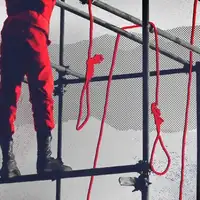
A graphics based on an actual image of a scaffolding with gallows erected for public hangings in Iran

Iran has executed at least 29 people arrested in connection with the widespread protests in January, more than half of whom were not accused of killing anyone, with some put to death in public in what rights groups describe as a campaign to deter further dissent.

The findings are contained in a new joint report by Human Rights Watch and the Abdorrahman Boroumand Center for Human Rights in Iran examining executions following the nationwide protests that erupted in late 2025 and January 2026.

Between March 18 and the end of August, Iranian authorities announced the executions of 29 people arrested in connection with the protests. Several were just 18 or 19 years old, and five were executed in public.

In 16 cases, authorities did not allege that the defendants had killed anyone. Instead, young protesters have been executed over allegations including setting fire to buildings or vehicles, possessing or using Molotov cocktails, entering or damaging government buildings, throwing stones and blocking streets.

The organizations say the speed with which some defendants have gone from arrest to execution has been extraordinary.

Saleh Mohammadi, a 19-year-old wrestling champion, was executed about five weeks after his arrest. Amir Hossein Hatami, 18, was executed 84 days after his arrest.

Sasan Azadvar Jonaqani, a 21-year-old karate champion, was arrested, convicted and executed in under four months. Authorities accused him of acts including breaking the windows of a police bus with stones and a baton.

‘War against God’

The executions mark a new phase in the crackdown that followed the January protests, when Iranian authorities killed thousands and detained tens of thousands as they sought to suppress the unrest.

Human Rights Watch and the Boroumand Center found that at least 59 men were executed during the same period on what they described as politically motivated and vaguely defined national security charges following grossly unfair trials.

At least three had reportedly been arrested in connection with the 2022 Woman, Life, Freedom protests.

Iranian courts have relied heavily on broadly defined capital offenses including “waging war against God” and “corruption on earth.”

Human Rights Watch and the Boroumand Center said those charges have allowed courts to impose death sentences without establishing that defendants were responsible for intentional killings.

‘Helping hostile states’

The report also points to Iran's 2025 Espionage Law as an increasingly important tool in protest-related prosecutions.

At least eight protesters executed following the recent demonstrations were convicted under the law, which expanded the range of conduct punishable as cooperation with “hostile states” and provides for expedited proceedings.

It can also impose lengthy prison terms for sending footage, images or information to foreign media, citizen journalists or foreign social media pages when authorities deem the activity contrary to national security.

‘Torture, forced confessions’

Human Rights Watch and the Boroumand Center documented defendants being denied independent lawyers of their choosing and courts relying on confessions allegedly extracted through torture, as well as unsubstantiated reports from security and intelligence agencies.

Detainees were allegedly beaten, subjected to electric shocks and mock executions, held for prolonged periods in solitary confinement and threatened with sexual violence against themselves or family members.

Some defendants later retracted their confessions in court and said they had been tortured. The report says authorities failed to investigate those allegations.

The organizations also documented the use of televised confessions before cases had concluded.

In one recording broadcast by state media, an interrogator told 18-year-old Shervin Bagherian that he was accused of “waging war against God.”

Bagherian appeared not to know what the charge meant. When the interrogator told him it meant execution, the teenager pleaded not to be put to death.

Public hangings

The report places particular emphasis on the return of public executions in protest-related cases, which the organizations say is intended to instill fear in the wider population.

On July 28, authorities executed Abolfazl Sepahi and Amir Hossein Safari in Alikhani Square in Isfahan, where four members of the security forces were reported killed during protests on January 8.

Three other men — Saleh Mohammadi, Saeed Davoudi and Mehdi Ghasemi — were executed in March “in the presence of a group of people in Qom,” according to the judiciary's Mizan news agency, language the report says indicated a public execution.

Scores could be next

Scores of protesters and political dissidents, including women and children, remain at risk of execution, according to the report.

Amnesty International said in July that it had identified 60 people, including three children, at risk of execution in connection with protests. Iran Human Rights has reported that more than 70 protesters were at risk in Isfahan Prison alone.

The actual number could be substantially higher.

Among those who could still be executed is 26-year-old mixed martial arts fighter and kickboxer Benyamin Naghdi.

A revolutionary court in Shiraz sentenced Naghdi to death for “corruption on earth” after accusing him of using a fire extinguisher as a makeshift flamethrower against security forces riding motorcycles during protests on January 3.

His lawyer, Mostafa Nili, said prosecutors initially accused Naghdi of attempted murder but later dropped charges related to bodily injury. Nili said no one was injured.

Nevertheless, the court concluded that the remaining allegations collectively amounted to “corruption on earth,” and Iran's Supreme Court upheld Naghdi's death sentence in July, according to the report.

Lawyers taking protest-related cases have also faced threats of arrest, while the Boroumand Center documented the arrests of at least 19 lawyers in the month following the January crackdown. Others have faced renewed prosecution or disbarment.

Human Rights Watch and the Boroumand Center describe the campaign as the “weaponization of the death penalty” in the aftermath of the January crackdown, intended to instill fear and deter further dissent.