• العربية
  • فارسی
Brand
  • Iran Insight
  • Politics
  • Economy
  • Analysis
  • Special Report
  • Opinion
  • Podcast
  • Live TV
  • Iran Insight
  • Politics
  • Economy
  • Analysis
  • Special Report
  • Opinion
  • Podcast
  • Live TV
  • Theme
  • Language
    • العربية
    • فارسی
  • Iran Insight
  • Politics
  • Economy
  • Analysis
  • Special Report
  • Opinion
  • Podcast
  • Live TV
All rights reserved for Volant Media UK Limited
volant media logo
INSIGHT

Rushed trials, public hangings: Iran courts race to crush dissent

Negar Mojtahedi
Negar Mojtahedi

Iran International

Sep 12, 2026, 18:54 GMT+1
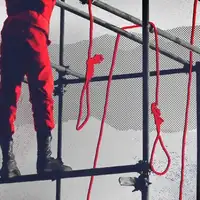
A graphics based on an actual image of a scaffolding with gallows erected for public hangings in Iran

Iran has executed at least 29 people arrested in connection with the widespread protests in January, more than half of whom were not accused of killing anyone, with some put to death in public in what rights groups describe as a campaign to deter further dissent.

The findings are contained in a new joint report by Human Rights Watch and the Abdorrahman Boroumand Center for Human Rights in Iran examining executions following the nationwide protests that erupted in late 2025 and January 2026.

Between March 18 and the end of August, Iranian authorities announced the executions of 29 people arrested in connection with the protests. Several were just 18 or 19 years old, and five were executed in public.

In 16 cases, authorities did not allege that the defendants had killed anyone. Instead, young protesters have been executed over allegations including setting fire to buildings or vehicles, possessing or using Molotov cocktails, entering or damaging government buildings, throwing stones and blocking streets.

The organizations say the speed with which some defendants have gone from arrest to execution has been extraordinary.

Saleh Mohammadi, a 19-year-old wrestling champion, was executed about five weeks after his arrest. Amir Hossein Hatami, 18, was executed 84 days after his arrest.

Sasan Azadvar Jonaqani, a 21-year-old karate champion, was arrested, convicted and executed in under four months. Authorities accused him of acts including breaking the windows of a police bus with stones and a baton.

‘War against God’

The executions mark a new phase in the crackdown that followed the January protests, when Iranian authorities killed thousands and detained tens of thousands as they sought to suppress the unrest.

Human Rights Watch and the Boroumand Center found that at least 59 men were executed during the same period on what they described as politically motivated and vaguely defined national security charges following grossly unfair trials.

At least three had reportedly been arrested in connection with the 2022 Woman, Life, Freedom protests.

Iranian courts have relied heavily on broadly defined capital offenses including “waging war against God” and “corruption on earth.”

Human Rights Watch and the Boroumand Center said those charges have allowed courts to impose death sentences without establishing that defendants were responsible for intentional killings.

‘Helping hostile states’

The report also points to Iran's 2025 Espionage Law as an increasingly important tool in protest-related prosecutions.

At least eight protesters executed following the recent demonstrations were convicted under the law, which expanded the range of conduct punishable as cooperation with “hostile states” and provides for expedited proceedings.

It can also impose lengthy prison terms for sending footage, images or information to foreign media, citizen journalists or foreign social media pages when authorities deem the activity contrary to national security.

‘Torture, forced confessions’

Human Rights Watch and the Boroumand Center documented defendants being denied independent lawyers of their choosing and courts relying on confessions allegedly extracted through torture, as well as unsubstantiated reports from security and intelligence agencies.

Detainees were allegedly beaten, subjected to electric shocks and mock executions, held for prolonged periods in solitary confinement and threatened with sexual violence against themselves or family members.

Some defendants later retracted their confessions in court and said they had been tortured. The report says authorities failed to investigate those allegations.

The organizations also documented the use of televised confessions before cases had concluded.

In one recording broadcast by state media, an interrogator told 18-year-old Shervin Bagherian that he was accused of “waging war against God.”

Bagherian appeared not to know what the charge meant. When the interrogator told him it meant execution, the teenager pleaded not to be put to death.

Public hangings

The report places particular emphasis on the return of public executions in protest-related cases, which the organizations say is intended to instill fear in the wider population.

On July 28, authorities executed Abolfazl Sepahi and Amir Hossein Safari in Alikhani Square in Isfahan, where four members of the security forces were reported killed during protests on January 8.

Three other men — Saleh Mohammadi, Saeed Davoudi and Mehdi Ghasemi — were executed in March “in the presence of a group of people in Qom,” according to the judiciary's Mizan news agency, language the report says indicated a public execution.

Scores could be next

Scores of protesters and political dissidents, including women and children, remain at risk of execution, according to the report.

Amnesty International said in July that it had identified 60 people, including three children, at risk of execution in connection with protests. Iran Human Rights has reported that more than 70 protesters were at risk in Isfahan Prison alone.

The actual number could be substantially higher.

Among those who could still be executed is 26-year-old mixed martial arts fighter and kickboxer Benyamin Naghdi.

A revolutionary court in Shiraz sentenced Naghdi to death for “corruption on earth” after accusing him of using a fire extinguisher as a makeshift flamethrower against security forces riding motorcycles during protests on January 3.

His lawyer, Mostafa Nili, said prosecutors initially accused Naghdi of attempted murder but later dropped charges related to bodily injury. Nili said no one was injured.

Nevertheless, the court concluded that the remaining allegations collectively amounted to “corruption on earth,” and Iran's Supreme Court upheld Naghdi's death sentence in July, according to the report.

Lawyers taking protest-related cases have also faced threats of arrest, while the Boroumand Center documented the arrests of at least 19 lawyers in the month following the January crackdown. Others have faced renewed prosecution or disbarment.

Human Rights Watch and the Boroumand Center describe the campaign as the “weaponization of the death penalty” in the aftermath of the January crackdown, intended to instill fear and deter further dissent.

Most Viewed

Heavy fighting spreads in southeastern Iran, with security force casualties reported
1

Heavy fighting spreads in southeastern Iran, with security force casualties reported

2

Anthropic says Iran-linked accounts used Claude for propaganda, US naval targeting

3
ANALYSIS

Russia may fill Iran gap if support for Yemen Houthis falters

4
ANALYSIS

Israel crosses Iran’s Lebanon red lines as Tehran leans on maritime leverage

5

Saudi Arabia squeezed from Iraq and Yemen ahead of GCC talks with Iran

Banner
Banner
Banner

Spotlight

  • Rushed trials, public hangings: Iran courts race to crush dissent
    INSIGHT

    Rushed trials, public hangings: Iran courts race to crush dissent

  • Israeli envoy says no victory until Islamic Republic falls

    Israeli envoy says no victory until Islamic Republic falls

  • Russia may fill Iran gap if support for Yemen Houthis falters
    ANALYSIS

    Russia may fill Iran gap if support for Yemen Houthis falters

  • Bid to oust Pezeshkian exposes rift among Iran conservatives
    INSIGHT

    Bid to oust Pezeshkian exposes rift among Iran conservatives

  • Iran’s hardliners bet on escalation as options narrow
    ANALYSIS

    Iran’s hardliners bet on escalation as options narrow

•
•
•

More Stories

Blogger sentenced to death in Iran on security-related charges

Sep 12, 2026, 13:42 GMT+1
100%

Soda Ebrahimi Shamsabadi, a 33-year-old blogger from Bandar Abbas who has been detained since March, has been sentenced to death, according to information obtained by Iran International.

Branch 3 of the Bandar Abbas Revolutionary Court convicted her on charges including insulting Iran's supreme leader, media and propaganda activity against national security, intelligence and security activity on behalf of hostile governments, and taking and sending photographs to Persian-language media abroad, according to the information.

The court also sentenced her to between two and five years in prison, barred her from some government services and ordered the confiscation of property. Her lawyer was notified of the death sentence on August 23.

Ebrahimi Shamsabadi was held in solitary confinement for 20 days and faced severe pressure during interrogation, according to information obtained by Iran International. Her family was not told where she was being held or about her condition during that period.

The sentence was issued by Judge Khajeh-Hassani, who was previously praised by judiciary officials as an exemplary judge for, among other things, issuing a high number of rulings and what they described as diligence in his work.

  • Protester blinded in one eye sentenced to death after return to Iran

    Protester blinded in one eye sentenced to death after return to Iran

More political and protest-related death sentences

The case comes amid a series of death sentences against protesters and political detainees in Iran.

Earlier this month, US-based rights outlet HRANA reported that Ali Zarei Doozdarresi, a protester who lost sight in one eye after being shot during the 2022 Woman, Life, Freedom protests, had been sentenced to death after returning to Iran from Germany.

Iran International also reported in August that Leila Abolhassani, a 43-year-old mother of two detained during the January protests in Shahin Shahr, had been sentenced to death on charges of “waging war against God.” Her case was sent to the Supreme Court following an appeal.

  • Iran sentences woman detained during January protests to death

    Iran sentences woman detained during January protests to death

Rights groups warn of rising executions

Rights groups have accused Iranian authorities of increasingly using capital punishment against protesters and political dissidents.

Norway-based Iran Human Rights said last month that 29 people arrested in connection with the January 2026 protests had been executed since March 19, in addition to two protesters from the 2022 Woman, Life, Freedom movement.

The US-based Abdorrahman Boroumand Center said in August that it had documented 950 executions in Iran since the start of 2026, including at least 20 women and 30 protesters. The UN human rights chief has also accused Iran of using executions to “instill fear among the population and suppress dissent.”

Trump says Iran likely behind Saudi pipeline attack

Sep 12, 2026, 13:20 GMT+1
100%
US President Donald Trump walks after delivering remarks to US embassy personnel and business leaders at Deerfield Residence, the residence of the US Ambassador to Ireland, in Dublin, Ireland, September 12, 2026.

US President Donald Trump said on Saturday that Iran was probably responsible for the aerial attack that shut Saudi Arabia’s East-West oil pipeline, while predicting that the war with Tehran would end “very soon.”

“I think they are, probably they are,” Trump told reporters in Dublin when asked whether Iran was behind the attack.

Trump said he expected the conflict to end shortly after the US midterm elections in November. “I think very soon. I think it'll be probably right after the mid-terms,” he said, adding that oil prices would “tumble” once the war ended.

He also said Washington controlled the Strait of Hormuz and that the Iran-backed Houthis “don't want to fight with us.” Asked about Saudi Arabia, Trump described Crown Prince Mohammed bin Salman as “a good friend of mine” and said: “Everything will work out fine.”

Saudi pipeline attack triggers border restrictions

The comments followed an aerial attack on Saudi Arabia’s East-West pipeline, a critical route carrying crude from the kingdom’s eastern oil-producing areas toward the Red Sea. The strike caused injuries and material damage and forced the pipeline to shut.

Saudi Arabia said the drones involved in the attack were launched from Iraqi territory.

Iraq subsequently ordered the closure of the Shalamcheh border crossing with Iran as a precaution, Reuters reported, citing two security sources. The sources said a large-scale operation was underway to pursue those responsible for the attack.

Valiollah Hayati, deputy governor of Iran's Khuzestan province, said Iraqi authorities had also closed the Chazabeh crossing from early Saturday, halting passenger and commercial traffic through both crossings.

Hayati later said Iraq's prime minister had ordered authorities to allow stranded passengers on both sides of the Shalamcheh and Chazabeh crossings to pass. Travelers were given a two-hour window to cross before the borders were to close again, he said.

Sources at Basra airport also reported the suspension of flights to and from Iran.

The attack drew condemnation from several regional governments, while Spain called for urgent de-escalation and said freedom of navigation through both the Strait of Hormuz and Bab el-Mandeb must be guaranteed.

BRICS seeks common ground as Iran-UAE tensions persist

Diplomatic attention also turned to New Delhi, where BRICS leaders unanimously adopted a joint declaration calling for conflicts to be resolved through “dialogue, consultation and diplomacy” and warning about growing nuclear risks.

The declaration condemned unilateral coercive measures that it said violated international law and said nuclear safeguards, safety and security must be upheld even during armed conflicts. Reuters had earlier reported that the text was expected to avoid naming individual countries as members worked to bridge differences between Iran and the United Arab Emirates over the regional war.

The agreement marked a change from a BRICS foreign ministers’ meeting in May, when divisions between Tehran and Abu Dhabi prevented the group from issuing a joint statement.

Iranian President Masoud Pezeshkian met UAE President Sheikh Mohamed bin Zayed Al Nahyan on the sidelines of the summit on Saturday, though Iran’s embassy in India gave no details of their discussions.

Chinese President Xi Jinping meanwhile urged BRICS members to take on a peacemaking role in the Middle East conflict, saying the war did not serve the common interests of the international community.

Tehran hardens military and nuclear rhetoric

Inside Iran, senior officials and lawmakers continued to signal a tougher posture. Lawmaker Esmail Kowsari said Iran had moved beyond a defensive military posture and that its war strategy had become offensive.

IRGC commander Ahmad Vahidi said Israel’s military would “collapse in a very short time” without US support and argued that Washington and Israel had underestimated Iran’s military capabilities.

Another member of parliament’s National Security and Foreign Policy Committee, Mohammadreza Mohseni-Sani, said Iran no longer regarded itself as constrained by the Nuclear Non-Proliferation Treaty and could reconsider its enrichment policy.

“Everything is changing” and “anything is possible,” he said when asked about higher enrichment levels and changes to Iran’s nuclear and defense doctrine.

At the same time, Russia’s state nuclear corporation Rosatom said it planned to increase the number of its specialists at Iran’s Bushehr nuclear power plant to 150 in the near future.

Trump again tells Iranians to take their government. This time nobody blinked

Sep 12, 2026, 10:13 GMT+1
•
Negar Mojtahedi
100%
US President Donald Trump

US President Donald Trump this week repeated the boldest promise of the Iran war, that when Washington is "finished," Iranians should take over their government. In February the sentence stunned. On Wednesday it barely registered, and the silence is the story.

"To the great, proud people of Iran, the hour of your freedom is at hand," Trump says in a video posted on X, drawing on remarks he first delivered on February 28, the day the US campaign began. "When we are finished, take over your government. It will be yours to take."

Six months ago, that was an extraordinary signal from an American president at the opening of a war with the Islamic Republic. This time there was no accompanying policy, no explanation of what "when we are finished" means, and no sign that Washington is preparing to help Iranians seize anything.

"I don't think the Iranian regime is going to care," Eric Mandel, founder of the Middle East Political Information Network, told Iran International's Eye for Iran podcast, whose conversation with him forms the basis of this analysis. "I think they've heard these messages before."

A war shaped by a calendar

Trump said this week that Iran was "limping along" and predicted the conflict would end "immediately after" November's midterm elections. He also acknowledged, in the same week, that electoral considerations may be influencing decisions about whether to escalate military action against Iran.

That is an American president saying, in public, that the pace of a war is being set partly by a domestic election.

His own senior advisers appear to be planning for something very different. Vice President JD Vance, Secretary of State Marco Rubio and others have privately discussed the possibility that Tehran could withstand US pressure and that the conflict could run through the end of Trump's presidency in January 2029, according to the Wall Street Journal.

So the same week produced three incompatible timelines: freedom "at hand," an end "immediately after" the midterms, and a war that may outlast the administration. If Trump is again telling Iranians their government will soon be theirs to take, what has changed since he first said it? Mandel's answer was blunt: "I haven't heard a new policy."

The gap between the promise and the means

For Mandel, the problem is not the stated objective but the distance between the promise and any way of achieving it.

"They can't ask the Iranian people to go out again into the streets and be slaughtered," he said. The last time people came out in their millions, in January, security forces killed tens of thousands in two days.

If Washington genuinely wants the Islamic Republic to fall, Mandel argued, it would have to go far beyond encouragement: bring together Iran's fragmented opposition, finance strike funds so workers can stay home rather than face security forces in the street, tighten secondary sanctions on the countries helping Tehran evade pressure, and give material support to parts of the opposition.

"The Iranian people can't take over if they're unarmed and they are not having coordination," he said. "If we're saying to the Iranian people to take over at that point, that just doesn't make any sense to me."

The operation that lost its name

Trump's original February message came as the White House described Operation Epic Fury as an effort to destroy Iran's nuclear and missile capabilities, degrade its proxy network and cripple its navy, and tied the campaign to decades of confrontation between the two countries.

Even the name has since receded. The Pentagon said Epic Fury officially ended on May 5, and military personnel were later told to stop using it for the continuing operations against Iran. The war did not end with the name.

Nearly seven months on, oil is back above $100 a barrel, the political cost of the conflict is increasingly visible ahead of the midterms, and Trump's advisers are contemplating a far longer confrontation than the president publicly predicts. That is what makes the decision to resurrect the February message striking, and it raises the question Mandel kept returning to: who was it for?

Not Tehran, he thought, which he described as in "survival mode" and betting it can outlast the administration. Not a weary American public either. "If it is for the American people, to my mind, it's the wrong way to present this," he said.

Trump would need to explain why bringing down the Islamic Republic serves US security and why Americans should prepare for a long campaign, and he has not.

Without that, ever more dramatic language loses its force. "To the regime, it's like the boy who cried wolf," Mandel said. "He keeps saying this every month."

The video appeared deliberately produced, he noted, which makes it hard to dismiss as an impulsive post. But he could not say what new message it carried. "I don't get the message yet of what it is."

That may be why an extraordinary sentence received such an ordinary response. A US president once again told more than 90 million Iranians that their government may soon be theirs to take. What remains unclear is whether Washington was announcing an objective, offering encouragement, applying pressure, or repeating a promise the world has heard before.

Heavy fighting spreads in southeastern Iran, with security force casualties reported

Sep 12, 2026, 09:04 GMT+1
100%
A screengrab from videos of clashes in Saravan, Sistan-Baluchestan province, September 12, 2026

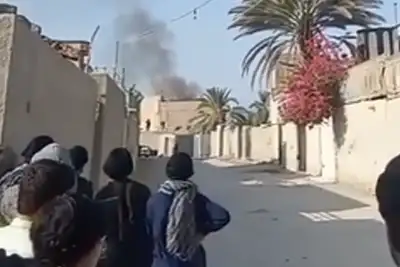
Heavy fighting between Iranian security forces and unidentified gunmen spread across parts of Saravan in southeastern Iran on Saturday, with reports of attacks on military vehicles and dozens of security personnel killed or wounded, the rights group Haalvsh reported.

The clashes began around a residential property in the Bakhshan area before dawn and were still continuing nearly eight hours later, extending to the vicinity of the Madani Grand Mosque and parts of Jahadabad, according to the group’s updates.

Local sources cited by Haalvsh said gunmen attacked at least three vehicles carrying military and security personnel, as well as two locations where forces had gathered. The reported casualty figures have not been independently confirmed.

Sources described sustained gunfire, repeated explosions and the use of heavy weapons, with fighting resuming after brief pauses. Haalvsh said it had not independently established the precise locations of all the exchanges.

  • Iran's forces beat Baluch women protesting over mines and local resources

    Iran's forces beat Baluch women protesting over mines and local resources

  • Armed group claims deadly attack on Guards members in southeast Iran

    Armed group claims deadly attack on Guards members in southeast Iran

Several ambulances were reportedly stationed nearby. Local sources said wounded personnel and bodies had been removed by other security forces, with some transported by ambulance to medical facilities. The identities and exact number of those killed or wounded remained unknown.

Roads blocked around residential area

Security forces blocked streets and access routes around the Madani Grand Mosque, roughly 200 meters from the house targeted in the initial operation, local sources said. A substantial deployment remained in the area, restricting movement around the fighting.

Gunmen inside the house exchanged fire with security personnel, some of whom were wearing traditional Baluch clothing, according to the sources. The property was described as belonging to a local resident, but the reports did not establish his connection, if any, to the gunmen.

Haalvsh reported civilians close to some of the clashes. Their situation remained unclear as fighting continued and roads were blocked, with no confirmed information on civilian casualties.

The gunmen’s identities and affiliations, the reason for the initial operation and any casualties among the armed group were also unknown. Military and security authorities had not issued an official account by the time of its latest update.

Saravan is in Sistan and Baluchestan, a southeastern province bordering Pakistan and Afghanistan and home to Iran’s mainly Sunni Muslim Baluch minority. The province has a long history of armed insurgency, although the reports provided no established link between Saturday’s gunmen and any known group.

Russia may fill Iran gap if support for Yemen Houthis falters

Sep 11, 2026, 17:05 GMT+1
•
Kambiz Tavana
100%
People participate in a parade after attending a Houthi military training as part of a mobilization campaign, in Sanaa, Yemen December 18, 2024

Russia could help sustain Yemen’s Houthis if Iran’s ability to support the group is weakened, providing a lifeline as the group expands its reach around a second crucial Middle Eastern shipping route, according to Anna Borshchevskaya, a senior fellow at the Washington Institute.

Borshchevskaya said Moscow has already provided intelligence and other assistance to the Iran-backed group, making the Houthis the clearest example of how Russia could help sustain parts of Tehran’s regional network if Iranian resources come under greater strain.

“With the Houthis in particular, there were reports in previous years that Russia also provided them with intelligence… details aside, it’s clear that Russia has been supporting the Houthis,” she told Iran International.

The Houthis reached the strategic island of Perim on Friday after Yemeni government forces withdrew, while the group also took the nearby mainland town of Dhubab, tightening its grip on a vital shipping route as disruption continues in the Strait of Hormuz.

Since late 2023, the group has repeatedly attacked shipping in the Red Sea, while previous reporting has indicated that Russia provided targeting data and satellite intelligence used in attacks on Western vessels.

Iran has also brokered secret talks between Russia and the Houthis over the possible transfer of advanced anti-ship missiles, while Russian actors have reportedly explored weapons sales to the group.

Asked whether Iran could effectively delegate some of the burden of sustaining its regional network to Russia if its own resources were depleted, Borshchevskaya said: “Yes, and that’s not just in Syria; that’s in other parts of the Middle East.”

She argued that Moscow could provide a lifeline without crossing what remains an important Russian red line: direct military confrontation with the United States.

“Russia would do a lot to support this regime. I don’t think they would go far enough to risk a direct military clash with the United States… But they’re not going to sit idly by either.”

A weakened network

Iran’s regional network faces some of its most severe pressure in years. The fall of Bashar al-Assad in December 2024 deprived Tehran of a key regional ally and ended its overt military presence in Syria.

Hezbollah has also suffered heavy losses in its conflict with Israel, which said on Thursday it had destroyed a major underground Hezbollah complex in southern Lebanon.

Iran itself is meanwhile under mounting military and economic pressure from the United States, raising questions about how much support it can continue to provide allied armed groups across the region.

The Houthis stand out in that landscape. Their latest offensive has brought them to the Bab el-Mandeb, on the opposite side of the Arabian Peninsula from Hormuz, potentially giving Iran and its allies leverage over another of the world’s most important maritime chokepoints.

For Borshchevskaya, Russia’s previous assistance to the group provides a model for how Moscow could help keep an Iranian ally operational even if Tehran’s own resources diminish.

“I think we can count on Russia to continue to provide this type of support to Iran—that is, support that stops short of putting Russia in a direct military confrontation with the United States.”

A broader Russia-Iran partnership

The relationship with the Houthis sits within a broader pattern of military and technical cooperation between Moscow and Tehran.

Since Russia’s invasion of Ukraine in 2022, Iran has supplied Shahed drones and production know-how to Moscow, while Russia has provided Iran with military technology and equipment.

More recently, Russia has secretly helped Iran develop supersonic cruise missile technology that could give Tehran another means of threatening US naval vessels in the Middle East.

Borshchevskaya said the partnership is driven by a broader convergence of interests, particularly their shared desire to reduce US influence.

For Moscow, she argued, the worst outcome would be an Iran that moved decisively toward the West, depriving Russia of an important partner in its wider confrontation with Washington.

That does not mean Russia would assume responsibility for Iran’s regional strategy wholesale. But it gives Moscow a strong incentive to prevent Tehran and its allies from being weakened beyond recovery.

100%

Syria shows limits—and opportunities

Syria illustrates both the limits of Iranian influence and Russia’s ability to preserve its own position after a major regional upheaval.

Iran lost its overt military presence after Assad’s fall, while Moscow has maintained relations with the government of President Ahmed al-Sharaa and negotiated to preserve a reduced Russian footprint.

“There are no Iranian bases. There are no open talks with the Iranian government the way there are with Russia,” Borshchevskaya said, while cautioning that Iran’s exclusion should not necessarily be assumed to be permanent.

Whether Moscow might eventually use its remaining position in Syria to assist Iranian-linked groups is, she said, “an open question.”

For now, the Houthis provide a more concrete test. Their advance around the Bab el-Mandeb comes as Iran is struggling to maintain pressure around Hormuz and its other regional allies face growing military pressure.

There is little evidence so far that Moscow is assuming the financial burden of Iran’s regional network wholesale. But Borshchevskaya argues that the support already provided to the Houthis offers a model for how Russia could help keep parts of that network operational if Tehran’s resources diminish.

Any such support could complicate Washington’s efforts to weaken Iran by squeezing its ability to finance and supply its regional allies.