Iranians to Trump: This time you fight, help is on its way
A scene of protests in Arak, Markazi province, on January 8, 2026
Donald Trump’s question about when Iranians would rise against the Islamic Republic drew thousands of responses arguing that fear of renewed repression, doubts over US policy and insufficient outside support are holding back another uprising.
“This time you fight. Help from the people is on its way,” one Iran International audience told the US president, turning back on Trump a phrase he used during earlier anti-government protests.
Trump asked the question on Truth Social on Tuesday night while rejecting an ABC News report that he was seeking to bring Iran into negotiations.
“I’m not trying to force Iran to the bargaining table... I couldn’t care less if they sign a worthless, to them, agreement,” Trump wrote.
“I like our position now much better, with almost total control of the Hormuz Strait, and their economy totally collapsing. They are just playing out the inevitable. When are the Iranian people going to rise up and fight?” Trump added.
Thousands of responses sent to Iran International pointed to a common argument: Iranians have repeatedly confronted the Islamic Republic, but many are reluctant to return to the streets without greater confidence that its forces can no longer suppress them and that outside powers will not change course.
‘People have been fighting for 47 years’
Several respondents pointed to successive waves of anti-government protests in Iran and the heavy costs borne by demonstrators.
“The people of Iran fought and rose up a thousand times beyond their capacity. Now it is time for other countries to help them,” one wrote.
“The people of Iran have been fighting for 47 years,” another told Trump.
Others pointed to protesters who took to the streets on January 8 and 9, asking when people who confronted government forces without weapons would receive meaningful assistance.
Some respondents said further negotiations between Washington and the Islamic Republic would undermine Iranians seeking political change.
“This government does not represent the people. Negotiating with the killers of the people is a mistake. Help so that the people themselves can finish the job,” one respondent wrote.
Fear of another crackdown
The prospect of another crackdown featured prominently in the messages, with people arguing that the capacity of security forces would have to be weakened before another uprising could succeed.
One described reducing the strength of forces used against demonstrators as the most important condition for renewed street protests.
“No matter how brave you are, if you know you will be killed by snipers, it is foolish to fight empty-handed,” another respondent wrote, referring to Trump’s previous calls for Iranians to protest.
On March 15, Trump said: “The protesters have no guns. And I know you’re a brave person, but I don’t think you’d be protesting. And so I think it’s very hard for them to protest. I fully understand it.”
Another person said ordinary people could not be treated as “cannon fodder,” adding that an uprising without a plan would be a mistake.
Several respondents said people would return to the streets when they believed the authorities’ ability to suppress demonstrations had been sufficiently weakened. Others pointed to disabling checkpoints and disrupting security structures as steps that could change the balance.
A scene of protests in Tehran on January 8, 2026
“Mr. Trump, continue the naval blockade and add a land blockade. Give [Benjamin] Netanyahu a free hand to destroy the system of repression, and then the people of Iran are ready to overthrow the Islamic Republic,” another one wrote.
Some also called for increased pressure on the Islamic Republic and clearer international backing for exiled Prince Reza Pahlavi during a potential transition.
Trump’s ‘help is on its way’ message returns
A separate strand of responses focused on mistrust of Washington and concern that Trump could encourage another uprising only to resume negotiations with the Islamic Republic.
“We are afraid that we will come out and you will negotiate with the mullahs’ regime again,” read a message.
“The people of Iran will rise when you do not negotiate with this murderous regime,” another wrote.
Trump had urged Iranians to continue protesting during demonstrations in January and told them that “help is on its way,” a message several respondents invoked in answering his latest question.
“When you said help was on its way, people came into the streets, but you sat down and made a deal with the government.”
The respondent added that if Iranians returned to the streets, they would do so “to fight and regain their own freedom,” rather than to advance US strategy.
A US sailor directs the takeoff of a UH-1Y Venom utility helicopter from the flight deck of USS Boxer (LHD 4) as the amphibious assault ship sails in the Arabian Sea. (CENTCOM)
Senior White House officials will consider intensifying military action against Iran after the November 3 midterm elections, Reuters reported on Wednesday, citing four people familiar with internal discussions.
No decision has been made on returning to full-scale conflict, but top aides to US President Donald Trump are pushing to keep the war relatively contained until the election as Republicans defend narrow majorities in Congress.
“We are keeping the pressure on Iran,” one White House official said. “But November is a priority.”
Vice President JD Vance and Secretary of State Marco Rubio are among the senior officials supporting efforts to keep the conflict relatively quiet until November, two White House officials told Reuters.
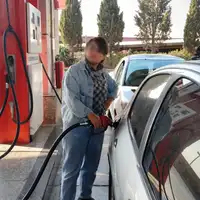
The sources said containing the war could limit its impact on Republican midterm campaigns and give the US military time to replenish depleted munitions. High gasoline prices have also contributed to public dissatisfaction with the conflict.
“The timetable has changed,” one senior White House official said. Another added: “The calendar is driving Iran.”
Reuters reported in August that the US military had used “virtually all” of its stock of some long-range precision missiles. The Pentagon, however, said the military had “everything it needs to execute” its mission.
The sources said Washington was focusing for now on intensifying economic pressure through sanctions and its naval blockade, seeking concessions in future negotiations that months of military action had failed to secure.
Trump warned on Tuesday that further Iranian action would bring a stronger US response.
“If the failed Nation of Iran retaliates for this very justified attack, they will be hit again at a much harder and higher level, but it will not be the biggest attack of them all, that is waiting in the wings,” he wrote on Truth Social.
White House spokeswoman Olivia Wales defended the administration’s strategy, saying: “President Trump has destroyed Iran’s military capabilities and is crippling what’s left of its abysmal economy with the most powerful naval blockade in world history and crushing sanctions.”
“The President will continue to advance America’s interests at home and abroad and will never allow Iran to have a nuclear weapon,” she added.
Saeed Golsorkhi, a 31-year-old powerlifter killed outside his family home in Shahroud by Iranian security forces on January 11, 2026, according to sources close to him.
Iranian security forces killed a 31-year-old protester outside his family home two days after he was shot and wounded during demonstrations in Shahroud, northeastern Iran, several sources close to him told Iran International.
Saeed Golsorkhi, an athlete and powerlifter, was shot in the knee during protests on January 9 and taken to hospital, the sources said. Concerned he could be arrested there, Golsorkhi discharged himself and returned home to continue treatment.
Security forces and Revolutionary Guards intelligence agents raided the family home on January 11, assaulted relatives and used pepper spray against Golsorkhi’s mother, according to the sources.
The forces bound Golsorkhi’s hands while his wounded knee was still bleeding and took him outside, the sources said. They blocked both ends of the alley before shooting him at close range in the head and abdomen.
Golsorkhi’s mother and his young niece witnessed the shooting, and he died in his mother’s arms, according to the sources.
Iran International previously reported on January 28 that Revolutionary Guards intelligence agents raided Golsorkhi’s home and shot him dead in front of his mother after he chanted “Death to Khamenei.”
Killings in Shahroud
Golsorkhi’s death forms part of a broader picture of the January crackdown in Shahroud documented by Iran International.
Eyewitnesses previously told that security forces killed at least 200 people in the city on January 8 and 9. The deaths of 22 women were recorded at Bahar Hospital alone, according to those accounts.
Other accounts from Shahroud have described security forces firing directly at protesters and authorities imposing restrictions on the families of those killed.
Iran International previously reported that Hossein Gharib, a 32-year-old athlete from Shahroud, was shot dead by security forces on January 9. His body was released only after his family agreed not to publicize his death and to hold a burial attended by no more than 10 people.
Brother detained, family barred from public mourning
Golsorkhi’s brother, Navid Golsorkhi, was arrested after the killing and held in temporary detention for about a month.
The family was able to retrieve Golsorkhi’s body several days later after agreeing to hold his burial without a gathering or public ceremony. Golsorkhi was buried on January 15 under tight security.
Saeed Golsorkhi, a 31-year-old powerlifter, poses at a gym in an undated image.
Security forces also blocked both ends of the street outside his mother’s home to prevent people from visiting the family to offer condolences, sources close to the family said. The family was not permitted to hold a public memorial.
The restrictions were not limited to Golsorkhi’s relatives. Iran International documented similar measures following the January crackdown, including bodies being returned at night, families being required to hold restricted burials and authorities preventing public mourning ceremonies.
Golsorkhi was a powerlifter and owned a clothing store in Shahroud.
People close to him said he admired the Pahlavi family and had an image of Reza Shah Pahlavi tattooed on his arm.
AI-generated editorial illustration depicting missile development, regional military technology and the potential threat to US naval forces. Image created for illustrative purposes.
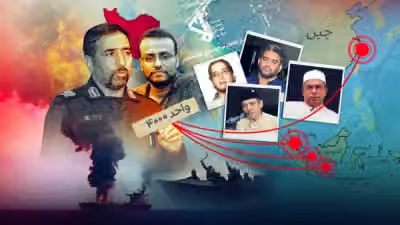
Russia has secretly helped Iran develop supersonic cruise missile technology that experts say could give Tehran a new way to threaten US Navy vessels in the Middle East, the Financial Times reported, citing leaked Russian correspondence, travel records and military patents.
The program, codenamed C430L, began in 2023 and continued during this year's war with the United States and Israel, the FT said.
Its main focus is a ramjet propulsion system that would allow a cruise missile to sustain flight at several times the speed of sound, reducing the time available for US and allied defenses to detect and intercept it.
“For the Iranians, this would give them a qualitatively new strategic weapon system that could threaten US Navy vessels,” Jim Lamson, a former CIA military analyst focused on Iran, told the FT.
Iran has built and flight-tested the propulsion system, but there is no evidence that a Russian-assisted supersonic cruise missile has entered service, the newspaper said.
The FT said Russia's state arms exporter Rosoboronexport arranged the program with missile developer NPO Mashinostroyenia.
Russian engineers made repeated trips to Iran before a contract was signed with Iran's Ministry of Defense and Armed Forces Logistics in November 2023, according to records reviewed by the newspaper.
By 2025, Russian specialists were analyzing Iranian flight-test data and advising Tehran on the ramjet's fuel system, combustion stability, air intake and engine nozzle.
“This is the transfer of a highly strategically sensitive military technology from Russia that the Iranians have wanted to acquire for decades,” Fabian Hinz, a senior analyst with Conflict Armament Research, told the FT.
“A programme like this would require political clearance from the very top in Russia,” he said.
The Kremlin, Rosoboronexport, NPO Mashinostroyenia and the Iranian government did not respond to requests for comment from the FT.
Potential naval impact
Supersonic cruise missiles combine high speed with low-altitude flight, making them harder for air and missile defenses to detect and engage quickly.
That could be particularly significant in the Persian Gulf, where the United States and its regional allies operate advanced land- and sea-based defenses.
Hinz said Russian engineering support could be especially valuable because it would help Iran solve technical problems rather than simply provide finished weapons.
“Getting a 60-year-old engineer to fly over and problem-solve, using their experience, is hugely valuable,” he said.
The FT said the program continued into 2026, with Russia preparing technical reports and both sides discussing a further phase of development.
A June 2026 Rosoboronexport letter showed talks were still under way over that next stage, though it was unclear whether it had begun.
Deeper military ties
The program points to a deeper form of military cooperation between Moscow and Tehran, with Russia helping Iran acquire the know-how to develop an advanced weapon system of its own.
Iran previously supplied Russia with Shahed attack drones used in Ukraine and helped Moscow establish domestic production.
The FT has also reported that Russia agreed to supply Iran with Verba shoulder-fired air defense systems, while Tehran acquired a high-resolution Chinese satellite later used to monitor US military facilities in the region.
“If the Russians are able to help the Iranians fix their technical problems, I think this would be one of the more impactful areas of Russian military-technical assistance to Iran in recent years,” Lamson said.
An Iranian court has sentenced Ali Zarei Doozdarresi, a protester shot by security forces and blinded in one eye during the 2022 protests, to death after he returned from Germany and was arrested upon arrival in Iran, US-based rights outlet HRANA reported.
Branch 23 of the Tehran Revolutionary Court convicted Zarei of “corruption on Earth,” based on alleged acts including extensive political activity, producing false news, propaganda against the establishment, disrupting security and unauthorized entry into and exit from the country, according to HRANA.
The death sentence was communicated to him on August 23, HRANA said.
Zarei, around 27 and from Tehran, was arrested by Intelligence Ministry agents on April 28 after returning to Iran. His case was initially handled by Branch 3 of Tehran Prosecutor’s Office District 33, known as the Security Prosecutor’s Office, before he was transferred to Qezel Hesar Prison in Karaj on June 30.
He is currently being held in Unit 3, Ward 37 of the prison, according to HRANA.
Zarei lost sight in his right eye after being shot during the 2022 Woman, Life, Freedom protests. He was later detained in December 2023 while visiting the graves of protesters killed in the crackdown at Tehran’s Behesht-e Zahra cemetery and spent 33 days in solitary confinement in Evin Prison.
He subsequently left Iran and reached Germany on a humanitarian visa.
While in Germany, Zarei appeared on stage at a February 14 rally in Munich held on the sidelines of the Munich Security Conference alongside exiled Prince Reza Pahlavi who had called for the gathering.
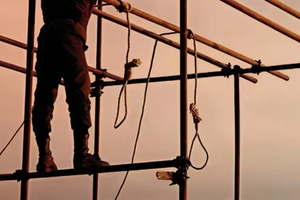
Iranian authorities have increasingly used the death penalty against protesters and political dissidents. Amnesty International has accused authorities of continuing to “weaponize the death penalty to repress dissent,” saying politically motivated death sentences have followed grossly unfair trials.
Last month, Norway-based Iran Human Rights said 29 people arrested in connection with the January 2026 protests had been executed since March 19, in addition to two protesters from the 2022 Woman, Life, Freedom movement. The group said hundreds of protesters were facing the death penalty and warned of an escalation in executions of political prisoners.
The US-based Center for Human Rights in Iran has also said authorities are increasingly using fast-tracked group prosecutions to sentence protesters to death, describing the practice as part of a strategy to punish those who joined protests and deter future dissent.
Young job-seekers in gather to demand more jobs be allocated to local applicants, in southwestern city of Ahvaz, Iran
Iranian security forces on Monday used gunfire and beatings to disperse two protests by young jobseekers in southwestern Iran, as anger over unemployment and alleged discrimination in hiring spills into the streets.
Police opened fire Monday on protesters in Gachsaran who had gathered over hiring practices at the Lishtar refinery project, according to rights groups and footage from the scene.
Human rights group HRANA published a video that appeared to show police firing shots at the gathering. Gunfire can be heard in the footage.
The group said at least one person was injured, while the Iran Human Rights Center and other local and rights groups reported multiple injuries.
Protesters had gathered to denounce what they described as unfair and discriminatory recruitment practices at the refinery project, including the influence of political connections, and demanded greater transparency and priority for qualified local workers.
The dispute has been building for weeks. Young jobseekers from the Garmsiri Boyer-Ahmad region previously demonstrated outside the refinery project and the Gachsaran governor’s office, demanding what they called “justice in hiring” and an end to discrimination against local applicants.
Domestic media reports indicate construction and excavation work at the Gachsaran refinery project in Lishtar was underway in August, while local officials had previously faced demands for greater transparency over recruitment.
The confrontation came alongside another jobs protest in Ahvaz, where security forces used beatings and gunfire to disperse young people protesting hiring practices at the Dabal Khazaei Sugarcane Agro-Industry Company, according to the Karun Human Rights Organization.
The group said it received videos and accounts showing armed forces confronting protesters and opening fire.
It also cited witnesses as saying an officer deliberately injured his own fingers in an attempt to provide grounds for arresting protesters. Iran International could not independently verify that claim.
The protesters say the company operates on around 12,000 hectares of land, much of it belonging to the local area and its residents, but that qualified local applicants have been passed over while workers from outside the region receive priority.
They have called for authorities to disclose how vacancies are advertised, the criteria used to recruit workers and the share of jobs allocated to local applicants.
The two confrontations come as economic grievances over jobs and alleged discrimination increasingly spill into public protest in Iran.
In both cases, young people were demanding jobs and greater transparency over who gets them. In both, their protests were met with violence by security forces.