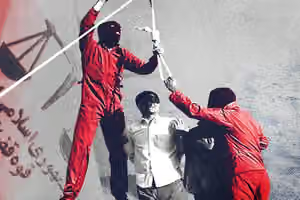
Iran court sentences 10 protesters to death in Isfahan
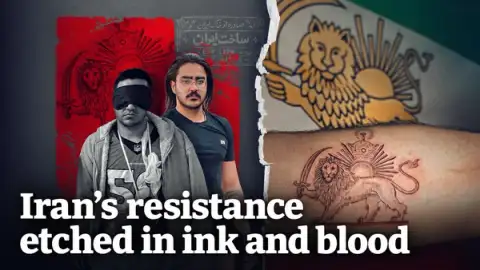
A Revolutionary Court in Isfahan has sentenced 10 protesters to death and six others to prison terms of up to 25 years over the nationwide demonstrations in the central Iranian city, according to an activist-run Telegram news channel.
Khabaraneha, run by Iranian political activist Mehdi Mahmoudian, said Branch 1 of the Isfahan Revolutionary Court issued the initial verdicts against 16 people detained in connection with the protests that began in late December 2025.
Those sentenced to death are Taraneh Rahimi, Navid Elyasi, Mehrdad Boeri, Abolfazl Dadgostar, Armin Gholami, Mehdi Mansouri, Ahmadreza Saeedi, Mohammadmehdi Asadi, Parsa Jafari and Mehdi Jafari, also known as Mehdi Khosravi.
Romina Rahimi and Milad Boeri were each sentenced to 25 years in prison, while Hamed Mehralian received a 15-year term. Setayesh Saedi, Sajjad Abedi and Ali Boeri were each sentenced to five years, Khabaraneha reported.
In addition, all 16 defendants were sentenced to five years for “assembly and collusion,” five years for “incitement” and one year for “propaganda against the establishment,” according to the report.
The case has become known as the “Isfahan Shohada Square” case and stems from protests in the area during the January uprising.
Khabaraneha said one of the female defendants was assaulted while in detention and filed a complaint over the incident, but that the court issued its verdict without examining the complaint.
Ahmadreza Saeedi also told judges during the trial that he had been tortured during interrogation, the channel reported. Khabaraneha said there had previously been reports of restrictions on lawyers’ access to the case file and of defendants being tortured to extract confessions.
Radio Farda reported in July that the case was connected to the deaths of Abbas Kamrani, a 37-year-old Revolutionary Guards colonel, and another person described in case documents as “homeless.” It said the 16 defendants mostly worked around Shohada Street in Isfahan.
Exiled prince urges international action
The office of Iran’s exiled prince Reza Pahlavi condemned the verdicts on Sunday, calling them “brutal and unjust” and saying they reflected an intensifying crackdown by the Islamic Republic.
Pahlavi’s communications office alleged that defendants had been denied legal representation and subjected to severe torture, including sexual violence against female detainees, to extract forced confessions.
“The world cannot stay silent in the face of these atrocities,” the office said.
The verdicts come amid a wave of death sentences against protesters in Isfahan. In a separate case known as the Alikhani Square case, Iranian authorities have executed five defendants since July.
Ghaem Hosseini was executed on Aug. 20, Abolfazl Sepahi Badjani and Amirhossein Safari Hosseinabadi on July 28, and Golmohammad Mohammadi and Erfan Esfandiari on July 19. The July 28 executions were carried out publicly in Alikhani Square.
Iranian police arrested a person accused of owing the country’s banking system more than €300 million after receiving foreign currency generated by exports, state media reported on Sunday.
Police identified the detainee only by the initials “A.L.” and described the person as one of the leaders of a network of financial intermediaries, known in Iran as “trustees,” used to transfer export revenues outside the formal banking system.
Authorities said the suspect had received foreign currency proceeds from exports over several years but failed to meet obligations to the banking system. The individual had gone on the run before being located and arrested by economic security police and sent to prison.
Majidreza Hariri of the Iran-China Chamber of Commerce said on X that the detainee had served as secretary of the Iranian Association of Money Changers, a description that may point to Ahmad Lavasani, a former head of the group.
Iran’s central bank dissolved the Association of Money Changers in 2023, citing what it called violations and deviation from its objectives.
So-called trustees became increasingly important as sanctions restricted Iranian banks’ access to the international financial system. Individuals or companies with bank accounts or financial links abroad have been used to receive oil revenues, pay for imports and transfer foreign currency outside formal banking channels.
Zabihollah Khodaeian, head of Iran’s General Inspection Organization, told state broadcaster IRIB in July that some trustees had “betrayed” the country and that one intermediary had failed to return $200 million before leaving Iran.
The Tehran-based Sazandegi newspaper reported at the time that at least 15 trustees had become unreachable while holding billions of dollars in Iranian oil revenues, according to Hariri.
Sazandegi said the judiciary had opened 59 cases involving managers of trustee companies and issued prosecution orders in 43 of them. Authorities were also seeking Interpol Red Notices for 15 trustees who had fled.
Details about trustees’ identities, contracts, fees, financial guarantees and oversight are generally not made public.
Separately, an Iran International investigation found that relatives of some of Iran’s most powerful security figures, including the son of Mohsen Rezaei, were among nine people linked to an oil-sales network that sources said failed to return about $11 billion in proceeds to Iran.
Security forces confront protesters during demonstrations in Iran in January 2026.
A Revolutionary Guards veteran who fought in Syria helped command a deadly crackdown on protesters in Shahriar near Tehran, as security forces used coordinated lethal tactics across Tehran province during nationwide protests in January, an Iran International investigation found.
Witnesses and local sources identified Abbas Rasoulifar, a former Guards member with experience fighting alongside forces supporting Bashar al-Assad in Syria, as directing operational groups deployed against protesters in Shahriar.
Parts of this investigative report are based on accounts from witnesses and local sources. The allegations are attributed to those who made them, and their inclusion does not mean that all details have been independently verified by the author.
Witness accounts from Shahriar and other cities around the capital describe security forces firing live ammunition from police stations, mosques and rooftops, deploying snipers and armored vehicles, and dividing urban areas into operational zones.
The accounts point to similarities between some tactics used during the crackdown and methods associated with urban warfare in Syria.
Shahriar religious site emerges as operations hub
The protests began with strikes by shopkeepers in Tehran before spreading rapidly to surrounding cities and much of Tehran province.
Demonstrations peaked on January 8 and 9 following a call by exiled Prince Reza Pahlavi, with a crackdown already underway turning particularly deadly during those two days.
In Shahriar, the locations of reported shootings and security deployments point to the vicinity of the Imamzadeh Esmail shrine as a center for assembling and dispatching forces.
The shrine hosted events associated with Iranian fighters deployed to Syria during the presidency of Ebrahim Raisi, who visited the site several times.
Rasoulifar, the shrine's executive director, emerged as a central figure during Iran International's examination of people connected to the site.
Witness accounts and other findings show that Rasoulifar commanded operational groups during the January crackdown and personally fired a handgun at protesters. Forces under his direction were dispatched across Shahriar from a base near the shrine, according to the investigation.
The base sits in a residential area behind the shrine and next to a boys' high school. Sources said it served as an assembly and preparation point for personnel sent to confront protesters.
From Syria to Shahriar
Rasoulifar, born in 1963, joined the Basij in 1979 and the Revolutionary Guards in 1984, according to published accounts of his background. He has longstanding ties to the Guards and participated in several operations during the Iran-Iraq war.
Abbas Rasoulifar, a Guards member with experience fighting alongside forces supporting Bashar al-Assad in Syria
Javan newspaper, which is affiliated with the Revolutionary Guards, documented Rasoulifar's presence in Syria in 2017 as one of the Iranian personnel called by the Islamic Republic as "defenders of the shrine," a misleading title reserved for the forces that were sent to Syria.
At the time, the Quds Force and allied forces were fighting alongside Assad's forces on several fronts in Syria.
Rasoulifar's deployment establishes his involvement in Iran's military operations in Syria, although the available evidence does not establish precisely which battles or urban operations he participated in.
His name has also surfaced in connection with earlier domestic crackdowns, including in 2009 and the November 2019 protests in Shahriar. Witnesses have also accused him of involvement in the killing of protester Nader Momeni in Shahriar in 2019.
Similar tactics reported across Tehran province
Iran International's examination of witness accounts shows that security operations across several cities in Tehran province shared common features, raising questions about the extent to which the crackdown was centrally coordinated rather than shaped by individual decisions by local units.
In Eslamshahr, police and riot-control forces went on alert in Zarafshan and Bagh-e Feyz on January 7 as strikes began.
As protesters moved toward the Saveh road the following day, police vehicles fired flares, according to witnesses. The accounts indicate that the flares were used to illuminate gatherings and help other units locate protesters.
Witnesses in Vavan, near Eslamshahr, said live ammunition was fired that night from the roof of a mosque and around Khomeini Square. Similar accounts of religious buildings being used as firing positions later emerged elsewhere.
In Parand, in Robat Karim county, witnesses said armed personnel speaking Arabic fired directly at protesters from inside mosques and bases on January 8. Some witnesses identified them as members of Iraq's Popular Mobilization Forces, though Iran International could not independently confirm their identity.
Witnesses also described forces apparently retreating to draw protesters toward Parand's Police Station 18 on January 8 and 9 before firing live ammunition once part of the crowd entered the surrounding area. Witnesses said protesters were killed in the shooting.
Snipers, armored vehicles and power cuts
In Pakdasht, southeast of the capital, security forces deployed a large armored vehicle and firearms against protesters around Mamazand and Allameh Street on January 8, according to witness accounts.
Clashes continued the following day, when witnesses described intense gunfire, including machine-gun fire by Basij and Revolutionary Guards forces.
In Gharchak, electricity around Kalantari Square was cut on the evening of January 8 before shooting began from inside a police station, witnesses said. Snipers positioned on the roof and different floors of a restaurant in Khomeini Square also fired at protesters in the darkness, according to local accounts.
Local sources put the number of people killed there in the dozens.
In Varamin, southeast of Tehran, vehicles equipped with loudspeakers played religious chants at high volume as security forces fired tear gas and live ammunition on January 9, according to witnesses.
Shahr-e Qods, also known as Ghaleh Hassan Khan, south of Tehran, experienced severe internet disruption and a power outage on January 8. Witnesses said snipers positioned on the roof of the Milad commercial complex and armed groups fired at protesters on January 8 and 9.
Some witnesses again identified Arabic-speaking personnel as members of Iraq's Popular Mobilization Forces.
Local accounts said dozens were killed. Among those identified was Ilya Qodsi, who was fatally shot in the head.
Witnesses describe abuse away from protests
Accounts from Pardis and Bumehen, in the east of the capital, describe violence extending beyond shootings at demonstrations.
Mohammadreza Moradgholi, a 19-year-old protester, was detained on the evening of January 8 and taken into a security forces' vehicle, according to one account. The source said that personnel killed him by cutting a blood vessel.
Another account said security forces searched a young man's phone near the Pardis toll station on January 9 and detained him after finding a photograph of Pahlavi.
Personnel severely beat the man and forced him to swallow two pills before leaving him on a street around midnight, according to the account.
Witnesses in the area also described loud religious chants accompanying baton beatings, direct gunfire and tear gas.
Syria experience raises questions over crackdown
Across the cities examined, recurring features included the use of rooftops and elevated positions for gunfire, power cuts, operational zones, live ammunition and coordinated deployments from fixed bases.
Iran International's findings indicate two particular similarities with urban warfare methods used in Syria: dividing cities into operational sectors and assigning units responsibility for controlling designated areas.
Rasoulifar's military background in Syria and his role organizing operational groups in Shahriar provide a direct personnel link between Iran's foreign military campaigns and the January crackdown.
Taken together, witness accounts from cities of Tehran province depict a crackdown in which lethal tactics appeared repeatedly across Tehran's heavily populated outer cities, extending methods of armed urban control to the capital's surrounding belt.
Iranian kolbars carry heavy loads through deep snow in a mountainous border area in western Iran.
Economic hardship and a lack of stable jobs are driving children and teenagers in Iran’s border regions into kolbari, the hazardous practice of carrying goods across mountainous frontiers for money, Iran's labor-focused news agency ILNA reported on Sunday.
“The fact that a teenager sets out on a route where there is a risk of being shot, a mine explosion or an accident, either to help their family or cover school and living expenses, should be a serious warning to society,” labor activist Abdollah Belvasi told ILNA. “A child should be sitting at a school desk, not on a kolbari route.”
Poverty and unstable household incomes are increasingly affecting children in families living along Iran’s borders, Belvasi said.
A shortage of jobs has also left many young people, including university graduates and accomplished athletes, facing a choice between kolbari, with its risk of death, or migration away from their homes and families, according to Belvasi.
Unemployment and a lack of prospects have prompted many young people in Kordestan to consider leaving their cities or even Iran, Belvasi added.
Economic pressures deepen
Iran has faced years of high inflation, a weakening currency and unemployment, eroding purchasing power and making basic living costs increasingly difficult for many households.
An Iranian kolbar carries a heavy load through snow in a mountainous border area.
Residents of some border communities have turned to kolbari to earn a living. Kolbars typically carry heavy loads on foot across difficult mountainous terrain, and some have been killed in shootings by Iranian security forces or died in accidents and mine explosions.
The growing gap between wages and living costs, reduced working hours and skilled workers moving into informal employment have highlighted the depth of Iran’s employment problems in recent weeks.
Hormozgan Workers’ House said on Friday that around 20,000 workers had lost their jobs because of an economic slowdown and business closures.
Kolbar deaths risk becoming routine
Deaths among kolbars are gradually being treated as routine news, receiving attention and prompting protests for several days before fading from public discussion, Belvasi warned.
“When a kolbar is killed, a family suffers,” he said. “A breadwinner may be lost, children may be left without a father, or a family may have to contend with medical expenses and disability. If we see kolbari only in terms of numbers and statistics, we ignore the human dimension of the tragedy.”
Government promises have failed to address the underlying conditions driving people into the work, Belvasi went on to say.
“The issue of kolbari cannot be solved simply by confronting the kolbar,” Belvasi added. “If the main causes – poverty, unemployment and the lack of stable job opportunities –are not addressed, the issue will emerge again. The root causes must be addressed.”
Discrimination, uneven development and a lack of employment opportunities remain fundamental problems in Iran’s border regions despite their economic, human and natural resources, according to Belvasi.
A letter expressing solidarity with Iran’s political prisoners has ignited an extraordinary ideological backlash, raising concerns among human rights advocates about how political narratives and disinformation can shape perceptions of repression in Iran.
Published in The Guardian on August 20, the open letter addressed political prisoners facing imprisonment, torture and execution under the Islamic Republic while also condemning US and Israeli military action against Iran.
“We write in solidarity with Iran’s political prisoners, who are trapped between two blades of a scissors,” the letter said, describing one blade as the Islamic Republic’s authoritarian rule and the other as the US-Israeli military assault.
The letter called for an end to executions and the release of political prisoners, arguing that opposing foreign military intervention should not mean remaining silent about repression inside Iran.
What followed was a fierce argument, particularly among figures on the political left.
Several people initially listed as signatories withdrew their names. Historian Robin D.G. Kelley said the published version was not exactly what he had initially seen.
University of Toronto professor Nisrin Elamin said she disagreed with the content and the process through which her name was added, arguing that the letter created a “false and harmful equivalency” between Iran and Israel.
Academics Rashid Khalidi and Nadia Abu El-Haj also removed their names. Other critics went further, characterizing the letter as contributing to efforts to manufacture consent for war.
Human rights lawyer Gissou Nia said the intensity of the reaction surprised her because she regarded the original statement of solidarity as “the bare minimum.”
For Nia, the dispute is about more than a single letter. She worries that ideology and disinformation can distort how international audiences understand repression inside Iran.
“There’s been a massive problem in terms of how narratives have been constructed since January of this year,” Nia told Iran International’s English language podcast Eye for Iran.
She pointed to internet shutdowns, restrictions on independent reporting and competing accounts of the January crackdown. Nia accused some commentators outside Iran of amplifying narratives that shifted responsibility for the killings away from the Islamic Republic despite evidence implicating its forces, describing some of the rhetoric as “mass atrocity denial.”
The stakes are particularly high amid a dramatic rise in executions.
The Abdorrahman Boroumand Center for Human Rights in Iran documented over 900 executions in the first seven months of 2026, including 56 on political or national-security charges. Its database now lists 967 reported executions this year.
Political prisoners welcome attention, with reservations
Roya Boroumand, executive director of the Abdorrahman Boroumand Center, said some former political prisoners she works with were pleasantly surprised to see prominent figures in Western academia and on the left publicly acknowledge their plight.
But the response was not without criticism.
Some felt politics weighed too heavily in the letter and questioned comparisons between their experiences under the Islamic Republic and injustices in Western countries. Others asked why China and Russia were absent if the principle was solidarity with prisoners more broadly.
Still, Boroumand said support for Iranian political prisoners should be welcomed rather than subjected to an ideological test.
“You can't criticize people for doing the right thing because the victims they are talking about are not the right victims in your politics,” she said.
Boroumand said political imprisonment can follow Iranians long after they leave a cell. Prisoners may endure physical and psychological torture and lose jobs, educational opportunities and their health. After their release, they may remain under state surveillance, while their relatives can also face pressure over their activities.
Even exile does not necessarily end it. Former prisoners can receive calls from interrogators and see relatives inside Iran summoned over social media posts made abroad.
“You have to face the people who say you don't exist or you don't matter,” Boroumand said.
Why Iran becomes an ideological argument
Journalist and author Jay Solomon said the backlash should also be understood through the ideological legacy of Iran’s 1979 revolution.
For parts of the anti-imperialist left, he said, the revolution came to symbolize a historic defeat for US power. The Islamic Republic later cast itself as a leading opponent of the United States and Israel, creating a political framework in which criticism of Tehran can be seen as weakening that broader struggle.
Solomon said he was struck by the “callousness” of some responses, which he interpreted as effectively asking political prisoners to accept their suffering for the sake of a broader geopolitical cause.
He also pointed to a political purity test in which criticism of the Islamic Republic can quickly generate accusations that critics are serving Western or Israeli interests. Solomon compared the dynamic with other ideological movements that became increasingly intolerant of internal criticism.
That rhetoric is particularly significant in Iran, where authorities themselves have long portrayed dissidents as agents of foreign powers.
For Iran’s political prisoners, the debate is anything but theoretical. They are living through an escalating campaign of executions and repression while arguments continue abroad over how their suffering should fit into competing political narratives.
“Solidarity is really being in solidarity with people and their plight,” Nia said, “regardless of the politics.”
Simin Fahandej, representative of the Baha'i International Community's United Nations Office in Geneva
Iran’s rising wave of raids, arrests and property seizures against Bahá’ís amounts to “state-sponsored theft,” the Bahá’í International Community’s representative to the United Nations in Geneva said, citing hundreds of incidents since the January crackdown.
Simin Fahandej told Iran International that pressure on the community had intensified following nationwide protests in January, fitting what she described as a longstanding pattern in which Bahá’ís are targeted during periods of crisis.
“Every single time that there has been a crisis in Iran, the Baha'i community is the first to be scapegoated,” Fahandej said, adding that confiscation of Bahá’í property had been a feature of persecution since the 1979 revolution.
Fahandej said hundreds of cases of persecution had been recorded since January across more than six provinces, while prosecutions of Bahá’ís had doubled from the previous year.
“These arrests and imprisonment of Baha'is isn't an incident,” she said. “It's a nationwide state-led campaign of persecution.”
Cash, gold, instruments
Thirteen United Nations experts earlier this month also warned of an increase in persecution of Bahá’ís in Iran, including allegations of torture and enforced disappearance, and said 57 members of the community were detained or imprisoned.
The warnings come amid a series of raids on Bahá’í families in the central city of Isfahan in which security forces seized cash, gold, household belongings, vehicles, musical instruments and equipment used by families to make a living.
More than 20 security agents simultaneously raided three homes on Monday belonging to Amin Tabyanifard, his mother Bahariyeh Askarinasab and his son Nima Tabyanifard, a source familiar with the matter told Iran International.
The source said plainclothes agents searched the properties from around 8 a.m. until about 1 p.m.
A combination image shows the homes of Amin Tabianifard, Baharieh Asgarinasab and Nima Tabianifard in Isfahan, Iran, after security forces raided the properties on August 24, 2026.
Askarinasab lives in a separate unit in the same building as Amin Tabyanifard, while Nima Tabyanifard lives in another neighborhood of Isfahan.
Agents searched the family’s musical-instrument workshop and seized its tools, equipment and specialized machinery, along with several valuable handmade instruments.
They also seized cash, gold, electronics, household belongings and numerous musical instruments. Authorities later sealed the family’s music and musical-instrument store.
The source said agents in one of the raids used violence, beat people present and made threats.
Nima Tabyanifard was ordered to report to the Isfahan Intelligence Department, while other members of the family received summonses to appear before a court located at Isfahan’s Dastgerd Prison.
Fahandej said some recent arrests and confiscations in other cases had been carried out without warrants.
“These arrests and confiscations, I have to make clear, have taken place entirely illegally,” she said. “They did not have warrants for confiscation nor arrest.”
She said security personnel had in some cases climbed over walls to enter Bahá’í homes.
“If this is not theft and stealing people's property, I don't know what is,” Fahandej said.
She described one case in which a parent was arrested in front of a two-year-old child, and another in which authorities deployed 14 guards, five vehicles and a representative of the prosecutor general to arrest one woman.
‘You didn’t learn your lesson’
In a separate Isfahan case, filmmaker and journalist Sepehr Atefi said security forces raided his parents’ home for the second time in several months.
Atefi wrote on X that eight male agents and one female agent spent more than six hours searching the property and his father’s workplace, including the soil in flowerpots and a bag of rice.
He said agents packed household possessions, including a television, vacuum cleaner and toolbox, along with gold, valuables, communications devices and children’s toys, into his parents’ own suitcases and bags before taking them away in a pickup truck. The family’s car was also seized, Atefi said.
Atefi told Iran International that the repeated raids were taking a psychological and practical toll on his parents.
“This incident and its recurrence can mentally exhaust them,” he said. “Confiscating their IDs and mobile phones can trap them in administrative bureaucracy for days and disrupt their daily lives.”
When his mother objected to the confiscations, agents told her: “These are illicit possessions,” and: “You didn’t learn your lesson the first time,” according to Atefi.
He interpreted the remark as meaning that the family had failed to change its religion and said they were being targeted because they were Bahá’ís.
Fahandej said such language made what she described as the discriminatory nature of the raids explicit.
“There is no other basis for any of these confiscations, arrests, raids ... other than the fact that they're Baha'i,” she said.
She said court documents in some prosecutions had also explicitly cited membership in the Bahá’í community.
“With the misuse of their state authority, they essentially steal Baha'is' properties with complete impunity,” Fahandej said.
Livelihoods targeted
Fahandej said the economic impact of the seizures was particularly severe because Bahá’ís already face restrictions on higher education and public employment.
“Baha'is in Iran are banned from universities,” she said. “Then they're also banned from public employment, so they can't be doctors or lawyers, teachers, and any form of public employment.”
That leaves many members of the community dependent on small businesses and home-based work, she said, making the confiscation of tools, equipment and businesses particularly damaging.
“The basic and modest livelihoods that they would be able to build through these small businesses, sometimes home businesses, are also confiscated.”
Fahandej said authorities had increasingly used Article 49 of Iran’s Constitution, which allows the state to confiscate wealth deemed to have been acquired through illicit means, to seize Bahá’í property under what she described as vague pretexts.
She also pointed to large bail demands as another form of economic pressure.
“Some of the bail amounts that we see actually becomes the equivalent of working for a hundred years in Iran,” she said, calling it “quite a devastating form of persecution.”
Property confiscation has a long history in the Islamic Republic’s treatment of Bahá’ís. Fahandej said community and individual properties were seized in the early years after the 1979 revolution, while Bahá’í institutions were banned from 1983.
Crackdown widens
Recent cases have extended beyond property seizures.
Fahandej pointed to Peyvand Naimi and Venus Hosseini-Nejad, two Bahá’ís arrested in Kerman in southeastern Iran in January whose coerced confessions were later broadcast on state television. The Bahá’í International Community said Naimi was tortured and subjected to mock hangings in detention.
“We saw the forced live confessions of two Baha'is on television, essentially to justify persecution against them and the entire community,” Fahandej said.
A Revolutionary Court in the northern city of Sari has also sentenced 12 Bahá’ís to prison terms and restrictions on their social rights. Six other Bahá’ís were recently arrested in Sari and Karaj, while a Bahá’í student at Islamic Azad University in Birjand was expelled and barred from continuing his studies because of his faith.
Unofficial estimates put Iran’s Bahá’í population at more than 300,000. The Bahá’í faith is not recognized under the Islamic Republic’s constitution, which recognizes Islam as well as Christianity, Judaism and Zoroastrianism.
Human Rights Activists in Iran said Bahá’ís accounted for about 62 percent of reported violations of religious minority rights in 2025.
Fahandej said the latest escalation was taking place as Iranians were already struggling with severe economic pressures.
“It's heartbreaking that amid an already difficult economic crisis in Iran, that the state-sponsored attack against the Baha'is is now sweeping the community, as they, together with all other Iranians, are already suffering,” she said.