• العربية
  • فارسی
Brand
  • Iran Insight
  • Politics
  • Economy
  • Analysis
  • Special Report
  • Opinion
  • Podcast
  • Live TV
  • Iran Insight
  • Politics
  • Economy
  • Analysis
  • Special Report
  • Opinion
  • Podcast
  • Live TV
  • Theme
  • Language
    • العربية
    • فارسی
  • Iran Insight
  • Politics
  • Economy
  • Analysis
  • Special Report
  • Opinion
  • Podcast
  • Live TV
All rights reserved for Volant Media UK Limited
volant media logo

EU states ready to join new Lebanon mission against Iran-backed Hezbollah

Sep 1, 2026, 15:42 GMT+1

More than 10 European Union member states are willing to contribute personnel and resources to a proposed military and civilian mission to advise and train Lebanese forces, EU foreign policy chief Kaja Kallas said on Tuesday.

The mission is intended to strengthen Lebanon’s Internal Security Forces, helping free up the Lebanese army to focus on disarming the Iran-backed militant group Hezbollah.

Discussions over the possible EU mission come as the mandate of the United Nations Interim Force in Lebanon is due to expire at the end of 2026.

Most Viewed

US-Iran fighting flares after diplomatic push stalls
1

US-Iran fighting flares after diplomatic push stalls

2
VOICES FROM IRAN

Iranians hit back at VP's case for pricier gasoline as dollar passes 2.1m rials

3
VOICES FROM IRAN

Nearly half in poll would not buy home in Iran even if they could afford it

4
INSIGHT

Actor dropped from play after pro-Palestine stance in rare reversal for Iran

5
EXCLUSIVE

IRGC Unit 4000 plans attacks on shipping in East Asia, sources say

Banner
Banner
Banner

Spotlight

  •  Hackers without borders: serving Tehran, stealing on the side
    SPECIAL REPORT

    Hackers without borders: serving Tehran, stealing on the side

  • The republic of magic: How Iran turned the unseen into an instrument of rule
    ANALYSIS

    The republic of magic: How Iran turned the unseen into an instrument of rule

  • President's son questions enrichment, ignites fierce debate in Tehran

    President's son questions enrichment, ignites fierce debate in Tehran

  • Iran fires back, but can missiles ease economic pain?
    ANALYSIS

    Iran fires back, but can missiles ease economic pain?

  • IRGC Unit 4000 plans attacks on shipping in East Asia, sources say
    EXCLUSIVE

    IRGC Unit 4000 plans attacks on shipping in East Asia, sources say

  • Iran loses ground on trade as war hits oil and non-oil exports
    ANALYSIS

    Iran loses ground on trade as war hits oil and non-oil exports

  • Iranians hit back at VP's case for pricier gasoline as dollar passes 2.1m rials
    VOICES FROM IRAN

    Iranians hit back at VP's case for pricier gasoline as dollar passes 2.1m rials

•
•
•

More Stories

The republic of magic: How Iran turned the unseen into an instrument of rule

Sep 1, 2026, 14:27 GMT+1
•
Reza Haji Hosseini
100%

The Islamic Republic moved beliefs about the unseen from the margins of society to the center of power, and used oil money to give them institutions, budgets and a propaganda apparatus, so that its rulers could draw legitimacy from a source no citizen can question.

Two recent scenes show what that means in practice.

At state-organized rallies in February, marking the anniversary of the 1979 revolution, organizers set fire to effigies they identified as Baal, the Canaanite deity condemned as a false god in both the Bible and the Quran. In the middle of an economic crisis, the state staged its victory over its enemies as a piece of street ritual.

  • Why were ‘Baal’ statues burned at Iran’s revolution anniversary rallies?

    Why were ‘Baal’ statues burned at Iran’s revolution anniversary rallies?

Months later, Salar Velayatmadar, a member of parliament, said the decision to stop publishing images of Mojtaba Khamenei had been taken on the advice of senior clerics in Qom, Mashhad and Najaf, and of security officials, so that Iran's enemies could not use "occult sciences," a term covering practices such as talismans, incantations and divination, to harm him.

With that, the occult had entered the official language of national security.

A distinction matters here. This is not an argument about what Iranians privately believe, and the point is not that millions of people hold beliefs about the sacred, as they do in every society. The question begins at the moment an unfalsifiable claim becomes the basis of political legitimacy, a security decision and the distribution of public money. At that point it has stopped being faith and become statecraft.

Nor is this a case of a secular state later contaminated by such thinking. The Islamic Republic's identity was bound from the beginning to a phrase that describes the country as belonging to someone who cannot be seen.

The absent owner

Speaking to government officials in September 1981, Ruhollah Khomeini, the cleric who led the 1979 revolution and founded the Islamic Republic, said: "The owner of this country is the Imam of Time." The line is recorded in volume 15 of Sahifeh-ye Imam, the official collection of his speeches and writings.

The Imam of Time is the twelfth imam of Shia Islam, who is believed to have vanished in the ninth century, to be alive and hidden, and to be destined to return. Iran's constitution frames clerical rule explicitly as an arrangement for the era of his absence.

  • Will Mojtaba Khamenei's absence help the Islamic Republic survive?

    Will Mojtaba Khamenei's absence help the Islamic Republic survive?

Read as a theory of ownership, the consequences are considerable. If the country's true owner is absent, clerics become the interpreters of his will, and the Supreme Leader, rather than representing citizens, becomes the deputy of an absent proprietor. His accountability runs towards a realm no one can reach, not towards a public that could remove him.

Khomeini's arrival did not create popular belief in miracles and unseen forces, which long predated him. What the state he founded did was move those beliefs out of private life and into the machinery of power.

Manufacturing the sacred

The apparatus has been building sanctity around its leaders since the beginning.

The historian Olmo Gölz, in a study of the claim that Khomeini's face could be seen in the moon, drew on memoirs and newspapers of the period to trace both the spread of the rumor and its rejection by Khomeini himself and by a number of clerics. The denial did nothing to prevent the halo forming.

Video from Khomeini's first days back in Tehran shows a man touching his hand and then the hands of the crowd, passing on a blessing said to reside in the leader's body.

Decades later, Mohammad Saeedi, the Friday prayer leader of Qom, said that Ali Khamenei, the late supreme leader, had uttered the name of Imam Ali at the moment of his birth. The political significance of such a story lies not in efforts to establish whether it happened, but in the fact that the official apparatus uses it to build sanctity around a ruler.

The unseen world also has physical addresses. The most important is the mosque at Jamkaran, outside Qom, built on the belief that the hidden imam once appeared on the spot. Its own website describes the well where visitors drop written petitions addressed to him. Around such beliefs the state has built rituals, buildings, media, pilgrimage routes and an economy.

Set in that history, the absence of Mojtaba Khamenei is the most recent expression of the same logic. A leader with no verified image or voice governs a system whose true owner is also described as absent. What looks from outside like a crisis of decision-making, and has clearly produced disagreement inside the government, is material that this apparatus is equipped to convert into mystery, sanctity and waiting.

The security dimension is real, and the comparison with Osama bin Laden's final years captures it. But the difference is in the structure of meaning: the al-Qaeda leader hid in order not to be found, while the ruler of a country said to belong to a hidden imam can turn his own invisibility into symbolic capital.

In a secular system, a vanished leader is a legitimacy crisis. Here, absence was given meaning in advance by the architecture of belief.

Messages attributed to Mojtaba Khamenei extend the same logic outward, describing Iranians as the bearers of a historic mission and placing the public, state institutions and allied forces abroad in a chain of divine purpose. The ruler cannot be seen, but society is required to carry out his mission.

Who pays for it

None of this could have expanded so far without earthly backing.

The Venezuelan anthropologist Fernando Coronil, in The Magical State: Nature, Money, and Modernity in Venezuela, described how oil states use wealth from beneath the ground to stage a power that appears miraculous. In the Islamic Republic the metaphor has acquired a literal meaning.

In the state's first decades, oil revenue freed the government from depending on taxation, and therefore from bargaining with its citizens. Money came out of the ground and was spent building an apparatus that took its legitimacy from the sky. Oil remains the state's source of foreign currency: according to data from the analytics firm Kpler, China took about 1.2 million barrels a day from Iran in 2026.

On that foundation, the seminaries, the propaganda organizations, the shrines, religious foundations, devotional associations and cultural institutes became a network for reproducing this worldview.

Superstition in the Islamic Republic moved well beyond the pulpit and the amulet-writer: it acquired organizations, media, staff and budget lines.

In the 2026 budget bill, the Supreme Council of Seminaries was allocated 74.5 trillion rials, about $37 million at market exchange rates, and the Seminary Services Centre 164.2 trillion rials, roughly $82 million. What those figures show is less their size than their presence: bodies of this kind now appear as line items in the national accounts. In the same budget, a meaningful pay rise for civil servants and pensioners was set aside in the name of controlling inflation, while the apparatus that produces and distributes religious legitimacy was left untouched.

The political function of these institutions is clear enough. They produce clerics, preachers, rituals, obedience, enemies and legitimacy. They build a world in which a foreign policy failure becomes a divine test, poverty becomes an occasion for patience, repression becomes the defense of faith, and the survival of the government becomes a sacred promise.

But the apparatus is no longer run on oil money alone. The 2026 bill projects that 87 percent of total budget resources will come from taxation. Oil was central to constructing this ideological edifice; taxes, inflation and the falling purchasing power of Iranians now pay to maintain it.

Magic did not produce oil for the Islamic Republic. The Islamic Republic used oil money to turn magic into an instrument of power.

In the republic of magic, the orders still come from heaven. The bill is increasingly paid out of people's pockets.


President's son questions enrichment, ignites fierce debate in Tehran

Sep 1, 2026, 04:10 GMT+1
•
Maryam Sinaiee
100%
Yousef Pezeshkian, son and media adviser of President Masoud Pezeshkian. File photo.

A dispute over Iran’s nuclear enrichment program has escalated into a broader political fight after President Masoud Pezeshkian’s son and adviser Yusef Pezeshkian defended remarks questioning whether enrichment is worth its costs during wartime.

The dispute has evolved into a wider argument over what constitutes national security: maintaining strategic capabilities regardless of their costs or reassessing them in light of the risks to Iran’s population, infrastructure and economy.

The controversy began with remarks by Jafar Ghaempanah, executive deputy to President Pezeshkian, who argued that Iran should consider the costs of pursuing its nuclear program amid the threat of further attacks on the country.

“Wisdom means achieving an objective that you can achieve at the lowest possible cost,” he said.

His comments drew fierce criticism from conservatives and hardliners, but the dispute intensified after Yusef Pezeshkian entered the debate in an Instagram story on Saturday.

“Enrichment is neither a principle of religion nor our honour, nor is our survival dependent on it,” he wrote.

Pezeshkian stressed in another story on Sunday that decisions should be made with full awareness of their consequences.

“We must do whatever is necessary to secure our interests,” he wrote, arguing that Iran should pursue enrichment, missiles and drones only insofar as they served those interests.

But he did not retreat from his central argument: “Our survival does not depend on enrichment. We won’t die if we don’t enrich uranium.”

The intervention broadened the controversy, with hardliners directing their criticism not only at Ghaempanah but also at the president and his administration. Some even called for the president to be removed from office.

Hardline attacks

Yadollah Javani, deputy political chief of the Revolutionary Guards (IRGC), rejected the argument that abandoning enrichment would have prevented war or pressure on Iran in an interview with state television on Sunday.

He said claims that Iran’s nuclear program, human rights record, missile program and regional allies were the fundamental causes of pressure were inconsistent with historical realities. Rather, he argued, these issues were pretexts for a broader confrontation.

The hardline Kayhan newspaper described the positions of Ghaempanah and Yusef Pezeshkian as “subversive”, saying Ghaempanah’s remarks “smell of outright surrender”.

It accused them of being part of a “capitulationist current” and warned that the same logic could eventually be used to justify abandoning Iran’s drone industry, defensive capabilities and regional influence.

The conservative Khorasan newspaper argued that Iran’s enrichment program could not be assessed solely through an economic cost-benefit calculation.

Referring to what it called Iran’s policy of “nuclear ambiguity”, the newspaper argued that continuing enrichment would not give Iran nuclear deterrence but could preserve the possibility of changing its nuclear doctrine in response to a nuclear attack.

It also said enrichment could leave open the possibility of developing so-called dirty bombs and a painful second-strike capability, potentially forcing Iran’s adversaries to reconsider their calculations.

Other conservative critics argued that Washington’s demands would not end with enrichment and that concessions would merely shift pressure to Iran’s missile program and other strategic capabilities.

Meisam Zohourian, a hardline lawmaker, said the more important issue was not simply that Ghaempanah had made the remarks but that the presidential administration’s public relations office had republished them.

“This means that at least a current within the government has decided to openly stand against the Leader’s position,” he wrote.

Reformist defence

Reformist voices have argued that critics of Ghaempanah and Yusef Pezeshkian were putting ideological commitments ahead of the costs imposed on ordinary Iranians.

Rouydad24 said the attacks reflected hostility toward an approach that seeks to define national security through realism and the interests of the population rather than through slogans that impose additional costs.

The website argued that the nuclear dispute could not be reduced to a legal or technological question when its potential costs included the destruction of infrastructure, economic paralysis and threats to the foundations of the state. Iran’s foreign policy, it said, needed to put “prudence” ahead of provocation.

Journalist Davoud Heshmati rejected the argument that giving up enrichment would simply lead Washington to make further demands, describing it as evidence of faulty reasoning.

He argued that the controversy surrounding Iran’s nuclear program was ultimately connected to Israel’s security concerns and warned against pursuing a nuclear capability that Iran could not adequately protect.

“A bomb that you cannot protect is, in fact, a basis for killing your own people,” he wrote.

The argument now goes beyond whether uranium enrichment itself is worth its cost. The deeper divide is over the lessons Iran should draw from the war: whether vulnerability makes preserving strategic capabilities more necessary, or whether the risks associated with those capabilities require Tehran to reconsider what national security is meant to protect.

Jobs protests met with gunfire in southwestern Iran

Sep 1, 2026, 02:16 GMT+1
100%
Young job-seekers in gather to demand more jobs be allocated to local applicants, in southwestern city of Ahvaz, Iran

Iranian security forces on Monday used gunfire and beatings to disperse two protests by young jobseekers in southwestern Iran, as anger over unemployment and alleged discrimination in hiring spills into the streets.

Police opened fire Monday on protesters in Gachsaran who had gathered over hiring practices at the Lishtar refinery project, according to rights groups and footage from the scene.

Human rights group HRANA published a video that appeared to show police firing shots at the gathering. Gunfire can be heard in the footage.

The group said at least one person was injured, while the Iran Human Rights Center and other local and rights groups reported multiple injuries.

Protesters had gathered to denounce what they described as unfair and discriminatory recruitment practices at the refinery project, including the influence of political connections, and demanded greater transparency and priority for qualified local workers.

The dispute has been building for weeks. Young jobseekers from the Garmsiri Boyer-Ahmad region previously demonstrated outside the refinery project and the Gachsaran governor’s office, demanding what they called “justice in hiring” and an end to discrimination against local applicants.

Domestic media reports indicate construction and excavation work at the Gachsaran refinery project in Lishtar was underway in August, while local officials had previously faced demands for greater transparency over recruitment.

The confrontation came alongside another jobs protest in Ahvaz, where security forces used beatings and gunfire to disperse young people protesting hiring practices at the Dabal Khazaei Sugarcane Agro-Industry Company, according to the Karun Human Rights Organization.

The group said it received videos and accounts showing armed forces confronting protesters and opening fire.

It also cited witnesses as saying an officer deliberately injured his own fingers in an attempt to provide grounds for arresting protesters. Iran International could not independently verify that claim.

The protesters say the company operates on around 12,000 hectares of land, much of it belonging to the local area and its residents, but that qualified local applicants have been passed over while workers from outside the region receive priority.

They have called for authorities to disclose how vacancies are advertised, the criteria used to recruit workers and the share of jobs allocated to local applicants.

The two confrontations come as economic grievances over jobs and alleged discrimination increasingly spill into public protest in Iran.

In both cases, young people were demanding jobs and greater transparency over who gets them. In both, their protests were met with violence by security forces.

Iran fires back, but can missiles ease economic pain?

Aug 31, 2026, 23:57 GMT+1
•
Negar Mojtahedi
100%
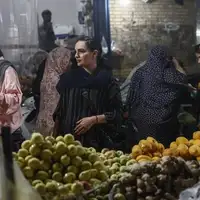
People browse a local market in Iran's Persian Gulf port city of Bandar Abbas, August 25, 2026

Iran’s latest strikes on American forces have brought threats of further US retaliation, but Washington increasingly sees Tehran’s military escalation as a sign of economic vulnerability rather than strategic strength.

After Iran launched missiles at US bases in Jordan in response to an American strike on Larak Island in the Strait of Hormuz, President Donald Trump promised another response.

“We’re going to hit them hard,” Trump told Fox News. “There will be a response.”

At the same time, Treasury Secretary Scott Bessent offered a different measure of who has the advantage.

“I would think that they are lashing out kinetically because they are losing economically,” Bessent said, arguing that Tehran is feeling the effects of Washington’s expanding pressure campaign.

Iran’s economy does not have to collapse, he said. “We just have to have the regime come to their senses.”

That leaves a central question hanging over the latest exchange: can Iran’s military retaliation actually improve its position as economic pressure mounts?

“Keep firing on Jordan, keep firing on Kuwait and Bahrain and UAE, but does that solve your problem at home?” Kamran Bokhari, Strategic Forecaster and Senior Resident Fellow with the Middle East Policy Council in Washington, told Iran International.

Bokhari believes Washington has little incentive to escalate into a larger war when it can respond to specific Iranian actions while maintaining the blockade and economic pressure.

“Keep the blockade,” he said. “If they try to mine, do what they did yesterday, but don’t escalate anything, and just keep the pressure up on the economic front.”

In that scenario, Iran retains the ability to retaliate, but its attacks do little to relieve the broader pressures facing the Islamic Republic.

Can economic pressure lead to something bigger?

Ali Dadpay, an Iranian American economist from Texas, said Washington’s stated objective is to change the Islamic Republic’s behavior rather than openly pursue regime change.

“Right now, they officially and legitimately say change of behavior,” Dadpay said.

But he argued that the economic deterioration Iran is experiencing could ultimately produce a more consequential outcome than Washington’s stated goal.

Dadpay pointed to the Soviet Union, East Germany and communist Poland as examples of political systems that collapsed without being invaded by a foreign power.

“A similar set of socio-economic factors can create a similar outcome,” he said of Iran.

Dadpay also said the combination of military and economic pressure could alter calculations among groups within the Islamic Republic and push the system toward what he described as a “new equilibrium.”

The immediate question is how far Washington is prepared to go with that economic pressure.

Max Meizlish, a former senior policy adviser at the Treasury Department’s Office of Foreign Assets Control, said a key test will be whether the US targets financial institutions facilitating Iranian trade with China.

Iran may still have oil to sell. The bigger question is whether Tehran can get paid. Unless financial channels through Hong Kong, the UAE and elsewhere are constrained, Meizlish said, “the regime is still going to have pathways for rearming itself.”

The pressure reaches ordinary Iranians

The expanding campaign is also having consequences beyond the regime. On August 24, OFAC suspended General License G, which had permitted certain educational services and academic exchanges involving Iranians.

ETS told Iran International it has since paused TOEFL and GRE testing inside Iran. Iranian nationals can still take the tests outside the country.

  • Iran sanctions reach education: Duolingo blocked, TOEFL and GRE in doubt

    Iran sanctions reach education: Duolingo blocked, TOEFL and GRE in doubt

Dadpay called the impact on testing a “side effect” of the broader restrictions. Meizlish said the administration may be trying to prevent regime-linked individuals from using educational opportunities abroad.

But he acknowledged the wider cost.

“There could be an unintended effect here where ordinary Iranians are caught in the crossfire, so to speak,” Meizlish said.

Iran’s missiles have shown Tehran can still strike back. What remains unclear is whether those attacks can ease the pressure building on the Islamic Republic — or whether Washington’s economic squeeze can change the regime’s behavior without increasingly hurting the Iranians it is meant to pressure Tehran on behalf of.

IRGC Unit 4000 plans attacks on shipping in East Asia, sources say

Aug 31, 2026, 22:25 GMT+1
•
Mojtaba Pourmohsen
100%

Iran’s IRGC intelligence arm is recruiting non-Iranian operatives to carry out attacks on ships, waterways and ports in East Asia, including two major Chinese ports, sources familiar with the plans told Iran International.

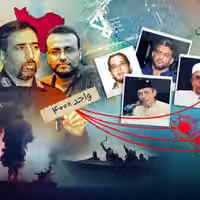
Iran International has obtained information about three alleged recruits and an operation being developed by Unit 4000, the Special Operations Division of the Islamic Revolutionary Guard Corps Intelligence Organization.

According to the sources, the unit recruited the three individuals through Shiite clerics in Thailand and Indonesia and has begun planning attacks in the Malacca and Bangka straits, as well as at Tanjung Priok Port in Indonesia and the Ningbo-Zhoushan and Shanghai ports in China.

The operations are being overseen by Brigadier General Rahman Moghaddam, commander of Unit 4000, according to Iran International’s sources.

Moghaddam was reported killed in an Israeli strike in Tehran on March 3, during the opening days of the war. Israeli security agencies identified him among senior Iranian intelligence figures killed in Israeli attacks.

Two days later, drones struck Nakhichevan in Azerbaijan in an attack Baku blamed on Iran, although Tehran denied responsibility. CNN later reported that Iranian officials believed the drone attack was retaliation for Moghaddam’s killing, which Tehran suspected had been carried out with Israeli assistance from Azerbaijan.

Iran International has now obtained information indicating that those reports of Moghaddam’s death were incorrect. According to the new information, he survived the strike and is now overseeing what the sources describe as a new phase of Unit 4000’s overseas maritime operations.

100%

Moghaddam, a former deputy coordinator at the Defense Ministry’s Protection and Intelligence Organization, took charge around three years ago of Unit 4000, which has been linked to assassination and sabotage operations targeting opponents of the Islamic Republic and Israeli interests abroad.

Plans to target ships in Indonesian and Chinese waters

Two sources familiar with the IRGC’s activities said Moghaddam is overseeing a new program aimed at expanding Unit 4000’s operations into East Asian waters.

The sources said the unit is considering attacks on commercial, military and privately owned vessels transiting the Malacca Strait, one of the world’s most important shipping routes, as well as the Bangka Strait.

Operatives recruited by the unit have also developed plans targeting Tanjung Priok, Indonesia’s busiest port, and the major Chinese ports of Ningbo-Zhoushan and Shanghai, the sources said.

The plans would represent a significant geographical expansion of Iran’s maritime pressure campaign.

Since the war began on February 28, Iran has sought to restrict shipping through the Strait of Hormuz, while the Iran-backed Houthis in Yemen have disrupted maritime traffic around the Bab al-Mandab and the Red Sea.

In June, Mohsen Rezaei, then a senior adviser to Iran’s supreme leader and now secretary of the Supreme National Security Council, told CNN that Tehran could expand the conflict if the war and US naval blockade continued.

“If the war continues and the naval blockade is not lifted, we will drag the war to the Indian Ocean, the Bab al-Mandab Strait, the Red Sea and the Mediterranean,” Rezaei said.

Around the same period, Quds Force commander Esmail Qaani said a new “security belt” of Iran’s so-called resistance front would extend from the Strait of Hormuz to Bab al-Mandab and from the Persian Gulf to the Red Sea.

Sources identify recruitment links in Thailand and Indonesia

Iran International’s sources said Unit 4000 had been seeking non-Iranian recruits for its East Asian maritime operations, allowing Tehran greater deniability if an operation was exposed.

100%

The recruits were brought to Iran for training before being assigned to operations in East Asia, according to the sources.

For recruitment in Thailand, Moghaddam approached Seyyed Momen Saketicha, a prominent figure in the country’s Shiite community, the sources said.

Saketicha was part of a Thai delegation that travelled to Tehran in 2023 and met Hamas representatives in efforts to secure the release of Thai nationals taken hostage during the October 7 attack on Israel.

The sources described Saketicha as a close associate of prominent Thai Shiite cleric Seyed Sulaiman Husaini, who heads the Al-Mahdi Foundation in Thailand and serves as imam of the Ruhollah Mosque in Nakhon Si Thammarat.

Husaini also has ties to Al-Mustafa International University, an Iran-based institution sanctioned by the US Treasury in 2020 over what Washington described as its role in facilitating recruitment for the IRGC Quds Force.

In 2012, after explosions in Bangkok that Thai and Israeli officials said were part of a plot targeting Israeli diplomats, Husaini blamed Mossad. A Thai court later convicted two Iranian men over the bomb plot. Iran denied involvement.

Focus on Indonesia

The bulk of Unit 4000’s planned East Asian maritime activity is centered on Indonesia, according to Iran International’s sources.

The sources said Moghaddam used two Indonesian clerics to identify potential recruits.

100%

One is Zahir Yahya, chairman of Ahlulbait Indonesia, a national Shiite organization. Iran International’s sources described Yahya as an intermediary who introduced potential operatives to Unit 4000.

The second is Abdullah Saqqaf, whom the sources identified as head of the Amir al-Mu’minin seminary in Bogor and as having links to Al-Mustafa International University.

According to the sources, Saketicha, Yahya and Saqqaf introduced potential recruits to the IRGC, while two Unit 4000 figures — Mohsen Aghazadeh and Vahid Yekeh-Dehqan — were responsible for recruitment and training.

100%

Three alleged recruits identified

Iran International has identified three individuals its sources say were recruited by Unit 4000 for covert maritime operations in East Asia.

The first, Pandu Yudhawinata, is an Indonesian operative who has previously been linked in counterterrorism reporting to Hezbollah and Iranian intelligence.

Yudhawinata was implicated in a failed 1994 Hezbollah plot to bomb the Israeli Embassy in Bangkok. Counterterrorism reporting has said he underwent training in Iran and later worked with Hezbollah networks in Southeast Asia.

Iran International’s sources also linked him to attacks in Sri Lanka.

The sources said Yudhawinata and two other Indonesian nationals, Ardiyanta Mutoha and Mohammad Hossein, travelled to Tehran for training intended to prepare them for covert operations at ports and waterways across East Asia.

The alleged plans come as Washington seeks to increase pressure on Iran’s oil exports while helping move energy shipments through the Strait of Hormuz.

US Treasury Secretary Scott Bessent said last week that the United States had helped move 130 million barrels of oil through the waterway over a two-week period while preventing Iranian exports.

Asia is particularly exposed to any expansion of maritime disruption. The International Energy Agency estimates that around 80% of oil passing through the Strait of Hormuz is destined for Asian markets.

The plans described to Iran International suggest that Unit 4000 may now be seeking to threaten another critical section of the energy and commercial shipping network serving Asia — extending the potential reach of Iran’s maritime campaign from the Middle East into some of the world’s busiest waters.