Iran army says new doctrine allows preemptive strikes

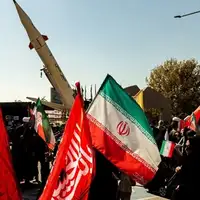
Iran’s army says its military doctrine is shifting from defensive to offensive, including the possibility of preemptive strikes and retaliation more extensive than the attack it is responding to.
Army spokesperson Brigadier General Mohammad Akraminia told state-run IRNA that the shift had emerged through the two recent wars.
He cited an Iranian attack on a US base in Jordan as an example of a preemptive operation and said any future attack on Iran would receive an immediate response that could be broader than the original strike.
Akraminia also said the military had used the pause in fighting to rebuild and upgrade systems damaged in the war, introduce new equipment and revise training based on lessons from the conflicts. He said Iran had no trust in its adversaries and was using the ceasefire to increase combat readiness.
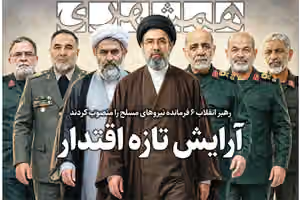
He confirmed that the Khatam al-Anbiya Central Headquarters had been merged with the Armed Forces General Staff to create greater unity of command, faster decision-making and quicker responses under what he described as current wartime conditions.
Akraminia also described the Strait of Hormuz as a geopolitical tool that could advance Tehran’s foreign-policy objectives.
Separately, he said civilians who kill or capture US troops in the event of a ground incursion into Iran would receive a five-billion-toman (about $30,000) reward, doubled for women, with the army also offering to buy the weapon used at twice its value and preserve it in a military museum.




The Islamic Republic may want the world to forget what happened in January, but the bodies of those who survived make that difficult.
Much of the attention since Iran’s bloody crackdown has rightly focused on those who were killed. Far less has been paid to those who lived.
They went into the streets hoping this time would be different. For many, it was, but not in the way they had hoped.
They survived being shot with metal pellets, beaten and, in some cases, slashed with machete-like weapons. Now doctors warn that some could spend the rest of their lives with permanent disabilities, chronic pain and dependent on opioids simply to manage it.
“You’re creating a generation of people in chronic pain and potentially creating a generation of opiate dependence,” Dr. Sarah Raza, a trauma and vascular interventional radiologist in Los Angeles, told Iran International’s English-language podcast Eye for Iran.
Raza is accustomed to catastrophic injuries. She works across multiple Level I trauma centers, treating adults and children with gunshot wounds, severe bleeding and injuries from vehicle crashes. But she says nothing in her medical career prepared her for the scale of what she has seen among those wounded in Iran.
“I have never seen this scale,” she said.
Working with Physicians for Human Rights, Raza has remotely assessed hundreds of injured Iranians, often through secure communications because patients fear seeking treatment inside the country. She says every patient she assessed spoke to medical teams from a home, a neighbor’s home or a relative’s home rather than a medical facility.
What she found was a pattern of injuries that could follow survivors for decades.
Hundreds of tiny metal pellets can remain embedded in a single person, lodged in skin, tendons and joints and near major nerves and blood vessels. Raza says more than 95 percent cannot safely be removed because surgery itself could damage arteries, nerves and other surrounding structures.
For some survivors, even ordinary movement may become a source of pain.
“Every time you bend your finger, you’re going to feel that pellet and it’s going to cause pain,” Raza said. “You’re going to have chronic inflammation. You’re going to need to be on steroids to manage the chronic inflammation. You’re going to need to be on opioids.”
The consequences, she warns, can include blindness, nerve damage, chronic inflammation, disfigurement and permanent disability, with some survivors unable to work or even walk.
“These will cause chronic disability, chronic nerve issues, chronic pain to the point of disfigurement, to the point of people being unable to work, walk,” Raza said.
Among the patients she described was a six-year-old boy.
Metal pellets struck his face during the protests and remain embedded in his skull, face and near his eye socket. Because of the concentration of nerves and blood vessels in the area, Raza says they cannot safely be removed.
“He’s going to live his whole life with pellets embedded in his skull, in his face, near his orbit,” she said.
He was six years old when he was wounded. The crackdown could remain physically inside his body for the rest of his life.
For Raza, his injuries represented something even more disturbing.
“This is their way of inflicting lifelong torture,” she said. “This is making someone’s body a prison.”
She described another patient, a 16-year-old construction worker whose mother had died and whose father, in his 70s, has cancer. The teenager was the family’s sole breadwinner.
In addition to pellet wounds, Raza said he suffered a deep laceration across his hand after people entered the crowds striking protesters with what she described as “machete-like objects.” The wound cut down to his tendons.
But his greatest concern was not his own pain.
“How am I going to feed my family?” Raza recalled him asking.
He wanted to know whether he could return to work so he could continue supporting his father and buying his chemotherapy medication.
“What can I do so I can go back to work? I need to feed my father. I need to buy him medicine, chemotherapy medicine,” Raza recalled him saying.
For Raza, his case shows how permanent injury to one protester can ripple through an entire family.
“This is the multi-generational physical, psychological trauma that they have inflicted,” she said.
Raza also believes the location and pattern of the pellet injuries are significant. She says she repeatedly saw pellets concentrated around areas rich in nerves and blood vessels, including the eyes, neck, torso and genitalia.
“This is not crowd control,” she said. “This is an intentional use of this weapon to inflict maximum pain, not only in the moment, but for years on.”
She makes an even more explicit assessment of the injuries she documented.
“This pattern is not coincidental,” Raza said. “It is intentionally inflicted to cause maximum amount of pain, injury throughout your life.”
There is another consequence.
The pellets that injure protesters may also identify them.
Because the fragments are metal and often cannot be removed, Raza says they can remain visible on X-rays and potentially detectable years later. Patients told her they feared their injuries could effectively mark them as people who had participated in the protests.
“Their wounds, their injuries have now become identifying markers for attack and targeted persecution later,” she said.
For survivors, then, the injury can become both punishment and evidence: a source of chronic pain that may never leave their bodies, and a physical record of what happened to them.
The dead can be counted.
The lifetime carried by those who survived is much harder to measure.
Warnings from senior Iranian officials about the cost of prolonging the war are increasingly converging with Washington’s central pressure point: whether Iran can economically sustain the conflict.
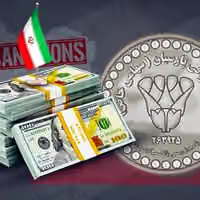
The warnings come as President Donald Trump launches an “Economic D-Day” against Iran, describing it as the “most crushing economic operation ever taken against any country” and seeking to deepen Tehran’s financial isolation.
President Masoud Pezeshkian said Friday Iran should seek to end the war now, linking his appeal to mounting financial constraints and the economic consequences of continued fighting.
“It is better to end the war today, when we are powerful and respected and the whole world acknowledges our victory,” Pezeshkian said.
His comments went beyond the case for ending hostilities. Pezeshkian said the maritime blockade had complicated Iran’s imports and exports and that the government lacked resources to meet some of its obligations to workers, retirees and government employees.
“The government is facing financial constraints. When we chant slogans, we must also accept the hardship that comes with them,” he said.
Parliament speaker Mohammad Bagher Ghalibaf delivered a similar economic warning during a visit to Baghdad, saying military strength could not preserve the Islamic Republic without growth, domestic production and functioning financial flows.
“No matter how much military power we have, if people are hungry and we don't have financial circulation, economic growth and domestic production, we will not endure,” Ghalibaf said Thursday.
The comments put two of Iran’s most senior elected officials on the same terrain Washington has increasingly emphasized: the economic capacity of the Islamic Republic to keep fighting.
Washington turns to economic pressure
President Donald Trump announced this week the “most crushing economic operation ever taken against any country,” targeting Iran and warning of economic consequences for countries, companies and financial institutions that continue providing it with support.
Vice President JD Vance has said the war has entered a phase in which economic pressure is Washington’s most effective tool, and Treasury Secretary Scott Bessent said the United States would impose the “toughest sanctions in history.”
Iranian Foreign Minister Abbas Araghchi rejected that premise Friday, saying Trump’s campaign was “bound to fail” like previous rounds of US pressure.
“14 years ago: ‘Most crippling sanctions in history.’ Failed. 8 years ago: ‘Maximum pressure.’ Failed. 5 months ago: ‘Unconditional surrender.’ Failed. Today: ‘Most crushing economic operation ever.’ Bound to fail,” Araghchi wrote on X.
“We have seen this movie before. Same bull. Different bullies,” he added.
Trump reinforced his own message Friday by reposting a Truth Social post from US lawyer David Schoen saying the president had given Iran “every possible chance” to change course.
Schoen wrote that Trump had offered Tehran opportunities to change its behavior and had made clear the consequences if it refused.
Oil and shipping flows shrink
Shipping and oil data provide a measure of the pressure Washington is seeking to intensify.
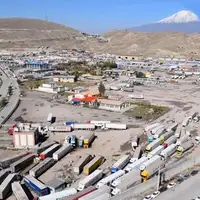
Only seven commodity vessels crossed the Strait of Hormuz Thursday, half the previous day’s total, according to initial Kpler data cited by Reuters. Four entered the waterway and three exited. No very large crude carriers or LNG tankers were among them.
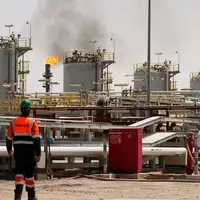
Separate Kpler figures showed an even steeper decline in Iranian oil loadings. They fell to 287,000 barrels this month, compared with around 2 million barrels per day in March and April, according to Kpler analyst Homayoun Falakshahi.
Falakshahi said oil already outside the blockade area could continue reaching China and generating revenue for several months. If the blockade remains in place, he said, Iran’s oil income would then move toward zero.
That pressure is also visible in trade with China, Iran’s largest crude buyer. Kpler data cited by Reuters showed Chinese imports of Iranian oil averaging 534,000 barrels per day so far in August, down from 1.4 million barrels per day in 2025.
Pezeshkian’s call draws pushback
Pezeshkian’s argument for ending the war quickly also met resistance from an outlet affiliated with the Revolutionary Guards.
The IRGC-affiliated Fars news agency said calls for an end to the conflict had been circulating among “bankrupt politicians in the media space” and said that language was now being repeated by the president.
“The enemy is like a wolf that smells weakness and, instead of retreating, begins a harder attack,” Fars wrote. It said appeals to end the war could signal that Iran was exhausted and looking for a rapid exit.
Whether aimed at domestic or foreign audiences, the competing messages are increasingly being tested against conditions inside Iran. Trump is betting that heavier economic pressure can force a change in Tehran’s course; Ghalibaf has warned that regardless of military strength, the Islamic Republic “will not endure” if people are hungry and the economy cannot function.
A warning by parliament speaker Mohammad Bagher Ghalibaf that Iran cannot endure if its people go hungry has exposed tensions in Tehran over acknowledging economic strain, with hardliners arguing that signs of weakness will encourage further US pressure.
Speaking at a meeting with Iranian and Iraqi businesspeople at the Iranian Embassy in Baghdad on Thursday, Ghalibaf stressed that economic strength must accompany military power.
“No matter how much military power we have, if people are hungry and we do not have financial circulation and economic growth, we will not endure,” he said. He also called for planning to confront what he described as unjust sanctions.
His remarks drew criticism from hardline commentators, who argued that acknowledging the impact of US economic pressure could help Washington.
Masoud Barati, a former state television presenter, wrote on X that Ghalibaf’s comments, coming as US President Donald Trump escalated his economic campaign against Iran, conveyed “a message of weakness.”
He said such a message reinforced the image of a weak Iran and encouraged the enemy to increase pressure. Warnings against projecting weakness were also a recurring theme in Friday prayers across Iran, whose broad themes are set by a government institution.
The dispute comes as the Trump administration prepares what Treasury Secretary Scott Bessent has described as the “toughest sanctions in history” on Iran, combining the existing US blockade with unprecedented sanctions aimed at collapsing the Islamic Republic.
Bessent also said the United States was seeking the “greatest coordinated economic isolation in the history of the world” and would press allies and other countries, including China, to join the campaign.
US Vice President JD Vance has said Tehran will not be able to withstand the pressure indefinitely, whether for “a couple of weeks or a couple of months or possibly longer.”
Vance acknowledged that Iran is also applying economic pressure on the United States, but said Tehran is feeling the greater impact.
Iranian-Canadian political analyst Shahir Shahid-Sales argued in a post on X that increasing economic pressure would not leave the Islamic Republic passively watching its own collapse.
“This system has no choice but to launch a widespread war, especially when such a decision is backed by high and false confidence,” he wrote, warning that ordinary Iranians would pay the price of the confrontation.
Tehran rejects pressure campaign
Iran’s Foreign Ministry on Thursday condemned the broad economic and trade sanctions, calling them evidence of the “anti-human, lawless and hegemonic nature” of the US government.
“Sanctions and economic pressure are the other side of the coin of war and military aggression,” the ministry said.
Foreign Minister Abbas Araghchi, meanwhile, dismissed what Trump has called “Economic D-Day” as a diversion from America’s own economic problems.
“The so-called ‘Economic D-Day’ is a diversion from America's own crisis: unprecedented debt and surging interest costs,” Araghchi wrote on X. “Doubling down on failed policies will only bring further defeat—and enmity of Iranians. US economic terrorism threatens global economy and sovereignty worldwide.”
In another post, he described the “most crushing economic operation in history” as a repeated scenario destined to fail.
President Masoud Pezeshkian, however, has repeatedly acknowledged Iran’s deteriorating economic situation in speeches and interviews, adding to the contrast between Tehran’s public dismissal of Washington’s strategy and concerns voiced by senior officials about conditions at home.
Friday prayers rally against US pressure
Friday prayer leaders across Iran responded extensively to US officials’ warnings over the economic campaign, while reiterating support for keeping the Strait of Hormuz closed.
Habibollah Ghafouri in Kermanshah described the renewed talk of sanctions and economic blockade as a clear admission of the “enemies’ failure against the Iranian nation and the Islamic front” after what he called their failure on the military front.
In Ardabil, Hassan Ameli called Trump’s statements a “major psychological operation,” saying they were intended to influence public sentiment and Iran’s markets.
In Semnan, Morteza Motiei argued that the United States was facing its own high costs, logistical challenges and international pressure rather than inflicting greater damage on Iran.
In Sari, Mohammad-Bagher El-Eini said Iran had seized control of the Strait of Hormuz and was holding America “by the throat,” vowing that the pressure would continue until the United States was destroyed and predicting the eventual destruction of US military forces.
Reza Nouri, the Friday prayer leader in Bojnourd, also warned regional countries over what he described as a naval blockade of Iran, saying that if Iran could not import or export goods, “no one should be able to do so.”
The contrasting messages point to a growing tension in Tehran’s response to Washington’s economic campaign: while senior officials acknowledge the need to strengthen the economy and prepare for prolonged pressure, hardliners fear that publicly admitting economic vulnerability could encourage the United States to intensify it.
Iranian crude loadings have fallen to about one-seventh of their pre-war level under the US naval blockade, while Chinese receipts of Iranian oil and fuel exports have also dropped sharply, tanker-tracking data reviewed by Iran International shows.
Data from commodities intelligence firm Kpler shows Iran has loaded an average of about 287,000 barrels per day (bpd) of crude so far this month, compared with roughly 2 million bpd before the Middle East war.
China, meanwhile, has received an average of just 523,000 bpd of Iranian crude so far this month. That compares with an average of about 800,000 bpd over the previous two months and more than 1.7 million bpd at the beginning of the war.
The United States reimposed a maritime blockade against the Islamic Republic in mid-July. As a result, more than 40 million barrels of Iranian oil stored on tankers in the Persian Gulf and Gulf of Oman have become effectively trapped, Kpler estimates.
Iran has stored 83 million barrels of oil outside the blockade zone, including 43 million barrels in the South China Sea, Yellow Sea and East China Sea. But with China sharply reducing its purchases, Tehran could run out of oil available for delivery to China in roughly five months if the current export rate persists.
Iran also exported around 256,000 bpd of fuel oil, or mazut, last year. Exports remained at roughly 220,000 bpd during the first two months of this year, but have plunged to just 61,000 bpd this month.
Iran had also been exporting a similar volume of LPG before the war. Those exports have now almost come to a halt.
According to Central Bank of Iran (CBI) data, the country’s crude oil and fuel oil exports were worth $57.5 billion last year, accounting for about 55% of Iran’s total exports. Crude oil, petroleum products and LPG together accounted for roughly 65% of the country’s total exports.
The sharp decline in exports of these commodities is likely not only to leave the government facing a massive budget shortfall, but also to create serious difficulties in securing the foreign currency needed to finance imports.
Iran imported nearly $78 billion worth of goods last year, including about $3 billion in gasoline, CBI data shows. Even if the country were to maintain its non-oil exports at last year’s level, they would not be sufficient to finance even half of its goods imports.
The situation is particularly difficult because Iran’s steel industry, which had generated as much as $5 billion a year in export revenues for the Islamic Republic, has been severely damaged by the recent war. The domestic market is now also facing a shortage of steel.
Iran was also a net importer of services last year, running a deficit of about $15 billion. Combined with its $78 billion in goods imports, that means Iran needed roughly $93 billion in foreign exchange to cover goods imports and its net services deficit.
Even if Iran manages to maintain its remaining non-oil exports at last year’s level, those revenues would cover only around one-third of those needs if crude oil, petroleum products, LPG and steel exports are excluded.
The pressure could increase further after US President Donald Trump on Wednesday threatened an “economic D-Day” against Iran, pledging economic warfare and isolation on an unprecedented scale after saying Tehran had failed to make a deal.
The threatened measures could make sanctions evasion more difficult and expose Iran’s already weakened foreign trade to additional challenges.
Yemen’s Houthis have become a more effective ally for Iran than Hezbollah, using Iranian support and their strategic Red Sea position to pursue both Tehran’s interests and their own agenda, Yemen analyst Mohammad al-Basha told Iran International.
The Houthis’ position distinguishes them from other members of Iran’s regional network, Al-Basha said. The group seized Sanaa in 2014 and became the de facto government, inheriting the conventional military of North Yemen while taking control of territory containing roughly 80 percent of the population.
“So you’re not just talking about a militia or an insurgency; they became a de facto authority,” Al-Basha said.
That combination of territorial control, state institutions and geography has given the Houthis advantages that Hezbollah and Iran-backed groups in Iraq do not possess, he said.
Iraqi armed groups wield significant influence but do not control the government, while Lebanon’s Hezbollah has operated as a powerful armed and political force within Lebanon rather than as the state itself.
The Houthis also sit along the Red Sea and Bab al-Mandab, one of the world’s most important maritime chokepoints, while Yemen’s mountainous terrain and extensive tunnel systems make the group difficult to target from the air.
Those factors have given the Houthis “an edge” and made them “more effective as an ally for Iran than Hezbollah,” Al-Basha said.
The comparison comes as other parts of Iran’s regional network have been weakened. Al-Basha said the so-called Axis of Resistance is weaker than it was before the October 7, 2023 Hamas attack on Israel, pointing to pressure on Hamas and Hezbollah and the fall of Bashar al-Assad’s government in Syria, which severed a key land route between Iran and its Lebanese ally.
Iran’s military backing
Iran, meanwhile, has invested heavily in the military capabilities that make the Houthis’ strategic position consequential. Al-Basha said Tehran has provided anti-ship ballistic missiles, anti-ship cruise missiles, land-attack cruise missiles and long-range drones, while the Islamic Revolutionary Guard Corps and its Quds Force remain central to the relationship.
“The Houthis will not be as strong as they are today without Iran,” Al-Basha said.
He said intercepted shipments heading toward Yemen continue to demonstrate the importance of Iranian support, including components for weapons the Houthis have presented as domestically produced. The group has developed some local manufacturing and assembly capabilities, he said, but Iranian support remains particularly important to its advanced missile and drone arsenal.
The relationship differs from Tehran’s former model with Hezbollah in another significant respect. Al-Basha said Iran has not generally provided the Houthis with financial support on the scale it once provided the Lebanese group. Tehran at times supplied discounted cooking gas and crude through Iraqi and secondary markets that the Houthis could resell, he said, but its most important contribution has been weapons.
Reports coming out of Yemen also indicate that an Iranian ambassador and a Quds Force representative have returned to Houthi-controlled territory, Al-Basha said. He said the ambassador has appeared in public photographs, while the Quds Force representative also appears to be back, with both widely understood to coordinate the relationship between Tehran and the Houthi leadership.
“Their natural partners are the Quds Force and the Guard,” Al-Basha said.
He contrasted Iran’s military support with a Saudi convoy he had recently seen carrying heavy equipment for power stations into Yemen. Iran, he said, has provided drones and ballistic missiles rather than power, electricity or food for Yemenis.
Al-Basha also described the relationship as increasingly public. He pointed to Houthi-linked delegations attending the funeral of Iran’s late supreme leader and subsequent Iranian engagement with the Houthi authorities as signs that ties once conducted more covertly are becoming increasingly visible.
An agenda of their own
The Houthis, however, are not simply acting on Tehran’s behalf. Al-Basha said they deliberately chose the current confrontation to support Iran while simultaneously exploiting changes in regional shipping to pursue their own objectives against Saudi Arabia.
With shipping through the Strait of Hormuz disrupted, Saudi Arabia has been forced to move more crude through its east-west pipeline toward the Red Sea, increasing the strategic importance of Bab al-Mandab, he said. The Houthis saw an opportunity to increase pressure on Riyadh and the international community at a moment when their own finances are strained.
Al-Basha said Iran had invested in the Houthis’ ballistic missile and drone programs, creating an expectation that they would support Tehran. But the timing also serves the Houthis’ interests as they seek greater control over airspace and shipping access as well as financial concessions from Saudi Arabia.
The group is seeking around $100 million a month in salary support and billions of dollars in reparations, Al-Basha said. Iran International has previously reported on a Houthi maritime embargo against Saudi-linked shipping and the diversion of Saudi tankers away from Bab al-Mandab.
The financial demands come as the Houthis struggle to sustain the areas they control. Al-Basha said the group collects revenue from ports, communications, aviation, taxation and customs, but much of that income is being prioritized for the war effort.
He cited signs of financial distress including the leasing of endowment properties around mosques and government offices to generate revenue. He also described people fighting over food at public events and eating from garbage, while noting that an online “I am hungry” campaign was visible but not as widespread as some accounts suggested.
That economic pressure is part of what is driving the current confrontation with Saudi Arabia, Al-Basha said. The Houthis calculate that Riyadh has more to lose from another major war in Yemen and can therefore be pressured into paying for a return to calm.
“Houthis know they have nothing to lose, and that’s why they’re going all in against Saudi Arabia,” he said. “They know that Saudi has a lot to lose.”
Bab al-Mandab leverage
The group’s ambitions extend beyond extracting financial concessions. Al-Basha described control of Bab al-Mandab as the “crown jewel” of its current military campaign, saying taking the strait would strengthen the Houthis against Yemeni government forces and give them a more direct means of threatening maritime traffic.
“They have fire control over the Red Sea,” Al-Basha said, but physical control of Bab al-Mandab would mean “you don’t need any more drones, missiles to threaten the ships. You could just send out a boat.”
Al-Basha said the Houthis also have ambitions beyond Yemen, describing an “expansionist model” that includes activity in the Horn of Africa and recruitment in Sudan. He cautioned against underestimating the group’s own power, saying it derives not only from Iranian support but from its determination, political agenda and broader ambitions.
For now, the Houthis have also been careful to avoid bringing the United States directly into their confrontation with Saudi Arabia. Al-Basha said they are not attacking US assets and have emphasized that they are not completely closing Bab al-Mandab, allowing them to exert pressure while limiting the risk of an immediate US response.
“If they will continue attacking Saudi Arabia and continuing to be very disruptive, sooner or later US will be dragged into this war,” Al-Basha said.
For Tehran, the Houthis now offer something increasingly difficult to replicate elsewhere in its regional network: an allied armed movement that also controls territory, institutions and a substantial military structure beside a critical global shipping route.
Iranian weapons remain central to that power, Al-Basha said, but the Houthis have their own revenue sources, political objectives and regional ambitions. It is that combination of Iranian military support and independent territorial power that, in his assessment, has made them a more effective ally for Tehran than Hezbollah.