The hidden toll of Iran crackdown: disability, chronic pain, opioid dependence

Negar Mojtahedi
Iran International

The Islamic Republic may want the world to forget what happened in January, but the bodies of those who survived make that difficult.
Iran International
The Islamic Republic may want the world to forget what happened in January, but the bodies of those who survived make that difficult.
Much of the attention since Iran’s bloody crackdown has rightly focused on those who were killed. Far less has been paid to those who lived.
They went into the streets hoping this time would be different. For many, it was, but not in the way they had hoped.
They survived being shot with metal pellets, beaten and, in some cases, slashed with machete-like weapons. Now doctors warn that some could spend the rest of their lives with permanent disabilities, chronic pain and dependent on opioids simply to manage it.
“You’re creating a generation of people in chronic pain and potentially creating a generation of opiate dependence,” Dr. Sarah Raza, a trauma and vascular interventional radiologist in Los Angeles, told Iran International’s English-language podcast Eye for Iran.
Raza is accustomed to catastrophic injuries. She works across multiple Level I trauma centers, treating adults and children with gunshot wounds, severe bleeding and injuries from vehicle crashes. But she says nothing in her medical career prepared her for the scale of what she has seen among those wounded in Iran.
“I have never seen this scale,” she said.
Working with Physicians for Human Rights, Raza has remotely assessed hundreds of injured Iranians, often through secure communications because patients fear seeking treatment inside the country. She says every patient she assessed spoke to medical teams from a home, a neighbor’s home or a relative’s home rather than a medical facility.
What she found was a pattern of injuries that could follow survivors for decades.
Hundreds of tiny metal pellets can remain embedded in a single person, lodged in skin, tendons and joints and near major nerves and blood vessels. Raza says more than 95 percent cannot safely be removed because surgery itself could damage arteries, nerves and other surrounding structures.
For some survivors, even ordinary movement may become a source of pain.
“Every time you bend your finger, you’re going to feel that pellet and it’s going to cause pain,” Raza said. “You’re going to have chronic inflammation. You’re going to need to be on steroids to manage the chronic inflammation. You’re going to need to be on opioids.”
The consequences, she warns, can include blindness, nerve damage, chronic inflammation, disfigurement and permanent disability, with some survivors unable to work or even walk.
“These will cause chronic disability, chronic nerve issues, chronic pain to the point of disfigurement, to the point of people being unable to work, walk,” Raza said.
Among the patients she described was a six-year-old boy.
Metal pellets struck his face during the protests and remain embedded in his skull, face and near his eye socket. Because of the concentration of nerves and blood vessels in the area, Raza says they cannot safely be removed.
“He’s going to live his whole life with pellets embedded in his skull, in his face, near his orbit,” she said.
He was six years old when he was wounded. The crackdown could remain physically inside his body for the rest of his life.
For Raza, his injuries represented something even more disturbing.
“This is their way of inflicting lifelong torture,” she said. “This is making someone’s body a prison.”
She described another patient, a 16-year-old construction worker whose mother had died and whose father, in his 70s, has cancer. The teenager was the family’s sole breadwinner.
In addition to pellet wounds, Raza said he suffered a deep laceration across his hand after people entered the crowds striking protesters with what she described as “machete-like objects.” The wound cut down to his tendons.
But his greatest concern was not his own pain.
“How am I going to feed my family?” Raza recalled him asking.
He wanted to know whether he could return to work so he could continue supporting his father and buying his chemotherapy medication.
“What can I do so I can go back to work? I need to feed my father. I need to buy him medicine, chemotherapy medicine,” Raza recalled him saying.
For Raza, his case shows how permanent injury to one protester can ripple through an entire family.
“This is the multi-generational physical, psychological trauma that they have inflicted,” she said.
Raza also believes the location and pattern of the pellet injuries are significant. She says she repeatedly saw pellets concentrated around areas rich in nerves and blood vessels, including the eyes, neck, torso and genitalia.
“This is not crowd control,” she said. “This is an intentional use of this weapon to inflict maximum pain, not only in the moment, but for years on.”
She makes an even more explicit assessment of the injuries she documented.
“This pattern is not coincidental,” Raza said. “It is intentionally inflicted to cause maximum amount of pain, injury throughout your life.”
There is another consequence.
The pellets that injure protesters may also identify them.
Because the fragments are metal and often cannot be removed, Raza says they can remain visible on X-rays and potentially detectable years later. Patients told her they feared their injuries could effectively mark them as people who had participated in the protests.
“Their wounds, their injuries have now become identifying markers for attack and targeted persecution later,” she said.
For survivors, then, the injury can become both punishment and evidence: a source of chronic pain that may never leave their bodies, and a physical record of what happened to them.
The dead can be counted.
The lifetime carried by those who survived is much harder to measure.







Marzban said she was arrested on May 17, 2023, while walking in a park, when two men and a woman approached her and told her she was being detained. After she resisted, two more men arrived and forced her into a vehicle, she wrote.
She said she was blindfolded and driven for about an hour to a location she later learned was an Intelligence Ministry detention facility.
According to her account, a female officer took her to a room for a search and ordered her to remove all her clothes. She said she was then wrapped in a chador while naked and taken by force to a basement cell.
Less than 10 minutes later, Marzban wrote, a masked man entered the cell and raped her despite her resistance, screams and protests.
“Time felt like years,” she wrote. “I don’t know, perhaps half an hour; perhaps less or more.”
Marzban said she was left bleeding on the floor of the cell after the assault.
She said two masked women and another woman dressed as a nurse entered the cell several minutes later and treated her injuries.
Marzban said several men subsequently told her she would be released that night if she remained silent about what had happened. She was blindfolded again, driven away from the facility and repeatedly warned during the journey about the consequences of speaking out, according to her letter.
She said she was eventually left near her home at around 7 p.m.
Silence and a second arrest
Marzban said she initially told no one about the assault, including her spouse, who she said had lived for years with advanced Parkinson’s disease.
“After this incident, I became isolated, distanced myself from others and stopped going to the park for walks,” she wrote.
She was arrested again around midnight on January 14, 2026, and taken to the same Intelligence Ministry detention facility, according to the letter.
Marzban said the greatest source of torment during the 22 days she spent there was the fear that she would be sexually assaulted again.
She said she repeatedly objected to men entering the women’s detention area and was met with hostility from officials.
Marzban, who converted to Catholic Christianity, was later transferred to Evin prison. She was sentenced by a Tehran Revolutionary Court in June to nine years and eight months in prison on charges including “propaganda against the system” and “assembly and collusion against national security.”
She said she tried several times during her later detention to file a formal complaint over the alleged 2023 assault, but officials prevented her from doing so and threatened her into silence.
Seven months after her latest arrest, she wrote, the sight of men still causes her anxiety.
Previous allegations of sexual violence in detention
Marzban’s account adds to years of allegations by political prisoners and protesters who have described rape, sexual assault and other forms of sexual violence in Iranian prisons and detention centers.
Iran International reported in February that several women and girls detained during January’s protests said they had been sexually assaulted or raped in custody. Among them were a young woman and a 17-year-old girl who said they were raped at an unofficial detention facility operated by the Revolutionary Guards.
Twenty-two female political and religious prisoners at Evin also wrote that year demanding an investigation into what they described as sexual abuse during body searches.
A year-long Iran International investigation published in 2024 found evidence that security forces had used sexual violence against protesters across several provinces during the 2022 demonstrations.
Victims have often said fear of retaliation and distrust of Iran’s judicial system deterred them from filing complaints, while those who did pursue cases frequently said their complaints went nowhere.
Marzban said she was speaking publicly in the hope that others who had suffered similar abuse would feel able to tell their stories.
“I hope that one day the seeds of our suffering will sprout,” she wrote, “and the tree of our demand for justice will grow strong.”
The push is coming from figures with real leverage, including inside the judiciary, and it has two aims: harsher enforcement of the dress code now, and an end to the suspension of Iran's strict Hijab and Chastity law.
Tehran Prosecutor Ali Salehi said on Monday the judiciary was preparing to move against cafes, restaurants and clothing stores for "committing acts contrary to public chastity and selling unconventional clothing."
On Thursday he went further, ordering judicial authorities to identify and confront what he called "organized and networked actors" promoting unveiling, whom he accused of spreading corruption in public places and offending public sentiment.
The closures were already underway. In recent weeks authorities have shut cafes, restaurants, shops and sports clubs in more than 15 cities, including Tehran, over hijab violations by customers or staff.
Women have also been blocked from obtaining motorcycle licenses, despite a government decision sent to police in February.
The reformist daily Shargh wrote on Wednesday that the resistance appeared to have little to do with law or road safety, and everything to do with what women would be wearing on the bikes.
'Hijab is a flag'
The pressure is louder on the street and online than in the institutions.
Hijab has moved to the front of the placards and slogans at the nightly pro-government rallies, according to social media users who follow them. Those gatherings drew some unveiled women in the early weeks of the war. They are far smaller now, and the crowd is almost entirely hardline.
Their target is often President Masoud Pezeshkian, who has not submitted the Hijab and Chastity law to government bodies for implementation, and whom demonstrators accuse of letting unveiled women multiply.
Pezeshkian has not objected to the law itself. The decision to freeze it was taken above him, out of fear that enforcing it would set off a new wave of anti-government protests.
Female hardliners have held their own gatherings in cities including Isfahan and Mashhad. Outside the governor's office in Isfahan, one placard carried a line attributed to Israeli Prime Minister Benjamin Netanyahu: "Unveiled women are our free soldiers."
Online, hardliners have been circulating footage of women walking, exercising, dancing and singing in shopping centers, cafes and streets, demanding that the authorities act against women they call "naked."
"Do you see the widespread wave of hijab tweets? The message is completely clear: the authorities have made up their minds to put an end to this situation. I can't wait for the operational phase to begin as soon as possible," one hardline user wrote.
The argument they make for themselves is that the veil is not a rule but a banner. "Hijab is the flag of the Islamic Republic and must not be allowed to fall," runs a common formulation.
"Hijab is not merely a secondary religious ruling; hijab is a flag," a hardline cleric posted. "If there is leniency over it, it will lead to the destruction of the family and the weakening of other religious laws." His patience, he warned, and that of others like him, could run out.
Other users have been keeping score. One noted that the same voices who spent the war demanding control of the Strait of Hormuz, guaranteed revenues from the waterway and a seat at the table of global oil pricing had "returned to factory settings," their attention back on women’s clothing.
A law too dangerous to use
The Hijab and Chastity law, finalized in 2024, is harsher than anything before it, and includes provisions that would let civilian groups confront women over their clothing.
It has never been enforced. Implementation was suspended over fears it would set off protests on the scale of those that followed Mahsa Amini's death, and the Supreme National Security Council's decision still stands.
The freeze carries the late supreme leader's authority. Interior Ministry spokesman Ali Zeynivand said this month that it was decided under Ali Khamenei and has not changed, and that Pezeshkian, too, supports it.
Meanwhile, the streets have moved. Unveiled women are far more visible than a year ago, and many now dress in ways that would have been unthinkable in public not long before.
Women's rights activists warn against reading that as the end of compulsory hijab. Women employed in government offices and institutions are still held to the dress code, and unveiled women are still turned away from some buildings and services unless they cover their hair, arms and legs.
Some users see the easing as a product of the war rather than a change of policy, and expect it to end with the fighting. "If the situation becomes more stable, I doubt the authorities will refrain from bringing their repressive forces back onto the streets to enforce hijab on women," one wrote.
Even among those who support compulsory hijab, some think a crackdown now would backfire. Morteza Panahian, a young cleric who has also criticized the refusal to license women motorcyclists, wrote that anyone blaming the spread of unveiling on the law's suspension had evidently never read the law.
"This law is so impossible to implement that, if it is promulgated, the pace of unveiling will double," he wrote.
Sharif University's student affairs office said the ruling against Reza Dalman, a 24-year-old master's student in computer engineering, was final. "The final ruling was communicated to the university for implementation on August 16," the office said.
Dalman was arrested on March 19 and released on bail about a month later. Student sources link his case to a stuffed rat that demonstrators hung from a tree during protests at Sharif in late February, before a Basij-affiliated student climbed up and took it down.
The toy was an insult with a name. Critics began calling Ali Khamenei "Moush-Ali," or Rat-Ali, after the late supreme leader largely vanished from public view during the 12-day war with Israel in June 2025, when reports said he had taken shelter in a fortified underground facility.
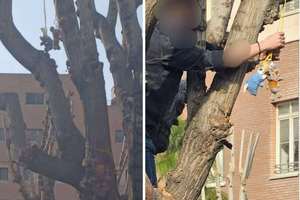

Moush means mouse, or rat. The nickname spread from social media into chants at protests inside Iran and among the diaspora, a way of mocking a leader his opponents said had run for cover.
Dalman published an image of the final decision, stamped "confidential," on his X account. Among the points the university listed against him was that during his defense he showed "no expression of remorse."
The expulsion sits alongside a judicial case against Dalman and a widening series of disciplinary rulings at one of Iran's most prominent universities.
Expulsion orders reach 10
Three more Sharif students have received preliminary expulsion orders, bringing to 10 the number facing such rulings, the United Students group said on Wednesday.
The latest are Ariana Kouchaki, an industrial engineering undergraduate, Ali Alirezaei, a mathematics undergraduate, and Arash Hatami, a physics undergraduate. Kouchaki and Hatami were each barred from studying at any university in Iran for one year, while Alirezaei received a five-year nationwide ban, according to the group.
Seven other Sharif students had already received expulsion orders. Dalman's is the only case finalized by the Ministry of Science; the rest remain preliminary.


