• العربية
  • فارسی
Brand
  • Iran Insight
  • Politics
  • Economy
  • Analysis
  • Special Report
  • Opinion
  • Podcast
  • Live TV
  • Iran Insight
  • Politics
  • Economy
  • Analysis
  • Special Report
  • Opinion
  • Podcast
  • Live TV
  • Theme
  • Language
    • العربية
    • فارسی
  • Iran Insight
  • Politics
  • Economy
  • Analysis
  • Special Report
  • Opinion
  • Podcast
  • Live TV
All rights reserved for Volant Media UK Limited
volant media logo

Ex-president warns Iran against losing ‘unprecedented’ opportunity with Trump

Aug 19, 2026, 14:08 GMT+1

Former Iranian President Mohammad Khatami has strongly backed the Islamabad Memorandum of Understanding signed by US President Donald Trump and Iranian President Masoud Pezeshkian, warning that Iran could face serious problems if the opportunity created by it is lost.

The Iran-US MoU, signed in June, set out a framework for ending the war and addressing disputes between Tehran and Washington through further negotiations. It was signed by Trump and Pezeshkian.

Khatami's official media channel published excerpts of his remarks on Tuesday.

Khatami described the Islamabad MoU as "unprecedented," saying he believed it gave Iran significant benefits while placing substantial commitments on Washington.

"Since World War II, no document signed by a US president has given this many advantages to the other side and imposed this many commitments on itself," Khatami said.

"If we lose the opportunity created by the memorandum, we will face extraordinary problems," Khatami said. "This memorandum has no parallel."

Khatami said the document carried particular weight because it had been signed by the presidents of Iran and the United States.

He said he did not trust the United States but argued that the signatures of Pezeshkian and Trump gave the document greater standing than many other agreements.

Khatami also addressed supporters of continued war, saying decisions about the country's future should not be driven by emotion.

"I, too, have been deeply affected by the killing of my leader, but the country should not be managed based on emotions," Khatami said. "We must see what is in the interests of the country, the system and Islam."

Most Viewed

US rules out Iran truce extension as Tehran official sets new deadline
1

US rules out Iran truce extension as Tehran official sets new deadline

2

Canada deports former Iranian official linked to 2019 protest crackdown

3

State TV host sparks backlash over ‘southern Iran for southern Lebanon’ remark

4
OPINION

For Iranian journalists, exile can last a lifetime

5
INSIGHT

Forced to serve in the IRGC, now fighting to stay in Canada

Banner
Banner
Banner

Spotlight

  • Luxury Tehran property asking prices surpass Munich and Sydney

    Luxury Tehran property asking prices surpass Munich and Sydney

  • For Iranian journalists, exile can last a lifetime
    OPINION

    For Iranian journalists, exile can last a lifetime

  • Seven months on, January protests still shape Iranians’ lives
    VOICES FROM IRAN

    Seven months on, January protests still shape Iranians’ lives

  • Forced to serve in the IRGC, now fighting to stay in Canada
    INSIGHT

    Forced to serve in the IRGC, now fighting to stay in Canada

  • Iran’s ‘infiltration’ bill sparks backlash over sweeping reach

    Iran’s ‘infiltration’ bill sparks backlash over sweeping reach

  • To survive maximum pressure, Iran kept pumping and broke its oil company
    ANALYSIS

    To survive maximum pressure, Iran kept pumping and broke its oil company

•
•
•

More Stories

An Iranian film broke every taboo. Viewers say society broke them first

Aug 19, 2026, 11:39 GMT+1
•
Hooman Abedi
100%
A scene from Bidad. Courtesy of the Karlovy Vary International Film Festival.

An Iranian film made in defiance of the censors reached YouTube last week, and the argument it started was not the one its makers might have expected: many viewers are asking not whether Bidad goes too far, but whether it goes far enough for the country it depicts.

For some viewers, Soheil Beiraghi's fourth feature puts a recognizable Iran on screen for the first time in years: women without mandatory hijab, men and women embracing, underground music, and a young singer who refuses to accept that her voice cannot be heard.

Others reached almost the opposite conclusion, arguing that the film trails the society it means to portray, or that its accumulation of drugs, alcohol, sex and broken relationships pulls focus from what Iranians are actually living through.

"I watched the film. The story is deeply moving, and it reflects what we are living through as a society," one user wrote on Iran International's Instagram page, praising its defiance of taboos while criticizing some of its dialogue and pacing.

Another called it simply "behind society," arguing that Iranians now have "much, much more serious" concerns than the ones on screen.

The split has turned a film into an argument about something larger than cinema: the widening distance between what Iran's censors forbid, what filmmakers can now show by ignoring them, and what audiences already consider ordinary life.

100%
A scene from Bidad. Courtesy of the Karlovy Vary International Film Festival.

When the street becomes the stage

Bidad follows Seti, played by Sarvin Zabetian, an aspiring singer whose ambitions collide with the restrictions on women's voices.

"You can't hear my voice," she protests to a music teacher early in the film, and is told that female singers may not be louder than the men accompanying them.

Seti refuses the compromise. She ends up singing in the street, where passers-by film her and circulate the clips, turning her into an emblem of a generation increasingly willing to take in public what official institutions withhold.

  • Made without permission: how Iran’s underground cinema owned 2025

    Made without permission: how Iran’s underground cinema owned 2025

Making the film carried a price. Security agents raided the production office and seized equipment and recorded material, and Beiraghi and several cast and crew members faced prosecution.

The director received a prison sentence later converted into a fine; Zabetian and Leili Rashidi, who plays Seti's mother, were also sentenced, while other defendants were acquitted.

The film went on to win the Special Jury Prize at the Karlovy Vary International Film Festival before its release online.

Have the taboos already changed?

For some Iranian viewers, the value of Bidad lies in showing what approved cinema has never managed to.

"Just the fact that they weren't wearing scarves or headscarves at home was very good," one Instagram commenter wrote, describing the film as all the more bitter for being drawn from life. Another called it the "reality of our lives as women" in Iran.

Others questioned whether those images still transgress anything. One wrote that the film addresses concerns belonging to an earlier phase of Iranian society and has failed to keep pace with what people now demand.

Mohammad Abdi, a writer and film critic, places Bidad within Iran's underground cinema but argues that Beiraghi has gone further than his peers by abandoning the compromises censorship imposes.

"The important point is that, when it comes to the government, the film stops compromising and speaks very directly about a generation that is tired and is taking its demands to the street," Abdi told Iran International.

He rejected suggestions by some commenters that the film reflects a reformist outlook, pointing to Seti's journey from negotiating within the rules to carrying her demand into the open.

"The film is actually about moving beyond reformism," Abdi said. "She goes through all these tests until she finally concludes that reformism no longer has meaning and that she has to stand against the regime in the street."

100%
A scene from Bidad. Courtesy of the Karlovy Vary International Film Festival.

A harsher line of criticism concerns how the film draws those who break the rules. One commenter objected to the prominence of alcohol, marijuana, sex and dysfunctional relationships, warning that such choices risk tying musicians and dissenters to social disorder in viewers' minds.

The Hollywood Reporter read the same world differently, describing a film populated by "rebels and outcasts" and arguing that Seti is far from alone in it: the picture follows one singer, but its wider significance lies in placing her among a growing number of young Iranians pushing back against limits on personal expression.

A related complaint appeared on X, where one user praised the film for its recognizable picture of Iranian life but wrote that it tries to carry too many injustices at once. Sexual harassment, a subplot in which Seti's mother is coerced into sex with an interrogator to secure her detained daughter's release, and Seti getting her period in custody were all unnecessary, the commenter argued.

That debate captures the unusual bind Bidad finds itself in: escaping censorship let it cross lines that approved cinema cannot, but crossing them no longer looks radical to audiences whose own lives changed faster than the rules did.

100%
A scene from Bidad. Courtesy of the Karlovy Vary International Film Festival.

Two generations meet

The same divide runs inside the film, through Seti's relationship with a nameless older man played by Amir Jadidi, who asks to be called only "Bebin," or "Look."

Tattooed, frequently high and seemingly emptied of his old ideals, he stands against Seti's determination to force her way into public life, Abdi said.

Their intimate but unconventional relationship becomes an encounter between two generations: one carrying the weight of disillusionment, the other unwilling to accommodate restrictions.

  • Iran releases songstress after brief arrest over concert without hijab

    Iran releases songstress after brief arrest over concert without hijab

The film's singing voice ties the fiction to the present. Its vocal tracks feature Parastoo Ahmadi, who has faced prosecution for performing without mandatory hijab.

In June, a court in Qom sentenced Ahmadi and eight musicians and crew members to 74 lashes each, a two-year ban on artistic work and a two-year travel ban over her 2024 Caravanserai Concert.

Bidad was made outside official channels because the Iran it shows cannot exist within the rules of approved cinema. Its reception online has exposed a second gap: some viewers celebrate the sight of those rules being broken, while others ask why the screen is still catching up with a society that broke them first.

Luxury Tehran property asking prices surpass Munich and Sydney

Aug 19, 2026, 11:07 GMT+1
•
Hooman Abedi
100%
A luxury house in northern Tehran

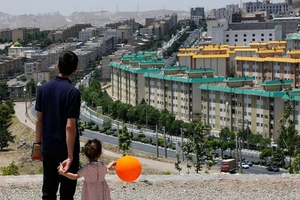
Some luxury apartments in northern Tehran are being advertised above the price of central Munich or Sydney: 25 billion rials, about $13,228, per square meter, according to Farhikhtegan newspaper, which examined the listings.

Eleven of 16 properties examined in the affluent neighborhoods of Aghdasiyeh and Elahiyeh were advertised above 10 billion rials ($5,291) per square meter, the Iranian daily said on Wednesday.

It has to be noted that the Tehran figures are sellers' asking prices for a small selection of high-end properties, not completed transactions, while the international figures represent broader city-center apartment prices.

Average asking prices across Tehran were around 2.3 billion to 2.5 billion rials ($1,217-$1,323) per square meter, with completed sales likely to be lower than advertised prices, Farhikhtegan said.

Monthly salaries for many Iranian workers are commonly put at around 200 million to 250 million rials, equivalent to roughly $105 to $132.

100%
A luxury house in northern Tehran

Multimillion-dollar properties in northern Tehran

A 500-square-meter property in Aghdasiyeh was advertised at 15 billion rials ($7,937) per square meter, giving it a total asking price of around 7.5 trillion rials ($3.97 million), according to the newspaper.

Another property measuring 600 square meters was offered at 18 billion rials ($9,524) per square meter, or approximately 10.8 trillion rials ($5.71 million).

  • Tehran rents hit three times many workers’ monthly pay

    Tehran rents hit three times many workers’ monthly pay

An 850-square-meter residential property marketed for redevelopment carried an asking price of 22 billion rials ($11,640) per square meter, putting the entire property at about 18.7 trillion rials ($9.89 million).

Prices in the sample climbed further in Elahiyeh. A 2,000-square-meter property marketed for redevelopment was advertised at 25 billion rials ($13,228) per square meter, equivalent to about 50 trillion rials ($26.46 million).

A 510-square-meter unit in a residential tower carried the same per-square-meter price, taking its total asking price to roughly 12.75 trillion rials ($6.75 million).

Tehran luxury prices overtake selected global cities

Farhikhtegan separately estimated luxury residential property in northern Tehran at $13,369 per square meter and compared that figure with average apartment prices across 30 cities.

Munich stood at $13,217 per square meter and Sydney at $13,067, according to the comparison. Shenzhen followed at $12,947, Taipei at $12,922 and Luxembourg at $12,793.

The Tehran estimate draws on luxury properties in some of the capital's most expensive neighborhoods, while the international figures cover broader city-center apartment markets.

International data focused specifically on luxury housing paints a different picture.

Knight Frank's Wealth Report 2026 defines prime property as the most desirable and expensive homes in a market, generally representing the top 5% by value.

Its data show that $1 million bought 42.1 square meters of prime residential property in Sydney at the end of 2025, implying a value of about $23,800 per square meter. The equivalent figures were about $30,400 in London, $29,500 in New York and $16,100 in Dubai.

Those figures put northern Tehran's listings in a different context. At an open-market exchange rate of around 1.89 million rials to the dollar, a property advertised at 25 billion rials per square meter was equivalent to about $13,228, below the prime residential values recorded by Knight Frank in Sydney, London, New York and Dubai.

The contrast highlights how Tehran can appear more expensive than Sydney when selected high-end listings in the Iranian capital are compared with average city-center apartments abroad, but cheaper when measured against Sydney's prime residential segment.

Tehran is not included in Knight Frank's international prime residential index, meaning no standardized ranking between the Iranian capital and the cities covered by its data is available.

  • Skyrocketing rents push Iranians back to parents’ homes, shared housing

    Skyrocketing rents push Iranians back to parents’ homes, shared housing

Dollar pricing reaches high-end property market

The rial's depreciation has also led some owners of expensive properties to advertise rents or sale prices directly in dollars, Farhikhtegan said.

  • Dollar-pegged pizza in Tehran points to a different kind of regime change

    Dollar-pegged pizza in Tehran points to a different kind of regime change

Previous listings cited by the newspaper included furnished apartments offered for monthly rents of roughly $1,100 to $4,200, with some landlords seeking dollar payments to limit the erosion of rental income as the rial loses value.

100%
A luxury house in northern Tehran

However, most residential sales and rental agreements remain denominated in Iran's currency.

The growing divide between incomes and housing costs has reshaped living arrangements for some Iranians, pushing tenants to cheaper cities or Tehran’s outskirts, back into their parents’ homes, or into shared apartments to split expenses.

Iran weighs attacks on military targets in Europe – FT

Aug 19, 2026, 07:56 GMT+1
100%
A police officer closes the entrance of RAF Akrotiri, a British sovereign base in Cyprus, which was hit by a drone overnight on March 2, 2026.

Iran has considered attacking military targets in Europe if US President Donald Trump escalates the war, the Financial Times reported on Wednesday, citing two insiders.

Iranian forces had assessed possible strikes against US assets in southeastern Europe, including Bulgaria, which approved the use of Bezmer Air Base by US refueling aircraft last month, the sources said.

Cyprus, where a British air base was hit by a drone in March, was also identified as a potential target for retaliation against a renewed US offensive, according to one of the sources.

Iran’s forces had separately examined attacks on subsea fiber-optic cables in the Strait of Hormuz if the conflict intensified, according to the report.

One source said Tehran was preparing to expand the war if Trump acted on threats to attack Iranian infrastructure. The other said Iran would place “no limits” on its response to US military action.

The sources described last month’s strike on a US base in Jordan, which killed three American service members, as Tehran’s most accurate long-range attack to date and evidence of its ability to hit targets farther afield.

“This was also a message to Europe: it can receive missiles, so it should know where it should stand in this war,” the first insider said. “A very big mistake, such as hitting our infrastructure, could make the war go beyond the region and reach Europe.”

Iran has not publicly confirmed the reported plans.

Military analysts told the FT that Iran could target US assets in southern and southeastern Europe with medium-range ballistic missiles, but questioned their accuracy and Tehran’s stockpile of longer-range weapons.

  • Rezaei named Iran’s top security chief and Khamenei representative

    Rezaei named Iran’s top security chief and Khamenei representative

  • All Mojtaba's men: Old guard shapes Iran’s new order

    All Mojtaba's men: Old guard shapes Iran’s new order

Iran’s recent elevation of hardliners to senior security and military posts has also deepened expectations within Tehran of renewed conflict, according to the report.

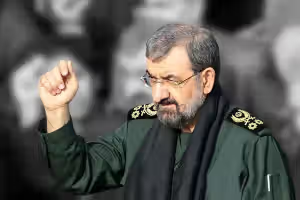
Referring to Mohammad Bagher Ghalibaf, Tehran’s chief negotiator, and Mohsen Rezaei, Iran’s top security chief, the second insider said Iran “is sending a clear message that if you don’t reach an agreement with Ghalibaf, you have to deal with Rezaei.”

“The message is: ‘Don’t be mad, because I’m madder than you are.’”

Meanwhile, negotiations over reopening the Strait of Hormuz remained stalled and Trump said there were no talks scheduled with Tehran.

The 60-day deadline is over. Now what does Trump do with Iran?

Aug 19, 2026, 02:56 GMT+1
•
Negar Mojtahedi
100%
US President Donald Trump seated next to Pete Hegseth

With the 60-day period set by the June US-Iran memorandum now over and no final agreement in place, Washington faces a choice between intensifying pressure, renewing major strikes or settling into a prolonged and unstable holding pattern.

President Donald Trump said Tuesday that there were “no talks or conversations going on, or scheduled” with Iran and that the US naval blockade remained in force.

A White House official told Semafor that Trump’s Truth Social post amounted to calling off talks with Iran for the foreseeable future.

The message appeared to contradict Jared Kushner, who just a day earlier described contacts with different parts of the Iranian government as unusually “robust” and spoke of “very positive and active conversations.”

The IRGC, meanwhile, has denied Trump’s claim that US officials were holding back-channel talks with Revolutionary Guard officials.

The conflicting accounts underscore one of the central uncertainties after the 60-day deadline passed: how much of the confrontation visible in public reflects what may be happening behind the scenes.

Interviews with three analysts and former officials suggest the end of the 60-day period does not necessarily leave Washington with a binary choice between launching another major offensive and walking away.

A third possibility is emerging: an extended and highly unstable holding pattern in which Washington intensifies economic pressure, maintains the blockade and avoids a return to the intensive military campaign seen earlier in the conflict, while retaining the option of renewed strikes.

Neither war nor peace

Former US Ambassador John Craig said he believes Trump has been persuaded by his military and foreign-policy advisers that further major military action would not necessarily resolve the conflict, particularly the nuclear issue.

“I think this is going to go on for quite a while, simply because there doesn't seem to be any other alternative,” Craig told Iran International.

Craig described that status quo as one in which the United States continues trying to keep ships, oil and goods moving through the Strait of Hormuz while Iran carries out lower-level attacks and probes against regional targets, all without a meaningful diplomatic process capable of producing an agreement.

“So no peace,” Craig said. “Not very high level of attacks and kinetic actions, but still no agreement and no process — even more important, no process to find an agreement.”

But Craig stressed that what is visible may tell only part of the story.

He said it is impossible to know what preparations could be taking place during the apparent lull, including whether new targeting packages are being assembled, intelligence operations are underway or assistance is being provided to people inside Iran.

“We don't know everything that is going on,” Craig said.

Ilan Berman, senior vice president of the American Foreign Policy Council, similarly said the current situation could persist well beyond the end of the 60-day period.

“I have the growing feeling that this status quo could persist for some time,” Berman told Iran International.

One reason, he said, is domestic US politics. With midterm elections approaching, the opportunity for attempting a quick and decisive conclusion to the conflict may already have passed.

Instead, Washington may increasingly conclude that time is on its side.

Berman said countries around the Persian Gulf, Central Asia and elsewhere are also using this period to build infrastructure and alternative transport corridors aimed at reducing vulnerabilities exposed by the conflict, particularly the dependence of global trade on the Strait of Hormuz.

“This isn't a great situation,” Berman said, “but time ends up working for Washington and not for Tehran.”

Can economic pressure break the stalemate?

Iran's economy is already under extraordinary pressure.

Iran's annual inflation reached 66% in July, while food prices rose 128% year-on-year, according to the Statistical Center of Iran, severely eroding household purchasing power.

Those pressures are being compounded by sanctions, the naval blockade, disruption to Iran's energy trade and the prospect of another round of US economic measures.

For Washington, that raises the possibility that time itself, combined with escalating economic pressure, could accomplish what another major military offensive may not.

Berman described Iran's economic crisis as potentially “the transformative variant,” arguing that the danger for the government grows as the rial loses value, purchasing power collapses and basic foods become increasingly unaffordable.

“This is not a sustainable condition,” he said.

But he cautioned that economic deterioration does not automatically produce political upheaval. Tehran can attempt to soften the impact through currency measures, trade arrangements and other economic interventions.

What has changed, Berman argued, is the nature of the leadership confronting those pressures. He described the current system as increasingly rigid and militarized, leaving it potentially less willing to prioritize domestic economic development.

Casey Babb, a senior fellow and director at the Macdonald-Laurier Institute, described the current moment as a “very uncertain and fragile holding pattern.”

He said Washington could combine substantially greater economic pressure with military capabilities it has so far chosen not to fully deploy.

But Babb cautioned that economic warfare carries consequences far beyond Iran's leadership.

“There is a human cost to that as well,” he said. “Innocent Iranians are going to suffer from that as well and already are.”

Babb said the United States clearly does not want a costly conventional ground war, while Iran's leadership has shown little indication that it is prepared to make the concessions Washington is seeking.

“It will take something probably quite significant for the regime to behave differently,” Babb said.

When does the shooting start again?

None of the analysts interviewed for this story suggested the current lull means the military confrontation is over.

Berman went further, saying he expects US strikes against Iran to happen again.

“The question to me is not whether or not there are going to be strikes again, because I think there will be,” he said.

The more important question, he argued, is whether future attacks remain limited actions designed to restore deterrence — what he described as “knuckle wraps” — or become the beginning of another major phase of the war.

Berman described the confrontation as an increasingly prolonged battle of wills, contrasting it with what he said Washington had initially envisioned as a shorter conflict similar to its campaign in Venezuela.

That creates another danger.

Unlike during the Cold War, he said, Washington and Tehran lack reliable lines of communication specifically designed to keep tactical confrontations from escalating into something much larger.

The result may be neither war nor peace.

Berman compared the current moment to the end of the second act of a three-act play — the point when the action temporarily slows before the pace picks up again.

But the apparent lull may be deceptive.

As Craig emphasized, intelligence operations, military targeting and other preparations could be taking place beyond public view. Diplomatic contacts may also be more complicated than the conflicting public statements from Washington and Tehran suggest.

The visible status quo could persist for some time.

What is happening underneath it — and what eventually breaks it — is much harder to know.”

Leaked audio: Iran's Basij brace for new protests and fear being named online

Aug 18, 2026, 11:47 GMT+1
100%
File photo of an IRGC cyber unit at a computer operations center in Iran.

Officials of Iran's Basij militia can be heard on a leaked recording weighing the risk of a new round of protests and the danger that members will be identified online, a rare glimpse of the anxiety inside the force the state sends against demonstrators.

In the audio recording of a closed meeting of the Media and Cyberspace Headquarters in Pakdasht, Tehran province, officials discuss possible new demonstrations, the online identification of Basij members and plans to track anti-government activity and individuals on social media.

The meeting was held amid recent developments including the killing of Hamidreza Rajabzadeh, a Basij member and government-aligned religious singer, as well as growing concern among officials over the role and influence of social media.

The Media and Cyberspace Headquarters is made up of cyber personnel and government supporters operating under the supervision of the Revolutionary Guards.

The concerns raised at the meeting echoed recent remarks by Ebrahim Garmabdari, commander of the Revolutionary Guards in Pakdasht, who said government opponents were using sanctions, infiltration and social media to target the Islamic Republic’s governing structure.

Earlier this week, Iran’s supreme leader appointed Hossein Taeb, a veteran intelligence official, to lead the Basij paramilitary forces, giving the former protest crackdown figure a mandate to expand the paramilitary force’s grassroots intelligence network and use of new technologies.

Concerns over pressure on Basij members

Participants of the meeting raised concerns about mounting social and psychological pressure on government-aligned forces.

Referring to Rajabzadeh’s recent killing, the meeting’s lead speaker described the incident as a warning that pro-government figures could be targeted both offline and online.

He said the pressure was intended to make Basij members, mosque clerics and local base commanders regret or feel ashamed of their affiliation, potentially pushing them to adopt opposition views to avoid social rejection.

Earlier in the meeting, a participant identified as Mr. Shahbazi said the underlying tensions had not subsided and warned that public protests against the government and confrontation with security forces could continue.

Concerns over AI and exposure of Basij members

A significant part of the discussion focused on possible breaches of security systems and the exposure of Basij personnel.

The lead speaker warned that opposition networks could use artificial intelligence to identify Basij members from group photographs and obtain personal details about them for possible retaliation.

He also voiced distrust of participants’ mobile phones, suggesting that apps such as ChatGPT could be listening to their conversation in real time.

Social media blamed for unrest and economic problems

The discussion also turned to social media, with the speaker criticizing filtering policies while also blaming the internet and platforms such as Instagram for a range of political, social and economic problems.

He said blocking Instagram, Telegram and WhatsApp had only increased public anger, but described online platforms as a major factor behind unrest, rising prices, cultural change and even the election of relatively moderate Masoud Pezeshkian.

He also said foreign intelligence services including Mossad were exploiting economic hardship to recruit young people and obtain information through online platforms by offering incentives such as free internet access, servers and VPN configurations.

A 2025 survey by the Iranian Parliament Research Center indicates that the vast majority of Iranians (81%) rely on VPNs to bypass internet censorship.

Order to monitor anti-government activity

The meeting also included what participants described as a “top secret” directive instructing cyber personnel to monitor platforms including Instagram and document protest-related and anti-government activity by residents of Pakdasht.

The meeting leader said the monitoring should apply without exception, instructing personnel to take screenshots even when close relatives posted protest-related content.

He told them to send the screenshots through the Iranian messaging app Eitaa along with identifying information including the person’s father’s name, national ID number, phone number and workplace address so action could be taken against them.

Warning of protests over fuel prices

Toward the end of the meeting, a Pakdasht IRGC cyber official warned of the possibility of widespread and violent protests in the near future, including over increases in fuel prices.

He said that in the “next unrest,” even people who did not own vehicles could take to the streets because of accumulated anger and attack targets including banks, fire trucks, ambulances and, in particular, Basij members.