Iran Central Bank says US-Israeli actions triggered website security disruption

Iran’s Central Bank said on Saturday that “hostile US and Israeli military and cyber actions” led a foreign provider to revoke security certificates for some of its websites, causing SSL warnings for users. However, it denied its infrastructure had come under cyberattack.
The bank said the technical security certificates for some websites linked to the Central Bank had been revoked by the unnamed foreign provider.
As a result, users may encounter SSL certificate errors when attempting to access the affected websites, it said.
The Central Bank stressed that the disruption was not caused by a cyberattack on its infrastructure and said all of its services remained operational.
It said measures were underway to introduce alternatives and resolve the security certificate issue.
Until the problem is fixed, the bank said users could bypass the security warning displayed by their browsers to access the services they need.





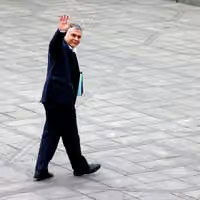
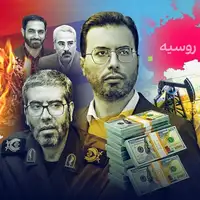


As Iran confronts military pressure abroad and mounting economic strain at home, signs are emerging that the Islamic Republic is increasingly turning its attention to another potential threat: renewed unrest on its own streets.
While veteran hardliners are returning to key positions overseeing forces responsible for domestic repression, cobblestones are being ripped out of historic pedestrian areas and replaced with asphalt.
Municipal officials have described the work as traffic management, but Iran International reporter Mehdi Sepahvand’s reporting suggests it could make the areas easier for security forces to penetrate and control during unrest.
Analysts say the developments, against a backdrop of uncertainty over the country’s new leadership, suggest the state is thinking beyond the current war to the possibility of another confrontation at home.
The return of Hossein Taeb, one of the Islamic Republic’s most feared security figures, to command the Basij is perhaps the clearest signal.
Omid Memarian, a senior Iran analyst at the think tank DAWN, said Taeb’s return shows the state is prioritizing control of the population.
‘An undeclared coup’
“They are very much nervous, concerned about people and their demands,” Memarian told Eye for Iran, adding that the leadership understands “the domestic situation can explode at any moment.”
Taeb, Memarian said, was brought back not to reconcile with Iranians, but to consolidate loyalists and signal that authorities are prepared to “crush any dissent.”
For Kamran Bokhari, a senior resident fellow at the Middle East Policy Council and strategic forecaster, the reshuffle raises a more fundamental question: who is making these decisions?
With Iran’s new Supreme Leader remaining unseen and unheard publicly, Bokhari questioned the extent of his authority and argued that a small group within the security establishment may effectively be running the system.
“The point is who is making these appointments?” he said.
Bokhari went further, describing the emerging arrangement as an “undeclared coup” by the Revolutionary Guards, in which he believes the IRGC is consolidating authority while preserving the appearance of a functioning constitutional system.
Jason Brodsky, policy director at United Against Nuclear Iran, offered a different reading, seeing a diffusion of power in the absence of a visible Supreme Leader capable of imposing decisions across the system.
Survival is not stability
Former CIA Iran specialist Mark Fowler said the Islamic Republic has absorbed severe military damage without collapsing.
“Surviving is winning for the Iranian regime right now,” Fowler told Iran International’s Eye for Iran.
But survival does not mean stability. With Washington seeking to intensify economic pressure, Fowler said there was no single inflation rate or economic threshold at which unrest became inevitable.
“It’s just a question of who cries uncle first,” he said.
Authoritarian governments can tolerate considerable hardship among their populations because their leadership is insulated from much of it, Fowler said.
“They’re more than happy to allow people to suffer,” he added.
Economic hardship does not automatically produce revolt. But the longer it persists, the more consequential the state’s ability to contain discontent becomes.
Beneath people’s feet
Perhaps the most striking sign cited by those who see preparations for future unrest can be found not in the leadership compound, but beneath people’s feet.
In central Tehran, cobblestones are being removed from historic pedestrian areas and replaced with asphalt.
The changes affect parts of central Tehran around District 12 and the Grand Bazaar, historically an important center of political mobilization, as well as areas near universities where students have repeatedly participated in protests.
Cobblestones can be dislodged and used as projectiles. Pedestrian streets also contain bollards, benches, trees and restaurant tables that can impede motorcycles and security vehicles while giving protesters places to congregate or seek cover.
Turning them into vehicle-accessible thoroughfares could change that equation.
“By changing these pedestrian zones into thoroughfares for cars, they are actually paving the way for swift action during protests,” Sepahvand said.
The changes, he added, create “plain sight and direct shooting range” for security forces.
Sepahvand said authorities have also put pressure on restaurants and gathering places where Iranians, including women appearing without mandatory hijab, have carved out small spaces of social freedom.
Those spaces allow communities to form, he said, something authorities understand can eventually translate into collective action.
“The government is sure that they are going to be facing more and more protests,” Sepahvand said.
The Islamic Republic is bringing veterans of repression back into senior positions, positioning the Basij for a greater domestic role and, according to Sepahvand’s reporting, altering public spaces in ways that could make future protests easier to suppress.
The Islamic Republic has survived the war so far. Its next test may come not from across its borders, but from the streets at home.
Iran says its non-oil trade has fallen by around 30% since the war began, but figures from several of its biggest trading partners point to far steeper declines in some of the country’s most important commercial relationships.
Trade with China has fallen to roughly a quarter of last year’s level by one measure, while commerce with Turkey, India and the European Union has also contracted sharply as war and disruption in the Strait of Hormuz reshape Iran’s foreign trade.
Mohammad-Sadegh Ghanadzadeh, a senior official at Iran’s Trade Promotion Organization, said both non-oil exports and imports fell by roughly 30% during the first four months of the current fiscal year, from March 21 to July 22.
The government has stopped regularly publishing detailed foreign trade statistics since the war began, making a fuller assessment difficult.
Iranian customs data show the country recorded slightly more than $34 billion in non-oil trade during the same four-month period last year, including $15 billion in exports.
China trade plunges
China is Iran’s largest trading partner, accounting for roughly one-third of the country’s non-oil foreign trade.
Chinese data put non-oil bilateral trade at around $10 billion in 2025—substantially lower than Iranian figures, in part because the two countries classify and record parts of their trade differently, including sanctioned Iranian commodities.
According to Chinese customs records, trade with Iran totaled less than $823 million during the first four months of the war, from March through June. That is roughly one-quarter of the level recorded during the same period a year earlier.
The disruption has also sharply increased transportation costs.
Majidreza Hariri, chairman of the Iran-China Chamber of Commerce, said transporting goods from China to Iran by sea or land now costs four times as much as before the war, with shipping a container costing as much as $13,000.
Major partners hit harder
Trade with several of Iran’s other major partners has also contracted sharply.
The United Arab Emirates, Iran’s second-largest trading partner, has largely halted trade with Tehran. Before the war, annual trade between Iran and the UAE stood at around $27 billion, about 80% of it Emirati exports to Iran.
The precise impact on trade with Iraq, Iran’s third-largest trading partner, remains unclear. But official data from Turkey, its fourth largest, show Turkish exports to Iran fell by almost half between March and June to around $716 million, while imports from Iran dropped 37% to $907 million.
India has recorded a similar decline. Its exports to Iran fell by around 60% during the first four months of the war to approximately $150 million.
Indian imports from Iran moved sharply in the opposite direction, reaching around $1 billion in the first half of the year — four times the level recorded during the same period last year—after India bought several shipments of Iranian crude oil and liquefied petroleum gas.
Health Minister Mohammad-Reza Zafarghandi recently said India, Iran’s largest supplier of pharmaceutical raw materials, had stopped shipments after the IRGC closed the Strait of Hormuz.
He said India had made the resumption of pharmaceutical exports conditional on free passage for Indian vessels through the waterway.
Where has the trade gone?
Taken together, available data suggest Iran’s trade with several of its largest established partners has contracted substantially more than the 30% overall decline reported by Tehran.
The discrepancy suggests commerce with other countries may have partly cushioned those losses.
Russia, Pakistan, Iraq, Afghanistan and Central Asian states are among the possible destinations, though the absence of regularly published Iranian customs figures makes it difficult to establish how much trade has shifted or where.
The broader picture nevertheless shows the economic fallout from the war extending well beyond Iran’s oil exports, weakening some of Tehran’s most important commercial relationships even as the full extent of the shift remains obscured by the lack of detailed Iranian data.
Sanctions can make Iran’s military and nuclear activities costlier and more difficult but cannot bring down the Islamic Republic on their own, former US Treasury official and weapons procurement expert Kerri Bitsoff told Iran International.
“Sanctions can't topple a regime on their own. That's not what they're for,” said Bitsoff, who previously worked at the Treasury Department’s Office of Foreign Assets Control, the agency responsible for administering and enforcing US economic sanctions. “They are intended to increase pressure.”
For Bitsoff, who worked on nonproliferation and weapons procurement at OFAC and is now executive director of investigations at TANGOS, the distinction is central to understanding what decades of US sanctions against Iran can and cannot accomplish.
Rather than expecting sanctions themselves to produce political change, she said their effect should be measured by how much they increase the cost and difficulty of the activities Washington is trying to constrain.
“They make everything that the regime does related to those more expensive, slower and more difficult to obtain,” she said, referring to activities such as Tehran’s nuclear and weapons programs. Sanctions, she added, are also intended “to set conditions for something else to happen” and “can't be alone.”
That argument comes after years in which successive US administrations have expanded, eased or more aggressively enforced different layers of sanctions against the Islamic Republic. Washington restored broad nuclear-related sanctions after withdrawing from the 2015 nuclear deal in 2018, targeting areas including Iran’s banking, energy and shipping sectors. President Donald Trump launched a renewed “maximum pressure” policy in February 2025, directing the Treasury Department to pursue a “robust and continual sanctions enforcement campaign” aimed at denying Tehran and its allied groups access to revenue.
Bitsoff said those measures should not be judged simply by how many Iranian individuals, companies or organizations Washington places on sanctions lists.
Enforcement matters more than numbers
“Numbers are not a good measure of the impact of sanctions and whether they are important,” Bitsoff said. “You can sanction thousands of individuals and entities within Russia, within Iran, within North Korea, and that's not really the answer.”
The more meaningful test, she said, is whether sanctions change the behavior of actors outside the targeted country — the banks, buyers, suppliers, shipping companies and intermediaries that allow sanctioned governments to continue obtaining money and material.
That often requires Treasury officials to identify specific weak points in complex networks rather than simply placing restrictions on an entire sector. Bitsoff described sanctions policy as operating on two levels: broad measures designed to restrict areas such as oil revenue or access to the financial system, and day-to-day operational measures targeting individual transactions, companies and procurement networks.
Weapons procurement provides one example of how that pressure works. Sanctions may not stop Iran from producing a missile or drone, Bitsoff said, but they can increase the cost of securing the components needed to build them and force manufacturers to rely on inferior alternatives.
“You raise the cost of procuring parts and components,” she said. “You force them to get worse parts and components, so their finished weapons are less effective.”
The effects can take years to become visible, she said, and may eventually be measured in missile failure rates or the ability of adversaries to jam drones and develop other countermeasures.
Iran’s reliance on foreign components has remained a focus of US sanctions. Treasury actions in 2025 and 2026 targeted networks in China, Hong Kong, the UAE and elsewhere accused of supplying Iran with drone components, missile propellant ingredients and other military goods. In June, OFAC sanctioned another group of China- and Hong Kong-based individuals and companies it said had supported weapons procurement for the Revolutionary Guards and Iran’s defense ministry.
Oil sanctions work differently, Bitsoff said. Rather than necessarily preventing a barrel of Iranian crude from reaching a customer, the restrictions can make every stage of that journey more expensive.
An Iranian shipment may have to pass through several intermediaries, rely on aging tankers carrying higher insurance costs, undergo ship-to-ship transfers and be sold at a discount to a limited pool of buyers willing to accept the risk of dealing in sanctioned oil. Ship managers, operators and others involved in the trade may also demand premiums because they risk becoming sanctions targets themselves.
“By the end of it,” Bitsoff said, Iran can be forced to absorb a “huge discount,” meaning export volumes alone do not provide a complete measure of whether sanctions are working.
The US Treasury has described many of the same methods in its recent actions against Iran’s oil trade, citing front companies, intermediary brokers, ship-to-ship transfers, falsified documents and manipulation of vessel identities. In April, Treasury said China was buying about 90% of Iran’s oil exports and that independent Chinese refineries, commonly known as teapots, accounted for most of those purchases.
Bitsoff said enforcement can therefore be thought of as a dial that Washington can turn up or down even when the underlying sanctions remain on the books.
She pointed to the period after the United States left the nuclear agreement in 2018, when tougher enforcement drove major buyers with exposure to the US financial system away from Iranian oil.
She contrasted that with the early years of the Biden administration, when she argued Washington eased enforcement as it sought to revive negotiations with Tehran, allowing Iran’s oil trade with China to adapt around smaller buyers with less exposure to the US financial system.
“The whole idea is to change behavior,” she said. “You don't wanna just sanction something and then walk away.”
Without continued enforcement, she said, companies treat a designation as a one-time event and find ways to adjust their operations around it. “If you don't keep up with that, if you don't make that enforcement visible, people are just going to keep doing what they want to do.”
Iran's sanctions evasion machine
Keeping up has become more difficult because Iran has spent years developing mechanisms to circumvent the restrictions imposed on it, Bitsoff said, describing a system largely developed by the Revolutionary Guards and the broader state during the intense sanctions pressure of the early 2010s.
“They have a sanctions evasion machine that works pretty well,” she said.
The core of that system has remained relatively consistent, relying on shadow banking, buyers willing to trade with Iran and efforts to avoid transactions vulnerable to the US financial system. But Bitsoff said Tehran has repeatedly adapted the mechanics when new opportunities appear, from deceptive tanker practices and cash smuggling to newer methods involving cryptocurrency.
“The pattern I can discern is that they'll just use anything at their disposal to evade sanctions,” she said.
China now occupies an especially important place in that system, both as the dominant destination for Iranian oil and as a source of components used by Iran’s military industries. The Treasury Department has increasingly targeted Chinese refiners, ports, shipping companies and procurement networks as part of the maximum-pressure campaign, including a June action against China- and Hong Kong-based actors accused of facilitating weapons purchases for the IRGC and defense ministry.
“Most evasion of sanctions, especially related to Iran, happens through China,” Bitsoff said. “Those are the front companies that move money. They're the buyers of oil. They're the suppliers of weapons components.”
That makes pauses in enforcement against China particularly significant, she argued, because companies and intermediaries watch US actions when deciding how much sanctions risk they are prepared to accept.
Bitsoff said this helps explain why sanctions cannot be regarded as an on-off mechanism capable either of completely stopping Iran’s activities or, at the other extreme, being dismissed as ineffective because those activities continue. Their purpose, in her view, is degradation: reducing revenues, increasing costs and making military and nuclear programs harder to sustain.
That pressure also has a domestic dimension, she said, because Iran’s leadership must contend with economic mismanagement while the public sees resources being directed toward military programs and allied armed groups rather than economic opportunity at home.
“The population knows that it's funneling money not to them, not to economic growth, not to opportunities, but back to its proxies, back to its nuclear program, back to its weapons program,” Bitsoff said.
But she stopped short of arguing that economic pressure can determine the Islamic Republic’s political future. Instead, she said sanctions can help establish the conditions in which other forces operate, with political change ultimately depending on Iranians themselves.
“The Iranian people are the ones that have to use that pressure,” Bitsoff said, adding that alongside sanctions, the United States should be “thinking of any possible way we can support that.”
President Donald Trump said he may soon declare the Strait of Hormuz US territory as shipping through the waterway nearly stopped and Tehran insisted it alone would decide when the strait opens or closes.
The Strait of Hormuz was unusually quiet Friday, with shipping traffic near a standstill. Hours later, as the day turned to Saturday in Iran, President Donald Trump said in New York that he may soon declare the strategic waterway “a territory of the United States,” drawing an immediate assertion from Tehran that the strait remains Iranian and under its command.
“Pretty soon I’ll be declaring the Strait of Hormuz a territory of the United States,” Trump said during remarks at the Police Academy Center for Training and Intelligence.
Deputy Foreign Minister Kazem Gharibabadi responded that Iran would decide when the strait opened or closed and would continue what he described as its blockade until Washington accepted its “strategic defeat.”
“The Strait of Hormuz has been Iranian, is Iranian, and will remain Iranian,” Gharibabadi wrote on X, adding that the waterway would be “closed and opened under Iran’s command.”
Hormuz traffic nearly stops
The competing claims over the waterway came as actual traffic through it fell to extremely low levels.
Kpler data showed only two vessels passed through the Strait of Hormuz on Friday, with no crude oil shipments visible.
Nine vessels crossed Thursday and five Wednesday, compared with an August average of 12. More than 130 ships traversed the strait daily before the US-Israeli war on Iran began in February.
US Central Command said Friday that its forces had redirected 62 commercial vessels, disabled three and boarded two as of Aug. 14 while enforcing the US blockade against Iran.
Secretary of War Pete Hegseth said Thursday that the United States could maintain that blockade “indefinitely” by rotating ships in and out.
Oil prices also rose Friday as faltering efforts to end the Iran war and the prospect of an extended blockade kept geopolitical risks elevated. Brent crude gained 0.7% to $87.68 a barrel, while US crude rose 0.3% to $81.49.
Pressure grows as talks remain unsettled
Washington also kept up its economic pressure on Tehran. Trump highlighted Treasury Secretary Scott Bessent’s remarks on “unprecedented economic isolation” for Iran by sharing a Newsmax report on Truth Social. Bessent said Thursday that the United States would apply measures against Iran that had “never been seen.”
Canada added sanctions Friday on five Iranian officials over activities it said obstructed navigation rights in and around the Strait of Hormuz. Global Affairs Canada said the measures targeted senior officials, including members of the IRGC, involved in military, legal and communications activities linked to threats against the waterway. Tehran, meanwhile, stopped short of committing to renewed negotiations.
Foreign Minister Abbas Araghchi said Friday that no decision had been made to resume talks with Washington, semi-official ISNA reported.
He said Qatar and Pakistan were continuing to exchange messages and remain in contact with Iran, but stressed that this “does not mean negotiations.”
Araghchi also said the Islamabad memorandum of understanding referred to an “end to the war,” rather than a ceasefire, rejecting the idea that there was a 60-day truce requiring an extension. He said previous diplomatic channels were no longer effective and that Iran was working on a temporary path that could later develop into a final framework.
Pakistan continued to push implementation of the June 18 Islamabad memorandum, with Foreign Minister Ishaq Dar calling it the “only way forward.” Iraq also said Friday it was negotiating with both the United States and Iran to secure passage of its oil exports through Hormuz.
The waterway itself was nearly still Friday, but the dispute over who controls it was not. Washington is sustaining military and economic pressure, Tehran is asserting authority over passage through the strait, and neither side has yet moved back into formal negotiations.
Tehran is likely to wake Saturday to a new round of official and media reactions to Trump’s remarks on Hormuz, just as much of the West heads into a summer weekend.
The aborted move in Kerman Province revived one of the most politically explosive questions in Iran: how to curb gasoline consumption without repeating the upheaval that followed the last major nationwide price increase in 2019.
Authorities in Kerman announced Thursday that gasoline consumed beyond the existing monthly quota would be sold at 872,000 rials per liter, roughly 17 times the current non-quota price. The measure was halted within hours, fueling speculation that it had been intended as a test for broader changes.
Under the current system, private-car owners receive 60 liters a month at 15,000 rials per liter and another 50 liters at 30,000 rials. Once that allocation is exhausted, gasoline costs 50,000 rials per liter.
The last nationwide gasoline price increase, imposed without warning in November 2019, triggered widespread protests and a deadly crackdown.
After the Kerman scheme was withdrawn, Esmail Saghab-Esfahani, vice president and head of the Organization for Optimization and Strategic Energy Management, appeared on state television to assure citizens that the government had no plan to increase gasoline prices.
Fars news agency, which is affiliated with the Revolutionary Guards, cited a government source Friday as saying an increase had been ruled out for now.
Mohammad-Saeed Ahadian, an adviser to parliament speaker Mohammad-Bagher Ghalibaf, said the heads of the three branches of government had decided against an increase and were considering alternatives.
A widening gasoline deficit
The retreat does little to resolve the problem that prompted the debate: Iran is increasingly consuming more gasoline than it produces.
Saghab-Esfahani said gasoline consumption had reached around 135 million liters a day, compared with domestic production of approximately 121 million liters. The daily shortfall must be covered through imports or strategic reserves.
Saghab-Esfahani also said the recent war had damaged some gasoline production capacity and made imports through southern Iran more difficult. He warned that the gap between production and consumption could reach 70 million liters a day within three years.
Increasing production enough to address the problem would require between $13 billion and $30 billion in investment, he said, money the government cannot afford.
Signs of tightening supply have already emerged, with images circulating on social media in recent days showing long lines of vehicles at fuel stations.
Searching for an alternative
With economic growth below zero and access to foreign currency under pressure, the government faces a choice between raising prices and fundamentally changing how gasoline subsidies are distributed.
One alternative gaining support would shift subsidized gasoline quotas from vehicles to individuals, an idea long promoted by hardliners and associated with former presidential candidate Saeed Jalili.
A version of the scheme was briefly tested on Kish Island under President Ebrahim Raisi before being abandoned.
Supporters argue that the current system disproportionately benefits wealthier households with multiple cars, while more than 40% of Iranian households without private vehicles receive no direct benefit.
Under the proposed model, individuals would instead receive gasoline allocations linked to their national ID or bank accounts and could use or sell them.
Economist Sadegh al-Hosseini, a prominent supporter of the proposal, argued that control over the subsidy should effectively be transferred from the state to citizens.
“Gasoline quotas should be given to people for free based on production, and people themselves should determine the price by trading their quotas,” he wrote on X.
Divisions over reform
The abrupt launch and cancellation of the Kerman scheme has exposed wider divisions within Iran’s political establishment over how to address the fuel problem.
Saghab-Esfahani supports linking gasoline quotas to national ID numbers rather than simply raising prices. His intervention drew criticism from reformist figures who warned of the political risks surrounding any changes to gasoline policy.
Abdollah Ramezanzadeh, spokesman for former President Mohammad Khatami’s government, criticized the handling of the issue in a post addressed to Pezeshkian.
“Entrusting the determination of energy prices—the most political and perhaps the most security-sensitive economic issue in the country—to someone with minimal political and security experience and no experience in crisis management has caused the current confusion over gasoline prices,” he wrote.
“The society is agitated and you have no room for mistakes.”
Ali Gholhaki, a political activist close to Ghalibaf, also pointed to resistance elsewhere in the establishment.
“Using pricing tools under the current circumstances to control fuel consumption is highly sensitive, and some important institutions in the country are also opposed to it,” he wrote.
The Kerman reversal leaves the underlying problem untouched. Iran has a widening gasoline deficit, but the most obvious corrective tool—higher prices—remains perilous under the long shadow of the 2019 upheaval.