• العربية
  • فارسی
Brand
  • Iran Insight
  • Politics
  • Economy
  • Analysis
  • Special Report
  • Opinion
  • Podcast
  • Iran Insight
  • Politics
  • Economy
  • Analysis
  • Special Report
  • Opinion
  • Podcast
  • Theme
  • Language
    • العربية
    • فارسی
  • Iran Insight
  • Politics
  • Economy
  • Analysis
  • Special Report
  • Opinion
  • Podcast
All rights reserved for Volant Media UK Limited
volant media logo

Iran-aligned Iraqi group sends $400 million monthly to Iran

Aug 12, 2026, 19:19 GMT+1

An Iran-aligned Iraqi armed group transfers about $400 million in cash to Iran each month by truck, Rudaw reported Wednesday, citing a member of parliament’s Security and Defense Committee who attended a meeting with Prime Minister Mohammed Shia al-Sudani.

The lawmaker said the group collects dollars from Iraqi businesses and institutions for Iran, adding that a single monthly shipment amounts to about four tons of cash, according to the report.

The issue was discussed at a meeting between Sudani and members of the parliamentary committee, according to Rudaw.

Most Viewed

US ship strike tests Tehran’s narrative of victory in Hormuz
1
INSIGHT

US ship strike tests Tehran’s narrative of victory in Hormuz

2
ANALYSIS

Iran loses ground in oil market as neighbors rebound

3
INSIGHT

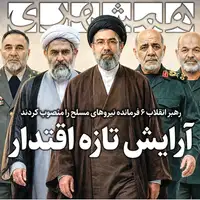
All Mojtaba's men: Old guard shapes Iran’s new order

4
INSIGHT

Iran hardliners tout offensive posture as Khamenei reshapes military command

5

US strikes Iran-bound ship as mediators signal Hormuz breakthrough

Banner
Banner

Spotlight

  • Iran loses ground in oil market as neighbors rebound
    ANALYSIS

    Iran loses ground in oil market as neighbors rebound

  • US ship strike tests Tehran’s narrative of victory in Hormuz
    INSIGHT

    US ship strike tests Tehran’s narrative of victory in Hormuz

  • Iran hardliners tout offensive posture as Khamenei reshapes military command
    INSIGHT

    Iran hardliners tout offensive posture as Khamenei reshapes military command

  • The Kinglet’s rookie mistake: how an Iranian hacker was caught at US request
    SPECIAL REPORT

    The Kinglet’s rookie mistake: how an Iranian hacker was caught at US request

  • Rising costs leave Iranians 'nothing' for a coffee
    VOICES FROM IRAN

    Rising costs leave Iranians 'nothing' for a coffee

Banner
•
•
•

More Stories

Iran could prolong war to outlast Trump, IRGC adviser says

Aug 12, 2026, 19:08 GMT+1
100%
Senior Iranian commander Mohammad Reza Naghdi speaks to PBS

A senior adviser to the commander of Iran's Revolutionary Guards said Tehran could deliberately prolong the war until US President Donald Trump leaves office to wear down its adversaries and deter future attacks.

"One way is to prolong this war until we get to the next term of the presidency and cause attrition, so that if anyone else wants to attack Iran, they will know there is a cost," Mohammad Reza Naghdi told PBS NewsHour on Tuesday.

Naghdi made the comment after being asked directly whether Iran's objective was to drag out the war and wait until Trump was out of office.

He said Iran needed to establish enough deterrence to prevent future attacks.

"We have to attain deterrence so that the enemy never dares to attack us, so we can live with security," he said.

Civilian ships in Strait of Hormuz

Naghdi also defended attacks by Iranian forces on non-military vessels attempting to cross the Strait of Hormuz.

Asked why Iran had attacked civilian ships on at least two occasions this week, Naghdi said Tehran needed to control shipping routes during wartime.

"When we are at war, vessels need to pass through a region we can control," he said. "When they leave an area that we control, it could be that they're transporting supplies for the enemy."

Asked whether attacking civilian vessels violated international law, Naghdi said Iran had the right to control routes it viewed as a threat during a war.

"When you're in a state of war, any thoroughfare deemed to be a threat, we can control it," he said.

His comments came as shipping through the Strait of Hormuz has fallen sharply amid the conflict and attacks on commercial vessels.

Khamenei absence due to security, Naghdi says

Naghdi was also asked why Supreme Leader Mojtaba Khamenei had not appeared publicly during the war.

"Naturally, it is due to security," Naghdi said when asked whether his absence was for security reasons. "Certainly, there is no other reason."

Asked whether he had personally seen Khamenei, Naghdi declined to answer.

"Let's leave this matter alone," he said.

PBS said it asked the White House for a response to Naghdi's remarks.

"It would be wise for Iran to agree to a deal," the White House said in a statement cited by PBS, adding: "Otherwise they know what will happen."

Iran loses ground in oil market as neighbors rebound

Aug 12, 2026, 18:14 GMT+1
•
Dalga Khatinoglu
100%
The P4 offshore platform at Iran’s Reshadat oil field in the Persian Gulf, completed in June 2026.

OPEC oil production continued its sharp post-war recovery in July, but Iran remained a notable exception, with output still around a quarter below pre-war levels and its oil revenues taking an even steeper hit.

Iran produced 2.478 million barrels per day (bpd) in July, up just 26,000 bpd from June, according to OPEC’s latest monthly report.

By contrast, Saudi Arabia increased output by about 590,000 bpd, Iraq by 665,000 bpd and Kuwait by 393,000 bpd. Combined crude production among OPEC members rose by about 1.66 million bpd in July to 23.63 million bpd.

Iran’s export revenues have recovered even more slowly.

Commodity intelligence firm Kpler told Iran International that daily deliveries of Iranian crude to Chinese refineries fell from more than 1.7 million bpd in March and April to less than 500,000 bpd in July.

Kpler said Iran offered its crude at a discount of more than $5 a barrel in July, while transportation costs exceeded $10 a barrel. Once payments to intermediaries were included, it estimated that at least 25% of the nominal value of Iran’s oil sales was lost before the proceeds reached the country.

At July’s export volumes, Kpler estimated that crude delivered to China had a nominal value of about $1.2 billion. That compares with average monthly oil revenues of about $3.8 billion last year, according to OPEC estimates.

China has long been overwhelmingly the largest destination for Iranian crude, leaving Tehran particularly exposed to changes in purchases by Chinese refineries.

Iran struggles to restore output

Iranian production fell by nearly 1 million bpd between the beginning of the Middle East war and May, according to OPEC figures.

Over the following two months, it recovered by only about 200,000 bpd, reaching 2.478 million bpd in July. The pace of that recovery slowed sharply last month, with the 26,000-bpd increase leaving production roughly a quarter below pre-war levels.

The figures contrast with the much faster restoration of production elsewhere in the Persian Gulf following the severe disruptions caused by the war.

Saudi Arabia, Iraq and Kuwait accounted for much of OPEC’s July increase as producers took advantage of the temporary ceasefire to restore output. Despite the rebound, regional production remains well below levels before the conflict, with large volumes of Persian Gulf supply still offline.

The contrast is even sharper with the United Arab Emirates, which left OPEC in May and has since sharply expanded production. OPEC continues to track UAE output in its monthly report despite its departure from the group.

OPEC estimates that UAE crude production reached around 3.78 million bpd in July, approximately 882,000 bpd above its level in the months preceding the war.

Venezuela also continued its recovery, with production reaching about 1.12 million bpd in July, up from around 940,000 bpd in January.

For Iran, however, the combination of depressed production, sharply lower deliveries to China and the costs associated with selling and transporting its crude means the financial recovery has lagged even further behind the rebound in output.

US ship strike tests Tehran’s narrative of victory in Hormuz

Aug 12, 2026, 16:40 GMT+1
•
Behrouz Turani
100%
People drive past an anti-U.S. billboard depicting U.S. President Donald Trump and the Strait of Hormuz, in Tehran, Iran, May 17, 2026.

A US strike on a container ship approaching an Iranian port has complicated Tehran’s narrative of a strategic victory against Washington over the Strait of Hormuz.

A US Navy MH-60 helicopter carried out a strike on the Panama-flagged containership M/V Vela Nova in the Gulf of Oman on Tuesday.

President Donald Trump later said the United States now had “total control” over the Strait of Hormuz and warned that if Iran acted, “they get blown away.”

Iranian officials remained relatively quiet on the incident through Wednesday afternoon. Foreign Ministry spokesman Esmaeil Baghaei, speaking to Press TV, instead denounced the wider US blockade as “dishonorable and illegal.”

Much of the Iranian media also focused heavily on the new defense agreement between Saudi Arabia, Pakistan and Turkey, with several outlets portraying the so-called Mecca Pact as politically inflated and of limited relevance to the regional balance.

Competing narratives over Hormuz

Hardline newspaper Vatan Emrooz sought to turn the location of the US strike into evidence of Iranian deterrence rather than American dominance.

The paper argued that the attack, carried out well outside the Strait of Hormuz, showed that US forces remained reluctant to operate within range of Iran’s coastal defenses.

It portrayed Washington’s decision to strike a merchant vessel farther out at sea as a sign of tactical caution and urged Iran to stand by the demands it has set for any reopening of the strait.

The argument reflects a broader theme in Iranian commentary over the past week.

Several outlets and officials have portrayed the confrontation over Hormuz as evidence that Tehran has succeeded in shifting the center of negotiations away from the nuclear issue and toward control of the waterway.

Some commentary also interpreted a temporary easing in Trump’s rhetoric and talks with Oman over shipping arrangements as signs that Washington was adjusting to new realities in the strait, even as Iranian commanders insisted there could be no simple return to pre-war conditions.

Trump’s latest remarks cut directly against that interpretation. His assertion of “total control” over Hormuz and threat of further military action suggest Washington continues to see coercive pressure, rather than accommodation, as central to its approach.

Economic costs remain

Iranian economic outlets have meanwhile focused on the growing cost of disruption to regional shipping.

Donya-ye Eghtesad noted that rising oil prices and maritime war-risk premiums were feeding through into domestic and regional markets, while air travel across the Persian Gulf continued to face suspensions and rerouting.

Recent attacks near Bab el-Mandeb have added to concerns that maritime disruption is no longer confined to Hormuz, increasing risks for shipping across a wider stretch of regional trade routes.

Those costs complicate triumphalist claims on either side. Washington continues to demonstrate its ability to use military force around Iran’s coast, while Tehran retains the capacity to keep maritime insecurity at the center of regional calculations.

The latest developments therefore leave the contest over Hormuz far from settled.

A recent letter to Supreme Leader Mojtaba Khamenei from Iran’s new security chief, Mohsen Rezaei, calling for expanded military capability and activity, suggests Tehran is also preparing for the possibility that the confrontation will continue rather than end through a quick diplomatic settlement.

When the language of home is no longer the language of life

Aug 12, 2026, 13:02 GMT+1
•
Tahmineh Rostami
100%
The photo shows Persian-language textbooks used in Iranian elementary schools.

The child understands every word her grandmother says in Persian. She answers in English. She can ask what's for dinner in her parents' language, but not describe her anxiety, her love or her future in it. She calls herself Iranian. Persian is no longer the language of her life.

In the study of migration and bilingualism, Persian is, for many children of Iranian immigrants, a heritage language: a language passed down through family and cultural background while another language dominates their schooling and social world.

The term is not the same as mother tongue. A mother tongue is usually the first language learned in childhood; a heritage language may lose its dominant place very early, sometimes before the child can read a word of it.

For Iranians, this is not merely a question of language teaching. More than four decades of political, social and economic emigration have built a multigenerational society outside Iran, one now entering its third generation.

The question is no longer how many Persian words the children know. It is how much of the language, the family memory and the direct connection to Iran will reach the generations after them.

  • One in 15 Iranians lives abroad after 45 years of Islamic Republic rule

    One in 15 Iranians lives abroad after 45 years of Islamic Republic rule

One generation weakens a language; the next can lose it

Starting school is one of the deepest turning points in a child's linguistic life. The host country's language is not just the language of lessons; it becomes the language of friendship, play, jokes, music, the internet and most of the child's social world. Even in a family where the parents speak Persian at home, the real share of Persian in the child's day shrinks, steadily and without anyone deciding it should.

Studies of Iranian families abroad find the same gap from the parents' side. In interviews conducted by sociolinguist Khadij Gharibi and her colleagues with Iranian households in the United Kingdom and New Zealand, and in similar research in the Netherlands, parents express a deep commitment to passing Persian on; one parent in the UK study put it simply: "You are Iranian even if you were born on the moon." Yet the same studies document a persistent distance between what parents believe and what daily practice at home actually delivers.

The shift rarely happens suddenly. First the child understands Persian and answers in Persian. Then she still understands her parents but replies in the dominant language. Later, Persian narrows to family matters and daily routine, while feelings, schoolwork and personal disputes migrate to the other language.

Nor are understanding, speaking, reading and writing a single skill. A person may understand Persian almost completely yet grope for words when speaking, or speak fluently yet be unable to read a simple text. At that point, direct access to Persian literature, media, history and much of the written world of the language closes too.

The experience of other immigrant communities shows how deep the shift can run within two or three generations, a pattern sociolinguists have described since Joshua Fishman's classic model of three-generation language loss.

In the United States, 89 percent of first-generation Latino youth and 79 percent of the second generation report speaking Spanish well; in the third generation the figure falls to 38 percent, and only 26 percent report strong reading and writing.

Canadian data show the shift happening inside the family itself: in households where both immigrant parents shared the same non-official mother tongue, 24.4 percent of children used only English or French at home, against 2.5 percent of their parents.

These numbers are not about Iranians and cannot be transferred to them directly. But the pattern they draw is unambiguous: a language's strength in the first generation is no guarantee it will reach the third.

When the shared language shrinks, the hard conversations shrink with it

The consequences are not only cultural. One of the most consequential facts of immigrant family life is the gap that can open between the linguistic reach of parents and children.

A child usually learns the host country's language faster and deeper than her parents do. A father or mother may handle the new language perfectly well for work and errands, yet still feel a memory, an emotion or a complicated thought most precisely in Persian. The child may lack sufficient Persian in exactly those places.

In childhood the gap barely shows. School, food and tomorrow's plans need only a narrow band of language. Adolescence demands other conversations: anxiety, love, identity, discrimination, gender, politics, the future, the family's own disputes.

A shrinking common language does not by itself produce a family crisis, and the difficulties of immigrant families cannot be reduced to language. Economics, the migration experience itself, generational difference and social pressures all play their part. But the more complicated the conversation, the more the linguistic ceiling makes itself felt.

In Iranian families, the bond with the older generation carries its own weight. A child with limited Persian can manage daily talk with her grandparents. Hearing the story of a life, the memory of an emigration, an argument about history, is harder.

For a community whose modern experience is knotted together with revolution, war, repression, protest and wave after wave of departure, this is not only about preserving literature and culture. Language is one of the principal carriers of family and historical memory. The narrower it becomes, the more the next generation's access to its own family's lived experience will depend on summaries, and on translation.

The third generation: who will teach Persian, and with which Iran?

About the coming generations there is still no comprehensive data. Nobody knows how many Iranian children abroad understand Persian, how many speak it, how many can read and write it. Even the size of the diaspora resists precise measurement, because countries classify people differently, by birthplace, citizenship, ancestry, ethnicity or language.

Yet the third generation's challenge is already visible in outline. The first generation typically carried complete Persian out of Iran. The second may hold a reduced version: strong comprehension, weaker speech, little literacy. When that generation becomes parents, its narrower Persian is no longer a private matter; it directly constrains what can be passed to the next child.

For Iranians, teaching the language carries a political complication too. Many immigrant families are caught between the need to preserve Persian and their distrust of institutions that are official, or tied to the Islamic Republic. Not everyone has access to a Persian school, and some parents refuse to let their child's language lessons come bundled with religious instruction, ideological content or the state's official narrative of Iran's history and identity.

So the question is not only how Persian should be taught. It is who teaches it, with what content, and with which image of Iran.

A few hours of weekend class will not carry a language on their own. A language survives when a child has reasons to use it: books and media made for her age, friendships with other Persian speakers, and the ability to talk in Persian not only about home and food, but about her own world.

For part of the second generation, Persian is still the language of home but no longer the language of life. For the third, the question is more fundamental: will Persian remain the language of home at all?

That question is not only about the survival of a language. Its answer will decide how directly generations who may never live in Iran can reach their family's memory, their people's modern history and the Iranian experience itself; whether Iran, for them, will be a land whose language they know, or a story that always arrives in translation.


New online poll suggests eight in ten would like to leave Iran

Aug 12, 2026, 11:10 GMT+1
•
Saba Heidarkhani
100%
Travelers line up with their luggage at check-in counters inside an airport departure terminal in Iran.

More than eight in 10 respondents to an Iran International Instagram poll said they would leave Iran if given the opportunity, reflecting deep frustration among those who took part over the country’s economic and social conditions.

The poll drew nearly 100,000 responses, with 83% saying they would emigrate and 17% saying they would stay. Economic hardship, inflation, social restrictions and uncertainty about the future featured prominently in comments from respondents considering leaving.

“We didn't have money to emigrate before; now we don't even have money to live in Iran,” one respondent wrote. Another said that with the exchange rate reaching 2 million rials to the US dollar, even getting to the border had become unaffordable.

Many emphasized that their desire to leave stems from a basic wish for stability, dignity, and a normal life without constant anxiety. "We only get one chance at life and youth, and I wish we could spend it somewhere in good spirits," one respondent wrote. "Why should we keep waiting years for Iran to be fixed?"

The findings align with independent research on societal hopelessness in the country. A poll conducted in March 2024 by the Washington-based Stasis Institute found that 76 percent of Iranians believed young people saw no successful future for themselves in Iran, a figure that rose to 82 percent among those aged 18 to 29.

  • One in 15 Iranians lives abroad after 45 years of Islamic Republic rule

    One in 15 Iranians lives abroad after 45 years of Islamic Republic rule

According to United Nations data, more than 4.14 million Iranians have sought asylum abroad since 1980. Iran International estimates that an additional two million Iranians have emigrated through legal channels, meaning roughly one in every 15 Iranians now lives abroad, out of a population of 87 million. Unofficial estimates place the first-generation Iranian diaspora at over eight million.

Economic strain and brain drain

Persistent inflation, eroding purchasing power and limited job opportunities remain among the main factors driving the desire to leave. Iran has consistently ranked among the leading countries of origin for international students in North America and Europe and ranks fourth worldwide as a source of doctoral students in the United States.

Socio-political restrictions, air pollution, and declining public infrastructure further exacerbate the sense of impasse. Foreign diplomatic operations in Iran have also slowed following recent regional escalations, leaving many visa applications halted and adding to public frustration.

100%
Travelers walk with their luggage inside an airport departure terminal in Iran.

Sociologist Hossein Ghazian previously told Iran International that push factors within Iran have consistently played a greater role in driving emigration than opportunities abroad. As those domestic pressures intensify, he said, the desire to leave is likely to grow.

Resistance versus departure

Despite the overwhelming majority favoring emigration, a segment of respondents rejected the idea, framing it as a surrender to the Islamic Republic. Some argued that remaining in Iran to demand political change is the only viable path forward.

"Emigrating means giving up," one respondent wrote. "Instead, we should rebuild Iran." Another added: "No, the ones who should leave are the Islamic Republic."

Others cited the popular protest song Suroud-e Zan (Women's Anthem) by Singer Mehdi Yarrahi, echoing its line: "Why travel? Stay and take it back."

For many, the decision remains contingent on the political regime itself. "If Iran were in good shape, never, but with the clerics in power, yes," one comment read.

For others, family ties remain the sole anchor. One woman noted she would have left two decades ago were it not for her mother, while another said she still hoped to build a better future for her children, even as she felt her own youth had slipped away.

As economic pressures intensify, the debate between leaving for stability and staying to push for change continues to define the daily reality of millions of Iranians.