• العربية
  • فارسی
Brand
  • Iran Insight
  • Politics
  • Economy
  • Analysis
  • Special Report
  • Opinion
  • Podcast
  • Iran Insight
  • Politics
  • Economy
  • Analysis
  • Special Report
  • Opinion
  • Podcast
  • Theme
  • Language
    • العربية
    • فارسی
  • Iran Insight
  • Politics
  • Economy
  • Analysis
  • Special Report
  • Opinion
  • Podcast
All rights reserved for Volant Media UK Limited
volant media logo

Secretary of War Hegseth rejects CNN report on US missile stockpiles

Aug 4, 2026, 22:30 GMT+1

US Secretary of War Pete Hegseth rejected a CNN report that said the US military depleted nearly 80% of its THAAD missile interceptors during the Iran conflict.

"That banner is NOT TRUE, CNN. Shame on you," Hegseth wrote on X on Tuesday, adding "We don’t hate the Fake News media enough."

Most Viewed

Tehran records heaviest damage in latest war, municipal report shows
1

Tehran records heaviest damage in latest war, municipal report shows

2
EXCLUSIVE

Iran's president met Mojtaba Khamenei in the back seat of a car

3

Khamenei warns Pezeshkian next resignation will be accepted, in-law says

4

Aramco sidesteps Hormuz as Iran crisis cuts flows to a tenth

5

US depleted 'virtually all' long-range precision missiles in Iran war - Reuters

Banner
Banner
Banner

Spotlight

  • Iran's parliament fades further from power after the war
    INSIGHT

    Iran's parliament fades further from power after the war

  • Iran state bank freezes national oil company accounts over debt

    Iran state bank freezes national oil company accounts over debt

  • War or government failure? Record inflation fuels political battle in Iran
    ANALYSIS

    War or government failure? Record inflation fuels political battle in Iran

  • Anti-Islam posts follow Iran's dawn executions, sparking hardline backlash

    Anti-Islam posts follow Iran's dawn executions, sparking hardline backlash

  • Iran used water hacks to intimidate not cripple, experts say

    Iran used water hacks to intimidate not cripple, experts say

  • Iran's president met Mojtaba Khamenei in the back seat of a car
    EXCLUSIVE

    Iran's president met Mojtaba Khamenei in the back seat of a car

•
•
•

More Stories

Iran presses wider Hormuz demands as US says deal may be close

Aug 4, 2026, 22:30 GMT+1
100%

Prospects for reopening the Strait of Hormuz remained uncertain Tuesday as Washington said an agreement could come by Wednesday, while Tehran linked normal shipping to transit fees, sanctions relief, security guarantees and an end to the US naval blockade.

At the center of the negotiations is a proposed arrangement under which ships would enter the Persian Gulf through an Iranian-controlled route and leave through a route controlled by Oman.

Whether Iran could collect service or transit fees remains a key point of dispute, with Washington opposing any charges.

Iran is also seeking a role in monitoring vessels leaving the Persian Gulf. A senior Iranian source involved in the negotiations told Reuters that Tehran wanted control over inbound traffic and oversight of outbound ships, including the ability to intervene if necessary. Oman would clear departing vessels after notifying Iran, the source said.

The Wall Street Journal, citing regional mediators, said Iranian diplomats initially welcomed the proposed division of the routes because it preserved some authority for Tehran.

Iran has also demanded the right to collect transit fees, potentially shared with Oman, alongside guarantees against renewed attacks, relief from oil sanctions and an end to the US blockade.

The United States and regional governments rejected the proposed fees and sought assurances that Iran and its proxy groups would not threaten their territories, according to the report. The dispute leaves the sides divided over whether the strait should reopen before Washington offers concessions or only after Tehran’s wider conditions are met.

The latest proposal has yet to receive a formal response from the Revolutionary Guards, the Wall Street Journal reported. Some IRGC officials told mediators they would reject any agreement that did not recognize Iran’s claim to control the strait, while mediators have questioned whether Iranian diplomats have sufficient authority to finalize a deal.

Separately, Tehran indicated that an Iran-Oman shipping arrangement would not by itself restore normal traffic.

The IRGC-affiliated Fars News reported, citing a source close to Iran’s negotiating team, that the waterway would not fully reopen unless the United States halted its attacks and fulfilled Iran’s conditions.

Despite those differences, US Treasury Secretary Scott Bessent said an agreement could be reached as early as Wednesday. Secretary of State Marco Rubio also said discussions with Iran and Oman had made progress but had not yet produced a final deal.

The diplomatic push continued despite a fresh maritime incident Tuesday, when a cargo vessel was hit by an unknown projectile off Oman. The United Kingdom Maritime Trade Operations did not identify those responsible, but the attack underscored the continuing risks to commercial shipping while negotiations remained unresolved.

Anti-Islam posts follow Iran's dawn executions, sparking hardline backlash

Aug 4, 2026, 22:13 GMT+1
•
Hooman Abedi
100%
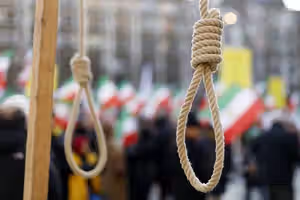
AI-generated illustration depicting the juxtaposition of the Islamic dawn call to prayer (adhan) and executions carried out before sunrise in Iran.

Angered by a wave of early-morning executions of protesters and political prisoners, some Iranian social media users have directed their anger at Islam and the morning call to prayer, prompting an IRGC-linked campaign demanding their prosecution.

As executions have accelerated in recent weeks, some Iranian social media users have increasingly portrayed the pre-dawn adhan as a reminder of hangings rather than the beginning of the day’s religious observances.

The adhan is the Islamic call summoning Muslims to the five daily prayers.

Iranian regulations state that death sentences should ordinarily be carried out at sunrise unless the court specifies another time. Executions are nevertheless widely associated with the early-morning hours, when prisoners’ families and supporters often wait for news as the dawn call to prayer is broadcast.

  • Iran hangs two more political prisoners as execution wave widens

    Iran hangs two more political prisoners as execution wave widens

Social media anger turns toward religious symbols

Posts criticizing Islam and religious symbols circulated across Instagram and X following the latest executions.

An Instagram user wrote that the dawn adhan had become “a symbol and reminder of the execution of this country’s youth,” adding that a call intended to invite people to worship, peace and salvation had instead become associated with taking lives.

  • More Iranian teenagers at risk of execution, rights groups warn

    More Iranian teenagers at risk of execution, rights groups warn

Activist Masih Alinejad wrote after clashes outside an execution site that the dawn call to prayer had become “only a symbol of death and execution.”

Another Instagram user wrote before planned executions in Isfahan that the young prisoners were due to be hanged “to the sound of the dawn call to prayer,” adding that it now carried “only the smell of death.”

Other users went further, posting profanity directed at Islam, the Quran, Shi’ite religious figures, the adhan and the Arbaeen pilgrimage. Some wrote that they no longer associated the dawn call with prayer but with executions.

IRGC-linked campaign urges crackdown

The IRGC-affiliated Fars News Agency said more than 700 people had signed a campaign on its platform by Tuesday, calling for the “maximum punishment” of those accused of “insulting Islamic sanctities online.”

Organizers cited Article 513 of Iran’s Islamic Penal Code and urged judicial and security authorities to take what they described as “effective and deterrent” action.

Under Article 513, insulting Islamic sanctities is punishable by between one and five years in prison. Cases classified as sabb al-nabi, or insulting the Prophet, can carry the death penalty.

100%

Fars said campaign supporters called for tougher enforcement against people who “deliberately insult Islamic sanctities” online and urged authorities to prosecute offenders under existing legislation.

Judiciary spokesman Asghar Jahangir has previously said Iran continuously monitors cyberspace through a dedicated unit within the prosecutor general’s office and urged citizens to report alleged online offenses through official channels.

  • Iran executes 20-year-old protester as fears grow for other detainees

    Iran executes 20-year-old protester as fears grow for other detainees

The campaign adds to broader efforts by Iranian authorities to tighten oversight of online speech as criticism over the recent executions continues to spread across social media.

Iran eyes Pakistani ports as route around US blockade

Aug 4, 2026, 18:55 GMT+1
100%
A soldier stands guard beside the Cosco Wellington, the first container ship to depart after the inauguration of the China Pakistan Economic Corridor port in Gwadar, Pakistan November 13, 2016.

Iran is exploring using two of Pakistan’s ports to keep trade moving amid the US blockade of its own ports, a senior Iranian official said on Tuesday.

Mohammad-Ali Dehghan Dehnavi, head of Iran’s Trade Promotion Organization, said Karachi and Gwadar could serve as hubs for re-exporting Iranian goods to third countries. He said Pakistan could also supply Iran with essential goods and industrial raw materials.

The comments came during a visit to Islamabad alongside Iranian Industry, Mine and Trade Minister Mohammad Atabak for bilateral trade talks.

Pakistan and Iran said they would work toward increasing trade to $10 billion, advancing a free trade agreement and removing barriers involving customs, border logistics and cargo movement.

100%
Iranian and Pakistani officials attend a bilateral trade meeting in Islamabad, Pakistan, Aug. 4, 2026.

Pakistan emerged as a key mediator after US-Israeli strikes on Feb. 28 triggered the Iran war and Tehran largely closed the Strait of Hormuz. When Pakistan-hosted US-Iran talks ended without a breakthrough on April 13, President Donald Trump ordered a blockade of maritime traffic entering and leaving Iranian ports.

The blockade ended on June 18 under an interim agreement mediated by Pakistan but was reinstated on July 14 after the deal began to unravel and fighting resumed.

Traffic through the Strait of Hormuz remains severely restricted. Kpler data showed only six vessels — three tankers and three bulk carriers — passed through the waterway on Monday, down from seven on Sunday, with all six using the route through Iranian waters.

On April 22, the US president said the naval blockade was costing Iran $500 million a day, while the War Department estimated that Tehran had lost $4.8 billion in oil revenue by May 1.

A Friday report by The Telegraph said the United States and Israel are weighing a possible land blockade of Iran to deepen its economic isolation, as President Trump reportedly believes the naval blockade in the Strait of Hormuz has achieved all it can.

Trump discussed the proposal with Israeli Prime Minister Benjamin Netanyahu during their meeting in Washington last Tuesday, alongside several other military and non-military options, according to the report.

A senior Israeli official suggested sealing Iran’s land routes to prevent goods from entering or leaving the country, saying such pressure could produce unpredictable consequences.

Iran shares extensive land borders with Iraq, Turkey, Afghanistan, Pakistan, Turkmenistan, Azerbaijan and Armenia.

Why Afghans still risk death to reach Iran

Aug 4, 2026, 17:34 GMT+1
•
Negar Mojtahedi
100%
The father, a 35-year-old driver with his Afghan family, sits with his young daughter in a pickup van.

"Take care of my sons." Those were the final words of Hayatullah, an Afghan migrant who used his phone to record what would become the last moments of his life in the scorching desert as he tried to reach Iran.

"Pray for me. Mother, I'm dying," he said, pleading with his loved ones to look after his sons, especially Habib.

Hayatullah was among 14 Afghan migrants who died attempting to reach Iran, Afghan officials said, weeks after the vehicle carrying them broke down and they continued the journey on foot.

Why would anyone risk one of the world's deadliest migration routes to reach Iran?

The country is grappling with economic crisis and widespread repression. It has carried out one of the region's largest deportation campaigns against Afghan migrants and offers little prospect of permanent legal status.

"It's not about a choice between safety and danger," Yasin Samim, an Afghan governance and development analyst, told Iran International. "It's about what type of danger."

Samim said conditions inside Afghanistan had become so severe that many people continued to flee despite knowing the risks awaiting them in Iran.

"The fact that they come to Iran shows the severity of the situation and conditions in Afghanistan," he said. "The reasons they leave Afghanistan have not changed."

With the Taliban's return to power, legal pathways to Iran have become increasingly restricted, forcing many low-income Afghans into the hands of smugglers.

"Granting a visa has become a deal of the black market," Samim said, adding that visas can reportedly cost between $1,000 and $1,200—far beyond the reach of many Afghan families.

"The combination of poverty, unemployment and repression leaves people with no alternative," he said. "That is the only choice they have."

Those who cannot afford legal routes often attempt the crossing through Nimruz, one of the main transit corridors into Iran for irregular migration.

The route has become synonymous with one of the deadliest migration paths into the country. Migrants cross vast stretches of unforgiving desert where temperatures regularly exceed 45°C (113°F).

If smugglers abandon them or their vehicle breaks down—as happened in this case—survival quickly becomes a race against dehydration. Many die before reaching help. Others face robbery, exploitation or detention before ever reaching Iran.

Iran has long hosted one of the world's largest Afghan populations despite offering few permanent rights to those who settle there. Before its mass deportation campaign in 2025, an estimated four million Afghans lived in the country, including registered refugees, documented migrants and undocumented workers.

Yet many remained in legal limbo despite spending years—or even decades—in Iran. Children born in Iran to Afghan parents are not automatically granted Iranian citizenship, and for most there is no realistic pathway to becoming Iranian citizens.

"Iran has shut down legal pathways for Afghans in recent years," Omid Memarian, senior Iran analyst at DAWN told Iran International. "Because so many pathways have been blocked, they have to take much riskier ways to be smuggled from Afghanistan to Iran.”

That means the chance of being exploited is higher, Memarian added, and their rights are more likely to be violated.

Tighter restrictions appear to have little bearing on Afghans' calculations. It has only pushed them onto more perilous routes across deserts such as Nimruz, where extreme heat could quickly turn a journey into a death sentence.

"For them, the question is not, 'Let's go to the best ideal country.' The question is, 'Let us get out of here.' ... It's about survival," Memarian told Iran International.

Iran International reached out to the United Nations High Commissioner for Refugees (UNHCR) for comment.

A spokesperson referred us to a statement issued last month warning that Afghanistan is ill-equipped to absorb the growing number of returnees.

The agency said more than six million Afghans have returned since 2023, while nearly half the country's population already depends on humanitarian aid.

It called for returns to be safe, voluntary and dignified, warning that mass deportations risk deepening one of the world's worst humanitarian crises.


Iran's president met Mojtaba Khamenei in the back seat of a car

Aug 4, 2026, 14:26 GMT+1
•
Mojtaba Pourmohsen
100%
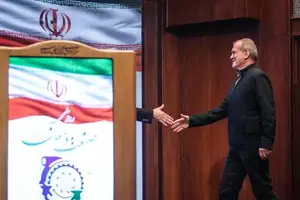
Iranian President Masoud Pezeshkian

Iranian President Masoud Pezeshkian was taken to a secret Tehran location and allowed only minutes in a dark, tinted-window car with a man presented as Supreme Leader Mojtaba Khamenei, sources familiar with the episode told Iran International.

Pezeshkian could not see the man beside him and later asked whether the voice he had heard had really belonged to the supreme leader, according to the sources.

Their account of the only known meeting between Pezeshkian and the Islamic Republic’s third supreme leader differs sharply from the version the president has told in public.

In mid-May, Pezeshkian told a gathering of trade association representatives that he had spent two and a half hours with the new leader “in a cordial atmosphere.” Iran International’s sources said the encounter lasted only a few minutes, after which the president was asked to leave.

The meeting itself was a concession extracted under pressure. Khamenei's office agreed to it only after repeated requests from Pezeshkian and his threat to resign, the sources said, and the president was informed that, contrary to standard practice, he would not be received at the leader's usual residence.

Instead, his security detail delivered him to an undisclosed location somewhere in Tehran. There he was taken from his own vehicle and seated in the back of a commercial car with tinted windows, where, apparently, Khamenei was already waiting. The spot was dark enough that the two men could not see each other, and Khamenei's guards did not permit a handshake. The conversation was carried entirely by voice.

The treatment reportedly angered Pezeshkian, who regarded it as humiliating. According to individuals in the president's office, he later asked whether the person beside him had in fact been the supreme leader, since he had only heard a voice in the dark.

It is unclear whether the remark was an expression of anger or genuine doubt. Pezeshkian has since requested a second meeting, this time at the leader's residence. The request has so far been denied.

A leader nobody sees

The president's uncertainty lands in a country that has neither seen nor heard its new ruler. In the roughly five months since the Assembly of Experts selected Mojtaba Khamenei to succeed his father, not a single audio recording or video of him has been released.

The silence has become a subject inside Iran's own state-aligned press. On Sunday, the website of the Hamshahri newspaper published a short video claiming that foreign intelligence services could trace any audio recording of the new leader and locate his hideout by measuring acoustic energy, analyzing the frequency signature of the electrical grid and examining background noise. The video added that spy agencies could analyze vocal-tract resonances to determine the extent of his injuries or anxiety, a claim that fed rather than calmed speculation about his condition.

The world's assessments diverge just as sharply. Three weeks ago, US President Donald Trump put the odds that Mojtaba Khamenei had been killed at 90 percent. Israel's prime minister recently said he is alive.

Even the government's own senior figures do not tell one story. "I have not seen Mojtaba Khamenei during this period, and only a limited number of people have met with him," Foreign Minister Abbas Araghchi said in a July interview with the online program The Story of the War. One day later, Pezeshkian said in a speech that the number of meetings with the leader had increased.

A resignation he cannot repeat

The strain between the president and the leader's office has since spilled into the open. In a video circulated on social media on Monday, Mohammad Bagher Kharrazi, a Khamenei family relative by marriage, said the new leader has formally warned that Pezeshkian's next resignation, after 28 threats or attempts, will be his last.

  • Khamenei warns Pezeshkian next resignation will be accepted, in-law says

    Khamenei warns Pezeshkian next resignation will be accepted, in-law says

"He declared it officially," Kharrazi said, "and that is why they packed up, turned down the wick, and stopped threatening to resign."

The warning matches Iran International's earlier reporting. A knowledgeable source said in late May that Pezeshkian had sent a formal letter to the leader's office asking to step down, a resignation driven by what the president described as the Revolutionary Guards' complete control over the running of the country.

A president who cannot resign, then, serves a leader he cannot see. Five months into the new reign, Mojtaba Khamenei remains unseen, unheard and unrecorded, a ruler his own president has met exactly once, in the dark, and still cannot be certain he has met at all.