Smoke rises from a warehouse of Russian online retailer Wildberries that the Regional Governor Oleg Melnichenko says is following a Ukranian drone attack, in Priovrazhnoe, Penza Region, Russia, July 30, 2026 in this screengrab taken from a social media video.
Signs of reluctance to widen the conflict are emerging in Tehran, with conservative politicians and media urging restraint even as they accuse the United States and Israel of orchestrating Ukraine's attack on an Iranian vessel.
The New York Times reported Wednesday that Iran had considered retaliating by striking a Ukrainian port before diplomatic efforts helped defuse the crisis, reinforcing the impression that, despite its rhetoric, Tehran is seeking to avoid opening another front.
Establishment figures have largely portrayed the attack as part of a broader US and Israeli effort to widen the conflict, warning Tehran against responding in a way that would play into that strategy.
Mohsen Sani, a member of parliament's National Security and Foreign Policy Committee, argued that the attack on the Iranian vessel and recent strikes against Iraq's Popular Mobilization Forces should be viewed within the same strategic framework.
"The United States is trying to pursue its objectives through proxy actors such as Ukraine and Saudi Arabia," he told the conservative news website Tabnak.
‘International dimension’
Former Iranian ambassador to Kuwait Mohammad Irani likewise accused Israel of encouraging Kyiv to open a new front against Tehran.
"The coming together of Netanyahu and Zelensky, in my view, represents the formation of a new front of confrontation or preparations for a new regional order," he told ILNA.
Irani nevertheless argued that Tehran should avoid creating conditions that would draw additional countries into the conflict.
"Because of pressure from Trump, Israel's hands are temporarily tied. They therefore want to bring another party into the confrontation so that the conflict expands beyond the region and acquires an international dimension," he said.
"If an immediate response is considered, every possible consequence and every option that could be used against us must also be taken into account so that the opposing side does not achieve greater cohesion."
A Western trap
Nour News, a media outlet closely aligned with Iran's Supreme National Security Council, argued that Ukraine's actions formed part of a coordinated US strategy stretching "from Yemen to the Caspian Sea," designed to increase pressure on Iran while allowing Israel time to recover militarily and politically.
In a separate editorial, the outlet argued Kyiv's subsequent diplomatic outreach—including Foreign Minister Andrii Sybiha's assurances to Abbas Araghchi that Ukraine sought no escalation—reflected concern over Iran's deterrence capabilities rather than a genuine attempt at reconciliation.
The conservative daily Resalat likewise argued Washington was attempting to use Ukraine as another proxy against Iran while warning that escalation in the Caspian Sea could ultimately draw Russia more directly into the conflict.
The moderate conservative newspaper Jomhouri-ye Eslami similarly urged Tehran not to fall into what it described as a Western trap, arguing that reducing tensions with Kyiv would better serve Iran's interests than opening another front.
Little appetite for escalation
Javid Ghorbanoghli, Iran's former ambassador to South Africa, said another Ukrainian attack was unlikely, arguing that Tehran had already signalled it would respond to any repeat incident.
"It is highly unlikely that Tehran seeks to expand the war," he said. "Iran prefers not to allow its already tense relations with European countries to deteriorate even further."
He added that Iran's political establishment was trying to avoid opening new fronts that could generate additional political and economic pressure.
Russia analyst Rouhollah Modabber argued the attack was intended to disrupt the International North-South Transport Corridor and undermine Iran's economic cooperation in the Caspian region.
He also claimed President Volodymyr Zelensky publicly accepted responsibility in an effort to secure additional US military and financial support.
The headquarters of Iran's state broadcaster, IRIB in northern Tehran, undated file photo
Iran's state broadcaster has ignored a formal order from its own watchdog to stop censoring senior officials, highlighting the gap between the country's formal institutions and where authority is exercised in practice.
The Islamic Republic of Iran Broadcasting (IRIB) has refused to comply with a ruling by the IRIB Supervisory Board ordering it to stop censoring President Massoud Pezeshkian, Foreign Minister Abbas Araghchi, Parliament Speaker and chief nuclear negotiator Mohammad Bagher Ghalibaf.
The dispute has drawn criticism from government officials and reformist and moderate newspapers while prompting little public sympathy.
Instead, many Iranians mocked the complaints, saying state television had long ignored ordinary people and was now simply extending the same treatment to members of the political establishment.
Before the Supervisory Board issued its ruling, government spokeswoman Fatemeh Mohajerani said the public expected the national broadcaster to uphold professional ethics, democratic principles and the national interest.
"All tastes and viewpoints must be reflected in the national broadcaster's narrative," she said.
Little public sympathy
On social media, many users joked that it was refreshing to see senior officials finally experiencing the neglect ordinary citizens had long endured from state television.
A Tehran-based journalist summed up the mood more bluntly, saying most people did not care whether politicians appeared on television; they wanted to see themselves and their own problems reflected instead.
For years, many Iranians have complained that IRIB neither reflects their lives nor represents their concerns.
Critics say television dramas rarely portray people like themselves, while supposedly spontaneous interviews on political and social issues feature only carefully selected voices. Others note that cooking programmes routinely feature meals beyond the reach of many families.
Meanwhile, IRIB responded to Araghchi's complaint with a sarcastic remark, saying it was "impossible to give him 24/7 coverage."
A watchdog without teeth
Earlier this week, the IRIB Supervisory Board formally warned the broadcaster over its repeated censorship of senior officials.
Board secretary Mohammad Mirzaei said "necessary cautions were issued" and that IRIB had pledged to implement reforms and prevent similar incidents from recurring. Deputy political director Hassan Abedini also publicly promised fairer coverage of officials' remarks and activities.
Yet the broadcaster showed no sign of changing course, declining even to report the Supervisory Board's meeting—a story carried by nearly every major Iranian news agency.
Established under Article 175 of Iran's Constitution, the Supervisory Board brings together representatives of the executive, parliament and judiciary to oversee IRIB's editorial conduct.
It can issue warnings, but ultimate authority over the broadcaster, including appointing its chief, rests with the Supreme Leader.
Current IRIB chief Payman Jebelli and his management team have long faced criticism over partisan editorial policies, discrimination and censorship directed at both ordinary citizens and politicians outside the ultraconservative camp.
Leadership under scrutiny
Jebelli's five-year term expires in less than a month, raising questions over whether Supreme Leader Mojtaba Khamenei will retain the current management or appoint a new leadership team.
The latest dispute comes amid an unusually coordinated campaign by media close to the Pezeshkian administration.
Last week, the reformist dailies Etemad and Shargh, together with the government's own newspaper Iran, accused IRIB of systematically censoring senior officials and promoting voices at odds with government policy.
Iran newspaper also alleged that the broadcaster censored remarks by Judiciary Chief Gholamhossein Mohseni Ejei praising Pezeshkian.
The episode has exposed more than a dispute over television coverage. It has highlighted the growing gap between Iran's formal institutions and the centres of authority that increasingly operate beyond their reach.
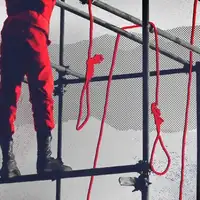
Three prominent political prisoners held in Tehran's Evin prison issued a joint statement accusing the establishment of using regional war as a cover to escalate domestic repression and attempt to rebuild its lost authority through executions.
Abolfazl Ghadyani, a veteran Islamic Revolution-era official turned fierce critic of Tehran; Mohammad Najafi, a human rights lawyer jailed for exposing a protester's death in custody; and Reza Valizadeh, an Iranian-American journalist and former Radio Farda contributor, issued the joint statement from Tehran's Evin prison.
The three political prisoners said the Islamic Republic was accelerating executions to inflict revenge on defenseless citizens for military setbacks against international adversaries.
"The corrupt regime of the Islamic Republic has once again turned war into a license to kill citizens," the prisoners wrote. "Whatever collapsed of its hollow authority on the battlefield, it is now trying to rebuild on the gallows."
Political prisoners Abolfazl Ghadiani (right), Mohammad Najafi (middle) and Reza Valizadeh
Executions described as 'begging for authority'
Executing protesters following show trials does not represent the administration of justice but rather "begging for authority on a path of blood," the signatories wrote.
They said Iranian authorities were rushing executions to take out frustrations on ordinary citizens that they could not exact on the US and Israel, seeking to crush any protesting voice.
"Today the hereditary regime of Mojtaba Khamenei, who like his father is a bloodthirsty and criminal tyrant who shared and partnered in all his father's crimes and plunder, has fallen from governance to tunnel-keeping," the statement said.
The prisoners added that the regime and its military-security cliques, unable to manage severe economic and social crises, were relying on a triad of "execution, crackdown, and imprisonment" to control the population outside their power centers.
Isfahan hangings spark grief and anger
The statement follows the executions of two young protesters early on Tuesday, Amirhossein Safari and Abolfazl Sepahi, who were hanged in Isfahan amid a heavy security deployment around Alikhani Square.
The two men were among 12 defendants convicted in the Alikhani Square case stemming from clashes during protests in January. Their hangings brought the total number of individuals executed in the case to four, following the executions of Golmohammad Mohammadi and Erfan Esfandiari on July 19. Eight others remain under sentence of death.
The hangings in Isfahan triggered widespread grief, anger, and public defiance across Iranian cities and abroad. Witnesses described crowds gathering near Alikhani Square overnight despite intimidation by security forces, while messages across social media described the executions as a crime that hardened public resolve rather than suppressed dissent.
UN human rights experts led by Special Rapporteur Mai Sato had urged Iranian authorities on Monday to halt the executions, warning that closed-court trials based on televised confessions violated basic international legal standards.
The joint statement from Evin prison comes amid a broader surge in death sentences and executions across Iran over the past year, particularly following the January protests and escalating regional conflict.
Data compiled by Iran International shows that the Iranian judiciary has executed more than 50 political prisoners since the beginning of the current Iranian year, with dozens more facing execution.
Rights groups and civil society leaders have issued repeated warnings over the escalation. Amnesty International reported that at least 60 people, including three individuals under the age of 18 at the time of their alleged offenses, face imminent execution in Iran.
The three Evin prisoners concluded their statement by warning that no government achieves security or legitimacy through "the accumulation of corpses and a fear production line," adding that if the ruling establishment fails to yield to the public will, "Iran will become more ruined."
A US Army AH-64 Apache attack helicopter takes off at an undisclosed location in the Middle East in this image posted by US Central Command on X on July 25, 2026.
US President Donald Trump's most likely response to the conflict with Iran will be to intensify air strikes against a broader range of targets rather than withdraw or launch a ground invasion, former senior Pentagon official David Des Roches told Iran International TV.
Speaking on Iran International's Titre Aval (The Lead) program on Wednesday, Des Roches said the United States had limited military options after adopting an air campaign and argued Trump was unlikely to accept the political cost of ending the operation without achieving his objectives.
Three options
"The United States went in with an air power-only strategy," said Des Roches, now an associate professor at the Near East South Asia Center for Security Studies.
"That usually is flawed because once you do that, and if you look historically at how we've used an air power-led strategy in Korea, Vietnam, even World War II, but I think the illustrative point is Kosovo."
"If you don't achieve your strategic goals initially against a small target set, your options are to either introduce another element of warfare, and we don't have time to do that. To have a credible ground invasion force would take a year to build up, or you bomb more intensively."
"You widen the target list to include dual-use infrastructure, like bridges, the power grid, the national communications, television, and radio. This is what the US did against Serbia to stop the massacre of Muslims in Kosovo, or you leave."
"Those are really your three options, and I think that President Trump does not relish the prospect of leaving. That's too close to Joe Biden."
David Des Roches (left), associate professor at the Near East South Asia Center for Security Studies, speaks with Iran International TV presenter Niusha Saremi during the network's Titre Aval program on July 29, 2026.
More strikes likely
Des Roches said he believed the White House was most likely to increase military pressure rather than expand into ground operations.
"So I think, you know, he doesn't really have the ability to introduce another domain of warfare," he said.
"But really, I think his main option is to try to increase pain on the regime, and I think that that will mean an expansion into the targets towards dual-use targets and an expansion of intensive bombing to include not just areas adjacent to the Persian Gulf, but also areas inland, and especially the capital Tehran."
Asked about reports that Trump had been advised against escalating the conflict because of concerns about US weapons stockpiles, Des Roches said he believed political and economic factors were more important than military constraints.
"Some, but I think it's not really driven by military action or missile inventories," he said.
"I think it's political and economic. So we have midterm elections coming up. The Islamic Republic knows this. The leaders within the Islamic Republic know it, and they have calculated that if they can draw the war out, keep gasoline prices high, that President Trump will be in a worse position, or may even be impeached and removed."
"I think that they're kind of overplaying their hand."
Des Roches said recent Iranian actions might not reflect a unified government position.
"I'm not sure if the actions we're seeing reflect a unitary position of the Iranian government, but rather the actions of different factions of the Iranian government, probably the Revolutionary Guard, who are vying for supremacy and are trying to wreck any possibility for negotiations."
He argued that an end to the conflict would shift public attention inside Iran toward domestic issues.
"Obviously, if peace breaks out, then the focus within Iran goes from a national rally around the flag, oppose the Zionist entity and the Great Satan, towards looking at things like where has all the money gone over the year? Why is Tehran running out of water when the Revolutionary Guard controls the major construction companies in the country, and why are their children driving Lamborghinis in Spain and ours are having a hard time getting water in Tehran?"
"So it's a challenging period, but I think the hardliners, particularly in the Revolutionary Guard, are at risk of severely overplaying their hand."
Asked whether regime change had become part of US strategy, Des Roches said he believed Trump was pursuing a different approach from previous US interventions.
"My view is President Trump's theory of victory is not that the US will impose a new regime the way we did, for example, in Iraq, because that didn't work out well."
"I think he feels that economic pressure will lead the Iranians to have their own regime change."
Des Roches said Trump appeared to believe the anti-government protests in late 2019 had brought Iran close to internal political change.
"I think he feels that in December that was about to happen. It was only the violence of the Revolutionary Guard and the Basij, the massacres of between 1,300 and 4,000 Iranians - we don't know the exact number - that would have done it."
"I think that's why we're here now. It's not because Netanyahu led it. It's because, in the face of what he saw as a vindication of his policy, I think he believes that had he remained president after 2020, regime change would have been accomplished from within by about 2022."
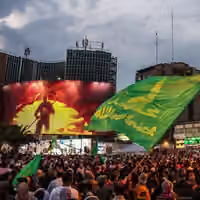
A man gestures toward a giant anti-Trump billboard during a nightly state-backed rally in Tehran, July, 25, 2026
Amid threats of war and mounting fears of economic collapse, Iran's government is seeking to reinforce its case for moderation in a fractured and deeply polarized political landscape.
On July 29, the administration's official daily, Iran, published four opinion pieces by representatives of four moderate and conservative parties, presenting the collection as evidence of a new political accord.
The paper argued that "the traditional pattern of political competition between Iran's two major blocs has fundamentally shifted," concluding that "what seems to have 'ended' is not reformism or principlism as political identities, but the confrontational style of rivalry that had turned these blocs into near-enemies."
The optimism sits uneasily with political reality.
Hardliners routinely accuse President Masoud Pezeshkian and Parliament Speaker Mohammad Bagher Ghalibaf of betraying the country because of their relatively pragmatic approach to negotiations and the confrontation with the United States, while state television, dominated by ultraconservatives, has repeatedly censored key remarks by both men.
Nor did the initiative reflect the country's current balance of political power. The contributors came from four parties that have largely been sidelined since at least 2020 and no longer reflect the real distribution of influence in presidential or parliamentary politics.
The ultraconservative Paydari Party, arguably the most influential ideological force in today's parliament, and the centrist Executives of Reconstruction Party were both absent, whether by exclusion or choice.
The paper nonetheless argued that "the pressures of war and national security crises pushed both sides toward cooperation, reducing polarization and enabling decisions that required broad consensus."
Yet it also acknowledged that Paydari—described as "a small but loud minority" enjoying disproportionate influence through state broadcasting—stood outside the initiative.
Rather than demonstrating broad political consensus, the exercise illustrated its limits. Three of the four essays were written not by party leaders but by deputies or senior members of organisations that have played only marginal roles in Iranian politics for nearly two decades.
The four contributors differed in emphasis but converged on a common message.
Mahmoud Vaezi argued that, amid hybrid warfare and economic pressure, Iran needed rationality, restraint and an end to factional competition. Alireza Khojastehpour called for what he described as "revolutionary rationality." Mohammad Sadegh Javadi-Hessar framed moderation as a religious imperative, while Mohammad Ali Amani argued that resilience depended less on military power than on social cohesion.
Collectively, the essays portrayed moderation as a strategic necessity rooted in political experience, revolutionary reasoning and religious ethics. Extremism was presented as corrosive, narrowing political choices, deepening polarization and eroding public trust.
Yet the initiative may reveal less about the emergence of a new political consensus than about the administration's effort to reinforce its case for a more moderate course.
Facing the prospect of war, worsening economic pressures and relentless attacks from powerful hardline factions, Pezeshkian appears to be seeking validation for a strategy that many of the country's most influential political actors remain unwilling to embrace.
The country's most influential ultraconservative factions, their media allies and an IRGC that increasingly acts as a political institution in its own right were absent from the discussion.
They are also the actors least likely to look to the government's flagship newspaper for lessons in moderation.
U.S. President Donald Trump, U.S. Vice President JD Vance, U.S. Treasury Secretary Scott Bessent, and Eric Trump, attend the funeral service for late U.S. Senator Lindsey Graham (R-SC) at Washington National Cathedral in Washington, D.C., U.S., July 28, 2026.
President Donald Trump's repeated vow to "finish the job" in Iran appears to extend well beyond Tehran's nuclear program, according to experts, pointing instead to a broader plan to permanently weaken its military power, regional reach, and potentially its hold on power.
As Trump prepared to meet Israeli Prime Minister Benjamin Netanyahu at the White House on Tuesday, he again warned that if Tehran refused to reach a nuclear deal, the United States would "finish the job."
The question became more urgent after Iran's surprise strike on US forces in Jordan—the Islamic Republic's first preemptive attack of the war rather than a retaliatory one—prompted Trump to declare the United States would "beat the fu*king sh*t out of" Iran.
"It's not just the nuclear program," said retired Admiral Robert Harward, a former deputy commander of US Central Command, arguing that Iran must lose not only its ability to build a nuclear weapon but also its capacity to threaten the region through missiles, drones and proxy forces.
Harward, a retired US Navy SEAL who lived in Iran before the 1979 revolution, said any lasting solution would require dismantling Tehran's broader military architecture, securing freedom of navigation through the Strait of Hormuz and limiting its ability to project force across the Middle East.
"I think when President Trump says 'finish the job,' he does mean something beyond that," he said.
Trump has never publicly defined the phrase, leaving it open to a range of military and political interpretations. While some see it as shorthand for permanently dismantling Iran's nuclear programme, others argue it points to a broader effort to weaken Tehran's ability to threaten its neighbours and rebuild after the war.
Blaise Misztal, vice president for policy at the Jewish Institute for National Security of America (JINSA), argued that Iran's nuclear programme is ultimately a symptom rather than the underlying problem.
"So long as that regime is in power, we're going to continue to be under threat," he said.
Harward went further, arguing that "a change of government in Tehran has to be the ultimate end state" because only a different government could permanently redirect Iran's resources away from military confrontation and toward rebuilding the country.
Neither expert presented regime change as current US policy. Trump himself has stopped short of making that case, even as his rhetoric has grown increasingly aggressive.
Earlier this week, Trump suggested the United States could strike Iran's bridges, infrastructure and power plants while insisting he wanted to avoid harming the Iranian people.
Harward argued those comments point not simply to an expanded bombing campaign but to a strategy of economic and military isolation.
"I'd like to see them shut down the airspace. I'd like to see them shut down the borders," he said, arguing that restricting the state's ability to move goods, people and military equipment could prove as consequential as direct military strikes.
Harward also raised the possibility of limited ground operations. Distinguishing them from the large-scale invasions of Iraq or Afghanistan, he described highly targeted missions to seize or destroy specific military objectives as "a very viable option."
The broadest interpretation of Trump's slogan concerns the future of the Islamic Republic itself. For now, however, his repeated promise to "finish the job" remains deliberately open-ended.
Whether it ultimately means dismantling Iran's nuclear programme, crippling its military capabilities or creating the conditions for political change may depend less on Trump's rhetoric than on how the war itself unfolds.