US raises security alert for citizens in Iraq amid regional tensions
The US Embassy in Baghdad raised its security alert for Americans in Iraq on Saturday, warning that the security environment remains complex amid heightened tensions in the Middle East and could escalate unexpectedly.
The embassy advised US citizens to exercise heightened vigilance, prepare for possible flight cancellations, airspace closures and travel disruptions, and monitor local media and official guidance. It also warned that Iran and groups supportive of Iran may target US interests overseas or locations associated with Americans.
FILE PHOTO: People walk through a local market as the value of the Iranian rial drops, in Tehran, Iran, December 20, 2025. / WANA via Reuters
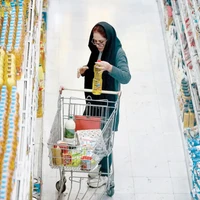
Consumer prices in Iran are nearly 89 percent higher than a year ago, as the country compresses into weeks the kind of inflation shock Americans experienced over all of 2022.
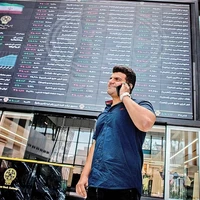
In Iran, everyone is watching the same number this summer. The US dollar is trading at around 1.9 million rials in Tehran’s open market, and the government has turned stopping it from reaching 2 million into a priority.
The state is spending scarce reserves to defend that line. The market is bracing for it to be crossed.
To understand why one exchange rate commands this much attention, it helps to know what the number means in Iranian life. The rial is a currency people try not to hold.
Salaries are paid in it, but many Iranians with savings convert them into dollars, crypto, gold, property or even food items with a longer shelf life as quickly as they can.
The dollar rate is the thermometer of everything else: rents, medicine, car prices and the cost of a grocery run.
When the rate crosses a round number, shopkeepers reprice, landlords renegotiate and expectations reset a step higher. Round numbers are not milestones on a financial chart; they are political events.
Here is the arc of that thermometer. Fifteen years ago, a dollar cost about 10,000 rials on the open market. In April 2025, it crossed 1 million.
This summer, it stands at the threshold of 2 million.
Spread over the first 15 years, the dollar doubled against the rial roughly once every two and a quarter years. The latest near-doubling took 15 months.
Put another way: it took 15 years to destroy 99 percent of the rial’s value against the dollar, and then 15 months to erase nearly half of what was left.
If inflation and depreciation continue at roughly their recent pace, the 3-million line could be five to eight months away. The latest halving of the currency’s value has arrived far faster than the average over the previous 15 years.
Why the central bank cannot hold the line
The engine behind this is not mysterious. Iran’s official statistics agency reports that consumer prices in June were 88.6 percent higher than a year earlier; the inflation families feel at the grocery store runs higher still.
The dollar has nearly doubled alongside the prices around it.
The inflation itself is rooted in fiscal arithmetic. The war and blockade have severely constrained Iran’s oil exports and maritime trade, while tax revenue is sinking with the economy.
The government is financing a substantial portion of its widening deficit through the banking system and central-bank liquidity creation—effectively expanding the money supply to meet its bills.
Monthly inflation has recently been running as high as 7 to 9 percent. For American readers, one comparison does the work of a statistics table: Iran is now living through something close to its own version of the 2022 US inflation shock almost every month.
The central bank’s playbook for moments like this is familiar to every Iranian. When it cannot stop the dollar’s rise, it tries to postpone losing the round number for as long as possible.
It does so through market interventions and public messaging that intensify in the final stretch.
In the winter of 2024-25, it fought exactly this battle at the 900,000-rial level and managed to push the crossing of 1 million until after the Iranian New Year in March.
But that defense was financed by oil revenue.
This one is being waged mid-war, under blockade and with exports sharply constrained. It is drawing on the remnant of reserves the country will need to import medicine and food.
A central bank without reliable oil income can buy weeks, not a new trend. Every week it buys may increase the pressure behind the next jump.
What happens next depends on the course of the war, the scale of central-bank intervention and whether oil exports resume.
If inflation and depreciation continue at their recent pace, the 2-million line could fall as soon as August.
A wider war would likely freeze the market first and then send it sharply higher when trading resumes. A durable ceasefire could slow or even temporarily reverse the move.
In every version, the greatest burden falls on Iranian families paid in rials and unable to convert their income or savings into anything safer.
They are watching each round number arrive sooner than the one before.
File photo by ISNA shows Rajaeishahr Prison west of Tehran
As international attention remains fixed on the Iran-US war and regional escalation, human rights advocates say Tehran is intensifying another campaign largely outside the global spotlight: the execution of protesters and political prisoners.
“The bombs are making noise and the world is looking at Iran, but what about the silence that is killing innocent people every day?” Azadeh Afsahi, founder of Iran House, told Iran International’s Eye for Iran podcast.
Rights groups say the war did not create the crackdown but has provided political cover for the Islamic Republic to fast-track death sentences, conceal executions from families and intimidate a population already traumatized by the violent suppression of nationwide protests in January.
Accelerated executions raise alarm
Rights groups estimate that around 100 political prisoners and protesters have received death sentences, while hundreds more face capital charges. More than 70 people are awaiting execution in Dastgerd Prison in the central city of Isfahan, according to Iran Human Rights.
Iran Human Rights says at least 24 people have been executed in connection with the January protests since March 19, most recently Mehdi Khaneki, a 26-year-old law graduate who was put to death on July 22.
Others have been executed over alleged ties to banned opposition groups or on espionage charges.
Those facing execution include people arrested following protests in Isfahan on January 8.
Iran executed Erfan Esfandiari, reportedly 18, and Gol Mohammad Mohammadi, a 23-year-old Afghan national, on July 19. Iranian authorities accused them of involvement in the deaths of four members of the security forces.
Rights groups say the defendants were denied fair trials and access to independent legal representation. Ten other men prosecuted in the same case remain at risk of execution, according to UN investigators.
The UN Human Rights Council-mandated fact-finding mission called on Tehran on Thursday to halt the executions immediately. It said relatives of at least two prisoners had been summoned for what appeared to be final visits, raising fears that further executions could be imminent.
The mission also raised alarm over efforts to expedite protest-related proceedings. It noted that Tehran prosecutor Ali Salehi announced on July 15 that cases connected to the protests and recent hostilities had been finalized and referred to court following an order from judiciary chief Gholam-Hossein Mohseni-Eje’i to accelerate proceedings.
ARTICLE 19, citing figures compiled by Hengaw, said Iran executed 109 people in June, including three women—a 10% increase from the same month last year. Only seven of those executions were officially announced, while at least 12 families received no advance notice, according to the organization.
The lack of warning has left some relatives learning about executions through official media.
According to AFP, the family of Vahid Baniamerian, a 34-year-old physics lecturer, received no warning before his execution. A relative said they were still awaiting a Supreme Court review when reports of his imminent execution began appearing in state media.
Baniamerian was executed alongside five other men convicted of alleged membership in the outlawed People’s Mujahedin Organization.
The executions also drew a response from US President Donald Trump, who wrote “Savages!!!” while reposting an image and account of Mohammadi’s execution. He also shared posts about Esfandiari.
Trump had previously warned Tehran against executing protesters. During the January 2026 uprising, he said the United States would take “very strong action” if authorities carried out hangings and told Iranians that “help is on its way.”
Human rights advocates, however, say public condemnation has not been matched by sufficient action.
Fear of another uprising
Shahin Milani, executive director of the Iran Human Rights Documentation Center, said the regime views internal rebellion as a greater threat to its survival than the prospect of a large-scale foreign invasion.
He said the Islamic Republic may fear its own population more than US military action. “The most serious threat that they face is from internal rebellion. This is from Iranian people bringing the regime down.”
Milani said the severity of the January crackdown demonstrated how seriously the authorities viewed that threat.
“They set a new standard in their own regime for brutality,” he said.
The executions, Milani argued, are intended both to frighten the wider population and demonstrate strength to regime supporters who might otherwise consider defecting.
He said they may delay further unrest but cannot resolve the economic hardship and political discontent driving opposition to the government.
“You cannot kill your way out of economic misery and discontent,” he said, predicting renewed demonstrations could emerge within months or years.
Afsahi said the crackdown has deepened depression and trauma among survivors and victims’ families, while international attention remains concentrated on the military conflict.
“Everybody cares about the bombs, but nobody cares about the hanging that is happening every day,” she said.
Despite that trauma, Afsahi said many survivors remain prepared to protest again.
“They’re just waiting,” she said. “They’re ready for that next ignition to be able to go out again.”
Brandon Silver, an international human rights lawyer and director at the Raoul Wallenberg Centre for Human Rights, said the executions should be viewed within the broader context of Iran’s record of domestic repression.
He pointed to the country’s high rates of executions, executions of people convicted of crimes allegedly committed as children, state hostage-taking and imprisonment of journalists.
“There is an effort to obfuscate, to hide these staggering statistics,” Silver said, describing the executions as part of “an ongoing campaign of mass domestic repression.”
He argued that abuses inside Iran have repeatedly spilled beyond its borders through hostage-taking and alleged plots targeting journalists, dissidents and human rights advocates abroad.
“When they’re able to carry this out within Iran, it puts all of us everywhere in danger,” he said.
Silver called on governments to move beyond statements by expelling officials involved in repression, imposing visa bans and freezing and seizing the foreign assets of regime figures. Those assets, he proposed, should be redirected to victims of the Islamic Republic.
Iranian prisoners have also begun challenging the execution campaign from inside the country. About 1,500 prisoners sentenced to death for drug-related offenses in Unit 2 of Ghezel Hesar Prison have staged a hunger strike and sit-in since July 13. The protest began after six inmates were transferred to solitary confinement in preparation for execution.
The protest has added a rare form of resistance from inside Iran’s prisons to the growing international campaign against the executions, according to the advocates interviewed by Eye for Iran.
They said the executions may demonstrate the regime’s capacity for repression, but they also reveal its fear that the anger driving Iran’s protest movement remains unresolved.
The war may have pushed that movement out of the headlines. It has not, they warned, eliminated it.
Plane spotters watch as a Boeing B-52 Stratofortress takes off at RAF Fairford airbase, which hosts United States Air Force (USAF) personnel, amid a ceasefire between the United States and Iran, in Fairford, Gloucestershire, Britain, April 23, 2026.
Iran is using migrant smuggling routes into Britain to move covert operatives into the country, the Telegraph reported on Saturday, citing unnamed Iranian officials, people smugglers and analysts.
The newspaper said the operation was centered on Unit 700, a logistics and smuggling arm of the Islamic Revolutionary Guard Corps' Quds Force that Britain sanctioned in 2024 for facilitating activities intended to destabilize the UK and other countries.
According to the report, an Iranian official described Britain's support for US military operations against Iran as making it a target, telling the newspaper: "Our armed forces' message was very clear yesterday - stay away from the carnage."
The official also said: "At the moment we have people right there in London ... They wait for us to tell them what to do," adding that Tehran could "easily make London unsafe" and that "we do not need a missile to target London. It's easier than that."
A second unnamed Iranian official went further, saying Iran had people in Britain who could "even target their prime minister's house" if Tehran chose to do so, according to the newspaper.
Smuggling network
The Telegraph said two people smugglers familiar with routes into Europe told the newspaper that parts of the network were controlled by the Iranian government.
One smuggler was quoted as saying that "some legs of the network" used to move migrants into Europe "are actually owned by the government," while another said controlling a route meant "you can do what you like."
The report said the routes, originally established to move weapons, money and supplies to Iran-backed groups in the Middle East, were also being used to move migrants into Europe, including Britain.
Security experts skeptical
The newspaper said British security experts questioned whether Iran had the capability to establish long-term covert networks in Britain.
It quoted Lynette Nusbacher, a former senior adviser to the Cabinet Office on security matters, as saying Iran lacked the "strategic patience" to plant genuine covert agents in Britain, while Kristian Gustafson of Brunel University said Tehran's objective could instead be to create enough fear to weaken British support for US operations.
Nearly half of Iranian internet users said they were angered by the country's recent internet shutdown during the conflict with the US, while most opposed unrestricted internet access for government officials, according to a survey commissioned by the communications ministry.
The survey by the Iranian Students Polling Agency (ISPA), conducted between June 15 and June 21, found that 46.1% of internet users said the shutdown of international internet access made them "very" or "to a great extent" angry and frustrated. Another 47.1% said it caused little or no anger.
The poll found that 89.3% of Iranians aged 15 and older use the internet.
Among users, 38.8% said losing access to the global internet created serious difficulties communicating with friends and family, while 33.6% said the main impact was on entertainment, including watching videos and listening to music.
Almost one-third, or 29.6%, said their work and income would have been completely disrupted if international internet access had not been restored, underscoring the reliance of many Iranians on online connectivity for their livelihoods.
The survey also suggested the restrictions did not drive most users to state media. During the outage, 39.2% said they followed news through state television, while 21.3% relied on domestic social media platforms such as Baleh and Eitaa and 14.5% turned to satellite television channels.
The findings also highlighted widespread dissatisfaction with internet services. Some 72.3% of users said they were little or not at all satisfied with internet speed, while 56.9% said increasing internet speeds would be their top policy priority. Another 21.5% said reducing internet filtering should be the priority.
The survey found 61.1% opposed unrestricted, unfiltered internet access for government officials, while 24.6% supported such access.
The communications ministry has estimated the internet shutdown cost Iran's economy about 5 trillion rials ($58 million at the official exchange rate) a day, according to the report. The survey also found that 58% of respondents viewed internet-based businesses as a key driver of job creation.
The survey was conducted on behalf of the communications ministry among a sample of 4,545 people.
Iran's president Masoud Pezeshkian gestures in a meeting, with State broadcaster chief Peyman Jebeli to his left
Iran’s government has publicly accused the state broadcaster of censoring President Pezeshkian’s remarks in which he said the late Supreme Leader Ali Khamenei privately ordered officials to negotiate with the United States despite publicly ruling out talks with Washington.
The dispute has reignited a long-running confrontation between Pezeshkian's administration and the Islamic Republic of Iran Broadcasting (IRIB), which reformist and pragmatic politicians have for years accused of partisan coverage and a pro-hardline editorial line.
The omitted remarks came during a televised interview in which Pezeshkian described how Iran's leadership decided to resume negotiations.
"After the Twelve-Day War, the martyred Supreme Leader officially announced that we would no longer negotiate with the United States," Pezeshkian said. "State television broadcast those statements as well."
According to the president, he and other senior officials later met Khamenei to explain the country's circumstances, reminding him that he himself had argued that a prolonged state of "neither war nor peace" was unsustainable.
"We asked, 'What should we do?' He instructed us to go and negotiate," Pezeshkian said.
"He also sent a message saying, 'Go and resolve the problem,' because it was not possible to continue under conditions of neither war nor peace."
Pezeshkian stressed that opening negotiations did not amount to a concession, adding that even now, despite what he described as "difficulties communicating with the Leader," the government's diplomatic steps continued to be taken "under his guidance and instructions."
The remarks appear to describe a distinction between Khamenei's public stance and his private guidance to senior officials, although Pezeshkian did not explain why the two differed.
The president's office later complained that the passage had been removed from the version broadcast by state television, prompting criticism from government supporters and renewed accusations that IRIB had selectively edited the interview.
The broadcaster has not publicly explained why the segment was omitted.
The clash is the latest in a series of disputes between Pezeshkian's administration and IRIB.
Since taking office, government officials and reformist politicians have repeatedly accused the broadcaster of favouring hardline political factions, selectively editing interviews and undermining the elected government through its news coverage.
IRIB has consistently rejected accusations of political bias, saying its editorial decisions are made according to professional standards.