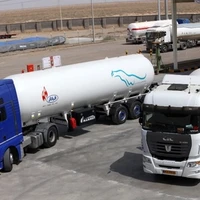
The shift comes as Brent crude climbed above $100 a barrel for the first time in two months after Iran-aligned Houthi attacks expanded maritime tensions from the Strait of Hormuz to the Bab al-Mandab Strait, raising fears of broader disruption to Middle Eastern energy exports.
US President Donald Trump this week warned that the United States would destroy Iranian bridges or power plants in response to attacks on shipping in the Strait of Hormuz.
He later blamed Tehran for Houthi attacks on commercial vessels in the Red Sea, saying any further assaults would trigger an "extremely severe" US response against both the Houthis and Iran.
Amid the escalating threats, Brent crude surged 6% on Thursday, climbing back above $100 a barrel for the first time in two months.
Tehran sees leverage
Iranian officials increasingly portrayed the price rally as evidence that insecurity around the Strait of Hormuz and the Bab al-Mandab had strengthened Tehran's negotiating position.
"The equation of this war is clear: either everyone or no one," Parliament Speaker and Iran's chief negotiator Mohammad-Bagher Ghalibaf wrote on X. "In a region where we cannot sell oil, no one will sell oil. If our security is not guaranteed, no infrastructure will remain safe."
He later added: "They wanted to punish Iran. Punished themselves with triple-digit oil instead."
Mohammad Mokhber, an adviser to Supreme Leader Mojtaba Khamenei, argued that the latest rally reflected disruptions to transportation rather than production, implying prices could climb much higher if energy infrastructure itself came under attack.
"Oil at $100 is, so far, merely the result of disruptions in transportation, not production. The fire the United States is igniting in the region's oil and gas fields will eventually engulf the entire world."
Ali Akbar Velayati, another senior adviser to Mojtaba Khamenei, likewise warned that "the illusion of striking Iran at low cost" could have consequences extending well beyond the battlefield to global energy markets.
Talks lose momentum
The more confident tone in Tehran coincided with signs that diplomacy was stalling.
According to Axios, citing two regional sources familiar with mediation efforts, Iran's leadership rejected the latest proposal presented through intermediaries.
"We're trying, but the Iranians are not cooperating," one source told the outlet.
Trump also acknowledged that negotiations had made little progress, saying Tehran wanted to negotiate but had not "suffered enough yet."
Conservative Iranian media and hardline commentators argued that soaring oil prices had renewed Washington's interest in diplomacy and urged Tehran to resist returning to the negotiating table while economic pressure on the United States and its partners continued to build.
Following its announcement of attacks on US facilities in Kuwait, the Islamic Revolutionary Guard Corps (IRGC) declared that Washington "must pay the price for breaking its commitments" and vowed not to allow the United States to use "deceptive ceasefires" to replenish military supplies and strategic reserves before resuming hostilities.
The statement accused Washington of seeking negotiations only after being "defeated on the battlefield."
Hardline commentator Hamid Moghaddam similarly argued that renewed American interest in diplomacy reflected the surge in oil prices and urged Iranian negotiators to hold their position.
Another hardline commentator wrote that unless households in the West began to feel the economic consequences of the conflict, the United States and Israel "would have no hesitation in turning Iran into another Libya or Gaza."
Former Israeli intelligence officer Danny Citrinowicz questioned whether Trump's increasingly forceful warnings would alter Tehran's calculations.
"The Houthis are not going to stop attacking, just as Iran is not going to stop supporting them," he said.
"These threats are unlikely to change behavior in either Sana'a or Tehran. If anything, repeated ultimatums that are not enforced risk highlighting the limits of American deterrence."