Ali Khamenei was killed at meeting on protest crackdown - security-linked outlet
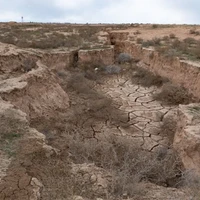
Satellite image shows extensive destruction at Ali Khamenei's compound in Tehran after the US-Israeli airstrike on Feb. 28 that killed Khamenei and several senior military commanders.
A meeting at Ali Khamenei's office where he was killed in February was focused on preparations to manage future protests as well as responding to what officials believed was an imminent US-Israeli attack, according to Noor News, a security-linked media outlet.
The report, published on Friday, followed recent remarks by Foreign Minister Abbas Araghchi, who said the US-Israeli attack that killed Khamenei and several senior military commanders did not occur during a full meeting of Iran's Defense Council. Instead, Araghchi said, a subordinate committee of the council, chaired by the council's secretary, was meeting at the time.
According to Noor News, the committee was chaired by Ali Shamkhani and was discussing the implementation of a comprehensive plan to organize resources, personnel, structures and equipment to manage future protests, while also assessing what participants believed was an imminent US-Israeli attack on Iran.
Protest response and military planning
The outlet said officials viewed the country as facing a "multi-layered threat" combining foreign military action with the prospect of domestic unrest, making preparations for both scenarios a priority.
The protest management plan, Noor News wrote, gained urgency after nationwide protests in January 2026. Khamenei, it added, rejected a proposal to transfer responsibility for the plan to the Supreme National Security Council's secretariat and instead instructed Shamkhani to oversee its implementation until its completion.
Khamenei and Shamkhani, the report added, also emphasized reducing casualties among civilians and protesters during demonstrations, leading to the development of new equipment and procedures for managing public gatherings.
The January protests were triggered by soaring prices, a collapsing currency and deep public anger toward the Islamic Republic. What began as an economic protest quickly evolved into a nationwide political crisis, prompting one of the most intense crackdowns in the Islamic Republic’s history.
Authorities responded with internet shutdowns, mass arrests and a violent crackdown. More than 36,500 Iranians were killed by security forces during the nationwide crackdown on January 8 and 9, according to classified government documents and other evidence reviewed by Iran International's Editorial Board.
The strike began while the committee was in session, killing Shamkhani and several senior military commanders, according to Noor News. The outlet said the meeting was intended to prepare for what participants believed would be simultaneous external military action and internal unrest.
Khamenei was killed on February 28 in the opening hours of the US-Israeli war against Iran. He died in a coordinated airstrike targeting his heavily fortified compound in Tehran as part of a broader operation aimed at decapitating Iran's military and political leadership. Satellite imagery later showed extensive destruction at the compound.
Khamenei, who had ruled Iran since 1989, was 86. The Assembly of Experts subsequently appointed his son, Mojtaba Khamenei, as Iran's new Supreme Leader.
Workers remove a damaged vehicle from a bridge near Bandar Abbas after a US airstrike, as the conflict between Iran and the United States continues to intensify, July 18, 2026
Recent statements by officials in Tehran and Washington illustrate how public rhetoric has shifted beyond military deterrence toward explicit threats against civilian and energy infrastructure across the Middle East.
The escalation accelerated after President Donald Trump warned that the United States would destroy an Iranian bridge or power plant for every attack on shipping in the Strait of Hormuz.
Iranian officials responded not by narrowing the confrontation but by broadening it, signaling that any future conflict would no longer be confined to military targets or the strategic waterway itself.
Until recently, Iranian messaging had focused largely on asserting its authority over the Strait of Hormuz and threatening commercial shipping.
Since Trump's warning, however, officials and state media have increasingly portrayed bridges, power grids, oil infrastructure and other civilian facilities across the region as legitimate targets in a broader campaign of reciprocal retaliation.
Iranian Foreign Minister Abbas Araghchi responded on Wednesday by declaring that Iran would follow an "eye for an eye" doctrine.
"I believe any attack on Iran's bridges, power plants or civilian infrastructure will be met with a powerful and decisive response," he said, warning that retaliation would target not only US assets but also any regional country facilitating such attacks.
On Thursday, Secretary of State Marco Rubio escalated the rhetoric further, saying Trump's Iran policy amounted to "a head for an eye" and warning Tehran it would pay a heavy price for attacks on Americans or US interests.
Iran's chief negotiator, Parliament Speaker Mohammad Bagher Ghalibaf, dismissed Washington's warnings and declared that the confrontation had entered an "either all or none" phase.
"If Iran is prevented from exporting oil or securing its domestic infrastructure, no infrastructure in the region will be safe, and no one will be able to sell oil," he warned.
His remarks reflected a growing effort to frame attacks on Persian Gulf energy infrastructure not simply as retaliation but as an integral part of Iran's deterrence strategy.
State and IRGC-linked media quickly amplified that message.
The IRGC-linked Tasnim News Agency quoted senior military sources as saying Iran had a "steel determination" to control the Strait of Hormuz and would strike multiple energy targets across the region in response to any attack on Iranian bridges or power plants.
State television likewise warned that Trump's infrastructure threats "will have no result other than the expansion of the war."
The rhetoric broadened further after Trump said he was considering strikes on Iran's nuclear facilities under Pickaxe Mountain.
In response, the Khatam al-Anbiya Central Headquarters warned such an attack would constitute an existential escalation, compelling Iran to target "all interests of America, its allies and supporters" throughout the Middle East.
Not everyone in Tehran supported the increasingly confrontational tone.
Former Iranian ambassador to Germany Hossein Mousavian argued that "continued military confrontation between Iran and the United States will produce no winner and will instead drag the region and the global economy into a costly war of attrition."
Writing in Rouydad24, he said the only viable exit lay in "an immediate return to diplomacy, an agreement on the security of the Strait of Hormuz, and the achievement of a durable nuclear deal."
Yet those voices remain overshadowed by an increasingly reciprocal exchange of threats.
Rubio has warned that Iran "will have to pay a price" if it continues attacking US interests, while Iranian hardliners increasingly argue that accepting a ceasefire itself was a strategic mistake.
Lawmaker Abolfazl Abutorabi told Didban Iran that Washington would have "kissed our boots" had Tehran continued fighting for another two weeks.
The increasingly symmetrical rhetoric suggests both governments are treating attacks on civilian and energy infrastructure not as exceptional acts of escalation but as legitimate retaliation, lowering the threshold for a conflict that could spread well beyond the battlefield and the Strait of Hormuz.
US Secretary of State Marco Rubio attends the 33rd ASEAN Regional Forum (ARF), part of the ASEAN Foreign Ministers' Meeting, at the Philippine International Convention Center on July 23, 2026 in Pasay, Metro Manila, Philippines.
US Secretary of State Marco Rubio said President Donald Trump’s policy toward Iran was “a head for an eye,” warning Tehran it would pay a heavy price for attacks on Americans and US interests.
Rubio made the remark when asked about Iranian Foreign Minister Abbas Araghchi invoking the principle of “an eye for an eye.”
“The president’s policy is a head for an eye,” Rubio told reporters at an ASEAN summit in Manila.
“They will pay a very heavy price for the things they’re doing. They’re already paying a very heavy price,” he said.
Rubio said Iran’s industrial and defense industrial bases had been “decimated” and that Tehran was continuing to lose missile launchers and radar systems.
“They’re losing launchers. They’re losing radars every single night. They are suffering billions of dollars in damage, and their economy is a disaster,” he said.
Despite Iran’s rhetoric, Rubio said, “they are suffering tremendously, and they’re going to suffer more until they come to their senses.”
US goal is denuclearized Iran
Rubio said the Trump administration’s goal was a denuclearized Iran, not regime change.
“I think the US is seeking a denuclearized Iran that will never have a nuclear weapon,” Rubio said.
“Our issue and our concern and our focus is denuclearizing Iran. They can never have a nuclear weapon.”
Asked whether Washington was comfortable leaving Iran’s current leadership in power, Rubio replied: “They can’t have a nuclear weapon.”
He also rejected suggestions that Trump had made regime change an objective of the conflict.
“He never said regime change was a goal,” Rubio said.
“From day one of the operation, it was very clear that we were going to degrade their missile launchers, their drones, and their factories and their navy.”
Rubio said Trump had argued that the Iranian people deserved better leadership, but added that Washington’s national interest was ensuring Iran never acquired a nuclear weapon.
Iran not ready for a deal
Rubio said he did not believe Iran was ready to reach an agreement with Washington despite repeated indirect messages seeking talks.
"These people are calling us every day, begging, let's do a deal. They send us messages through other countries, third countries," Rubio said.
"The problem is, every time these people do a deal, they either break it or after they make it, they want to change the deal."
"I don't think they're serious about making a deal," he said, adding: "I think they'll be ready soon because the price they're paying is very high."
Rubio said Iran had suffered extensive military and economic damage.
"They're losing launchers. They're losing radars every single night. They are suffering billions of dollars in damage, and their economy is a disaster," he said.
Despite Iran's rhetoric, Rubio said, "they are suffering tremendously, and they're going to suffer more until they come to their senses."
Warning to Iran
Asked about Iranian Foreign Minister Abbas Araghchi's remarks invoking "an eye for an eye," Rubio responded: "The president's policy is a head for an eye."
"They will pay a very heavy price for the things they're doing. They're already paying a very heavy price," Rubio said.
He said Iran's industrial and defense industrial bases had been "decimated" and said Tehran would continue to pay a price for its actions.
Russia question
Asked about a report that US intelligence analysts were investigating whether Russia had assisted Iranian drone strikes on CIA facilities in the Persian Gulf, Rubio declined to comment on the specific allegation.
"Let's imagine that were true. I certainly wouldn't discuss it in the press," he said.
Rubio said Iran had spent years building up the military capabilities it was now using.
"Nothing that Iran is doing, nothing that anyone's doing to help Iran is in any way increasing their ability to target Americans," he said.
"Iran has spent the better part of 20 years not just sponsoring terrorism, but building long-range rockets, short-range missiles and drones."
He said Tehran had intended to double its stockpile and use its missiles and drones to deter action against a nuclear weapons programme.
"The world will be a safer place because we addressed it," Rubio said, referring to US military action against Iran's capabilities.
A view the panel at Iran International town hall in Washington, DC (July 2026)
The US may be peeling away layers of Iran's leadership, but without a plan for what comes next, bombing the coast and seizing islands cannot reach the problem in Tehran, and risk delivering an IRGC takeover rather than real change, experts said at an Iran International town hall.
The panel, held at Iran International's Washington headquarters and moderated by Fardad Farahzad, brought together Michael Rubin of the American Enterprise Institute, Ilan Berman of the American Foreign Policy Council, and Iranian-American analyst Fereshteh Pezeshk.
The discussion came amid renewed US strikes, with attacks tearing through bridges and infrastructure across Iran's south.
Is Washington heading for a ground operation?
The question hanging over the room was whether the air campaign is a prelude to something larger. Rubin framed the choice in stark terms.
"When you have a hornet's nest, you have two good options. One is to leave it alone. The other one is to get rid of it," he said. "The last thing you want to do is sit underneath it lightly tapping it with a stick, and we're getting to the point where that stick tapping is over."
The open question, he added, is "are we heading to boots on the ground? And if we're heading to boots on the ground, are we simply talking about the islands in the Persian Gulf, or are we talking about some of the ports?"
Pezeshk talked about the risks. A move onto Iranian soil, she argued, would be "disastrous," and not only in military terms. "A very good population of Iranians, unlike the rest of the Middle East, are pro-American," she said, describing "a chasm between the people and the Islamic Republic" after the killing on Iran's streets.
Michael Rubin of the American Enterprise Institute at Iran International town hall in Washington
An occupation, she warned, could close that chasm rather than widen it. "The solution is in Tehran, not on the coasts. You've got to resolve that problem."
Berman placed the same question inside American politics, noting that gasoline prices and looming midterm elections are shaping every decision the administration makes.
The task now, he said, is to establish what military planners call escalation dominance, "to show the Iranian regime that they have more firepower and they have politically more will to stay and to fight."
Regime change or transformation?
The most contested idea of the evening came from Berman, who argued that a quieter transformation has already taken place inside the Islamic Republic.
The current rulers, he said, "have a different DNA. They behave differently, they negotiate differently," a shift he traced in part to a war that opened at the very top of the escalation ladder with the killing of the supreme leader.
However, he pointed out that the change has not produced true regime change. “The Trump administration hasn’t dug deep enough... “You haven’t had regime change as most of us have historically thought about it – a transition from the Islamic Republic to a fundamentally different governing system.”
Rubin pushed the logic toward the machinery of power, describing an effort to peel away the leadership layer by layer. With the Revolutionary Guards numbering well over 100,000, he argued, "somewhere along those ranks there is someone who wants to enrich himself" and would deal with Washington.
But he cautioned that the administration may not know who actually runs the country, comparing its approach to "negotiating with the doorman in a skyscraper rather than negotiating with the owner."
Both men returned to a warning that any transition badly managed could produce something worse.
Iranian-American analyst Fereshteh Pezeshk at Iran International town hall
Pezeshk offered the strongest caution against treating decapitation strikes as a complete regime-change strategy. “You have to resolve the political issue in Tehran, not the manifestation.”
She pressed the point harder: removing the leadership without a plan for the day after risks chaos. "How do you ensure it's not going to be a Taliban-like power that comes in? Are you working with the opposition? Are you inclusive enough?" She saw little sign of that groundwork.
"The guy sitting in Tehran is going to be there forever until they die. The US president, two and a half years from now, is gone."
The next uprising, and a fumbled chance
If there was a shared conviction, it was that Iran's streets, not its negotiators, will decide the outcome, and that Washington keeps missing its moments there.
Berman described unrest in Iran as a cyclical force, erupting roughly every two and a half years and accelerating. The lesson of the past six months, he said, is that the US was caught flat-footed when it mattered.
When the internet went dark in January, he recounted, the administration assumed it could "just pierce that veil" with Starlink units and VPNs. Instead it found the jamming, aided by Russia and China, far more robust than expected, and its own tools not prepositioned.
"One of the most important lessons that this last half year has brought is we should be thinking now about the next round of protests, because the next protest is going to start."
Pezeshk argued it already had. She credited the January protests, set off in part by an opposition call to the streets, as "one of the biggest protests ever in Iranian history," met with a killing she put at around 40,000. Her frustration was that such a force draws so little attention in Washington.
The Kurds, the islands, and a mafia state
Asked whether the US might arm Kurdish or other groups to open a ground front, the panel was wary. Rubin noted Washington's long reluctance to back separatist movements in the region, and Pezeshk attributed the on-again, off-again talk to "the chaos of the Trump administration."
Berman said officials he had spoken to were "very nervous about the steadfastness and the resolve of these elements."
Ilan Berman of the American Foreign Policy Council
Rubin, speaking "as an analyst rather than advocate," sketched where a limited campaign might fall: not the ports, but strategic islands, from Abu Musa and the Tunbs to Kish and Qeshm, "the gateway to Bandar Abbas."
He warned that seizing Iranian territory could backfire by rallying a fiercely nationalist public. The Islamic Republic, he argued, would not be moved by the loss of land the way a normal state would.
"They act like a mafia. They don't care if part of the country is gone as long as they're still in power."
Pezeshk’s argument was that territorial occupation – whether by US forces, Kurdish groups or another regional actor – could unite Iranians around national sovereignty.
Can an ideological system make a lasting deal?
Rubin argued that the Islamic Republic’s political identity limits its ability to reach the kind of pragmatic agreement sought by the Trump administration. Rubin argued that the Islamic Republic’s political identity limits its ability to reach the kind of pragmatic agreement sought by the Trump administration.
Pezeshk was skeptical any lasting deal is possible with a system she sees as ideological to its core.
Persian Gulf states, she said, want development, not confrontation, "they do not want to go back to the 18th century," while the Islamic Republic "has a tolerance for absorbing a lot of pain just because they don't care about their people."
Whether the war ends at the table or on the coast, the panel's consensus held that its true resolution lies elsewhere.
As Rubin put it, the nuclear file, the missiles and the proxies are all "the manifestation of the root cause, which is the Islamic Republic."
US Secretary of State Marco Rubio speaks during a press conference on the sidelines of the Association of Southeast Asian Nations (ASEAN) Foreign Ministers' Meeting in Pasay, Philippines on July 22, 2026.
US Secretary of State Marco Rubio said on Wednesday that Iran was under severe economic and military pressure but the United States would continue targeting its ability to attack commercial shipping while remaining open to a negotiated solution.
"Iran's in a lot of trouble," Rubio told reporters on the sidelines of the ASEAN summit.
He said Iran was facing "hyperinflation, runaway inflation, high food costs," adding that the country's military infrastructure had suffered "a tremendous amount of damage."
Rubio accused Tehran of spending "every penny they have" over the past two decades "not spending it on their country," but instead "sponsoring terrorist groups and building up their missiles and their drone systems."
He said those missile and drone capabilities had been intended to shield Iran's nuclear ambitions.
"A year from now, Iran would have had so many missiles and drones that they would have been behind a conventional shield that would have given them immunity to do whatever they wanted."
Shipping campaign
Rubio said the United States was focused on protecting commercial shipping and reducing Iran's ability to threaten maritime traffic.
"Ships are trying to go through the Straits and they're getting blown up. Commercial ships are going through the Straits and they're being blown up," he said.
"The United States is defending that shipping and, in addition, is targeting the places that are launching against those ships that continue to degrade Iran's ability to target and harm global shipping."
"So that's what's happening there, and that's what we're focused on."
Memorandum of understanding
Asked about Iran's announcement that it had suspended its commitments under the Islamabad memorandum of understanding with the United States, Rubio said agreements depended on compliance.
"If you make a deal, if you sign on to an agreement, and then you violate the agreement, the agreement's no longer valid," he said.
"That doesn't mean you can't have a future agreement, but ultimately, that future agreement will have to be judged on whether or not you're complying with the conditions."
Rubio said the memorandum "called for the opening of the Straits, free and fair navigation."
"In fact, they were supposed to put out a statement to that regard a week and a half ago, and instead, on the day they were supposed to put out that statement, instead of doing that, they targeted and hit a ship."
Diplomacy remains possible
Rubio said Washington had not abandoned diplomacy despite the military campaign.
"We remain open to diplomacy. We remain open to working it out in a negotiated way."
"But right now, they don't seem to be serious about that, and so we're going to continue to protect shipping."
He added that other countries should join the effort.
"We think other countries should join us in that endeavor. We don't need them to, but they should because they're more impacted by it than we are."
"And at the same time, we are going to, when the opportunity presents itself, degrade their ability to target global shipping."
China and the Strait of Hormuz
Rubio said China's actions had not changed the course of the conflict with Iran and suggested Beijing opposed any disruption to navigation through the Strait of Hormuz.
"Nothing that's happened, nothing that China has done, has in any way changed the trajectory of what you're seeing in terms of the conflicts we're having with Iran," he said.
"I don't think they're big fans of what Iran is trying to do in the Straits."
"They've said so publicly that they oppose tolling or any sort of restraint on freedom of navigation in the Straits, and we hope they'll continue to say that. It's important that other countries say that as well."
A satellite view shows an overview of the Natanz nuclear facility and Pickaxe Mountain, near Natanz, Iran, June 30, 2026. Vantor/Handout via REUTERS
President Donald Trump vowed Tuesday to strike Iran’s Pickaxe Mountain, but experts say the deeply buried nuclear facility, potentially central to Tehran’s efforts to restore enrichment, may be far harder to disable than his warning suggests.
“The new site that they’re talking about, they’re trying to possibly reconstitute a site, we’ll hit that site,” Trump told reporters Tuesday during an Oval Office meeting with Lebanese President Joseph Aoun.
“Any site where they’re even thinking about nuclear, we’ll be hitting it very, very powerfully.”
Hours after the US president’s warning, Iran’s joint military command warned that any US attack on Iran’s nuclear or other sensitive sites would widen the regional war, according to state media.
US interests and those of countries supporting Washington would face a “powerful assault” by Iran’s armed forces, Khatam al-Anbiya Central Headquarters said.
Raja News, a hardline Tehran outlet, went further, calling for Iran to publish a list of vital infrastructure across the region, particularly in the United Arab Emirates, and strike the targets if the United States attacks Pickaxe Mountain.
The outlet said Iran should not wait for an attack before responding and urged officials to present a practical plan for withdrawing from the Nuclear Non-Proliferation Treaty.
Trump’s warning followed an Israeli intelligence assessment, first reported by The Wall Street Journal, that Iran moved thousands of uranium-enrichment centrifuges into Pickaxe Mountain last fall.
Israel shared the assessment with Washington, but the allegation has not been independently verified, and neither country has publicly disclosed the evidence supporting it.
If accurate, the reported transfer would make Pickaxe one of the most strategically important surviving sites in Iran’s nuclear program.
Centrifuges enrich uranium by spinning uranium hexafluoride gas at extremely high speeds and are essential for producing nuclear fuel or weapons-grade material.
“When you assemble centrifuges like that, the next step is to put them in an enrichment plant,” David Albright, president of the Institute for Science and International Security, told Iran International.
Iran began building Pickaxe Mountain after an explosion in 2020 damaged an above-ground advanced centrifuge assembly facility at Natanz in an attack widely attributed to Israel. Tehran said the underground complex would replace the damaged assembly plant.
Satellite imagery has shown years of continued construction. Albright said the underground complex appears significantly larger than would be required for centrifuge assembly alone, leading his institute to assess that it could eventually also house a uranium-enrichment plant.
If centrifuges are being stored there, experts say the facility could provide Tehran with a pathway to restore uranium enrichment despite months of US and Israeli military strikes.
A difficult target
Its depth also makes Pickaxe one of Iran’s most difficult nuclear facilities to attack.
Andrea Stricker, deputy director of the Foundation for Defense of Democracies’ Nonproliferation Program, said the facility is estimated to sit roughly 300 to 450 feet beneath a granite mountain, potentially placing it beyond the reach of conventional US bunker-buster bombs.
“Essentially, Pickaxe is where Iran could reconstitute a nuclear weapons pathway,” Stricker told Iran International.
Rather than attempting to penetrate the mountain itself, experts say military planners could seek to disable the facility by targeting its tunnel entrances, ventilation systems and electrical infrastructure.
“You don’t look to get a bunker buster to pass through the mountain. I mean, that’s just not possible,” Albright said.
But he added that the complex was “not immune from destruction or shutting it down.”
“If they have centrifuges in there and they can’t use them, then that is a step forward to try to keep Iran from building nuclear weapons,” he said.
Stricker said another option would be to destroy access through the eastern and western tunnel entrances, preventing Iran from re-entering the complex while allowing the site to be monitored for renewed activity.
Preventing reconstitution
For Rebeccah Heinrichs, a senior fellow at the Hudson Institute, Pickaxe represents a different phase of the military campaign.
While Washington still has conventional military targets it can strike from the air, Heinrichs said Pickaxe presents a more complex challenge because of its depth and its potential role in rebuilding Iran’s nuclear program.
If Trump concludes that airpower alone cannot prevent Iran from restoring its nuclear capabilities, Heinrichs said any use of US forces on the ground would more likely involve a limited special-operations mission than a conventional invasion.
"This would be a special operations mission on the ground," she toldEye for Iran, suggesting any such operation would likely be conducted alongside Israel to secure or remove sensitive nuclear material.
There is no public evidence that Washington is planning such an operation.
Heinrichs also suggested that the United States may have deliberately avoided striking Pickaxe so far to preserve the possibility of entering or securing the complex, although Washington has not publicly indicated that this was its reasoning.
Whether Trump ultimately orders an attack remains uncertain, and his warning may be intended partly to deter Iran from activating the facility.
But the president’s remarks, the Israeli intelligence assessment and mounting concern among nuclear experts have placed Pickaxe Mountain at the center of a broader strategic question: how to prevent Iran from rebuilding its nuclear program after months of military strikes.