Trump posts poll showing support for Iran peace deal


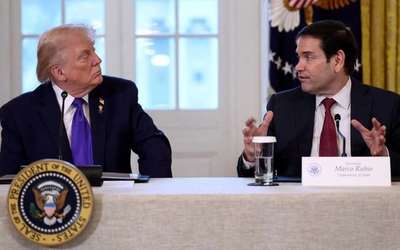
US President Donald Trump posted a poll on Truth Social on Monday showing majority support for his administration's peace deal with Iran.
The image, from polling firm Big Data Poll, showed 60.4% of registered voters and 62.2% of likely voters supporting the agreement to end the Iran war, with about one-quarter opposed.
According to the poll, the deal reopens the Strait of Hormuz without tolls, begins a 60-day negotiation period on Iran's nuclear program and sanctions relief, and says Iran "shall not procure or develop nuclear weapons."
Trump did not add any comment to the post.




The spokesman for Iran's army said on Monday the war would continue until the country achieved what he described as "full deterrence," adding that countries supporting the United States could face consequences in the Strait of Hormuz.
Mohammad Akraminia said countries that had cooperated with Washington while continuing to use the Strait of Hormuz for trade and oil exports should expect Iran's approach to the waterway to affect its relations with them.
"Any country that sides with the Americans will certainly face problems in the Strait of Hormuz," Akraminia said. "No one can use this route to bring in equipment and ammunition and then use them against us."
Iran’s parliament speaker said the United States was continuing to send military equipment to the region despite saying it wanted to end the war, adding that the Islamic Republic was prepared for further US moves on Monday.
“The Americans continue to bring new military equipment into the region and say they are seeking to stop the war. They have judged our intelligence by their own limited IQ,” Mohammad Bagher Ghalibaf wrote on X.
Ghalibaf, who is leading Iran’s negotiating team, said Iranian officials had become highly experienced in assessing US tactics and had prepared accordingly.
“We have reached the level of full mastery in recognising these American tactics, and we have prepared on that basis,” Ghalibaf said.
Ghalibaf wrote Washington’s conduct would determine whether its public statements were credible.
“Actions must support those statements, not contradict them,” he said.
Iran's economy has become the country's main battlefield after military attacks, President Masoud Pezeshkian said on Monday, warning that mounting economic pressure could fuel public discontent.
Speaking at a meeting of the High Council of the Judiciary, Pezeshkian said Iran was facing a "full-scale war" that extended beyond military confrontation.
He said that worsening economic conditions and pressure on livelihoods could erode public support if social discontent continued to grow.
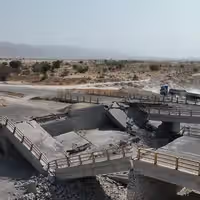
US attacks damaged a significant portion of Iran's energy and water infrastructure, Energy Minister Abbas Aliabadi said on Monday, adding that authorities hoped to end power cuts in the country's south within five weeks.
Aliabadi told state television that electricity saved through public conservation efforts would be redirected to southern provinces.
He said efforts were underway to restore the affected infrastructure and eliminate electricity outages in southern Iran within the next five weeks.
The Strait of Hormuz cannot be taken out of Iran's control, lawmaker Rouhollah Motefakker Azad said on Monday, adding that Tehran would escalate its military response if the war continued.
Motefakker Azad, a member of parliament's presiding board, told Mehr News Agency that Iran would not back down over the strategic waterway.
"If the war continues, the Islamic Republic will enter it in a more aggressive manner, and then the Americans should more seriously and quickly think about leaving the region," he said.