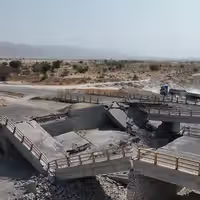
The debate has intensified since Iran targeted a vessel near the Strait of Hormuz last week, prompting a renewed US military campaign that has included days of strikes on ports, bridges, airports and military facilities across Iran’s southern provinces.
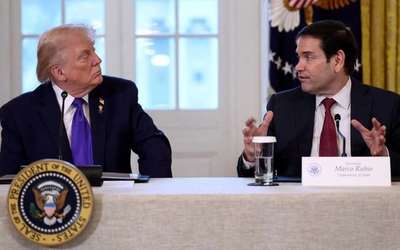
Even as US Vice President JD Vance and Iranian Parliament Speaker and chief negotiator Mohammad-Bagher Ghalibaf have continued to defend diplomacy backed by military preparedness, the fighting has persisted and the prospect of a wider conflict has grown.
The criticism has been directed in part at ultrahardline figures such as Qom Seminary Chancellor Alireza Arafi, who has called for further war against the United States and an end to negotiations.
Two recent commentaries—one by former lawmaker and former National Security Committee chairman Heshmatollah Falahatpisheh, the other by political analyst Abdolrahman Fathollahi—reflect the growing push to hold hardliners accountable for the costs of confrontation.
While one focuses on political responsibility for failed diplomacy, the other highlights the burden borne by communities on Iran’s southern frontier.
‘Defeating diplomacy’
Writing in the moderate daily Toseh Irani, Falahatpisheh accused hardline factions of using what he called a distorted interpretation of religion to obstruct diplomatic opportunities.
“I believe part of these two major wars against Iran was the result of this very definition of religious beliefs by extremists, who are now turning to distorting religion to defeat diplomacy,” he wrote.
He argued that the same factions had repeatedly promised better outcomes while blocking agreements that could have reduced tensions.
“They are the exact same people who blocked two good agreements during the major periods of 2021 and 2022, claiming they would forge a better deal,” he wrote. “But in practice, not only was no agreement achieved, but two major wars were imposed on Iran.”
Falahatpisheh called for the prosecution of those he said had turned diplomatic opportunities into military conflict.
‘Patriotism from a safe distance’
A second commentary, published Thursday in Shargh, shifted the focus from political responsibility to the human cost of confrontation.
Under the title The Country’s Future and the Triangle of Extremism, Costs, and Responsibility, Fathollahi warned about the toll of intensifying US airstrikes on Iran’s southern coastal provinces.
He pointed to public campaigns calling for outspoken opponents of negotiations to be sent to the front lines, accusing them of practising what he described as “patriotism from a safe distance.”
“One certainly cannot beat the drums of war from the safe margins of the capital behind podiums, while dumping the costs of those decisions onto the people living in the front lines,” Fathollahi wrote, highlighting the plight of communities bearing the brunt of the fighting over the Strait of Hormuz.
The comments come after a week of US strikes on infrastructure across Iran’s Persian Gulf provinces, where dozens have been killed or injured and many more affected by transport disruption, electricity blackouts and water shortages during the height of summer.
For Fathollahi, the question is no longer simply one of military strategy but whether Iran’s leaders are willing to change course before the costs grow even higher.
“Rethinking certain political approaches and utilizing all expert and diplomatic capacities is not a choice,” he concluded, “but a necessity to safeguard national interests and reduce the costs imposed on society.”