• العربية
  • فارسی
Brand
  • Iran Insight
  • Politics
  • Economy
  • Analysis
  • Special Report
  • Opinion
  • Podcast
  • Iran Insight
  • Politics
  • Economy
  • Analysis
  • Special Report
  • Opinion
  • Podcast
  • Theme
  • Language
    • العربية
    • فارسی
  • Iran Insight
  • Politics
  • Economy
  • Analysis
  • Special Report
  • Opinion
  • Podcast
All rights reserved for Volant Media UK Limited
volant media logo

Palestinian president backs Jordan, Kuwait, Bahrain after Iran attacks

Jul 10, 2026, 03:55 GMT+1

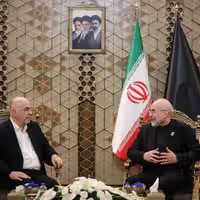
Palestinian Authority President Mahmoud Abbas expressed solidarity with Jordan, Kuwait and Bahrain following Iran's attacks this week, the official Wafa news agency reported Thursday.

Abbas reaffirmed Palestine's support for any measures the three countries take to safeguard their sovereignty.

Most Viewed

Finnish grocery brand drawn into Khamenei funeral spectacle in Iraq
1

Finnish grocery brand drawn into Khamenei funeral spectacle in Iraq

2

Iran summons British ambassador after London calls in senior diplomat

3
INSIGHT

New strikes expose Tehran’s battle between diplomacy and revenge

4
ANALYSIS

A remote bridge shows how US-Iran war is expanding

5
TEHRAN INSIDER

We live through decisions we don't make

Banner
Banner
Banner

Spotlight

  • Tehran torn between war and deal as Khamenei is buried
    INSIGHT

    Tehran torn between war and deal as Khamenei is buried

  • A remote bridge shows how US-Iran war is expanding
    ANALYSIS

    A remote bridge shows how US-Iran war is expanding

  • US strikes, Hormuz clashes push Iran deal to brink
    INSIGHT

    US strikes, Hormuz clashes push Iran deal to brink

  • Trump's rhetoric U-turn leaves Iranians between dread, hope and memes
    VOICES FROM IRAN

    Trump's rhetoric U-turn leaves Iranians between dread, hope and memes

  • We live through decisions we don't make
    TEHRAN INSIDER

    We live through decisions we don't make

  • Hamas gives up Gaza government, but not Iran ties
    ANALYSIS

    Hamas gives up Gaza government, but not Iran ties

•
•
•

More Stories

Tehran torn between war and deal as Khamenei is buried

Jul 10, 2026, 03:30 GMT+1
•
Behrouz Turani
100%
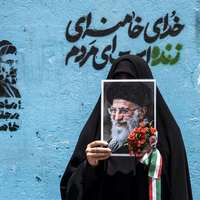
A woman holds a portrait of Ali Khamenei near graffiti supporting his successor Mojtaba Khamenei during funeral ceremonies in Tehran, July 7, 2026

Iran’s media landscape is sharply split over the latest escalation, with moderate outlets warning that ordinary Iranians will pay the price and hardline voices calling for forceful retaliation against US interests and regional energy routes.

The debate comes as Ali Khamenei was buried in Mashhad after a week of funeral ceremonies, marking the symbolic beginning of a new political era for the Islamic Republic.

One headline on a leading Tehran news site captured the anxiety: “People will have to pay the price of uncalculated slogans.”

Other outlets warned of “the very high possibility of a full-fledged war,” soaring exchange rates and gold prices, and a country trapped in “a war between wars.”

Coverage on pro-reform Fararu and other outlets reflected growing concern over security and the economy, as Iranians rushed to convert savings into gold and dollars in a volatile market reacting to every comment from Tehran or Washington.

‘Incation worse than compromise’

Economist Mehdi Pazouki warned in an interview with Fararu that continued uncertainty would deepen the damage to Iran’s economy and people’s livelihoods.

“Every single day earlier that the agreement is signed is in the country’s interest,” he said, urging Tehran to finalize an agreement with Washington and pursue deeper reforms.

“The cost of inaction is far greater than the cost of compromise,” he added.

Despite renewed military escalation, Reuters cited a US official on Thursday as saying Washington remained committed to finding a resolution with Iran and that technical talks were continuing.

The pro-Pezeshkian daily Etemad voiced concern over the growing pressure on Iran’s state institutions.

While acknowledging what it called “the necessity of a calculated defense to deter unilateral American bullying,” the paper warned that a wider regional war could overwhelm civilian systems.

It pointed to casualties reported by the Health Ministry—at least 14 killed and 78 wounded—and damage to transport corridors in Khuzestan and Golestan provinces.

Etemad urged the Supreme National Security Council to ensure that any military response does not close backchannel or third-party diplomatic efforts, arguing that preventing a broader crisis must remain the government’s priority.

Sharq warned that US strikes on bridges and the Tehran-Mashhad railway marked a shift toward what it described as efforts to isolate Iran’s domestic markets.

Sharq said Iran’s ability to withstand pressure depends not only on military power but also economic durability, urging the government to use global concerns over energy instability to push for mediation.

‘Sacrilegious and criminal’

Hardline outlets presented the same developments as evidence that Iran should abandon restraint and expand its response.

Conservative factions framed the latest strikes as an opportunity to enforce Iranian control over the Strait of Hormuz.

Kayhan, whose chief is customarily appointed by the Supreme Leader, described the targeting of the Tehran-Mashhad railway corridor ahead of the late Supreme Leader’s burial as a “sacrilegious and criminal act of desperation.”

It argued that Supreme Leader, Mojtaba Khamenei now had a mandate for defiance, warning that any attack on Iran’s infrastructure would render “the entire maritime transit apparatus of the Persian Gulf completely non-operational.”

In a commentary headlined “Shattering the Logistics of Aggression,” the municipal daily Hamshahri praised Iranian strikes on US targets, including Patriot missile infrastructure in Kuwait and fuel depots in Bahrain.

Hamshahri argued that by expanding attacks to include host nations, Tehran was weakening what it described as the American security umbrella in the region.

The paper warned that disruption of Iran’s transport networks would be answered with paralysis of the regional energy supply chain.

Mojtaba Khamenei absent from public view during father’s burial

Jul 10, 2026, 01:52 GMT+1

Iran’s Supreme Leader Mojtaba Khamenei remained out of public view as his father and predecessor, Ali Khamenei, was buried in Mashhad in the early hours of Friday local time.

Other members of the Khamenei family attended the private ceremony, which followed days of public funeral events for the slain leader and several close family members killed alongside him on the first day of US-Israeli strikes on Tehran on February 28.

Mojtaba Khamenei has not been seen publicly since that day.

A remote bridge shows how US-Iran war is expanding

Jul 10, 2026, 01:28 GMT+1
•
Umud Shokri
100%
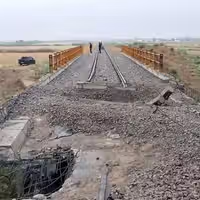
An image related by Iranian media purportedly showing the damage to the Aq Takeh Khan bridge in northeastern Iran, July 9, 2026

A reported US strike on a railway bridge in northern Iran has drawn attention to a lesser-known front in the widening conflict: the battle over the transport corridors linking Iran to Central Asia, Russia and China.

Iranian state media and the IRGC said cruise missiles attributed to US forces struck the Aq Tekeh Khan railway bridge near Aqqala in Golestan province early Wednesday, damaging the Gorgan–Incheh Borun railway line.

Washington has not confirmed the strike, and the claim has not been independently verified.

The bridge is part of Iran’s northern rail connectivity with Turkmenistan and wider Central Asian networks, making it relevant to military logistics, civilian trade, sanctions resilience and alternative transit routes.

Its targeting, if confirmed, would suggest that transport nodes are becoming strategic assets in the widening conflict, where pressure on dual-use infrastructure can disrupt connectivity without focusing only on conventional military sites.

Why the bridge matters

The Aq Tekeh Khan Bridge lies on the Gorgan–Incheh Borun railway, a key segment linking Iran’s interior to its northeastern border with Turkmenistan.

Incheh Borun serves as an important rail crossing and dry port in Golestan province, connecting southward into Iran’s national railway network and northward into the Kazakhstan–Turkmenistan–Iran corridor inaugurated in 2014.

The corridor, stretching from Kazakhstan through Turkmenistan into Iran, provides an overland connection between Iran and Central Asia, with links to Russia, China and wider Eurasian markets.

It also complements the International North-South Transport Corridor (INSTC) and overlaps with China’s Belt and Road Initiative ambitions by offering alternatives to vulnerable maritime routes.

For Iran, this northern railway artery is strategically valuable because it expands access to resource-rich Central Asian states and supports transit flows less exposed to Gulf chokepoints.

Freight trains from China have also moved along related corridors, underscoring the route’s place in broader East-West Eurasian trade.

Battle of transport networks

If confirmed, targeting railway infrastructure would suggest a broadening of strike objectives beyond traditional military facilities.

Railway bridges such as Aq Tekeh Khan are dual-use assets: they support civilian commerce, military mobility, sanctions-evading trade and rapid wartime logistics.

In modern conflicts, from Ukraine to the Middle East, infrastructure warfare has become increasingly central. Railways, ports, pipelines, bridges and power grids serve as chokepoints where military pressure and economic disruption intersect.

A damaged bridge can force rerouting, increase transport costs, delay supply chains and create bottlenecks whose effects exceed the physical scale of the strike itself.

For Iran, already facing pressure on southern ports, energy infrastructure and Gulf-facing trade routes, disruption to northern rail connectivity would test the resilience of its overland alternatives.

Targeting sanctions lifelines?

Damage to the Aq Tekeh Khan Bridge and associated rail services could limit Iran’s ability to move goods, fuel, equipment and strategic materials along its northern corridor.

Iranian authorities said the damage was repaired within a day and rail traffic had resumed, a claim that could not be independently verified. Even if temporary, the disruption highlights the importance of repair speed and infrastructure resilience in a conflict increasingly focused on transport networks.

Northern rail connectivity becomes especially important when southern ports or the Strait of Hormuz face military or political pressure. In such conditions, Iran’s ability to maintain alternative land routes through Central Asia, the Caspian region and Russia becomes part of its wider strategic depth.

Iran has spent years developing land corridors with Central Asia, Russia, China and the Caspian region to reduce dependence on maritime routes exposed to sanctions, surveillance and possible interdiction.

The Kazakhstan–Turkmenistan–Iran railway and INSTC-linked routes are central to that strategy, enabling transit revenues, regional trade and access to markets where sanctions enforcement may be less direct.

Strikes on such infrastructure could therefore be intended to erode Iran’s sanctions resilience by raising operational risks for partners and discouraging use of Iranian corridors during periods of conflict.

Regional consequences

The reported strike also carries potential implications for Turkmenistan, Kazakhstan and other Central Asian states.

These countries have invested in diversified transit routes through Iran to reach Gulf ports and global markets while reducing dependence on Russian or Chinese-controlled corridors.

If Iranian routes are viewed as vulnerable during conflict, governments and commercial operators may reassess their reliability.

For China, disruption to Iranian-linked corridors adds uncertainty to longer supply chains connecting East Asia, Central Asia and the Middle East.

For Russia, which has deepened logistical ties with Tehran, damage to Iranian transport infrastructure could complicate southern access routes.

The reported strike highlights how infrastructure has become part of modern strategic competition.

For Iran, the incident reinforces the challenge of protecting trade networks built to withstand sanctions and pressure on maritime access. It also shows that corridor politics, from the BRI to the INSTC, are increasingly shaped not only by commerce but by military risks.

Whether this leads to hardened infrastructure, shifts in regional trade planning or renewed pressure for de-escalation remains uncertain, but the bridge’s symbolic and practical importance now extends well beyond Golestan province.


US strikes, Hormuz clashes push Iran deal to brink

Jul 10, 2026, 01:21 GMT+1
100%

The fragile memorandum between Tehran and Washington is facing its biggest test yet after two days of US strikes on targets along Iran’s southern coast and Iranian attacks on commercial shipping near the Strait of Hormuz raised fears of a return to full-scale war.

Iranian officials have threatened severe retaliation, while analysts warn that disputes over sanctions, maritime routes and the future of the agreement could push both sides into another major confrontation.

Mohsen Jalilvand, a professor of international relations, said the continued US military presence in the region and Tehran's insistence on controlling shipping through the Strait of Hormuz have significantly increased the risk of war.

"When both sides continue to stand by their positions, and there are no signs of retreat, it is only natural that the likelihood of a broader confrontation increases," he told the news website Fararu.

Read the full article here.

Israel told US Iran plotted to kill Trump - WSJ

Jul 10, 2026, 00:32 GMT+1

Israel shared new intelligence with the United States that it said indicated a fresh Iranian plan to kill President Donald Trump, The Wall Street Journal reported citing people familiar with the matter.

CNN, citing two sources familiar with the matter, said the Israeli warning came this week and concerned a specific plot, but that the United States had not vetted the details itself.

Trump said Wednesday during a NATO summit in Ankara that he was on “every single one” of Iran’s lists and had so far been “a little bit lucky.”