UN shipping body urges countries to reject Iran’s Hormuz claims

The governing council of the UN shipping agency called on countries Friday to reject Iran’s efforts to assert sovereignty over the Strait of Hormuz and its creation of a body claiming authority over traffic through the waterway.
The non-binding decision by the International Maritime Organization’s council “strongly condemned” Tehran’s move to establish an entity seeking to control passage through the strait and urged member states not to recognize any Iranian action aimed at obstructing international navigation.
Iran’s recently created Persian Gulf Strait Authority said in June that vessels would need permits to pass through the waterway.
Iran rejected the criticism as politically motivated, saying its measures did not amount to closing the strait.






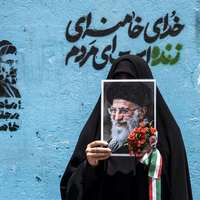



The message had been set in advance by the Friday Prayer Policy Council, which announced that weekly services nationwide would become “Fridays of Blood Vengeance and Revenge” until those blamed for Khamenei’s killing were punished.
The council said revenge was not an emotional response but a “strategic” and religious duty, explicitly naming US President Donald Trump and Israeli Prime Minister Benjamin Netanyahu.
“Carrying out retribution against the principal criminals – particularly the criminal Trump and the child-killing Netanyahu – is an unchanging element of divine justice,” its statement said.
It went further, saying every person or group with the ability to act had a duty to “rise for jihad” and carry out the task without delay. The council said banners calling for vengeance for Khamenei would remain beside Friday prayer pulpits until retribution was achieved.
The language was repeated across major cities.
In Mashhad, where Khamenei was buried, Friday prayer leader Ahmad Alamolhoda said retaliation must be seen by the public rather than remain an unfulfilled promise.
“Revenge and blood vengeance for the martyred leader must remain before the eyes of the people, and the people must see it with their own eyes,” he said. “Only then will real revenge have been taken.”
Saeed Jalili, the Supreme Leader’s representative to the Supreme National Security Council, told worshippers in Mashhad that revenge was a national right and a responsibility for officials.
“If you say Iran’s assets must be released, the greatest asset of our nation was its beloved leader,” Jalili said. “Today, the nation’s right is to defend this great asset through revenge, and it is the duty of officials to pursue it.”
Bushehr’s interim Friday prayer leader Yousef Jamali said worshippers would continue chanting for revenge until the United States and Israel were punished.
“We will stand alongside the officials and the armed forces and, God willing, bring the White House down on its occupants,” Jamali said. “Know that the sword of our revenge will fall upon the oppressors.”
In Rasht, cleric Rasoul Falahati linked revenge to the dispute over the US-Iran memorandum and navigation through the Strait of Hormuz.
“Negotiating in the middle of a war is meaningless,” he said. “Under the recent understanding, we opened the Strait of Hormuz, but America fulfilled none of its commitments and instead moved to further reinforce its bases.”
He said Muslims and “free nations” around the world were ready to take revenge on Trump and Netanyahu and urged Iran’s armed forces to respond firmly to any further US action.
Tehran Friday prayer leader Mohammad Hassan Aboutorabi Fard also accused Washington of violating the memorandum and rejected any US role in the strategic waterway.
“We explicitly declare that under no circumstances will the United States be allowed to interfere in the affairs of the Strait of Hormuz,” he said.
In Qom, Alireza Arafi described revenge against those who carried out and ordered Khamenei’s killing as a legal and religious right that would not be forgotten.
Shiraz interim Friday prayer leader Adel Hajipour used almost identical language, saying the destruction of those responsible was a public demand.
In Malayer, Mohammad-Ali Arzandeh said Friday prayers would remain “Fridays of revenge and blood vengeance” until Israel was destroyed and those blamed for regional insecurity were eliminated.
