US cannot negotiate while Iran reneges on obligations, envoy tells UN meeting


US Deputy Ambassador to the United Nations Tammy Bruce told an emergency Security Council session that Washington remained open to diplomacy with Iran, but warned talks could not continue while Tehran was breaching basic obligations.
“While dialogue remains possible, the US can’t negotiate while Iran reneges on simple obligations, like don’t shoot on civilian objects. If you shoot at civilian objects or ships, we will respond,” Bruce said, adding that “President Trump prefers peace.”
Bruce said Iran had violated international law and Security Council resolutions, arguing that such actions “cannot be met with council equivocation and obstruction.”






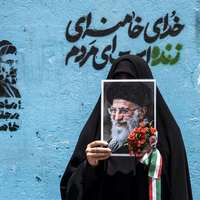

A source close to Iran’s negotiating team denied media reports that Tehran and Washington were preparing to hold a new round of talks next week, the IRGC-affiliated Fars news agency reported.
The source told Fars that claims about finalized preparations for talks in Islamabad and continued technical discussions next week were false and had no factual basis.
The source added that any developments in the negotiation process would be announced only through official channels of the Islamic Republic.
"No negotiations will be held until the Trump administration fulfills its commitments," said Mohammad Marandi, a member of the Islamic Republic’s delegation in Islamabad talks.
Influential hardline politician Saeed Jalili said avenging Ali Khamenei’s killing was the nation’s right and the authorities’ duty, in remarks seen as one of the first public signs of a rift within Iran’s leadership in the post-Khamenei era.
“What kind of revenge is this? Why is our nation calling for a great revenge? This nation wants to defend its rights,” Jalili told a group of Khamenei mourners in Mashhad.
“If you seek the release of frozen assets, know that the Iranian nation’s greatest asset was its leader. Today, our nation has the right to seek revenge. And it is the authorities’ duty to pursue this revenge. Revenge is the nation’s right and the authorities’ duty.”
A Qatari delegation visited Iran on Friday in an effort to ease tensions and strengthen Doha’s role as a mediator following the latest escalation between Tehran and Washington, according to reports.
Iran’s semi-official Tasnim News Agency said the visit followed what it described as Qatari accusations against Iran over an incident in the Strait of Hormuz and subsequent US attacks on Iranian military and civilian targets.
A source familiar with the talks told Reuters that Qatari negotiators were meeting Iranian officials to de-escalate tensions and create conditions for broader negotiations, adding that the effort was being coordinated with Washington.
US President Donald Trump said Iran had asked to continue talks with Washington but warned that the ceasefire between the two countries was over.
“We have agreed to Iran talks, but the United States has stated to them, in no uncertain terms, that the ceasefire is over,” Trump said.
His comments come after renewed military exchanges between the two countries raised questions over the future of the temporary memorandum of understanding signed last month.
Britain has enacted legislation creating powers that could allow the government to designate Iran's Islamic Revolutionary Guards Corps under a new legal framework targeting organizations linked to hostile foreign state activity as of July 2026.
The National Security (State Threats) Act 2026 gives the Home Secretary authority to designate organizations reasonably believed to be involved in foreign power threat activity if doing so is considered necessary to protect the UK's safety or interests.
The legislation follows a 2025 review by Jonathan Hall KC, the UK's Independent Reviewer of Terrorism and State Threat Legislation, which recommended introducing proscription-style powers for state-linked organizations. Hall said the new framework would, for example, allow the government to designate the IRGC.
"Keeping our country and communities safe is the first duty of any government," Home Secretary Shabana Mahmood said. "Under these new powers, we're going further to dismantle and deter hostile activity."
The law makes it a criminal offence to support, assist or receive a material benefit from a designated organization, with penalties of up to 14 years in prison.
It is intended to target groups acting on behalf of foreign states, including those accused of targeting dissidents, carrying out cyber attacks or threatening critical infrastructure.
The IRGC is already designated as a terrorist organization by the United States and Canada and several other countries. The new legislation does not automatically designate any organization, but provides the legal mechanism for ministers to do so if they consider the statutory tests have been met.
The Home Office said designations will be made without delay when judged necessary, while exemptions remain for legitimate diplomatic, humanitarian and journalistic engagement.