• العربية
  • فارسی
Brand
  • Iran Insight
  • Politics
  • Economy
  • Analysis
  • Special Report
  • Opinion
  • Podcast
  • Iran Insight
  • Politics
  • Economy
  • Analysis
  • Special Report
  • Opinion
  • Podcast
  • Theme
  • Language
    • العربية
    • فارسی
  • Iran Insight
  • Politics
  • Economy
  • Analysis
  • Special Report
  • Opinion
  • Podcast
All rights reserved for Volant Media UK Limited
volant media logo

Iran negotiator says Hormuz fees to resume after 60-day suspension

Jun 26, 2026, 18:16 GMT+1

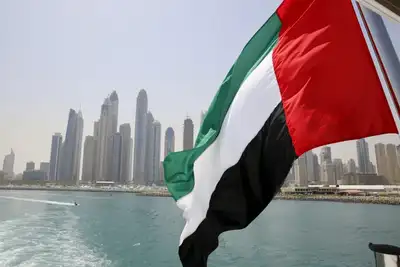
An economic member of Iran’s negotiating team said Tehran accepted a 60-day suspension of fees on vessels passing through the Strait of Hormuz to secure an agreement, but that collection would resume once the period ends.

Hossein Ghorbanzadeh said charging vessels solely for passing through a natural waterway “has no meaning under international law", and that fees are collected only in return for services provided to ships.

But addressing the suspension of charges on vessels transiting the Strait of Hormuz, Ghorbanzadeh said Tehran had accepted the measure “so that the agreement could be reached.”

“After this period ends, collection of fees from passing vessels will resume,” he said.
Most Viewed

Sources detail Ali Khamenei bunker with blast-resistant room
1
EXCLUSIVE

Sources detail Ali Khamenei bunker with blast-resistant room

2
INSIGHT

President's economic reality check fuels Iran's US deal debate

3

North Korea received $25 million for Iran tunnel technology, ex-diplomat says

4

World Cup déjà vu: Iran’s ominous Brazil-Scotland quake memory haunts Venezuela

5

FIFA lets fans take rainbow flags to Iran-Egypt match, but bars Lion and Sun

Banner
Banner
Banner
•
•
•

Spotlight

  • Iran's Pride Match is about visibility, not politics
    OPINION

    Iran's Pride Match is about visibility, not politics

  • Investigation traces January protest deaths to Gharazi Hospital in Isfahan
    SPECIAL REPORT

    Investigation traces January protest deaths to Gharazi Hospital in Isfahan

  • US-Iran MoU pauses conflict but leaves nuclear dispute unresolved

    US-Iran MoU pauses conflict but leaves nuclear dispute unresolved

  • Iran economists warn recovery needs reform not just relief
    INSIGHT

    Iran economists warn recovery needs reform not just relief

  • Rival visions of Iran take to the streets during Ashura
    INSIGHT

    Rival visions of Iran take to the streets during Ashura

  • Iran’s negotiators have 60 days; its factories may not
    ANALYSIS

    Iran’s negotiators have 60 days; its factories may not

More Stories

IRGC denies US claims of direct Tehran-Washington line over Hormuz

Jun 26, 2026, 17:41 GMT+1

IRGC spokesperson Hossein Mohebbi denied what he called US officials’ claims that a direct line had been established between Tehran and Washington over the Strait of Hormuz, saying the report was “a complete lie.”

“This matter is a complete lie and is strongly denied. It has not happened and will not happen,” Mohebbi said.

He added: “The Strait of Hormuz is Iranian territory and has nothing to do with the United States.”

Iran lawmaker tells GCC: missiles, drones and Hormuz are Tehran’s red lines

Jun 26, 2026, 17:35 GMT+1

The head of the Iranian parliament’s National Security Committee warned GCC leaders that US military bases had made them less secure, saying Iran’s missile and drone power and its management of the Strait of Hormuz are Tehran’s “serious red lines.”

In a post on X, Ebrahim Azizi said the GCC states had “outsourced” their security and that this had made them “more insecure.”

“You have seen how US military bases in your countries, instead of providing security, have become a source of threat,” he wrote.

Azizi said the only reliable path to regional security was distancing from the United States.

Araghchi briefs UK foreign secretary on progress in US talks

Jun 26, 2026, 17:23 GMT+1
Araghchi briefs UK foreign secretary on progress in US talks
100%

Iranian Foreign Minister Abbas Araghchi briefed UK Foreign Secretary Yvette Cooper on the latest state of negotiations and progress in implementing recent understandings during a phone call Friday, Iranian state media reported.

Araghchi updated Cooper on the latest diplomatic consultations and steps taken as part of the ongoing negotiation process.

The two sides also discussed bilateral and regional developments and emphasized continued diplomatic consultations aimed at supporting regional stability, advancing the talks and achieving positive and lasting results.

Iran's Pride Match is about visibility, not politics

Jun 26, 2026, 17:20 GMT+1
•
Omid Iravanipour
Iran's Pride Match is about visibility, not politics
100%
Soccer Football - FIFA World Cup 2026 - Group G - Iran v New Zealand - Los Angeles Stadium, Inglewood, California, U.S. - June 15, 2026 Iran fans celebrate after the match

Iran’s World Cup match against Egypt has become a test not only of FIFA’s approach to inclusion but also of whether LGBTQ+ Iranians can claim visibility on one of the world’s biggest sporting stages.

The game has been designated as the tournament’s “Pride Match” by local organizers to acknowledge and celebrate the LGBTQ+ community.

The designation has no official standing with FIFA and was determined by Seattle’s local organizing committee. Still, the Iran Football Federation objected, as did Egypt’s. Iran’s football chief labeled the match’s designation an “irrational move that supports a certain group.”

That opposition is unsurprising. It represents a continuation of the Islamic Republic’s efforts to erase our community and deny our existence.

In Iran under the Islamic Republic, being LGBTQ+ can quite literally be a death sentence. Under Articles 234–239 of Iran’s Islamic Penal Code, same-sex acts between men can be punished by death.

I never came out publicly in Iran, but I didn’t have to. People could “sense” it, they’d say. The harassment, the threats and the fear were constant. I could have been arrested—or worse.

After fleeing to the United States, I began speaking out—mostly for those who still can’t. In June 2019, when New York City hosted WorldPride to mark the 50th anniversary of the Stonewall Uprising, I had the privilege of marching through the streets of Manhattan alongside my fellow Iranian queers and my family.

It was the first time WorldPride had ever been held in the United States, but for me it meant even more. After 23 years of living under an oppressive state, I was finally able to publicly and proudly be myself—both as a proud Iranian and a gay man.

From that day forward, I committed myself to using the privileges I have as an American citizen to amplify the voices of the Iranian LGBTQ+ community to the world. Our community faces severe legal and social discrimination, state-sanctioned violence and persecution, and unyielding efforts to erase our existence.

I quickly came to understand that it would be reductive to speak about the Iranian LGBTQ+ community outside the context of Iranian identity and Iranian politics. The two cannot be separated.

This is exactly why the 2026 FIFA World Cup has become such a charged and meaningful moment for our community. The news felt like a moment in which we could bring visibility to our plight on one of the world’s largest stages.

But the Pride Match represents only one controversy surrounding Iran in this year’s World Cup. Ahead of the tournament, FIFA made the decision to ban the historic Lion and Sun flag from all venues because it reportedly viewed the flag as “political” in nature.

That flag served as Iran’s official flag until the regime seized power in 1979 and replaced the Lion and Sun image with its current emblem. For millions of Iranians, including myself, the Lion and Sun is not a political symbol but one of cultural identity and resistance to a government that has never represented us.

Despite FIFA’s decision, dozens of brave Iranian fans defied the ban at the national team’s opening match, waving the flags proudly across SoFi Stadium in Los Angeles. While some fans displayed the flags without issue, others were stopped by security while trying to enter the stadium.

One young boy who was stopped said the flag “means freedom,” while another asked: “What do they expect us to do? Support a regime that we do not believe in?”

That question deserves an answer from FIFA. By banning the Lion and Sun, FIFA risked reinforcing the regime’s preferred narrative by treating a symbol many Iranians see as cultural identity as merely political.

The broader conduct of the Iranian Football Federation at this tournament should also give FIFA pause. The Iranian team’s send-off ceremony in Tehran was held at an IRGC-affiliated rally hosted by a sanctioned official who described the World Cup as a “war battlefield” and urged players to compete in memory of those who “stood by Iran’s missile defense systems and ballistic missile launchers.”

This is the organization whose preferences FIFA appears to have reflected when it banned the Lion and Sun flag.

Iran has now threatened to walk off the field entirely if it faces Pride symbols or dissenting slogans at the match, and FIFA has left local organizers to hold the line alone. Iran’s sports minister says they have been “assured that no disruptive incidents will occur in the stadium,” but it remains to be seen how FIFA will handle the situation during the match.

FIFA should avoid repeating that mistake. The Pride Match was intended to affirm visibility and inclusion, not to make a statement about Iranian politics.

For LGBTQ+ Iranians, that visibility is not symbolic. It is something they are denied at home under threat of imprisonment, violence and even death. Allowing that visibility to be erased on US soil would leave them wondering whether their existence remains negotiable when confronted by political pressure.

Iran, Oman customs chiefs propose joint committee to implement customs pact

Jun 26, 2026, 17:16 GMT+1

Iranian and Omani customs chiefs have proposed forming a joint committee to implement a bilateral customs agreement aimed at expanding cooperation and facilitating trade, Iran’s state news agency IRNA reported.

Foroud Asgari, Iran’s deputy economy minister and head of the Islamic Republic of Iran Customs Administration, held talks with Saeed bin Khamis al-Ghaithi, head of Oman’s Royal Customs, on the sidelines of the World Customs Organization meeting.

The two sides emphasized the need to operationalize an agreement on mutual administrative assistance in customs affairs and discussed ways to broaden cooperation between the two countries’ customs authorities.