• العربية
  • فارسی
Brand
  • Iran Insight
  • Politics
  • Economy
  • Analysis
  • Special Report
  • Opinion
  • Podcast
  • Iran Insight
  • Politics
  • Economy
  • Analysis
  • Special Report
  • Opinion
  • Podcast
  • Theme
  • Language
    • العربية
    • فارسی
  • Iran Insight
  • Politics
  • Economy
  • Analysis
  • Special Report
  • Opinion
  • Podcast
All rights reserved for Volant Media UK Limited
volant media logo

Iran says military capabilities guarantee self-defence

Jun 26, 2026, 14:17 GMT+1Updated: 16:21 GMT+1

Iran's military capabilities guarantee its right to self-defence, Foreign Ministry spokesperson Esmail Baghaei wrote on X on Friday.

"The GCC was mistaken to believe regional security concerns could be addressed by relying on the biggest violator of security," he added, rejecting a joint GCC-US statement released on Thursday.

Most Viewed

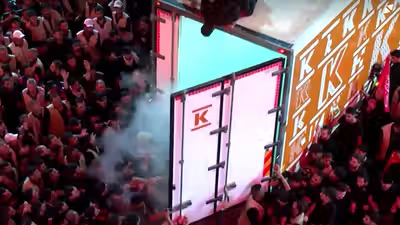
Finnish grocery brand drawn into Khamenei funeral spectacle in Iraq
1

Finnish grocery brand drawn into Khamenei funeral spectacle in Iraq

2

Trump says Iran memorandum is over, calls Tehran leaders 'scums'

3

Khamenei funeral lays bare deep political divisions in Iran

4
ANALYSIS

Hamas gives up Gaza government, but not Iran ties

5

Iran summons British ambassador after London calls in senior diplomat

Banner
Banner
Banner

Spotlight

  • Tehran torn between war and deal as Khamenei is buried
    INSIGHT

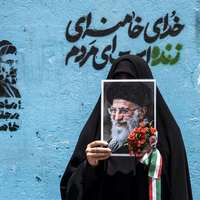
    Tehran torn between war and deal as Khamenei is buried

  • A remote bridge shows how US-Iran war is expanding
    ANALYSIS

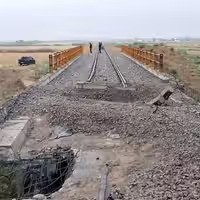
    A remote bridge shows how US-Iran war is expanding

  • US strikes, Hormuz clashes push Iran deal to brink
    INSIGHT

    US strikes, Hormuz clashes push Iran deal to brink

  • Trump's rhetoric U-turn leaves Iranians between dread, hope and memes
    VOICES FROM IRAN

    Trump's rhetoric U-turn leaves Iranians between dread, hope and memes

  • We live through decisions we don't make
    TEHRAN INSIDER

    We live through decisions we don't make

  • Hamas gives up Gaza government, but not Iran ties
    ANALYSIS

    Hamas gives up Gaza government, but not Iran ties

•
•
•

More Stories

Khamenei adviser says Arab states' stability depends on Iran's Hormuz role

Jun 26, 2026, 12:47 GMT+1

Ali Akbar Velayati, an adviser to Iran's Supreme Leader, criticized a joint statement by the US secretary of state and GCC foreign ministers, saying Arab states along the Persian Gulf owed their stability to Iran's management of the Strait of Hormuz.

In a post on X, Velayati said the West had brought the region nothing but "violence and plunder," while the stability of regional states was "owed to Iran's centuries-long stewardship of the Strait of Hormuz."

He also warned smaller Arab states against relying on what he described as "dictated statements."

"Do not place your hopes in statements written for you," he wrote, adding that "smaller states on the margins will have no seat at the table when the regional order is redrawn."

"Their strategic survival depends on Tehran's restraint," Velayati wrote.

Fire extinguished at Karun Petrochemical in southwestern Iran

Jun 26, 2026, 12:44 GMT+1

Fire broke out on Friday at the Karun Petrochemical complex in Mahshahr, southwestern Iran, during debris removal and safety operations following recent attacks on facilities in the area, the company said.

Karun Petrochemical said the blaze affected part of Unit 380 and was quickly brought under control by the site's firefighting and emergency response teams.

The company said there were no casualties or material damage from the incident.

Iranians recast Ashura mourning to remember January protest victims

Jun 26, 2026, 12:38 GMT+1
•
Saba Heidarkhani
100%
File photo shows a subdued Muharram mourning procession through a street in Iran.

Many Iranians are using the Shiite mourning period of Muharram to commemorate those killed in January's nationwide protests rather than take part in state-backed religious ceremonies, according to messages sent to Iran International and videos from across the country.

Muharram is the holiest month in the Shiite Muslim calendar. Its ninth and tenth days, Tasu'a and Ashura, commemorate the seventh-century killing of Imam Hussein, the grandson of the Prophet Muhammad, whose death at the Battle of Karbala symbolizes resistance against oppression and is marked each year with public mourning processions.

Messages received by Iran International suggest this year's ceremonies have drawn smaller crowds than in previous years, with many Iranians saying the nights of January 8 and 9 massacres have become their own Tasu'a and Ashura, when they mourn tens of thousands of those killed.

Social media posts also show many users replacing traditional Muharram images with photographs and names of people killed during recent protest crackdowns.

Many shared similar sentiments, writing: "We have had our own Ashura. We have seen the real oppressed."

Quieter ceremonies, different mourning

Videos sent to Iran International show some mourning processions incorporating tributes to those killed in the protests.

One resident said a banner bearing the names and photographs of protest victims was raised during Ashura ceremonies in Homayounshahr, near Isfahan, on June 25. According to the account, it was displayed openly during the religious gathering.

The mother of 25-year-old Mohammad Jafarpour, who was killed by security forces in Khomeinishahr, Isfahan province, on January 9, posted a video from his graveside on Wednesday.

"My mourning procession this year, my Ashura and Tasu'a, is your grave, my son," she wrote.

Several residents described this year's Muharram ceremonies as noticeably subdued.

A Tehran resident said that while passing Enghelab Square in central Tehran on June 24, coinciding with Tasu'a, they saw only a single woman waving the Islamic Republic's flag.

Another said chest-beating processions in their town, once dominated by young people, were this year attended mainly by older participants.

"The young people of our city were buried in January with all their dreams," the resident said.

  • A nation in limbo: 100 days after the massacre, has the world moved on?

    A nation in limbo: 100 days after the massacre, has the world moved on?

For decades, Muharram rituals have been strongly promoted by the Islamic Republic and, in many state-supported ceremonies, religious observances have also served as platforms for political messaging and expressions of support for the government's ideological positions.

Karbala remembered through recent protests

Many said they now wear black during Muharram to mourn those killed in the January protests.

Some residents also said that mourning ceremonies in places including Kangavar in Kermanshah province included elegies for those killed during the protests.

Video received by Iran International showed the mother of a victim called Mohammad Radmannia addressing mourners during a Tasu'a ceremony in Tehran, urging them: "Do not let my son's path be extinguished."

Radmannia, 29, was killed by security forces during protests in Tehran's Nezamabad neighborhood on January 9.

  • Over 36,500 killed in Iran's deadliest massacre, documents reveal

    Over 36,500 killed in Iran's deadliest massacre, documents reveal

Another video shared by the sister of 25-year-old Amirhossein Javadzadeh showed their mother searching through Muharram mourners while calling her son's name aloud.

Elsewhere, mourners in Lafmejan village in Gilan province gathered at the grave of 18-year-old Mani Safarpour during a Muharram procession. His photograph was mounted on ceremonial drums used in the procession. Safarpour was killed during protests in Tehran on January 8.

The use of Muharram commemorations to remember those killed in anti-government protests has continued since the Woman, Life, Freedom movement.

During Muharram in 2023, mourners in several cities sang protest songs, held symbolic performances honoring those killed, distributed memorial food offerings in their names and gathered at gravesides.

Any deal with US would be tactical, not strategic, Tehran Friday prayer Imam says

Jun 26, 2026, 12:35 GMT+1

Iran makes no distinction between different US administrations and sees the United States and Israel as "two sides of the same coin," Tehran's Friday prayer imam said, insisting the Islamic Republic had no trust in Washington's commitments.

Mohammad Javad Ali Akbari said Iran had "no trust in America's promises and commitments" and that any agreement reached because of regional or international considerations, or out of respect for neighboring countries, "does not mean a strategic understanding."

"It is only a contingent agreement," he said.

Ali Akbari also said the Iranian people still regarded themselves as "the avengers of the blood" of Supreme Leader Ali Khamenei and others killed on what he called the "path of truth."

Khamenei posters expose struggle over who owns Lebanon’s ceasefire

Jun 26, 2026, 12:26 GMT+1
100%
Billboards showing Iran’s new Supreme Leader Mojtaba Khamenei and his late father, Ali Khamenei, on the road to Beirut’s airport (June 2026)

Lebanon has ordered the removal of billboards showing Iran’s new Supreme Leader Mojtaba Khamenei and his late father from the road to Beirut’s airport, turning a dispute over public posters into a test of who gets to define the country’s fragile post-ceasefire moment.

The billboards, installed this week along the route to Beirut-Rafic Hariri International Airport, carried the slogan “Thank you to loyal Iran.” They appeared days after a ceasefire was announced between Israel and Hezbollah as part of wider US-Iran negotiations, and as Lebanese and Israeli officials continued direct US-mediated talks over southern Lebanon.

Interior Minister Ahmad Hajjar said Thursday he had ordered the banners and posters removed within two days. Speaking on the sidelines of a Cabinet meeting, he said the decision was part of efforts to regulate public spaces and enforce existing laws.

But the timing gave the order wider political weight. Hezbollah and its allies have portrayed the ceasefire as proof of Iran-backed “resistance” leverage, while Lebanon’s government is trying to show that decisions over the country’s territory, security and public space still belong to the Lebanese state.

The airport road is one of Lebanon’s most visible political corridors. For years, posters and banners linked to Hezbollah, Amal and Iran-aligned figures have lined parts of the route into Beirut.

100%
Shiite mourners walk past a banner depicting Iran's late Supreme leader Ali Khamenei as they mark Ashura, the holiest day on the Shiite Muslim calendar, in the southern suburbs of Beirut, Lebanon, June 26, 2026.

In 2022, Lebanon’s Tourism Ministry asked Hezbollah and Amal to remove billboards showing religious and political figures from the same road and replace them with signs promoting tourism.

The latest posters carried a sharper message. By thanking Iran days after the ceasefire, they presented Tehran not as an outside power in Lebanon’s war but as the loyal patron whose support helped shape the outcome.

That message comes as the ceasefire itself remains unsettled. Lebanese and Israeli officials have been engaged in US-mediated talks over southern Lebanon, including proposals for Israeli forces to hand some areas to the Lebanese army and for Hezbollah to be kept out of those zones.

Israel, however, has signaled it does not intend to leave southern Lebanon quickly. Prime Minister Benjamin Netanyahu has said Israel will remain in a southern security zone as long as required, while Defense Minister Israel Katz has said Israeli troops will not withdraw even under US pressure.

The ceasefire has also been strained by continued violence. Local and international reports have described Israeli strikes and gunfire in southern Lebanon since the truce was announced, while Hezbollah has accused Israel of violating the agreement.

Hezbollah, for its part, has rejected any settlement that resembles normalization with Israel. In a televised Ashura address on Friday, Hezbollah leader Naim Qassem said Israel must leave Lebanon “unconditionally” and said the group would accept no normalization, no end to hostility with Israel, no gains for Israel and no partial Israeli presence on Lebanese soil.

His remarks placed Hezbollah on a collision course with the logic of the US-mediated talks, which depend on a negotiated security arrangement in the south. They also reinforced the message carried by the airport road billboards: that Iran and Hezbollah see the ceasefire as part of a wider regional struggle, not merely a Lebanese border arrangement.

For Lebanon’s government, the posters created an immediate sovereignty problem. Leaving them in place would allow an Iran-Hezbollah victory message to dominate the country’s main international gateway at the very moment Beirut is trying to negotiate under its own authority.

Removing them, however, exposes the limits of that authority. The Lebanese state can clear a road, but it cannot easily resolve the deeper conflict behind the posters: Hezbollah’s weapons, Israel’s presence in the south, Iran’s role in the ceasefire and Washington’s attempt to keep Lebanon’s track separate from its broader deal with Tehran.