Leader condemned Islamabad negotiations as 'against religious law' - report
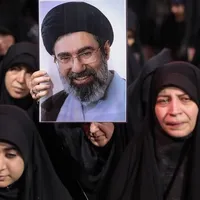
A conservative outlet - Raja News - reported on Saturday Iran’s new supreme leader issued a negative response to the Islamabad negotiations, objecting that officials had discussed nuclear issues and failed to uphold a previously outlined set of conditions.
According to the report, the Leader said the talks were conducted “against religious law” due to engagement on the nuclear file and failure to impose the agreed conditions.
The outlet added that members of the Supreme National Security Council subsequently wrote to the Leader defending the need to include the nuclear issue in any negotiations and raising concerns about continued conflict and possible strikes on infrastructure.
It said the Leader responded that the talks would bring “neither benefit in this world nor in the hereafter” and would not prevent attacks on Iran’s infrastructure.
Hardline figure and former lawmaker Jalal Rashidikoochi warned on Saturday that members of the Paydari Front and their allies in parliament, state television and online networks have launched a “very dangerous game” that he said would weaken the standing and popularity of Iran’s new supreme leader among the public.
"The Paydari faction, in collaboration with their representatives in Parliament and on state television, and their aides and supporters in the virtual realm, have embarked on a highly dangerous game-one whose primary outcome will be, before anything else, the erosion of the new Leader's stature and popularity among the masses of the people," Rashidikoochi posted on X.
"Fostering despair over any improvement in conditions, laying the groundwork for tensions, manufacturing false polarizations, disrupting society's psychological security, and undermining the legitimacy of the regime-these are among the other consequences of this perilous game," he added.
US President Donald Trump said there would be “NO TOLLS” in the Strait of Hormuz during the 60-day Iran ceasefire period and none afterward unless imposed by the United States if a final deal is not completed.
In a post on Truth Social, Trump said any future tolls would be “by and for the United States of America” as reimbursement for what he described as US services as the “Guardian Angel” of Middle Eastern countries.
The United States’ initial aim in technical talks with Iran in Switzerland on Sunday is to secure an agreement allowing the International Atomic Energy Agency to inspect Iranian nuclear sites, Israel’s Channel 12 reported.
The report said any agreement by Tehran would allow IAEA inspectors to visit Iran’s nuclear facilities for the first time since the 12-day war in June 2025.
According to Channel 12, the inspections would likely include Fordow, Natanz and Isfahan.
In exchange for Iran agreeing to the return of inspectors, Washington is prepared to release several billion dollars in Iranian assets held in Qatar, the report said.
The funds would be used by Iran to purchase food, medicine and other humanitarian goods, according to the report.
Channel 12 also said the IAEA believes most of Iran’s 440 kilograms of uranium enriched to 60% is held at the Isfahan facility, with the rest located at Natanz and Fordow.
Hardline lawmaker Mahmoud Nabavian read excerpts from what were described as top-secret letters by Supreme Leader Mojtaba Khamenei on state TV, saying he had opposed nuclear talks, demanded compensation from the US and insisted on Iran’s exclusive control over Hormuz, before he was interrupted and the live program was abruptly ended.
Iran’s state broadcaster later called Nabavian’s remarks a legal violation warranting judicial action and said a director at the organization had resigned over the incident.
A hardline lawmaker sparked a major backlash after reading excerpts from what were described as top-secret letters by Iran’s Supreme Leader on state TV, claiming he opposed US talks, before he was interrupted and the program was abruptly cut off.
Mahmoud Nabavian, a member of parliament’s National Security and Foreign Policy Committee, said Supreme Leader Mojtaba Khamenei had repeatedly objected to the course of negotiations with the United States and set conditions that were not reflected in the Iran-US memorandum of understanding.
His remarks came as Iran’s negotiating team travelled to Switzerland for a new round of technical talks with the United States, days after Tehran and Washington signed the MoU aimed at ending the war and opening the way for further negotiations.
“The Supreme Leader explicitly expresses his dissatisfaction,” Nabavian said on the program. “He says, ‘Why did you not observe the conditions?’”
He said Khamenei had written that Iran was “neither in a hurry nor under any compulsion to negotiate or reach an agreement,” adding that the talks should be aimed at “ending the war and securing compensation,” not the nuclear issue.
According to Nabavian, Khamenei had also told negotiators not to discuss what he called “the main issue," apparently referring to Tehran's nuclear program.
“I will read one sentence. There is no other choice,” Nabavian said, before quoting from what he described as Khamenei’s correspondence: “What has taken shape in the Pakistan negotiations is fundamentally different from what was supposed to happen and from what constituted the condition for the legitimacy of the negotiations.”
Nabavian said Khamenei then called for the negotiations to be stopped.
He also said Khamenei repeated his position on the nuclear file on April 4, April 18 and April 24, insisting that Iran should either achieve “victory” by forcing the other side to fully recognize its right to enrichment, or remove the nuclear issue from the agenda of negotiations “forever.”
On the Strait of Hormuz, Nabavian said Khamenei viewed the waterway as a key point of leverage against Washington.
“The Strait of Hormuz is a very important key,” Nabavian quoted him as saying. “If the Americans want pressure taken off their throat, they must first implement preconditions, foremost among them the payment of compensation and debts.”
Nabavian added that “none of these things” had appeared in the MoU.
He said Khamenei had insisted that management of the Strait of Hormuz must remain exclusively in Iran’s hands, “not even with Oman, let alone other countries.”
According to Nabavian, Khamenei had also divided ships into different categories, saying some vessels should be stopped altogether, some could pass after paying tolls, and others, including ships belonging to Iran’s allies, could pass without payment.
He said the instructions were included in a message dated March 12.
As Nabavian continued speaking, he was interrupted by the state TV's presenter and the program abruptly ended.
State TV vows legal action
Iran’s state broadcaster later called his remarks a legal violation warranting judicial action, saying his references to classified documents and correspondence by senior officials were punishable.
It also said one director at the organization had resigned over the incident and that disciplinary action would be taken.
The disclosure also drew criticism from conservative media circles. The editor-in-chief of Mashregh accused Nabavian of selectively reading from a wider set of correspondence.
“Why don’t you say these selective excerpts of yours were from about 20-something correspondences, and in fact from the earliest ones?” Hossein Soleimani wrote on X, addressing Nabavian. “Since you disclosed and published the system’s secret and top-secret documents, you should at least have disclosed them correctly and accurately.”
Nabavian and other figures close to the hardline Paydari Front have sharply criticized the Iran-US MoU in recent days, accusing President Masoud Pezeshkian, Parliament Speaker Mohammad Bagher Ghalibaf and Foreign Minister Abbas Araghchi of making dangerous concessions to Washington.
The criticisms come as a message attributed to Khamenei said he authorized the signing of the memorandum of understanding despite having “another view in principle,” after receiving assurances from Pezeshkian that Iran’s rights and those of the “Resistance Front” would be protected.
Iranian media have reported that the negotiating team, led by Ghalibaf and including Araghchi, Central Bank Governor Abdolnaser Hemmati and other senior officials, has left for Switzerland for technical talks with the United States.
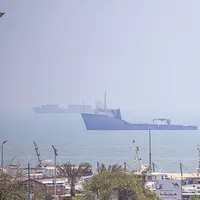
The talks are being held as the Islamic Revolutionary Guard Corps (IRGC) Navy has once again closed the Strait of Hormuz over what Tehran describes as violations of the MoU in Lebanon.
On Saturday, Iran’s Supreme National Security Council, in a directive seen by Iran International, instructed media outlets not to portray the renewed closure of the Strait of Hormuz and Iran’s simultaneous participation in talks as a split between the “field” and diplomacy.
The directive said Iran was pursuing a single strategy combining military pressure and diplomacy, and urged media outlets to frame action in Hormuz not as an alternative to negotiations but as support for them.