• العربية
  • فارسی
Brand
  • Iran Insight
  • Politics
  • Economy
  • Analysis
  • Special Report
  • Opinion
  • Podcast
  • Iran Insight
  • Politics
  • Economy
  • Analysis
  • Special Report
  • Opinion
  • Podcast
  • Theme
  • Language
    • العربية
    • فارسی
  • Iran Insight
  • Politics
  • Economy
  • Analysis
  • Special Report
  • Opinion
  • Podcast
All rights reserved for Volant Media UK Limited
volant media logo

Hardliner reveals ‘top-secret’ Khamenei objections to US talks on state TV

Jun 20, 2026, 19:54 GMT+1

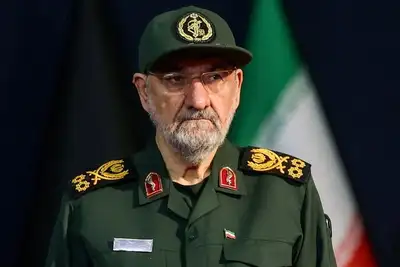
Hardline lawmaker Mahmoud Nabavian read excerpts from what were described as top-secret letters by Supreme Leader Mojtaba Khamenei on state TV, saying he had opposed nuclear talks, demanded compensation from the US and insisted on Iran’s exclusive control over Hormuz, before he was interrupted and the live program was abruptly ended.

Iran’s state broadcaster later called Nabavian’s remarks a legal violation warranting judicial action and said a director at the organization had resigned over the incident.

Continue reading the story

Most Viewed

Tehran's familiar battle lines return over deal with US
1
INSIGHT

Tehran's familiar battle lines return over deal with US

2
INSIGHT

Tehran divided over what Khamenei MoU message really meant

3
PODCAST

Trump says Iran is 'finished', experts say Tehran won big

4
ANALYSIS

A US-Iran deal alone won't rescue Iran's oil economy

5
ANALYSIS

A fragile compact: ambiguities that could undermine US-Iran MoU

Banner
Banner
Banner

Spotlight

  • Iran may get a lifeline, but major obstacles remain
    ANALYSIS

    Iran may get a lifeline, but major obstacles remain

  • Can Iran rebuild ties with Arab neighbours without a US deal?
    INSIGHT

    Can Iran rebuild ties with Arab neighbours without a US deal?

  • Tehran divided over what Khamenei MoU message really meant
    INSIGHT

    Tehran divided over what Khamenei MoU message really meant

  • Trump says Iran is 'finished', experts say Tehran won big
    PODCAST

    Trump says Iran is 'finished', experts say Tehran won big

  • A US-Iran deal alone won't rescue Iran's oil economy
    ANALYSIS

    A US-Iran deal alone won't rescue Iran's oil economy

  • A fragile compact: ambiguities that could undermine US-Iran MoU
    ANALYSIS

    A fragile compact: ambiguities that could undermine US-Iran MoU

•
•
•

More Stories

Hardliner reveals ‘top-secret’ Khamenei objections to US talks on state TV

Jun 20, 2026, 19:45 GMT+1
Hardliner reveals ‘top-secret’ Khamenei objections to US talks on state TV
100%
File photo shows hardline lawmaker Mahmoud Nabavian

A hardline lawmaker sparked a major backlash after reading excerpts from what were described as top-secret letters by Iran’s Supreme Leader on state TV, claiming he opposed US talks, before he was interrupted and the program was abruptly cut off.

Mahmoud Nabavian, a member of parliament’s National Security and Foreign Policy Committee, said Supreme Leader Mojtaba Khamenei had repeatedly objected to the course of negotiations with the United States and set conditions that were not reflected in the Iran-US memorandum of understanding.

His remarks came as Iran’s negotiating team travelled to Switzerland for a new round of technical talks with the United States, days after Tehran and Washington signed the MoU aimed at ending the war and opening the way for further negotiations.

“The Supreme Leader explicitly expresses his dissatisfaction,” Nabavian said on the program. “He says, ‘Why did you not observe the conditions?’”

He said Khamenei had written that Iran was “neither in a hurry nor under any compulsion to negotiate or reach an agreement,” adding that the talks should be aimed at “ending the war and securing compensation,” not the nuclear issue.

According to Nabavian, Khamenei had also told negotiators not to discuss what he called “the main issue," apparently referring to Tehran's nuclear program.

“I will read one sentence. There is no other choice,” Nabavian said, before quoting from what he described as Khamenei’s correspondence: “What has taken shape in the Pakistan negotiations is fundamentally different from what was supposed to happen and from what constituted the condition for the legitimacy of the negotiations.”

Nabavian said Khamenei then called for the negotiations to be stopped.

He also said Khamenei repeated his position on the nuclear file on April 4, April 18 and April 24, insisting that Iran should either achieve “victory” by forcing the other side to fully recognize its right to enrichment, or remove the nuclear issue from the agenda of negotiations “forever.”

On the Strait of Hormuz, Nabavian said Khamenei viewed the waterway as a key point of leverage against Washington.

“The Strait of Hormuz is a very important key,” Nabavian quoted him as saying. “If the Americans want pressure taken off their throat, they must first implement preconditions, foremost among them the payment of compensation and debts.”

Nabavian added that “none of these things” had appeared in the MoU.

He said Khamenei had insisted that management of the Strait of Hormuz must remain exclusively in Iran’s hands, “not even with Oman, let alone other countries.”

According to Nabavian, Khamenei had also divided ships into different categories, saying some vessels should be stopped altogether, some could pass after paying tolls, and others, including ships belonging to Iran’s allies, could pass without payment.

He said the instructions were included in a message dated March 12.

As Nabavian continued speaking, he was interrupted by the state TV's presenter and the program abruptly ended.

State TV vows legal action

Iran’s state broadcaster later called his remarks a legal violation warranting judicial action, saying his references to classified documents and correspondence by senior officials were punishable.

It also said one director at the organization had resigned over the incident and that disciplinary action would be taken.

The disclosure also drew criticism from conservative media circles. The editor-in-chief of Mashregh accused Nabavian of selectively reading from a wider set of correspondence.

“Why don’t you say these selective excerpts of yours were from about 20-something correspondences, and in fact from the earliest ones?” Hossein Soleimani wrote on X, addressing Nabavian. “Since you disclosed and published the system’s secret and top-secret documents, you should at least have disclosed them correctly and accurately.”

Nabavian and other figures close to the hardline Paydari Front have sharply criticized the Iran-US MoU in recent days, accusing President Masoud Pezeshkian, Parliament Speaker Mohammad Bagher Ghalibaf and Foreign Minister Abbas Araghchi of making dangerous concessions to Washington.

The criticisms come as a message attributed to Khamenei said he authorized the signing of the memorandum of understanding despite having “another view in principle,” after receiving assurances from Pezeshkian that Iran’s rights and those of the “Resistance Front” would be protected.

Iranian media have reported that the negotiating team, led by Ghalibaf and including Araghchi, Central Bank Governor Abdolnaser Hemmati and other senior officials, has left for Switzerland for technical talks with the United States.

The talks are being held as the Islamic Revolutionary Guard Corps (IRGC) Navy has once again closed the Strait of Hormuz over what Tehran describes as violations of the MoU in Lebanon.

On Saturday, Iran’s Supreme National Security Council, in a directive seen by Iran International, instructed media outlets not to portray the renewed closure of the Strait of Hormuz and Iran’s simultaneous participation in talks as a split between the “field” and diplomacy.

The directive said Iran was pursuing a single strategy combining military pressure and diplomacy, and urged media outlets to frame action in Hormuz not as an alternative to negotiations but as support for them.

Iranian human rights lawyer Javad Alikordi sentenced to 18 years in jail

Jun 20, 2026, 19:22 GMT+1
Iranian human rights lawyer Javad Alikordi sentenced to 18 years in jail
100%
Javad Alikordi

Iranian rights lawyer Javad Alikordi has been sentenced to 18 years in prison, HRANA reported, more than six months after his arrest in connection with a memorial for his brother, rights attorney Khosrow Alikordi, who died under suspicious circumstances.

The rights group said Branch 1 of the Mashhad Revolutionary Court sentenced Alikordi to five years in prison on charges of “assembly and collusion to act against national security” and 13 years for “propaganda against national security” under Iran’s newly hardened espionage-related legislation.

Under Iran’s sentencing rules for multiple convictions, if the ruling is upheld, Alikordi would serve the longest prison term handed down in the case, which is 13 years.

Alikordi, who is being held in Vakilabad Prison in Mashhad, was also sentenced to two years of exile in Saravan, in the underprivileged Sistan and Baluchestan province, and a two-year ban on leaving the country.

HRANA said he was arrested by security forces at his workplace in Mashhad in December 2025, days after the death of his brother Khosrow who was a prominent lawyer who represented jailed protesters, political prisoners and bereaved families seeking justice for relatives killed during Iran’s 2022 protests.

Khosrow Alikordi was found dead in his office in Mashhad under unclear circumstances in December. Iranian authorities cited cardiac arrest, but fellow lawyers, activists and some relatives of victims he represented questioned the official account and called for an independent investigation.

Javad Alikordi, a lawyer, university lecturer and former member of the Sabzevar City Council, had also represented political prisoners and families of slain protesters.

He was arrested after protesting the detention of Nobel Peace Prize laureate Narges Mohammadi and other activists during Khosrow's memorial.

Rights groups say he has faced repeated judicial pressure over his legal and human rights work.

Hormuz must stay shut until $12B released, Israel leaves Lebanon - Tasnim

Jun 20, 2026, 17:40 GMT+1

The Strait of Hormuz should not be reopened until several conditions under the Iran-US MoU are met, among them the release of at least $12 billion in Iranian assets, the implementation of oil sanctions waivers, and Israel’s withdrawal from Lebanon, the IRGC-affiliated Tasnim News said on Saturday.

It said reopening the Strait only in return for the lifting of the US naval blockade would be a “strategic mistake” and a violation of the Iran-US memorandum of understanding.

The outlet said the strait should remain closed until all commitments under the MoU are fully implemented, including Israel’s withdrawal from Lebanon.

Iran media told to frame Hormuz closure as support for diplomacy

Jun 20, 2026, 17:07 GMT+1
Iran media told to frame Hormuz closure as support for diplomacy
100%

Iranian media have been instructed to avoid portraying the renewed closure of the Strait of Hormuz and Iran’s participation in US talks as a divide between the armed forces and negotiators, according to a Supreme National Security Council directive seen by Iran International.

The directive, addressed to media managers and editors, said the renewed closure of Hormuz came in response to what it called continued ceasefire violations and Israeli actions in southern Lebanon, while Iran’s negotiating team was heading to Switzerland.

It said the Islamic Republic was pursuing a “single strategy” that combines deterrence and military leverage with diplomacy to force the other side to implement its commitments and protect Iran’s national interests.

The directive urged media outlets to frame military actions not as a replacement for diplomacy but as its support, and to avoid presenting negotiations as a sign of retreat.

It also called on outlets to emphasize the “synergy” between military power and diplomacy in securing national interests.

Iran negotiators head to Switzerland for US talks, Vance expected to join

Jun 20, 2026, 16:28 GMT+1

Iran's negotiating team led by Parliament Speaker Mohammad Bagher Ghalibaf has left Tehran for Switzerland ahead of technical talks with the United States, which Pakistan says will start on Sunday. US Vice-President JD Vance is also expected to join them in Switzerland, CNN reported citing a US official.

Foreign Minister Abbas Araghchi is also part of the Iranian delegation, according to the reports by Tehran outlets.

The team also includes Central Bank Governor Abdolnaser Hemmati and Ali Bagheri Kani, the deputy for international affairs at the secretariat of Iran’s Supreme National Security Council.

Kazem Gharibabadi, a deputy foreign minister, Foreign Ministry spokesperson Esmail Baghaei and Deputy Oil Minister Hamid Boord are also accompanying the delegation.