• العربية
  • فارسی
Brand
  • Iran Insight
  • Politics
  • Economy
  • Analysis
  • Special Report
  • Opinion
  • Podcast
  • Iran Insight
  • Politics
  • Economy
  • Analysis
  • Special Report
  • Opinion
  • Podcast
  • Theme
  • Language
    • العربية
    • فارسی
  • Iran Insight
  • Politics
  • Economy
  • Analysis
  • Special Report
  • Opinion
  • Podcast
All rights reserved for Volant Media UK Limited
volant media logo

Mojtaba Khamenei says he approved Iran-US MoU despite reservations

Jun 18, 2026, 18:32 GMT+1Updated: 21:37 GMT+1

A message attributed to Iran's Supreme Leader Mojtaba Khamenei said he authorized the signing of a memorandum of understanding between the presidents of Iran and the United States despite having “another view in principle,” after receiving assurances that Iran’s rights and those of the “Resistance Front” would be protected.

In the message issued after the signing, Khamenei said Iranian officials had made extensive efforts “out of compassion and goodwill” to reach the agreement, while describing US President Donald Trump as having acted “out of desperation” and used “all kinds of leverage” to secure it.

Khamenei said he had given his approval after President Masoud Pezeshkian, in his capacity as head of the Supreme National Security Council, pledged on behalf of himself and other council members to safeguard Iran’s national rights and the interests of the Resistance Front.

“He also made clear that if the American side seeks excessive demands, they will not accept them,” Khamenei said.

The message appeared aimed at addressing criticism from hardliners opposed to the deal, with Khamenei saying the Iranian nation and himself would now await the fulfillment of the stated conditions.

He also warned that future in-person negotiations would not amount to accepting the position of “the enemy.”

“From this moment, we — you, the proud nation, and this humble servant — will await the realization of the stated conditions,” he said.

Most Viewed

Text of US-Iran memorandum released
1

Text of US-Iran memorandum released

2

Toronto shooting probe uncovers trail leading to Tehran

3

US says Iran won't get funds upfront under MoU

4
INSIGHT

Can Iranians cheer Team Melli without cheering the state?

5
INSIGHT

Hope, anger and distrust: Iranians debate Iran-US memorandum online

Banner
Banner
Banner

Spotlight

  • Why some think a weakened Iran could emerge stronger
    ANALYSIS

    Why some think a weakened Iran could emerge stronger

  • Iran markets rally on US deal hopes, but economists warn relief is no cure

    Iran markets rally on US deal hopes, but economists warn relief is no cure

  • Atlas of Iran missile cities: The hidden network behind Tehran’s missile power
    SPECIAL REPORT

    Atlas of Iran missile cities: The hidden network behind Tehran’s missile power

  • Hope meets caution as Tehran weighs economic impact of US deal
    INSIGHT

    Hope meets caution as Tehran weighs economic impact of US deal

  • Toronto shooting probe uncovers trail leading to Tehran

    Toronto shooting probe uncovers trail leading to Tehran

•
•
•

More Stories

Trump denies US will pay Iran $300 billion

Jun 18, 2026, 18:17 GMT+1

US President Donald Trump denied the United States would make a $300 billion payment to Iran, though the memorandum of understanding he signed refers to a US-enabled plan of at least $300 billion for Iran’s reconstruction and economic development.

“There is no 300 Billion Dollar payment to Iran by the U.S. That’s Fake News! All there is for the U.S. is Success, Lower Oil Prices, and Victory. Check out the Stock Market. Dumocrat propaganda at play!!!” Trump wrote on Truth Social.

The fund has been described as being made up of private-sector money, backed by commitments from companies in the United States, Persian Gulf Arab states, Asia, South America and Africa, with no government money or grants.

Article six of the memorandum of understanding, as read out by a US official on Wednesday, says the United States will work with regional partners to develop the plan and grant the licenses, waivers and permissions needed for the relevant financial transactions.

“The United States of America undertakes with regional partners to develop a definitive, mutually agreed plan with at least USD 300 billion for the reconstruction and economic development of the Islamic Republic of Iran. The mechanism for the implementation of this plan will be finalized as part of final deal within 60 days. All required licenses, waivers, and permissions needed for the relevant financial transactions will be granted by the United States of America,” the US official read out.

US military lifts blockade on Iranian ports

Jun 18, 2026, 17:59 GMT+1

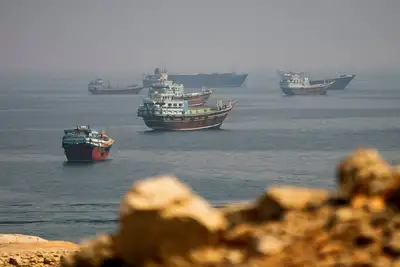
US Central Command said American forces had lifted the blockade on all maritime traffic entering and exiting Iranian ports and coastal areas in accordance with President Donald Trump’s direction.

American forces are not impeding the transit of vessels to or from Iranian ports on the Persian Gulf and Gulf of Oman, CENTCOM said in a post on X.

“All U.S. military blockade enforcement efforts have ceased,” CENTCOM said.

CENTCOM said US naval ships would remain in the area to ensure all aspects of the agreement were “adhered to, obeyed and in full force and effect.”

Vance says US must sign off on any Iran investment under sanctions relief

Jun 18, 2026, 17:22 GMT+1

US Vice President JD Vance said foreign investment in Iran would require US approval and sanctions relief, arguing that any such opening would depend on Tehran changing its behavior and could give Persian Gulf Arab states new leverage over Iran.

Vance said any foreign investment in Iran would require US sanctions relief and approval, arguing that Persian Gulf Arab economic involvement could give regional states leverage over Tehran if it changes its behavior.

Vance said there was “a great desire from the Arab world and from outside the Arab world” to invest in Iran if Tehran “behaves properly,” but stressed that such projects would not be possible without Washington’s approval because of US sanctions.

Citing the example of a potential power plant project funded by the United Arab Emirates, Vance said: “If they behave, and if the Emiratis themselves want to build a power plant, then we will do the sanctions relief necessary to make that possible.”

He said allowing such investment would create economic integration that could serve as leverage over Tehran.

“It actually creates integration, which is leverage,” Vance said. “A world where the [Gulf Coast Coalition has greater leverage into the Iranian economy is a world where the Iranians are going to be heavily prevented from misbehaving.”

Vance said Persian Gulf Arab states saw Iran as weakened and believed there was an opportunity to build a new relationship with Tehran, but added that any such opening remained hypothetical because it would require “a transformation in Iranian behavior.”

Technical talks on Iran expected this weekend, Vance says

Jun 18, 2026, 17:13 GMT+1

Asked about the US plan to destroy Iran’s highly enriched uranium stock, Vice President JD Vance said technical negotiations were expected to begin this weekend, though the timing could still change.

“These technical negotiations are going to start sometime this weekend. That's still the plan, but that could change because it's not an easy country, Iran, to get out of, and so we're trying to figure out exactly when that's going to happen,” Vance said.

“I suspect this weekend, but I'm not sure. I may, it just depends on exactly when the Iranians can get there. We're trying to figure that out as we speak, but again, I suspect it will happen this weekend,” he added.

Vance says final Iran deal must keep Hormuz open, free of tolls

Jun 18, 2026, 17:05 GMT+1

US Vice President JD Vance said international waterways should be free of tolls and any final agreement with Iran must ensure the Strait of Hormuz is not used as a choke point for the global economy.

“First of all, we believe international waterways should be free of tolls, and that's been our position. That's what you see, of course, in the 60 days of the MOU,” Vance said.

Vance said the memorandum of understanding envisioned Oman, Iran and the GCC working together on a future security framework for the strait.

“We don't ever want this to happen again,” Vance said. “That's not about tolling, that's about ensuring that the straits are never used as a choke point for the global economy ever again.”

“We're going to do, of course, working with our allies in the region, is to ensure that that is reflected in the final deal, and if that's not reflected in the final deal, there's not going to be a final deal,” he added.

“If the Iranians want the benefits of the bargain, they have to give us the things that are necessary to get those benefits,” he said.