• العربية
  • فارسی
Brand
  • Iran Insight
  • Politics
  • Economy
  • Analysis
  • Special Report
  • Opinion
  • Podcast
  • Iran Insight
  • Politics
  • Economy
  • Analysis
  • Special Report
  • Opinion
  • Podcast
  • Theme
  • Language
    • العربية
    • فارسی
  • Iran Insight
  • Politics
  • Economy
  • Analysis
  • Special Report
  • Opinion
  • Podcast
All rights reserved for Volant Media UK Limited
volant media logo

Qom Friday prayer leader says Iran will not yield if US makes excessive demands

Jun 19, 2026, 12:27 GMT+1

Qom Friday prayer leader Mohammad Saeedi said Iranian officials would not accept what he called illegal US demands if Washington pursued excessive demands under the memorandum with Iran.

Speaking in Friday prayers in Qom, Saeedi said Supreme Leader Mojtaba Khamenei’s message had emphasized protecting the country’s rights and the so-called “Resistance Front,” adding that this would now shape public expectations and judgment of the agreement.

Saeedi said Iranians, despite their experience of what he described as US bad faith, were emphasizing unity out of respect for Khamenei’s position and hoped the other side would uphold its commitments.

Most Viewed

US says Iran won't get funds upfront under MoU
1

US says Iran won't get funds upfront under MoU

2

Khamenei shifts responsibility for MoU as Iran, US implement Hormuz terms

3
INSIGHT

Tehran's familiar battle lines return over deal with US

4

US says Iran deal will end enrichment, destroy uranium stocks, cap missiles

5
VOICES FROM IRAN

Iranians say US deal leaves people out of the equation

Banner
Banner
Banner

Spotlight

  • A US-Iran deal alone won't rescue Iran's oil economy
    ANALYSIS

    A US-Iran deal alone won't rescue Iran's oil economy

  • Iran's Qatar power link exposes a deeper energy dilemma
    ANALYSIS

    Iran's Qatar power link exposes a deeper energy dilemma

  • Who in Tehran is opposing a deal with Washington?
    INSIGHT

    Who in Tehran is opposing a deal with Washington?

  • A fragile compact: ambiguities that could undermine US-Iran MoU
    ANALYSIS

    A fragile compact: ambiguities that could undermine US-Iran MoU

  • A thaw with the US won't fill Iranian tables overnight
    INSIGHT

    A thaw with the US won't fill Iranian tables overnight

  • Why some think a weakened Iran could emerge stronger
    ANALYSIS

    Why some think a weakened Iran could emerge stronger

•
•
•

More Stories

Hezbollah says Iran tied US talks to full Lebanon ceasefire

Jun 19, 2026, 12:15 GMT+1

Hezbollah lawmaker Hassan Fadlallah told Reuters that Iran had informed the group that talks with the United States could not continue without a comprehensive ceasefire, tying the US-Iran diplomatic track to the fighting in Lebanon.

Fadlallah said Lebanon’s government should reject direct negotiations with Israel as long as Israeli attacks on Lebanon continue.

Iran says Hormuz transit fees suspended under US memorandum

Jun 19, 2026, 12:12 GMT+1

Iran will waive planned fees for ships using the Strait of Hormuz during the 60-day negotiation period under its memorandum with the United States, according to Iran’s Persian Gulf Strait Authority.

The authority said ships seeking passage while the interim agreement is in force must submit transit requests at least 48 hours before arrival.

Iran said it would suspend fees for security, safety, environmental services and related insurance during the period, while requiring vessels to coordinate routes and transit times in advance because of areas affected by mines and the need to ensure safe navigation.

Who in Tehran is opposing a deal with Washington?

Jun 19, 2026, 12:11 GMT+1

A message attributed to Iran's Supreme Leader Mojtaba Khamenei and the swift reactions from President Masoud Pezeshkian and chief negotiator Mohammad Bagher Ghalibaf highlighted the uneasy coalition behind the agreement with the United States and the lingering doubts about it.

The intervention comes after weeks of criticism from hardline media outlets, clerics and political factions that viewed the agreement as a dangerous concession to Washington.

While the ultraconservative Paydari Party is often portrayed as the main opponent of rapprochement with the United States, recent debate in Iran has highlighted a broader network of political, media and ideological actors resisting a Tehran-Washington understanding.

In a message issued after the signing of the memorandum, Mojtaba Khamenei warned that actions creating “pessimism among the people” effectively serve the enemy, language widely interpreted as a rebuke to hardline critics of the agreement.

Both Pezeshkian and Ghalibaf quickly issued statements pledging to follow the leader's guidance and defend the negotiating process.

The apparent effort to impose discipline on the debate has coincided with growing scrutiny of those opposing diplomacy.

Continue reading...

Khamenei’s caveat fuels call to pull back from US memorandum

Jun 19, 2026, 12:10 GMT+1

A hardline religious speaker seized on Supreme Leader Mojtaba Khamenei’s caveat about the US memorandum to call for a "movement to return to the Leader’s position," sharpening pressure on President Masoud Pezeshkian’s government even as some critics have softened their tone after the message.

Esmail Ramezani said Khamenei’s statement that he had approved the memorandum despite holding a different view should become a rallying point for those who oppose the path now set for talks with Washington.

“Now that the Supreme Leader has announced that his view was something else, the people must demand the launch of a movement to return to the Leader’s position,” Ramezani said.

He urged supporters who had taken part in street rallies during the war to gather again and demand that the country follow Khamenei’s stated view rather than the memorandum’s announced path.

Ramezani also called for the 60-day negotiation track to be undermined if a memorandum had already been signed, saying officials should not proceed along the announced path.

“If a memorandum has been signed, somehow back out of those 60 days of negotiations and do not go down the path that has been announced,” he said.

His comments point to a harder line than many official reactions after Khamenei’s Thursday message. The IRGC, for example, backed officials pursuing the memorandum while warning of military retaliation if the United States broke the deal.

Khamenei’s message gave conditional cover to the memorandum while distancing himself from its consequences, saying he had authorized it after Pezeshkian and the Supreme National Security Council accepted responsibility for protecting Iran’s rights and those of the regional allied militant groups.

Iran's Qatar power link exposes a deeper energy dilemma

Jun 19, 2026, 11:46 GMT+1
•
Umud Shokri
Iran's Qatar power link exposes a deeper energy dilemma
100%
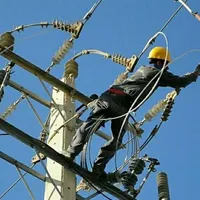
A technician works on high-voltage transmission equipment at an electricity substation in Iran.

Iran's plan to connect its electricity grid to Qatar highlights a growing paradox at the heart of the country's energy strategy: even as Tehran seeks a larger regional role through cross-border energy diplomacy, it faces one of the worst domestic power shortages in decades.

On June 16, Energy Minister Abbas Aliabadi announced that studies for a power-grid connection between Iran and Qatar were nearing completion and that implementation was beginning.

The project revives a 2022 memorandum of understanding signed during President Ebrahim Raisi's visit to Doha, which envisaged electricity exchanges of up to 1,000 megawatts through a subsea link.

The announcement comes as Iran grapples with a deepening electricity crisis, sanctions pressure and vulnerabilities exposed by recent conflict involving Iran, Israel and the United States.

Energy diplomacy under pressure

The proposed interconnection is more than a technical project.

If completed, it could allow electricity to flow in either direction during periods of peak demand or disruption. Qatar's gas-fired generation could help support Iran during shortages, while Tehran could seek to export power when domestic demand is lower.

More broadly, the project reflects Iran's effort to deepen economic ties with Gulf neighbours and reduce its regional isolation. Qatar has long maintained relations with Iran, the United States and other Gulf states while playing a recurring mediating role in regional diplomacy.

For Tehran, electricity trade offers revenue, political leverage and a way to project itself as a regional energy actor despite sanctions and mounting domestic constraints.

The project could also serve as a modest step toward wider Gulf electricity integration. Linking Iran to the GCC Interconnection Authority network would remain politically and technically difficult, but the Qatar connection would mark one of the few tangible efforts in recent years to expand energy cooperation across a region long divided by geopolitical rivalries.

Yet Iran's own power shortages raise questions about how realistic those ambitions are.

A worsening power crisis

Iran's electricity system faces mounting strain from years of underinvestment, aging infrastructure, sanctions, inefficient consumption, fuel constraints and drought-related pressure on hydropower generation.

Although installed generation capacity appears substantial on paper, actual available supply is often significantly lower because of plant outages, fuel shortages, declining efficiency and transmission losses.

The situation becomes especially acute during the summer, when air conditioning, industrial demand and urban consumption push the grid beyond available capacity.

Iran's parliamentary research center has warned that the country could face a summer electricity deficit of around 13,640 megawatts, equivalent to roughly 17% of projected peak demand.

Blackouts, industrial shutdowns and disruptions to public services have become increasingly common.

This context helps explain why the Qatar project matters. While Iranian officials often present such initiatives as evidence of the country's emergence as a regional energy hub, the interconnection may be just as important as a potential source of imported electricity during periods of domestic stress.

Without major investment in generation, transmission and fuel supply, the project could ultimately expose Iran's dependence on its neighbours rather than demonstrate export strength.

Iran has relatively few options for addressing the crisis quickly. Sanctions continue to restrict access to modern turbines, grid equipment, financing and foreign expertise, while meaningful electricity-price reforms remain politically sensitive. Expanding renewable energy would help, but doing so requires investment, storage capacity and transmission upgrades that cannot be deployed overnight.

Regional electricity trade is therefore one of the few tools available to Tehran in the short term.

The shadow of war

Recent conflict has further highlighted Iran's energy vulnerabilities.

Strikes on infrastructure linked to South Pars, the giant gas field that underpins much of Iran's electricity generation, underscored how disruptions to gas production can quickly affect power supplies.

The conflict also exposed broader risks facing Gulf energy systems. Iranian attacks on facilities linked to Qatar's energy sector demonstrated how regional infrastructure could become vulnerable during periods of military escalation.

As a result, the proposed interconnection carries both economic and strategic significance. It could strengthen resilience and create incentives for cooperation, but it would also add another piece of critical infrastructure exposed to future crises.

Opportunities and limits

An Iran-Qatar electricity link could provide benefits for both countries.

Cross-border interconnections can improve grid stability, reduce reserve requirements and provide emergency support during disruptions. Over time, they may also help integrate renewable energy by balancing supply across larger networks.

The technical challenges are significant but manageable. A subsea high-voltage connection would require substantial investment, converter stations, cybersecurity protections and close operational coordination.

The larger obstacles may be political and financial.

US sanctions could deter banks, insurers and international engineering firms from participating in Iran-linked infrastructure projects. Broader Gulf integration would face additional political hurdles after years of regional tension.

Outlook

The Qatar interconnection ultimately reveals as much about Iran's domestic weaknesses as its regional ambitions.

Faced with sanctions, underinvestment and a worsening electricity crisis, Tehran has increasingly turned to energy diplomacy, regional trade and cross-border infrastructure as tools for managing pressure at home.

The project could strengthen Iran-Qatar ties, improve energy resilience and create a modest opening toward wider regional cooperation.

But its significance lies less in the electricity it may eventually carry than in what it reveals about Iran's broader predicament: a country seeking regional influence through energy diplomacy while increasingly dependent on external partnerships to manage mounting pressures at home.