• العربية
  • فارسی
Brand
  • Iran Insight
  • Politics
  • Economy
  • Analysis
  • Special Report
  • Opinion
  • Podcast
  • Iran Insight
  • Politics
  • Economy
  • Analysis
  • Special Report
  • Opinion
  • Podcast
  • Theme
  • Language
    • العربية
    • فارسی
  • Iran Insight
  • Politics
  • Economy
  • Analysis
  • Special Report
  • Opinion
  • Podcast
All rights reserved for Volant Media UK Limited
volant media logo

Khamenei’s caveat fuels call to pull back from US memorandum

Jun 19, 2026, 12:10 GMT+1

A hardline religious speaker seized on Supreme Leader Mojtaba Khamenei’s caveat about the US memorandum to call for a "movement to return to the Leader’s position," sharpening pressure on President Masoud Pezeshkian’s government even as some critics have softened their tone after the message.

Esmail Ramezani said Khamenei’s statement that he had approved the memorandum despite holding a different view should become a rallying point for those who oppose the path now set for talks with Washington.

“Now that the Supreme Leader has announced that his view was something else, the people must demand the launch of a movement to return to the Leader’s position,” Ramezani said.

He urged supporters who had taken part in street rallies during the war to gather again and demand that the country follow Khamenei’s stated view rather than the memorandum’s announced path.

Ramezani also called for the 60-day negotiation track to be undermined if a memorandum had already been signed, saying officials should not proceed along the announced path.

“If a memorandum has been signed, somehow back out of those 60 days of negotiations and do not go down the path that has been announced,” he said.

His comments point to a harder line than many official reactions after Khamenei’s Thursday message. The IRGC, for example, backed officials pursuing the memorandum while warning of military retaliation if the United States broke the deal.

Khamenei’s message gave conditional cover to the memorandum while distancing himself from its consequences, saying he had authorized it after Pezeshkian and the Supreme National Security Council accepted responsibility for protecting Iran’s rights and those of the regional allied militant groups.

Most Viewed

Text of US-Iran memorandum released
1

Text of US-Iran memorandum released

2

Toronto shooting probe uncovers trail leading to Tehran

3

US says Iran won't get funds upfront under MoU

4

Khamenei shifts responsibility for MoU as Iran, US implement Hormuz terms

5
INSIGHT

Tehran's familiar battle lines return over deal with US

Banner
Banner
Banner

Spotlight

  • Who in Tehran is opposing a deal with Washington?
    INSIGHT

    Who in Tehran is opposing a deal with Washington?

  • A fragile compact: ambiguities that could undermine US-Iran MoU
    ANALYSIS

    A fragile compact: ambiguities that could undermine US-Iran MoU

  • A thaw with the US won't fill Iranian tables overnight
    INSIGHT

    A thaw with the US won't fill Iranian tables overnight

  • Why some think a weakened Iran could emerge stronger
    ANALYSIS

    Why some think a weakened Iran could emerge stronger

  • Atlas of Iran missile cities: The hidden network behind Tehran’s missile power
    SPECIAL REPORT

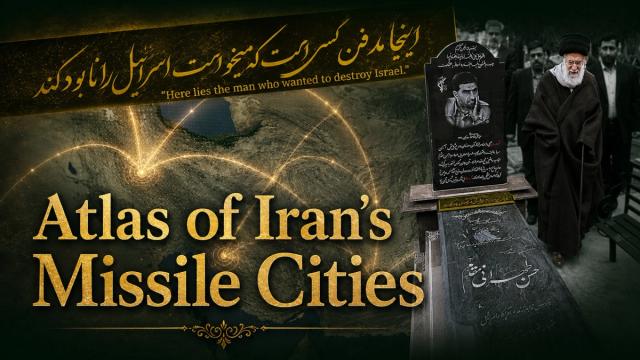
    Atlas of Iran missile cities: The hidden network behind Tehran’s missile power

  • Toronto shooting probe uncovers trail leading to Tehran

    Toronto shooting probe uncovers trail leading to Tehran

•
•
•

More Stories

Iran's Qatar power link exposes a deeper energy dilemma

Jun 19, 2026, 11:46 GMT+1
•
Umud Shokri
Iran's Qatar power link exposes a deeper energy dilemma
100%
A technician works on high-voltage transmission equipment at an electricity substation in Iran.

Iran's plan to connect its electricity grid to Qatar highlights a growing paradox at the heart of the country's energy strategy: even as Tehran seeks a larger regional role through cross-border energy diplomacy, it faces one of the worst domestic power shortages in decades.

On June 16, Energy Minister Abbas Aliabadi announced that studies for a power-grid connection between Iran and Qatar were nearing completion and that implementation was beginning.

The project revives a 2022 memorandum of understanding signed during President Ebrahim Raisi's visit to Doha, which envisaged electricity exchanges of up to 1,000 megawatts through a subsea link.

The announcement comes as Iran grapples with a deepening electricity crisis, sanctions pressure and vulnerabilities exposed by recent conflict involving Iran, Israel and the United States.

Energy diplomacy under pressure

The proposed interconnection is more than a technical project.

If completed, it could allow electricity to flow in either direction during periods of peak demand or disruption. Qatar's gas-fired generation could help support Iran during shortages, while Tehran could seek to export power when domestic demand is lower.

More broadly, the project reflects Iran's effort to deepen economic ties with Gulf neighbours and reduce its regional isolation. Qatar has long maintained relations with Iran, the United States and other Gulf states while playing a recurring mediating role in regional diplomacy.

For Tehran, electricity trade offers revenue, political leverage and a way to project itself as a regional energy actor despite sanctions and mounting domestic constraints.

The project could also serve as a modest step toward wider Gulf electricity integration. Linking Iran to the GCC Interconnection Authority network would remain politically and technically difficult, but the Qatar connection would mark one of the few tangible efforts in recent years to expand energy cooperation across a region long divided by geopolitical rivalries.

Yet Iran's own power shortages raise questions about how realistic those ambitions are.

A worsening power crisis

Iran's electricity system faces mounting strain from years of underinvestment, aging infrastructure, sanctions, inefficient consumption, fuel constraints and drought-related pressure on hydropower generation.

Although installed generation capacity appears substantial on paper, actual available supply is often significantly lower because of plant outages, fuel shortages, declining efficiency and transmission losses.

The situation becomes especially acute during the summer, when air conditioning, industrial demand and urban consumption push the grid beyond available capacity.

Iran's parliamentary research center has warned that the country could face a summer electricity deficit of around 13,640 megawatts, equivalent to roughly 17% of projected peak demand.

Blackouts, industrial shutdowns and disruptions to public services have become increasingly common.

This context helps explain why the Qatar project matters. While Iranian officials often present such initiatives as evidence of the country's emergence as a regional energy hub, the interconnection may be just as important as a potential source of imported electricity during periods of domestic stress.

Without major investment in generation, transmission and fuel supply, the project could ultimately expose Iran's dependence on its neighbours rather than demonstrate export strength.

Iran has relatively few options for addressing the crisis quickly. Sanctions continue to restrict access to modern turbines, grid equipment, financing and foreign expertise, while meaningful electricity-price reforms remain politically sensitive. Expanding renewable energy would help, but doing so requires investment, storage capacity and transmission upgrades that cannot be deployed overnight.

Regional electricity trade is therefore one of the few tools available to Tehran in the short term.

The shadow of war

Recent conflict has further highlighted Iran's energy vulnerabilities.

Strikes on infrastructure linked to South Pars, the giant gas field that underpins much of Iran's electricity generation, underscored how disruptions to gas production can quickly affect power supplies.

The conflict also exposed broader risks facing Gulf energy systems. Iranian attacks on facilities linked to Qatar's energy sector demonstrated how regional infrastructure could become vulnerable during periods of military escalation.

As a result, the proposed interconnection carries both economic and strategic significance. It could strengthen resilience and create incentives for cooperation, but it would also add another piece of critical infrastructure exposed to future crises.

Opportunities and limits

An Iran-Qatar electricity link could provide benefits for both countries.

Cross-border interconnections can improve grid stability, reduce reserve requirements and provide emergency support during disruptions. Over time, they may also help integrate renewable energy by balancing supply across larger networks.

The technical challenges are significant but manageable. A subsea high-voltage connection would require substantial investment, converter stations, cybersecurity protections and close operational coordination.

The larger obstacles may be political and financial.

US sanctions could deter banks, insurers and international engineering firms from participating in Iran-linked infrastructure projects. Broader Gulf integration would face additional political hurdles after years of regional tension.

Outlook

The Qatar interconnection ultimately reveals as much about Iran's domestic weaknesses as its regional ambitions.

Faced with sanctions, underinvestment and a worsening electricity crisis, Tehran has increasingly turned to energy diplomacy, regional trade and cross-border infrastructure as tools for managing pressure at home.

The project could strengthen Iran-Qatar ties, improve energy resilience and create a modest opening toward wider regional cooperation.

But its significance lies less in the electricity it may eventually carry than in what it reveals about Iran's broader predicament: a country seeking regional influence through energy diplomacy while increasingly dependent on external partnerships to manage mounting pressures at home.

Iran MP says parliament was shut so officials could sign anything without oversight

Jun 19, 2026, 11:05 GMT+1

The head of parliament’s Health and Treatment Committee criticized what he called the continued closure of parliament, saying lawmakers had been sidelined as the Islamic Republic moved toward a memorandum with the United States.

“They closed parliament so they could sign whatever they wanted,” Hosseinali Shahriari said.

Shahriari said the memorandum with Washington must ultimately be approved by parliament and warned against repeating the swift approval of the 2015 nuclear deal.

“The time when they approved the JCPOA in parliament in 20 minutes has passed. We were harmed by this once, and the same thing must not happen again,” he said.

He also criticized Foreign Minister Abbas Araghchi’s remarks about the possible dilution of enriched uranium, saying the nuclear issue should not be part of the negotiations because it is among the Islamic Republic’s red lines.

Paris seeks role in Iran talks, says missiles and proxies must be addressed

Jun 19, 2026, 09:44 GMT+1

France wants a role in the next phase of talks on Iran’s nuclear program and will not approve the lifting of UN sanctions unless it is satisfied with the terms of a final accord, Foreign Minister Jean-Noel Barrot said Friday.

Barrot, whose country is a veto-wielding permanent member of the UN Security Council, said any final deal would need Security Council endorsement and that France would have to approve the lifting of UN sanctions.

“The return for major concessions that will be asked of Iran is the lifting of sanctions, sanctions that were taken at the United Nations,” Barrot told franceinfo.

The US-Iran agreement reached this week calls for 60 days of negotiations on Iran’s nuclear program, with a final deal to be endorsed by the Security Council.

Barrot said regional stability would require the talks to address not only Tehran’s nuclear program but also its ballistic missile program and support for proxy groups.

“Our objective is to get major concessions from the Iranian regime, a radical change in posture. And we will have our word to say, because as a member of the UNSC it will be necessarily linked to the resolution of this crisis,” Barrot said.

IRGC says it stands behind officials but is ready for war if talks fail

Jun 19, 2026, 08:50 GMT+1

The Islamic Revolutionary Guard Corps said it would stand behind the Islamic Republic’s officials after Supreme Leader Mojtaba Khamenei’s message on the memorandum with the United States, while warning it was ready for military action if what it called the enemy violated Iran’s rights.

In a statement addressed to Khamenei as Supreme Leader and commander-in-chief, the IRGC praised his message as strengthening internal unity, raising morale among forces and giving political leaders support in pursuing the Islamic Republic’s demands.

  • Khamenei shifts responsibility for MoU as Iran, US implement Hormuz terms

    Khamenei shifts responsibility for MoU as Iran, US implement Hormuz terms

The Guards portrayed the memorandum and future talks as the result of military pressure, saying the enemy had retreated from threats against Iran to asking for an understanding and negotiations. It said Iranians and military forces expected diplomacy to continue what it called the battlefield’s achievements and lead to the fulfillment of Iran’s rights.

“The dear nation and the fighters of Islam stand like a mountain behind their statesmen, and if the treacherous enemy seeks, as in the past, to make excessive demands and violate the rights of the Iranian nation, the Islamic Revolutionary Guards are ready on land, at sea, in the air and across all arenas of hybrid warfare, stronger than before and drawing on the experience of several battles, to inflict a far greater historic defeat on them at the slightest signal from that brave and wise commander,” the statement said.

Who in Tehran is opposing a deal with Washington?

Jun 19, 2026, 08:14 GMT+1
•
Behrouz Turani
Who in Tehran is opposing a deal with Washington?
100%
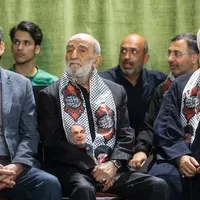
Hossein Shariatmadari (centre), editor of hardline daily Kayhan, and one of the most prominent anti-US voices in Iran, attends an event to commemorate slain IRGC commander Hossein Salami, June 18, 2026

A message attributed to Iran's Supreme Leader Mojtaba Khamenei and the swift reactions from President Masoud Pezeshkian and chief negotiator Mohammad Bagher Ghalibaf highlighted the uneasy coalition behind the agreement with the United States and the lingering doubts about it.

The intervention comes after weeks of criticism from hardline media outlets, clerics and political factions that viewed the agreement as a dangerous concession to Washington.

While the ultraconservative Paydari Party is often portrayed as the main opponent of rapprochement with the United States, recent debate in Iran has highlighted a broader network of political, media and ideological actors resisting a Tehran-Washington understanding.

In a message issued after the signing of the memorandum, Mojtaba Khamenei warned that actions creating “pessimism among the people” effectively serve the enemy, language widely interpreted as a rebuke to hardline critics of the agreement.

Both Pezeshkian and Ghalibaf quickly issued statements pledging to follow the leader's guidance and defend the negotiating process.

The apparent effort to impose discipline on the debate has coincided with growing scrutiny of those opposing diplomacy.

'Negotiation is haram'

One of the most detailed assessments came from Khabar Online, which argued that resistance to the ongoing negotiations should not be viewed as ordinary criticism but as an organized campaign to undermine diplomacy, attack key officials and deepen national divisions.

The report identified state television, IRIB, as the leading institutional opponent of an agreement. It cited remarks by hardline clerics who used the broadcaster's platforms to denounce negotiations with the United States.

Among them was cleric Gholamreza Ghassemian, who declared on state television that “negotiation is haram,” while arguing that those pursuing talks were acting contrary to divine principles. Another cleric, Sheikh Esmail Ramezani, insisted that relations with Washington were impossible.

Khabar Online accused IRIB of functioning as the mouthpiece of a single political faction rather than a national broadcaster and even alleged that portions of the leader's recent warnings against discord were downplayed to preserve a hardline narrative.

The report also pointed to figures associated with the late president Ebrahim Raisi's administration, arguing that some remained more focused on domestic political rivalries than on supporting diplomacy endorsed by the state's highest institutions.

Messianic detractors

The Paydari Party appeared third on the list. The article described it as a rigidly ideological parliamentary bloc that has used its network of lawmakers and media outlets to challenge the negotiating team and question the merits of engagement with Washington.

Yet even Paydari represents only part of the opposition.

In a separate interview with Rouydad24, former lawmaker and security official Mansoor Haghighatpour argued that resistance to a Tehran-Washington agreement also reflects the influence of the messianic Hojatiyeh association, whose legacy remains the subject of recurring debate in Iran.

The article did not mention several familiar hardline voices who have also opposed diplomacy. Among them are Kayhan editor Hossein Shariatmadari, a longtime critic of engagement with the United States, and MP Esmail Kowsari, who continued issuing threats against Washington and regional states during the war and subsequent ceasefire.

'Harsh response'

The divisions echo debates surrounding the 2015 nuclear agreement, when hardline factions accused negotiators of capitulation while supporters argued diplomacy was necessary to ease pressure on the country.

Ghalibaf was more explicit in defending the current process, warning that those acting against the leader's guidance “under the guise of obeying the Leadership” would face a “harsh response from the nation.”

For now, however, public criticism appears to have subsided. The day after the memorandum was signed, Iranian media largely fell silent on opposition to a possible agreement.

Whether that reflects a direct effort by the leadership to quiet dissent, or merely a temporary pause as political factions adjust to the new reality, may become clearer in the days ahead.

What is already apparent is that resistance to a deal with Washington extends well beyond any single party or faction—and that the leadership has signaled it expects those disputes to remain contained.