• العربية
  • فارسی
Brand
  • Iran Insight
  • Politics
  • Economy
  • Analysis
  • Special Report
  • Opinion
  • Podcast
  • Iran Insight
  • Politics
  • Economy
  • Analysis
  • Special Report
  • Opinion
  • Podcast
  • Theme
  • Language
    • العربية
    • فارسی
  • Iran Insight
  • Politics
  • Economy
  • Analysis
  • Special Report
  • Opinion
  • Podcast
All rights reserved for Volant Media UK Limited
volant media logo
EXCLUSIVE

Israel to help oust Iran regime, Bennett tells Iranians frustrated by US deal

Jun 16, 2026, 19:13 GMT+1
File photo shows a billboard in Jerusalem that reads "the end of Ayatollah's regime in Iran"

Former Israeli prime minister Naftali Bennett says he has drawn up a detailed plan to help Iranians topple the Islamic Republic, addressing growing frustration among dissidents that an emerging US-Iran deal could save and embolden Tehran’s hardline rulers.

“We’re going to do everything in our power to ultimately topple this horrible regime,” Bennett told Iran International correspondent Babak Eshaghi. “And I want to tell the Iranian people, the wonderful Iranian nation: Don’t lose your hope.”

“This terrible, disconnected, corrupt and evil regime will fall. You will be free,” he said.

Bennett, who is positioning himself as one of Prime Minister Benjamin Netanyahu’s main challengers, said outside powers must be ready to help Iranians the next time they rise up against the Islamic Republic.

“What we’re going to do is ensure that next time the people of Iran rise up, we provide them the tools to win, communication and other tools,” he said. “This rotten regime will fall at some point.”

“Our job is to accelerate that,” Bennett added.

His comments come as many Iranians opposed to the Islamic Republic have voiced frustration over the expected signing of a US-Iran memorandum on Friday, fearing that Washington and Tehran are moving toward an agreement that would preserve the ruling system after months of war, repression, blackouts and sanctions.

After the January crackdown, in which security forces killed thousands of protesters and detained tens of thousands, both Donald Trump and Netanyahu promised to support Iranians seeking to bring down the regime.

But the emerging deal has deepened concern among many anti-government Iranians that ordinary people paid the heaviest price while Tehran’s more hardline leadership survived and may now gain breathing space through diplomacy.

Bennett sought to answer that concern by saying he had prepared “an elaborate and detailed plan” aimed at bringing down the Islamic Republic.

“I’ve put together an elaborate and detailed plan whose goal is to ultimately topple this Ayatollah regime,” he said.

He said the plan would rely on “many tools, not only war,” including “economic tools, diplomatic tools, covert, overt operations,” as well as efforts to empower the Iranian people.

Bennett also warned that the expected US-Iran memorandum should not lead to an easing of pressure on Tehran unless any final agreement fully dismantles Iran’s nuclear and missile programs and regional proxies.

“It’s a temporary agreement. It’s far from over,” he said.

“We have to ensure that the final agreement is a good one,” Bennett added. “That totally dismantles the Iranian nuclear program, the ballistic missile program, the regional terror program.”

“That’ll be the ultimate test,” he said. “We can’t let up on the sanctions and on all the pressure on this horrible regime until that’s achieved.”

His remarks come amid unease in Israel over the emerging agreement. Channel 12 reported that Israeli officials asked Washington to see the draft memorandum, but the United States refused to share the text before the signing ceremony.

The reported refusal has fueled concern in Israel that the deal could fall short of Netanyahu’s stated demands, including the dismantling of Iran’s nuclear capabilities, curbs on its missile program and limits on Tehran’s regional network.

Message to Iranian people and leaders

Bennett compared the Islamic Republic to the Soviet Union in its final years, saying authoritarian systems can collapse faster than expected.

“This regime will fall,” he said. “It’s a corrupt, disconnected and incompetent regime, very similar to the Soviet Union regime of the 1980s.”

“If you had asked me in 1985, will the regime fall? Who knows? But just four years later, it fell,” Bennett added.

“My message to the Iranian people is: Raise your heads. Be proud. Be strong. We are looking after you.”

He also issued a direct warning to Iran’s rulers.

“I would tell those leaders, those ayatollahs: Your time is running out. We are after you. We know exactly who you are. And you will not remain in power for long,” Bennett said.

“It might take a bit of time,” he added. “But your time is over.”

Most Viewed

Iran media publish purported details of Iran-US draft agreement
1

Iran media publish purported details of Iran-US draft agreement

2
INSIGHT

Iran media split over US MoU as hardliners warn of retreat

3

World leaders welcome Iran-US deal, back path to final agreement

4
INSIGHT

Iran-US MoU draws praise and backlash across Tehran’s political spectrum

5

New Zealand considering IRGC terrorist designation, deputy PM says

Banner
Banner

Spotlight

  • Iran hardliners rage over US deal, but experts say regime is closing ranks
    ANALYSIS

    Iran hardliners rage over US deal, but experts say regime is closing ranks

  • Iran-US MoU draws praise and backlash across Tehran’s political spectrum
    INSIGHT

    Iran-US MoU draws praise and backlash across Tehran’s political spectrum

  • Iran media split over US MoU as hardliners warn of retreat
    INSIGHT

    Iran media split over US MoU as hardliners warn of retreat

  • Trump's Iran strategy underrates regime's resilience, ex-US diplomat says

    Trump's Iran strategy underrates regime's resilience, ex-US diplomat says

  • Lebanon may become first test of emerging Iran-US deal, experts say
    PODCAST

    Lebanon may become first test of emerging Iran-US deal, experts say

  • The uneasy mix of diplomacy and pressure in Canada’s Iran policy
    ANALYSIS

    The uneasy mix of diplomacy and pressure in Canada’s Iran policy

•
•
•

More Stories

Iran executes two January protesters as post-war crackdown continues

Jun 16, 2026, 12:57 GMT+1
Iran executes two January protesters as post-war crackdown continues
100%

The Islamic Republic executed Javad Zamani and Abolfazl Saedi, two men arrested during the January protests in Shahrud, early Tuesday, the judiciary-affiliated Mizan news agency reported.

Mizan described the two men as “enemy foot soldiers” and “armed leaders of the January coup” in Shahrud, saying protesters had created what it called the pretext and conditions for hostile action by Iran’s enemies.

Mohammad-Sadegh Akbari, the head of the judiciary in Semnan province, accused Zamani and Saedi of taking part in unrest, damaging bank branches, creating disorder outside the governor’s office, overturning and burning a police vehicle, and attacking homes and cars.

  • Iran executes another political prisoner, bringing tally to 37 since March

    Iran executes another political prisoner, bringing tally to 37 since March

Mizan said the charges against them also included inciting people to attend protests, assembly and collusion against domestic and foreign security, moharebeh, or “waging war against God,” and “corruption on earth.”

Officials and state media in Iran have repeatedly sought to discredit anti-government protests by labeling them “riots,” “unrest” or a “coup” and linking them to foreign actors, including the United States and Israel.

Mizan also published a 50-second video it described as the men’s confessions, with their faces blurred.

Rights groups and former detainees have repeatedly reported the use of forced confessions under pressure, torture and harsh detention conditions in the Islamic Republic’s prisons.

Iran has sharply increased executions in recent months, including political prisoners accused of taking part in the January protests or facing espionage-related charges.

In early June, the Islamic Republic executed Mehrdad Mohammadinia and Ashkan Maleki, two January protesters, over allegations that they set fire to a mosque in Tehran.

World leaders welcome Iran-US deal, back path to final agreement

Jun 15, 2026, 01:05 GMT+1
World leaders welcome Iran-US deal, back path to final agreement
100%
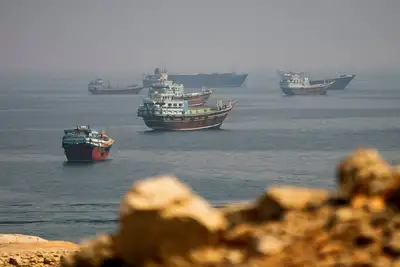
A view of ships near the Strait of Hormuz at sunset, file photo, undated

World leaders welcomed the agreement between Iran and the United States to end months of conflict, expressing support for the ceasefire and the negotiations expected to follow.

The strongest endorsements came from regional mediators and European governments, which described the breakthrough as a major step toward restoring stability in the Middle East and preventing further escalation.

Qatar's Prime Minister welcomed the memorandum of understanding reached between Tehran and Washington and voiced support for the next phase of negotiations.

Doha has played a central role in diplomatic efforts throughout the conflict and was among the key countries involved in mediation.

UN Secretary-General António Guterres congratulated both sides for reaching what he described as a peace deal providing for "an immediate and permanent ceasefire, the reopening of the Strait of Hormuz, as well as a framework for further negotiations."

"This represents a critical step towards the peaceful settlement of the conflict," Guterres said, while thanking Pakistan, Qatar, Egypt, Saudi Arabia, Türkiye and other regional countries for helping facilitate the agreement.

British Prime Minister Keir Starmer also welcomed the deal, saying London stood ready to support the technical negotiations that will now begin.

"I warmly welcome today's agreement reached between the United States and Iran," Starmer said, reiterating Britain's longstanding position that Iran must never acquire a nuclear weapon.

Japan's Prime Minister Sanae ⁠Takaichi also welcomed the announcement, expressing hope that "free and ‌safe navigation through ​the Strait of Hormuz will ‌be ensured in practice, ​and that a final agreement on ​Iran's nuclear issue and other matters will be reached as soon as possible."

In a joint statement, Britain, France, Germany and Italy signaled their readiness to ease sanctions on Iran in response to steps addressing its nuclear program.

"Iran must never acquire a nuclear weapon. We stand ready to work with the US, Iran and the IAEA to this end," the four countries said.

The international reaction followed announcements by Iranian and US officials that they had reached a memorandum of understanding ending hostilities and launching a 60-day period of negotiations on a final settlement.

Tehran has said final negotiations will begin only after implementation of key provisions in the framework agreement, including the lifting of the maritime blockade and the release of Iranian funds.

US President Donald Trump described the agreement as a historic achievement, saying it would bring "peace and security" to the region and allow for the reopening of the Strait of Hormuz, one of the world's most important energy shipping routes.

While many details remain unresolved, the broad international backing suggests governments across the region and beyond are eager to see the fragile agreement evolve into a lasting settlement.

Iran media publish purported details of Iran-US draft agreement

Jun 15, 2026, 00:11 GMT+1
Iran media publish purported details of Iran-US draft agreement
100%
Motorcycles ride past a billboard depicting Iran's slain Supreme Leader Ali Khamenei, on a street in Tehran, June 2026

Iran's state-affiliated Mehr News on Sunday published what it described as details of a 14-point draft memorandum of understanding between Tehran and Washington, provides for the release of $24 billion in frozen Iranian assets during the 60-day talks

The reported draft has not been independently verified, and neither Iranian nor US officials have publicly confirmed its contents.It appears to match a version first published by Mehr News on Friday.

According to Mehr, the draft begins with an immediate and permanent end to military operations across all fronts, including Lebanon, alongside a US commitment not to interfere in Iran's internal affairs and to respect the sovereignty of the Islamic Republic.

The report says Washington would commit to lifting the naval blockade within 30 days, withdrawing forces from around Iran and allowing the reopening of the Strait of Hormuz under Iranian arrangements during the same period.

The draft also reportedly provides for the release of $24 billion in frozen Iranian assets during the 60-day talks, with half the funds becoming available before negotiations begin.

The publication comes as regional and international leaders welcomed news of the framework agreement.

Qatar's prime minister, British Prime Minister Keir Starmer and other officials have publicly endorsed the breakthrough, while US President Donald Trump described it as a "great deal" that would bring peace and security to the region and lead to the reopening of the Strait of Hormuz.

One of the most politically sensitive provisions concerns the scope of future negotiations.

According to Mehr, discussions would be limited to the fate of enriched uranium, enrichment activities, sanctions relief and economic reconstruction. Iran's missile program and support for allied armed groups would be explicitly excluded from the agenda.

On the economic front, the draft reportedly calls for the suspension of sanctions on Iranian oil, petrochemical products and related exports, allowing Tehran full access to the resulting revenues. It also includes a requirement for the United States and its allies to present reconstruction plans worth at least $300 billion for Iran.

Mehr reported that the two sides would then enter a 60-day period of negotiations aimed at reaching a final agreement covering Iran's nuclear program and the lifting of US primary and secondary sanctions, as well as UN Security Council and IAEA-related restrictions.

Under the reported framework, Iran would reiterate its commitment under the Nuclear Non-Proliferation Treaty not to pursue nuclear weapons. During the negotiating period, the United States would reportedly refrain from deploying additional forces to the region or imposing new sanctions.

The contents published by Mehr, however, remain unconfirmed and could still be subject to change as both sides move toward formal negotiations.

Lebanon may become first test of emerging Iran-US deal, experts say

Jun 13, 2026, 21:42 GMT+1
•
Negar Mojtahedi
Lebanon may become first test of emerging Iran-US deal, experts say
100%
The image shows a gathering in Beirut, Lebanon, on April 22, 2026, where supporters paid tribute to Iran's late Supreme Leader Ali Khamenei and expressed support for his successor, Mojtaba Khamenei.

As Washington and Islamabad push for a preliminary agreement with Iran, experts say the unresolved fight over Lebanon could determine what the region looks like after the war and how much influence Iran retains.

The US and Pakistani officials say a Memorandum of Understanding with Iran will be signed on Sunday, describing it as a step toward ending the wider conflict, but Tehran has cast doubt on the timing.

That uncertainty has kept attention on the issues still capable of derailing or reshaping any deal.

One of them is Lebanon.

Iranian officials and media reports have suggested that any broader understanding with the United States would have to include an end to fighting involving Hezbollah. Israel has rejected any arrangement that would limit its freedom of action, with Defense Minister Israel Katz saying Friday that Israel would continue operating in Lebanon regardless of any agreement with Tehran.

The dispute reflects a larger reality taking shape across the Middle East: even if a preliminary Iran-US agreement moves forward, the struggle over Lebanon may decide what kind of post-war order follows it.

For veteran Middle East negotiator Aaron David Miller, Tehran’s focus on Lebanon is no accident.

“I think they are using Lebanon now to try to push Trump to push Netanyahu and to establish a new equation,” Miller, a senior fellow at the Carnegie Endowment for International Peace, told Eye for Iran.

For decades, Hezbollah served as Iran’s primary deterrent against direct attacks on Iranian territory. Now, Miller argues, Tehran is attempting to reverse that logic by making Hezbollah itself the red line.

Lebanon, he said, has become even more important to Iran after setbacks elsewhere in its regional network. The result is a new dynamic in which military action in Lebanon risks triggering a wider confrontation involving Iran directly.

“The concern about Lebanon and the Persian Gulf is that they provide ample opportunities for miscalculation or kinetic interaction,” Miller said.

The repercussions are already being felt beyond Lebanon.

Mohamed Fahmy, an Egyptian-Canadian journalist and Middle East political analyst who recently returned from reporting in Kuwait, Saudi Arabia and the United Arab Emirates, said the war has altered how Iran is viewed across parts of the Arab world.

“There is a scar that has changed the psyche of people there towards how Iran is viewed,” Fahmy said.

Fahmy said governments across the region are now grappling with questions about deterrence, security and their future relationship with Tehran as missile and drone attacks continue despite diplomatic efforts.

The shifting landscape is also reshaping traditional assumptions about power in the Middle East.

“If you ask me who are the three most powerful players in the region, they’re the three non-Arabs: Israel, Turkey and Iran,” Miller said.

“The three states that dominated Middle Eastern politics for decades, Egypt, Iraq and Syria, are all offline.”

That makes Lebanon more than a side issue in the diplomacy around Iran. It is one of the places where the limits of any agreement may be tested first: whether Iran can preserve the deterrent value of Hezbollah, whether Israel can keep striking without triggering a wider war, and whether Washington can turn a preliminary understanding with Tehran into a more durable regional arrangement.

'The only real end is Iran regime change'

For former US special representative for Iran Elliott Abrams, the debate over Lebanon points to a larger question about the future of the Islamic Republic itself.

“The only real end of this is the end of the regime, which is to say, let the Iranian people govern themselves,” Abrams told Eye for Iran.

Looking beyond the immediate fighting, Abrams argued that the significance of the war may not ultimately be measured by what happens in Lebanon, but by what happens inside Iran.

“If the regime falls in a few years, we’ll all look back on early 2026 and say that’s when it started.”

For now, Lebanon remains one of the clearest tests of the emerging Iran-US track. A preliminary agreement may slow the war, but experts say the unresolved fight over Hezbollah and Israel’s freedom of action could still shape what comes after it.

US, Pakistan say Iran deal set for Sunday as Tehran split clouds signing

Jun 13, 2026, 12:49 GMT+1
US, Pakistan say Iran deal set for Sunday as Tehran split clouds signing
100%
File photo shows US President Donald Trump (left) and Pakistani Prime Minister Shehbaz Sharif

US President Donald Trump and Pakistani officials said an Iran-US memorandum of understanding is set for electronic signing Sunday, but Tehran’s path to signing is being clouded by hardline backlash, disputes over nuclear terms and the fate of frozen funds.

Trump, in a Truth Social post, said the Deal is scheduled to get signed on Sunday, and "immediately after it is signed, the Hormuz Strait is open to all."

He also said no money would change hands under the agreement, a claim that contrasts with Iranian statements that the release of blocked funds would be an integral part of any deal.

Trump said that “at the appropriate time,” once conditions are calm, the United States would retrieve what he called “the Nuclear Dust” buried deep underground and downblend and destroy it, either in Iran or the United States.

He also warned that if the process fails, Washington has “the ultimate alternative.”

Pakistan’s Foreign Ministry said Saturday that an electronic signing ceremony for the Iran-US memorandum of understanding is scheduled for Sunday.

A senior US administration official told Reuters that Washington believes it has reached a “strong” deal with Iran.

Yet Iran’s security and military establishment has not yet signed off on the agreement, in what The Wall Street Journal described as a potentially significant stumbling block.

Mediators told the Journal on Friday that circles centered on the Islamic Revolutionary Guard Corps had yet to approve the preliminary deal to wind down the war.

Iran remains cautious

That uncertainty cuts against the public confidence coming from Washington and Islamabad, and helps explain why Tehran’s public messaging has remained more cautious.

Iranian Foreign Minister Abbas Araghchi has said a memorandum of understanding with the United States could be signed remotely if final negotiations are completed, while insisting the text has not yet been finalized and could still change.

Al-Arabiya reported that Araghchi will travel to Pakistan on Sunday with a delegation for technical discussions related to the emerging agreement.

However, Iran's foreign ministry spokesman had earlier said no delegation would visit Pakistan and no deal is expected to be signed on Sunday.

Differing versions

The two sides are describing the possible agreement in sharply different ways.

Washington has framed it as a performance-based deal that would require Iran to dismantle its nuclear program, destroy or remove highly enriched uranium and accept inspections before receiving economic relief.

A US official told the Wall Street Journal that under the deal, Iran could receive broad sanctions relief if it decommissions nuclear sites, ends its enrichment program and stops funding proxy militia groups, including Hezbollah in Lebanon.

The signing of an initial agreement would open a 60-day period during which Iran would reopen the Strait of Hormuz and the United States would wind back its blockade of Iranian ports and commerce, the Journal reported.

During that period, negotiations would continue on a final nuclear deal and the sanctions relief Tehran would receive under it.

The US official said Iran would receive no money upfront under the deal, despite Tehran’s demand for $24 billion in assets frozen under US sanctions during the 60-day period, along with some upfront economic relief.

Tehran has presented the memorandum as a political and security framework rather than a final agreement. Foreign Ministry spokesman Esmail Baghaei said the release of Iran’s blocked funds would be an “integral” part of any agreement, while arguing that Tehran should receive payment for services it provides in the Strait of Hormuz. He said foreign military bases and forces in the region must come to an end.

Baghaei also said the nuclear issue and related matters would not be addressed at this stage, with the focus instead on ending the war and issues related to Lebanon.

A deal still contested in Tehran

That gap has given hardliners inside Iran an opening to attack the draft before it is signed.

A video released by IRGC-affiliated media appears to show a gathering outside the Foreign Ministry’s representative office in Mashhad on Saturday evening where protesters chant, “Death to Araghchi, the dishonorable compromiser and infiltrator.”

The hardliners have been criticizing the foreign ministry and the negotiating team in recent days, accusing them of giving too many concessions to the United States in the emerging deal.

Kayhan, a hardline daily close to Iran’s most uncompromising faction, warned that the Strait of Hormuz must not be reopened through diplomacy with Washington. It said Hormuz had been closed “with power” and should not be opened until US forces leave the region and Washington accepts the supreme leader’s red lines.

Khorasan daily went further, arguing that any deal would only delay what it described as a final confrontation between Iran and the United States, giving both sides time to rebuild offensive and defensive strength before a wider war.

The backlash has also moved through parliament. Ebrahim Rezaei, spokesman for parliament’s National Security Committee, said “excessive generosity” at the negotiating table had changed “the enemy’s calculations” and made Washington think Iran was weak.

Mahmoud Nabavian, another hardline member of the committee, criticized the emerging MoU as open-ended, saying it does not set a timeline for a final agreement and allows for its extension. He said sanctions relief, the withdrawal of US forces and the lifting of the blockade had all been deferred to a final agreement.

Nabavian also said enrichment would remain at its current level, which he described as “zero,” while Tehran would be committed to preparing the ground for reopening the Strait of Hormuz and allowing all commercial vessels to pass without restrictions.

But the hardline front is not entirely unified. The conservative daily Javan criticized those rejecting any negotiation with Washington, arguing that diplomacy can be part of confrontation rather than surrender.

Tehran also appears to be keeping its strategic partners informed. Iranian Deputy Foreign Minister Kazem Gharibabadi said he discussed the latest developments on the draft Islamabad memorandum with the Russian and Chinese ambassadors in Tehran.

Hormuz remains the test

Hormuz remains the clearest test of whether diplomacy is lowering the temperature or merely reorganizing the pressure.

Araghchi has said Iran’s pressure over the strait would remain in place and that Iranian forces would intervene whenever necessary. He said tolls could not be imposed under international law, but described “service fees” as part of the negotiations.

Baghaei echoed that argument, saying Tehran’s measures to manage safe traffic through the Strait of Hormuz were both a step to protect national security and an effort serving the broader interests of the international community.

At the same time, the blockade is already affecting trade. Abbas Soufi, deputy chairman of parliament’s Construction Committee, said imports through Iran’s southern ports have faced challenges because of maritime restrictions.

A senior US administration official said Washington would be involved in de-mining the Strait of Hormuz as it reopens, with G7 countries possibly joining the effort. The official also said Trump will meet leaders from the UAE, Qatar and other Middle Eastern countries at the G7 summit.

Hardliners voice

Hardline figure Jalal Rashidikoochi accused Iranian lawmaker Seyed Mahmoud Nabavian of fuelling division over a potential Iran–US agreement, saying he had undermined national unity and warning that his actions would “come back to haunt him,” adding that even if his intentions were good, he had become “the cause and instigator of a great evil in the country which will also engulf you.”

Iranian lawmaker Seyed Mahmoud Nabavian said he read out and explained the text of a potential Iran–US agreement in an interview with the Student News Agency, insisting it is a “total loss,” while adding that he welcomed official denials of his remarks and was ready for debate on the deal.

A hardline influencer, Sarbaz Roohulla Rezvi, said he takes his political position from the Supreme Leader, adding he would support any decision on ceasefire or military action if approved by him, and act accordingly in practice, saying he would defend a ceasefire if ordered or support military action if instructed.