• العربية
  • فارسی
Brand
  • Iran Insight
  • Politics
  • Economy
  • Analysis
  • Special Report
  • Opinion
  • Podcast
  • Iran Insight
  • Politics
  • Economy
  • Analysis
  • Special Report
  • Opinion
  • Podcast
  • Theme
  • Language
    • العربية
    • فارسی
  • Iran Insight
  • Politics
  • Economy
  • Analysis
  • Special Report
  • Opinion
  • Podcast
All rights reserved for Volant Media UK Limited
volant media logo

Vance says Iran deal text not released yet due to 'diplomatic sensitivities'

Jun 16, 2026, 20:34 GMT+1

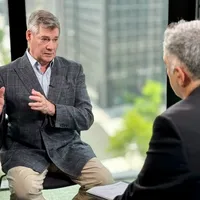
Vice President JD Vance said the United States has not released the text of its memorandum of understanding with Iran because officials needed to “sequence this in the right way.”

“There are some delicate diplomatic things going on where the Iranians, and not just the Iranians, but some of our mediators — the Pakistanis and the Qataris — have asked us to sequence this in the right way,” Vance told the Megyn Kelly show.

Vance said he did not “fully understand” the reasoning behind the secrecy, but added that “there are sensitivities that exist in the Arab and Muslim world that we’re trying to be responsive to.”

Most Viewed

Iran media split over US MoU as hardliners warn of retreat
1
INSIGHT

Iran media split over US MoU as hardliners warn of retreat

2
INSIGHT

Iran-US MoU draws praise and backlash across Tehran’s political spectrum

3
ANALYSIS

Iran hardliners rage over US deal, but experts say regime is closing ranks

4
EXCLUSIVE

Israel to help oust Iran regime, Bennett tells Iranians frustrated by US deal

5

Iran executes two January protesters as post-war crackdown continues

Banner
Banner

Spotlight

  • Iran hardliners rage over US deal, but experts say regime is closing ranks
    ANALYSIS

    Iran hardliners rage over US deal, but experts say regime is closing ranks

  • Iran-US MoU draws praise and backlash across Tehran’s political spectrum
    INSIGHT

    Iran-US MoU draws praise and backlash across Tehran’s political spectrum

  • Iran media split over US MoU as hardliners warn of retreat
    INSIGHT

    Iran media split over US MoU as hardliners warn of retreat

  • Trump's Iran strategy underrates regime's resilience, ex-US diplomat says

    Trump's Iran strategy underrates regime's resilience, ex-US diplomat says

  • Lebanon may become first test of emerging Iran-US deal, experts say
    PODCAST

    Lebanon may become first test of emerging Iran-US deal, experts say

  • The uneasy mix of diplomacy and pressure in Canada’s Iran policy
    ANALYSIS

    The uneasy mix of diplomacy and pressure in Canada’s Iran policy

•
•
•

More Stories

Israeli media releases alleged details of Iran-US MoU

Jun 16, 2026, 20:17 GMT+1
Israeli media releases alleged details of Iran-US MoU
100%

Israel’s Channel 12 released what it said were 12 main clauses of the Iran-US memorandum of understanding, including terms on Lebanon, Iran’s nuclear program, Hormuz, sanctions and frozen assets.

The report listed the main clauses as follows:

  1. Iran, the United States and their allies would stop hostilities, including in Lebanon.
  2. Iran reaffirmed its commitment not to develop or acquire nuclear weapons.
  3. The United States and Iran committed to resolving the issue of removing Iran’s enriched uranium stockpile.
  4. The United States and Iran would discuss enrichment and Iran’s nuclear needs.
  5. Iran would maintain the status quo in its nuclear program as long as negotiations continue.
  6. The United States would lift the naval blockade, refrain from imposing new sanctions and not reinforce its forces in the region during negotiations on the final agreement.
  7. Iran would make the necessary arrangements to ensure safe passage for commercial vessels through the Strait of Hormuz, free of charge, for 60 days.
  8. The United States committed to making frozen Iranian assets available for use once the memorandum of understanding is implemented.
  9. If a final agreement is reached, the United States would withdraw its forces within 30 days and cancel all sanctions on Iran.
  10. Any final agreement would include a plan to establish a $300 billion fund for Iran’s reconstruction.
  11. Washington would grant Tehran temporary sanctions waivers to sell oil during the negotiations.
  12. Negotiations will be held between Iran and Oman with the participation of [Persian] Gulf policy to define "arrangements regarding shipping and maritime services"

Pope Leo says he hopes Iran-US deal ends war

Jun 16, 2026, 19:50 GMT+1

Pope Leo praised the interim deal between the United States and Iran to end the regional war in the Middle East, saying “thanks be to God” that the two powers were set to formalize their accord on Friday.

“There will still be several points to settle, but it is always better to do so through dialogue, through negotiations, and not by returning to war,” Leo told journalists outside his residence in Castel Gandolfo, Italy.

“I hope that it truly is a solution to the war, that the war really is over, and that we can move forward,” he said.

Iran lawmaker says US must prove MoU commitment by ending war in Lebanon

Jun 16, 2026, 19:43 GMT+1

The head of the Iranian parliament’s national security and foreign policy committee said Washington must prove its commitment to the Iran-US memorandum of understanding by ending the war against Lebanon and upholding every clause of the agreement.

“Any breach will be met with a decisive, crushing response,” Ebrahim Azizi wrote on X.

“The era of unilateral imposition against Iranians is over,” he added.

Israel to help oust Iran regime, Bennett tells Iranians frustrated by US deal

Jun 16, 2026, 19:13 GMT+1
Israel to help oust Iran regime, Bennett tells Iranians frustrated by US deal
100%
File photo shows a billboard in Jerusalem that reads "the end of Ayatollah's regime in Iran"

Former Israeli prime minister Naftali Bennett says he has drawn up a detailed plan to help Iranians topple the Islamic Republic, addressing growing frustration among dissidents that an emerging US-Iran deal could save and embolden Tehran’s hardline rulers.

“We’re going to do everything in our power to ultimately topple this horrible regime,” Bennett told Iran International correspondent Babak Eshaghi. “And I want to tell the Iranian people, the wonderful Iranian nation: Don’t lose your hope.”

“This terrible, disconnected, corrupt and evil regime will fall. You will be free,” he said.

Bennett, who is positioning himself as one of Prime Minister Benjamin Netanyahu’s main challengers, said outside powers must be ready to help Iranians the next time they rise up against the Islamic Republic.

“What we’re going to do is ensure that next time the people of Iran rise up, we provide them the tools to win, communication and other tools,” he said. “This rotten regime will fall at some point.”

“Our job is to accelerate that,” Bennett added.

His comments come as many Iranians opposed to the Islamic Republic have voiced frustration over the expected signing of a US-Iran memorandum on Friday, fearing that Washington and Tehran are moving toward an agreement that would preserve the ruling system after months of war, repression, blackouts and sanctions.

After the January crackdown, in which security forces killed thousands of protesters and detained tens of thousands, both Donald Trump and Netanyahu promised to support Iranians seeking to bring down the regime.

But the emerging deal has deepened concern among many anti-government Iranians that ordinary people paid the heaviest price while Tehran’s more hardline leadership survived and may now gain breathing space through diplomacy.

Bennett sought to answer that concern by saying he had prepared “an elaborate and detailed plan” aimed at bringing down the Islamic Republic.

“I’ve put together an elaborate and detailed plan whose goal is to ultimately topple this Ayatollah regime,” he said.

He said the plan would rely on “many tools, not only war,” including “economic tools, diplomatic tools, covert, overt operations,” as well as efforts to empower the Iranian people.

Bennett also warned that the expected US-Iran memorandum should not lead to an easing of pressure on Tehran unless any final agreement fully dismantles Iran’s nuclear and missile programs and regional proxies.

“It’s a temporary agreement. It’s far from over,” he said.

“We have to ensure that the final agreement is a good one,” Bennett added. “That totally dismantles the Iranian nuclear program, the ballistic missile program, the regional terror program.”

“That’ll be the ultimate test,” he said. “We can’t let up on the sanctions and on all the pressure on this horrible regime until that’s achieved.”

His remarks come amid unease in Israel over the emerging agreement. Channel 12 reported that Israeli officials asked Washington to see the draft memorandum, but the United States refused to share the text before the signing ceremony.

The reported refusal has fueled concern in Israel that the deal could fall short of Netanyahu’s stated demands, including the dismantling of Iran’s nuclear capabilities, curbs on its missile program and limits on Tehran’s regional network.

Message to Iranian people and leaders

Bennett compared the Islamic Republic to the Soviet Union in its final years, saying authoritarian systems can collapse faster than expected.

“This regime will fall,” he said. “It’s a corrupt, disconnected and incompetent regime, very similar to the Soviet Union regime of the 1980s.”

“If you had asked me in 1985, will the regime fall? Who knows? But just four years later, it fell,” Bennett added.

“My message to the Iranian people is: Raise your heads. Be proud. Be strong. We are looking after you.”

He also issued a direct warning to Iran’s rulers.

“I would tell those leaders, those ayatollahs: Your time is running out. We are after you. We know exactly who you are. And you will not remain in power for long,” Bennett said.

“It might take a bit of time,” he added. “But your time is over.”

Iran-US deal includes $300 billion investment fund, over half committed - Reuters

Jun 16, 2026, 19:05 GMT+1
Iran-US deal includes $300 billion investment fund, over half committed - Reuters
100%

A $300 billion private investment fund designed to spur investment into Iran is outlined in the US-Iran framework agreement, with more than half of the sum already committed, Reuters reported on Tuesday, citing a source with direct knowledge of the deal.

The source said the fund was designed to give both sides an economic incentive to conclude a final deal, adding that it would contain no government money or grants.

The report said that companies based in the US, Persian Gulf states, Asia, South America and Africa had agreed to commit financing, with pledged investments spanning energy, logistics, manufacturing and transport.

A senior Iranian source told Reuters that Tehran had originally sought $400 billion in compensation for war damage from the US, but Washington said it would not provide it. The idea for the fund, to be named the Reconstruction and Development Fund, then emerged, the report said.

The Iranian source said regional countries could contribute by securing loans, establishing credit lines or directly financing reconstruction of sites damaged in the war, including the Mobarakeh Steel complex, refineries, airports and other infrastructure.

Reuters said the fund is separate from talks on lifting US sanctions and releasing frozen Iranian assets.

The fund will not be created or become operational until a final and satisfactory deal is signed, the source said. During the 60-day memorandum period, fund administrators will work with Iranian officials and investors to plan and scope projects, the report added.