US imposes new Iran-related counter-terrorism sanctions
The United States issued new Iran-related counter-terrorism sanctions on Friday targeting Iranian individuals and entities, according to a notice posted on the US Treasury Department website.
The United States issued new Iran-related counter-terrorism sanctions on Friday targeting Iranian individuals and entities, according to a notice posted on the US Treasury Department website.




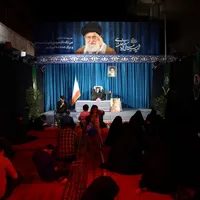
Israeli Prime Minister Benjamin Netanyahu views the emerging US-Iran agreement as a political and strategic disaster, while figures close to him blame President Donald Trump for blocking Israeli-backed plans to help topple Tehran’s leadership, Al-Monitor reported citing a senior political source.
The report said Netanyahu’s circle believes the Iranian government could have been toppled early in the war if Washington had backed Israeli plans, including a proposal involving Kurdish forces entering Iran under US and Israeli air cover.
A senior Israeli intelligence source said the Kurdish plan was detailed and had required major investment, but Washington “hit the brakes” at the last moment. The source said Trump also blocked other Israeli operational initiatives, warning that the consequences could be “disastrous and long-term.”
One Netanyahu associate said the prime minister’s “hands are tied” and that he can do little but “salute Trump.”
Netanyahu has reached the point where he longs for the days of President Joe Biden and even President Barack Obama, the political insider was quoted as saying.
The report also said the possible US-Iran agreement has fueled speculation that Netanyahu may consider stepping down before elections and seek a plea bargain in his corruption trial if the deal proves as damaging as Israel fears.
Iran has not reached a final understanding with the United States despite continued exchanges of messages and will wait to see whether Washington actually ends what Tehran calls an illegal naval blockade, Foreign Ministry spokesman Esmail Baghaei told state TV.
Baghaei said Iran “said goodbye to the language of ‘must’ 47 years ago” and that Western governments cannot dictate terms to the Islamic Republic.
“We make our own decisions based on the interests and rights of the Iranian people,” he said.
He also said what Washington has described as a naval blockade was illegal from the beginning, calling it both a violation of the ceasefire and a disruption of international freedom of navigation.
Baghaei said Tehran would wait to see whether the United States follows through in practice on its stated position or whether it is merely a “propaganda claim.”
“If they do it, it means stopping an unlawful act they started a few weeks ago and should never have committed in the first place,” he said.
On a possible understanding with Washington, Baghaei said messages were still being exchanged but no final agreement had been reached.
US Secretary of State Marco Rubio praised Pakistan’s “sincere diplomatic and mediation efforts” for peace and stability in the region and beyond during a meeting with Pakistan’s foreign minister in Washington, Pakistan’s Foreign Ministry said.
"The Secretary thanked the Minister for the constructive role Pakistan continues to play in realizing President Trump’s vision for peace in the Middle East and its mediation efforts with Iran," the US State Department said.
"The Secretary and Deputy Prime Minister agreed upon the importance of working together to further strengthen a meaningful partnership that fosters security and prosperity for both Americans and Pakistanis."
No final understanding has been reached between Iran and the United States, IRGC-affiliated Tasnim News reported, rejecting Trump’s remarks on lifting the naval blockade as unilateral and insisting Iran’s frozen assets must be addressed before any preliminary deal.
Tasnim said Trump’s comments should be viewed with skepticism, arguing that even if the naval blockade is lifted in practice, it would only amount to ending one violation of the ceasefire because the blockade should not have been imposed in the first place.
The outlet also dismissed claims by Trump and US media about the nuclear file as baseless, saying the current discussions do not involve details of the nuclear issue.
Tasnim said Trump’s insistence that Iran’s frozen funds will not be released only deepens Tehran’s doubts about Washington’s seriousness.
The Islamic Republic has repeatedly said the status of its frozen assets must be determined before any initial understanding is reached, the report added.
Claims by US President Donald Trump about a possible agreement with Iran are “a mix of truth and lies” and do not reflect the draft terms being reviewed in Tehran, IRGC-affiliated Fars News reported, citing informed sources.
The report said the draft agreement, framed as “commitment for commitment,” is in the final stages of approval in Iran but no definitive decision has yet been made.
According to Fars, Trump has claimed victory by presenting points that contradict the text of the draft, even as he says the US blockade will be lifted.
The report denied that Iran had agreed to reopen the Strait of Hormuz without tolls or conditions, saying no such clause exists in the draft. It said Tehran would reopen the strait after the blockade is lifted, based on its own arrangements, which could include monitoring, inspections, services and security measures.
Fars also rejected Trump’s claim that Iran would dismantle or destroy its nuclear material, saying informed sources described the assertion as baseless and absent from the memorandum.
The report said the most important part of the draft is an immediate payment of $12 billion in frozen Iranian assets, adding that Tehran would not enter any further phase of negotiations until the money is released.
It also said a full ceasefire in Lebanon in line with Hezbollah’s position was another key issue.
Fars said Iran would only move to the next stage of talks, including sanctions relief and the nuclear issue, if those conditions are resolved, and that any final agreement would be based on the Islamic Republic’s red lines and “complete distrust” of the United States.